The Quiet Language of Observation
Peter Stalder has built an artistic practice grounded in careful observation, technical discipline, and an enduring fascination with the transformative qualities of light. Born in 1966 to a Swiss father and an English mother, the Swiss-British painter is now based in Nyon, in western Switzerland, following a life shaped by experiences across Switzerland, Latin America, and London. This rich cultural background has nurtured an artistic perspective that values both landscape and human presence, allowing familiar subjects to become emotionally resonant through attentive looking. Although largely self-taught, Stalder strengthened his practice through studies at The Royal Drawing School and The Heatherley School of Fine Art in London, complementing years of independent exploration with rigorous academic instruction. Today, his work moves confidently between portraiture, figure drawing, plein-air painting, and landscape, always united by a commitment to revealing atmosphere through the careful orchestration of light.
Drawing has accompanied Stalder since childhood, when he amused himself by sketching portraits and caricatures of his teachers. What began as an instinctive pastime gradually evolved into a lifelong commitment to figurative art. That early fascination matured into a disciplined study of anatomy, proportion, and expression, eventually expanding beyond portraiture to encompass landscapes, streets, lakes, mountains, and everyday environments. Throughout this evolution, drawing remained the foundation upon which his paintings developed. Working across oil, graphite, charcoal, and pastel, he continually returns to observational practice as the basis for both technical precision and emotional authenticity. His broad command of different media demonstrates versatility while preserving a coherent visual language that consistently prioritises sensitivity over spectacle and close looking over decorative excess.
Rather than searching for dramatic subjects, Stalder finds lasting inspiration within ordinary moments. Familiar landscapes, thoughtful faces, quiet streets, and shifting weather all become opportunities to examine the relationship between perception and feeling. His paintings are less concerned with constructing elaborate narratives than with preserving fleeting impressions that might otherwise disappear unnoticed. This approach encourages viewers to slow their own pace and engage with subtle variations of atmosphere, expression, and colour. Every composition reflects an artist who values patience, observation, and craftsmanship, demonstrating that the simplest subjects can acquire remarkable emotional depth when approached with sincerity and sustained attention.

Peter Stalder: Illuminating Portraits Through Presence
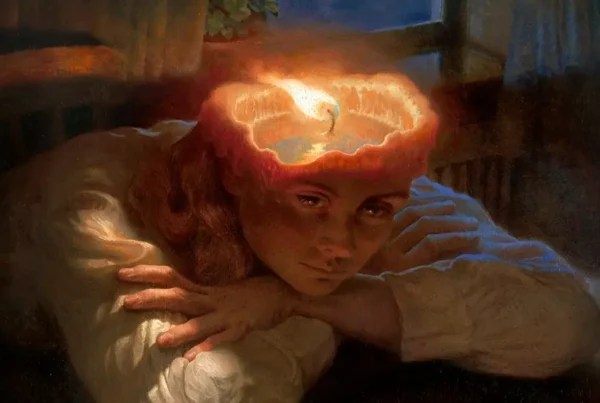
Portraiture occupies a central position within Stalder’s artistic identity. His paintings and drawings reveal a sustained commitment to understanding the individuality carried within every face. Rather than striving for photographic exactitude, he seeks to communicate psychological presence through restrained modelling, carefully balanced composition, and subtle transitions between light and shadow. Expressions remain understated, inviting prolonged contemplation instead of immediate explanation. This measured approach allows viewers to discover emotional complexity gradually, making each portrait feel intimate without becoming theatrical. Faces frequently emerge from softly controlled tonal structures that recall classical traditions while maintaining an unmistakably contemporary sensitivity. The result is portraiture that values emotional truth as highly as technical accomplishment.
Years of academic drawing and life study have strengthened Stalder’s understanding of anatomy and structure, providing a secure foundation for expressive interpretation. His work demonstrates confidence across oil, pastel, charcoal, and graphite, with each medium employed according to its particular strengths. Monochrome drawings depend upon refined tonal variation and economical mark making, while colour portraits use restrained palettes enriched through carefully balanced warm and cool relationships. Transparent layers create convincing flesh tones, allowing luminosity to emerge naturally instead of through excessive rendering. Selectively softened edges guide attention toward the eyes and facial expression, reinforcing the quiet psychological intensity that distinguishes much of his portrait practice.
Portrait commissions are generally developed within the privacy of the studio, where sustained observation encourages thoughtful collaboration between artist and sitter. This setting enables Stalder to concentrate fully on subtle aspects of expression, gesture, and atmosphere without distraction. Every portrait reflects a balance between disciplined craftsmanship and emotional restraint, avoiding unnecessary embellishment while remaining visually engaging. Through this process, each individual becomes more than a likeness. Instead, the portrait serves as an exploration of presence itself, demonstrating how carefully observed light can reveal character, mood, and the quiet complexity contained within the human face.

Landscapes Shaped by Atmosphere and Place
Landscape painting provides an equally significant dimension of Stalder’s creative practice. Deeply connected to the scenery surrounding Nyon and the wider La Côte region, he frequently works outdoors, responding directly to changing weather, seasonal transitions, and the constantly shifting behaviour of natural light. Mountains, lakes, village streets, quays, and winding paths appear repeatedly throughout his paintings, each interpreted through direct observation rather than formulaic repetition. Painting en plein air allows him to react immediately to fleeting conditions, preserving the freshness and spontaneity of lived experience. These landscapes celebrate familiar environments while revealing how light continually reshapes even the most recognisable places.
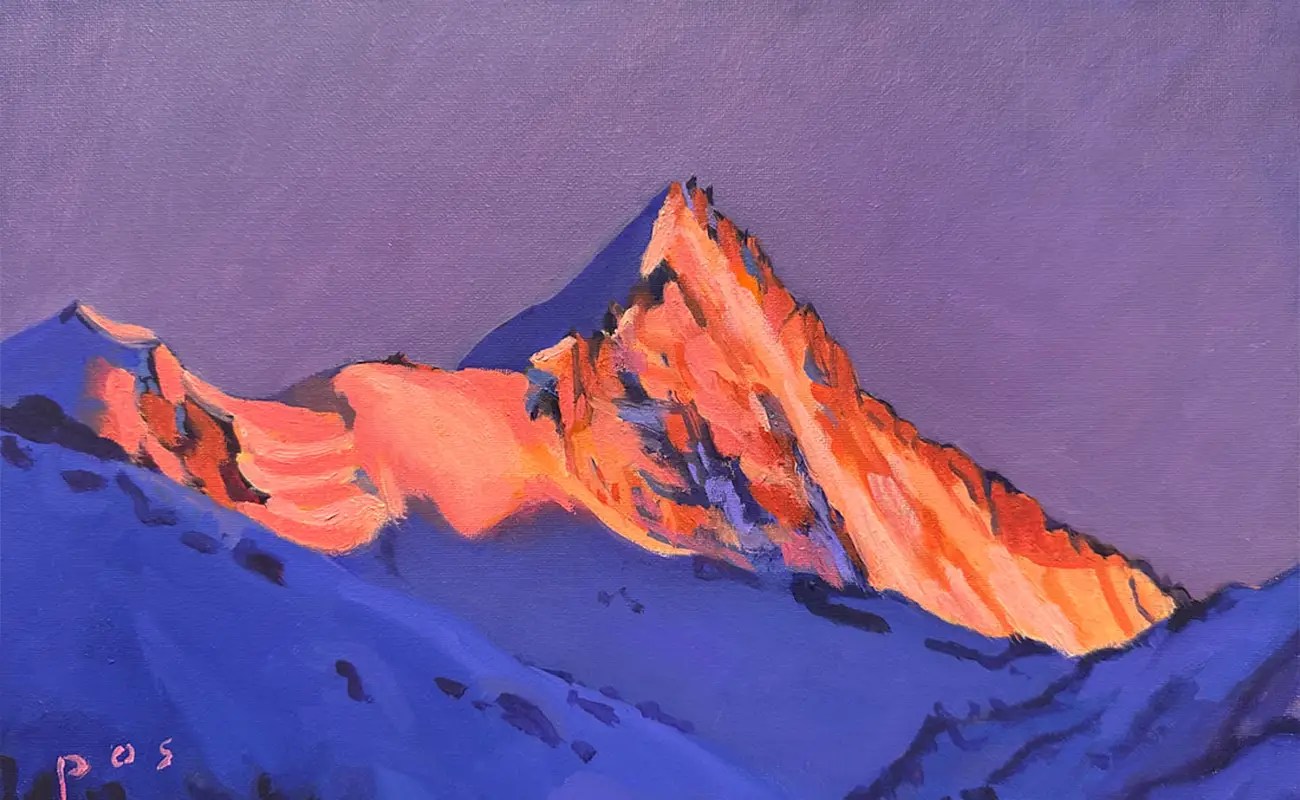
Light functions as the unifying principle across every landscape. For Stalder, illumination is never simply descriptive but instead becomes the force that defines structure, controls colour relationships, and establishes emotional atmosphere. Warm evening sunlight, crisp winter brightness, soft autumn haze, and dramatic alpine glow all generate distinctive visual experiences that influence both composition and mood. Rather than recording every geological detail, he simplifies forms into broad shapes and harmonious colour masses. This economy of description allows viewers to experience the sensation of place through atmosphere instead of literal precision. Impressionist sensitivity to colour combines naturally with the structural discipline of representational painting, producing landscapes that remain both immediate and enduring.
Colour harmony plays a particularly important role within these outdoor works. Even scenes containing vibrant oranges, luminous pinks, rich ultramarines, and deep violet shadows remain carefully balanced, preventing intensity from becoming overwhelming. Controlled complementary relationships heighten the impression of changing daylight while preserving visual unity across the composition. Simplified mountain silhouettes, broad horizontal divisions, and thoughtfully placed areas of open space encourage calm reflection rather than visual distraction. Through these carefully considered decisions, Stalder transforms ordinary landscapes into contemplative experiences that celebrate attentive observation and the emotional richness found within the natural world.

Peter Stalder: A Practice Defined by Consistency and Recognition
Although firmly rooted in representational painting, Stalder avoids the rigidity that can sometimes accompany academic traditions. Visible brushwork, softened contours, and selective simplification preserve the vitality of the painted surface while reminding viewers that every work represents an interpretation rather than a mechanical record. Technical precision and painterly freedom coexist throughout his practice, creating images that remain faithful to observation without sacrificing freshness or individuality. Influences associated with classical portraiture, academic draftsmanship, Impressionism, and contemporary plein-air painting are clearly evident, yet they are synthesised into a personal visual language centred upon sensitivity to light, emotional restraint, and disciplined observation.
This mature artistic voice has earned recognition through numerous solo and group exhibitions across Switzerland, France, and the United Kingdom. His paintings have been presented at Galerie Esquisse in Nyon, Fondation l’Estrée in Ropraz, Galerie le Bunker in Sainte-Croix, the ARPADI Biennial in Divonne-les-Bains, Montreux Art Gallery, the Royal Society of Portrait Painters Annual Exhibition, and The Pastel Society exhibition at Mall Galleries in London. His work was also exhibited at the Salon du Dessin et de la Peinture à l’Eau at the Grand Palais in Paris. These exhibitions reflect the growing appreciation of a practice built upon consistency, craftsmanship, and thoughtful engagement with figurative painting.
Recognition has also arrived through awards, including the Prix spécial Ornans and the Prix spécial Jury des Jeunes at the 2020 “A la manière de Courbet” competition in La Tour-de-Peilz. Yet perhaps the defining quality of Stalder’s work lies less in accolades than in its enduring ability to transform familiar subjects into quietly compelling experiences. Whether depicting a contemplative portrait, a snow-covered mountain, a lakeside view, or a sunlit street, he consistently demonstrates that attentive observation can reveal unexpected emotional depth. Across every medium and subject, his paintings affirm that light possesses the remarkable capacity to shape memory, atmosphere, and human connection, inviting viewers to look more carefully at the world before them.