Finding Stories Hidden in Every Street
Cities often reveal themselves gradually, through overlooked corners, familiar buildings, and fleeting moments that most people pass without noticing. Maxwell Tilse has built an illustration practice around preserving exactly those experiences. Born and raised in Sydney, Australia, and now working primarily from London, he transforms architecture, travel, and personal observation into detailed ink drawings that celebrate the emotional character of place. Entirely self taught, his career emerged from a lifelong enthusiasm for drawing rather than formal academic training, demonstrating how sustained curiosity and dedication can shape a distinctive artistic voice. His illustrations invite viewers to pause, examine familiar surroundings more closely, and appreciate the narratives embedded within streets, landmarks, and everyday urban life. Rather than pursuing spectacle, Tilse focuses on intimacy, presenting cities as collections of memories that continue to evolve through careful observation and thoughtful craftsmanship.
Creative influences appeared early in his life through classic European comics, especially the adventures of Tintin and Asterix. Their expressive storytelling, clean visual language, playful humour, and carefully drawn environments encouraged him to imagine drawing as both narrative and exploration. During childhood he filled pages with cartoons for classmates, inventing humorous adventures inspired by the interests of young friends and popular culture. One particularly memorable creation featured the absurd exploits of Mr. Plop, a talking piece of poo that he still jokingly considers among his greatest achievements. Although these youthful drawings were intentionally silly, they strengthened his confidence in visual storytelling and established habits of observation that would continue into adulthood. Over time, those early influences gradually evolved into a more refined illustration practice centred on architecture, travel, and the subtle personality of individual places.
Leaving university marked an important turning point in Tilse’s development. Choosing to backpack across the world, he documented his experiences in illustrated travel diaries while supporting his journey by selling hand drawn postcards. This period became far more than an extended holiday because it offered continuous opportunities to practice composition, draw unfamiliar people, and study a remarkable variety of architectural forms. Every destination became both classroom and studio, allowing experimentation without rigid expectations. Those months fundamentally reshaped his ambitions, transforming a personal hobby into the beginnings of a sustainable profession. When he later relocated to London in 2015, the habits formed during those travels remained central to his creative identity, continuing to guide both his freelance career and his ongoing fascination with recording the atmosphere of cities through direct observation.

Maxwell Tilse: Drawing Cities Through Observation
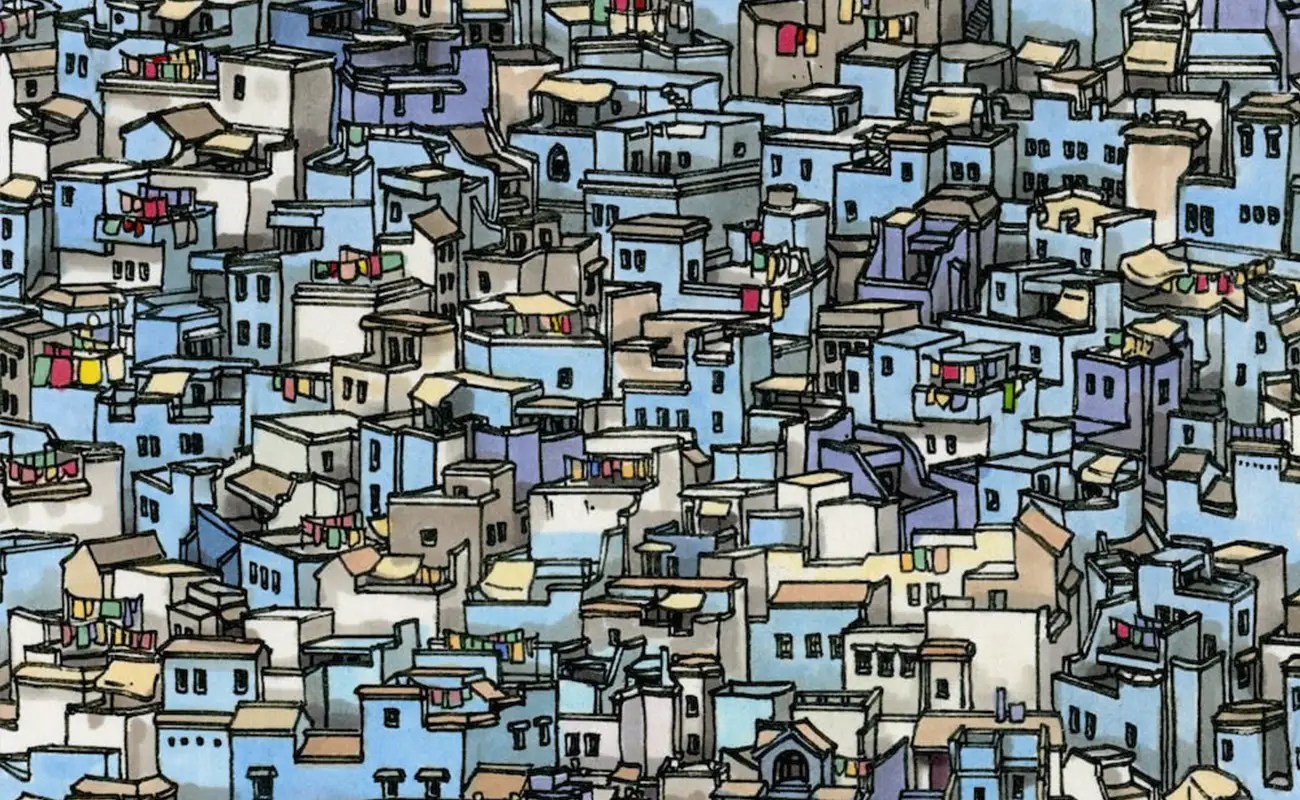
Tilse’s working process remains firmly committed to traditional techniques despite the widespread availability of digital illustration tools. Most works begin with Indian ink and nib or simple pens on paper, allowing every mark to retain the immediacy of direct hand movement. Sketching outdoors continues to play an essential role whenever conditions permit, since drawing from life captures changing light, passing pedestrians, shifting weather, and countless subtle details that photographs rarely communicate. His illustrations are never digitally constructed or altered after completion, reinforcing both their tactile qualities and the authenticity of the observational process. This dedication to analogue methods allows each drawing to preserve the atmosphere of a specific location while revealing the patience and concentration invested in every carefully placed line.
Environmental conditions influence not only where Tilse works but also how individual drawings develop. Comfortable weather allows him to remain outdoors for extended periods, absorbing sounds, conversations, changing shadows, and the rhythm of city life while sketching. Morocco stands out as a destination where these circumstances encourage long, uninterrupted drawing sessions immersed within the surroundings themselves. By contrast, harsh winter conditions in Chicago dramatically limited opportunities for outdoor observation, leaving a memorable impression of how climate can shape artistic practice. These contrasting experiences demonstrate that illustration, for Tilse, depends as much upon physical presence within a place as it does upon visual accuracy. Every drawing becomes connected to lived experience rather than existing solely as a representation of architecture.
Travel continues to expand both his technical skills and creative outlook. Encounters with fellow artists while exploring different countries provide valuable opportunities to exchange sketchbooks, compare techniques, and learn through direct conversation. Since his artistic education developed independently rather than within formal institutions, these spontaneous meetings have become an important source of practical knowledge and encouragement. Certain destinations also leave particularly lasting impressions because of their extraordinary architectural variety. Istanbul occupies a special place among them, offering layered hills, historic mosques, narrow streets, and elevated viewpoints that continually inspire fresh compositions. Even after multiple visits, Tilse considers the city an endlessly rewarding subject whose complexity encourages repeated observation and continuous discovery through drawing.

Memory, Architecture, and the Character of Place
Throughout Tilse’s portfolio, architecture serves as much more than a collection of buildings. Streets, landmarks, neighbourhood pubs, and public spaces become vessels carrying stories, historical associations, and personal recollections that extend beyond their physical appearance. His illustrations consistently suggest that cities are shaped not only by construction but also by the experiences people attach to them over time. This perspective appears especially clearly in the “Little Cities” project, where miniature urban scenes compress architecture, narrative, and memory into remarkably compact works. Rather than overwhelming viewers with scale, these carefully considered illustrations encourage close attention, rewarding careful looking with details that gradually reveal the personality of each location.
Among his most widely recognised creations are intricate cut out illustrations portraying London’s historic pubs and celebrated landmarks. Despite measuring only a few centimetres across, these drawings capture architectural character with exceptional precision while preserving warmth and charm. Tilse frequently enriches these works by pairing them with historical information or personal reflections, encouraging audiences to think about each building as part of a broader cultural story rather than simply an attractive façade. Through this approach, familiar urban locations become points of connection linking design, community, memory, and everyday experience. His controlled line work communicates remarkable accuracy without sacrificing the sense of affection that defines his relationship with the cities he draws.
Private commissions remain a significant part of Tilse’s professional practice, allowing him to create highly personal works for individual clients while continuing to explore architectural storytelling. Alongside these commissions, he has collaborated with internationally recognised organisations including the BBC, PayPal, Nespresso, Preferred Hotels, Turkish Airlines, Tourism Malaysia, Cubitt House, New York Puzzle Co., and Art Basel Miami. These partnerships demonstrate the versatility of his illustration while maintaining the consistent visual identity established through years of observational drawing. Whether creating commissioned artwork or documenting a favourite street corner, the underlying motivation remains unchanged: preserving places through careful craftsmanship and inviting others to recognise beauty in environments they may otherwise overlook.

Maxwell Tilse: A Life Built Around Drawing
Looking ahead, Tilse remains motivated by destinations that promise new visual experiences and deeper cultural encounters. Iran has long occupied a prominent place on his travel ambitions because of its dramatic mountain landscapes, remarkable architectural history, and reputation for generous hospitality. India also represents a compelling aspiration, offering the possibility of travelling extensively while filling sketchbooks with observations gathered throughout the journey. These ambitions reflect his continuing belief that artistic development grows through direct engagement with unfamiliar places rather than remaining within familiar surroundings. Every new destination offers opportunities to strengthen observation, expand visual understanding, and record experiences that later become part of his evolving body of work.
Tilse also enjoys seeing his illustrations transformed into jigsaw puzzles, appreciating the unique challenges that different compositions create for participants. Crowded scenes filled with expressive faces prove especially demanding compared with architectural subjects because each tiny facial expression introduces another visual clue that must be carefully matched. He hopes to produce more illustrations featuring lively urban crowds, particularly inspired by cities such as London and New York, where countless small details gradually emerge during the puzzle solving process. This perspective reflects his wider artistic philosophy, encouraging sustained observation and rewarding viewers who spend time engaging closely with an image rather than rushing through it.
For emerging artists hoping to unite creativity with travel, Tilse offers guidance grounded in practical experience rather than abstract theory. He encourages aspiring illustrators to begin with a sketchbook and simple pens before heading outside to draw directly from observation. Street sketching, he believes, develops essential understanding of movement, composition, and changing light while demonstrating that every location possesses creative potential regardless of how ordinary it first appears. Many of his own sketches never reach public view because their primary purpose is learning rather than exhibition. That emphasis on steady personal growth captures the foundation of his artistic journey, one that began with childhood cartoons, matured through illustrated travel diaries, and continues today through hand drawn celebrations of cities, memory, and the enduring power of careful observation.