“My art is not for everybody. It is for those who are not afraid to feel.”

Between Industrial Shadows and Creative Fire
Patrik Šíma emerged from the industrial atmosphere of Ostrava, a city marked by steel factories, coal mines, and long stretches of grey winters that shaped his perception of contrast from an early age. Surrounded by harsh urban scenery, he found refuge in a home environment filled with private acts of creativity. His father kept diaries layered with drawings, writing, collage, and painting while music played in the background, turning ordinary evenings into deeply personal rituals of reflection. Although those moments were quiet, they carried emotional intensity that would later become central to Šíma’s own artistic identity. The collision between bleak external surroundings and vivid internal imagination created the foundation for a practice rooted in emotional honesty, experimentation, and transformation across multiple mediums.
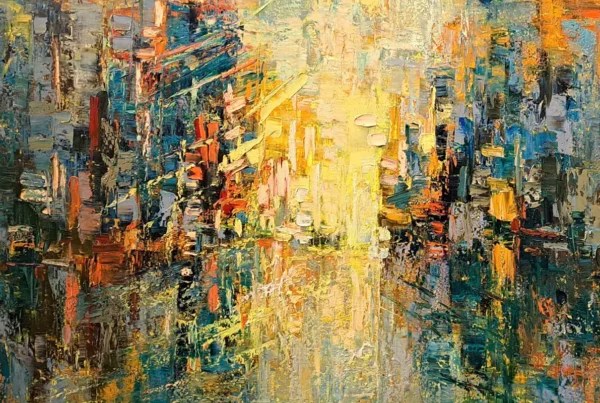
Rather than separating disciplines into fixed categories, Šíma treats literature, painting, and music as interconnected forms of communication. His paintings explode with energetic color and instinctive gestures, while his poetry and acoustic compositions extend similar emotional frequencies through words and sound. This fluid relationship between mediums allows him to explore the same psychological tensions from different perspectives. Themes of solitude, confrontation, vulnerability, and presence move freely between his canvases, written texts, and recordings. The emotional atmosphere remains consistent even when the medium changes. Such an approach reflects a belief that creativity is not divided into compartments but exists as one ongoing internal conversation expressed through varying artistic languages.
That commitment to raw expression distinguishes his work from polished or decorative aesthetics. Šíma is drawn toward emotional immediacy rather than technical perfection, seeking authenticity over calculated style. His compositions often hold explosive contrasts where darkness clashes with vivid color or silence collides with noise. These visual and emotional tensions echo the experiences that shaped him growing up in Ostrava. Instead of softening reality, he confronts it directly, allowing discomfort and intensity to remain visible within the work. The result is art that demands emotional participation from viewers and listeners rather than passive observation, inviting audiences into experiences that feel deeply personal yet universally human.

Patrik Šíma: The Refusal of Fixed Identity
Šíma never approached art through a carefully designed career plan. Creativity entered his life instinctively, developing from an ongoing sensitivity to images, emotions, and internal experiences that demanded expression. Over time, he recognized that his work revolves around heightened awareness of the present moment and the emotional force contained within it. This perspective explains why he resists adopting a fixed visual identity or stylistic formula. For him, repetition can become a limitation that distances the artist from truth. Instead, each work develops according to emotional necessity, guided by intuition, passion, and responsiveness to the moment in which it is created.
The absence of rigid stylistic boundaries allows his practice to remain fluid and unpredictable. One project may emerge through layered abstract painting filled with violent color contrasts, while another appears as intimate poetry or acoustic music carrying quieter emotional weight. Despite these shifts, the underlying impulse remains consistent. Šíma searches for authenticity that feels immediate and alive rather than controlled or manufactured. His openness to transformation keeps the work in constant motion, preventing it from becoming trapped within expectations. This freedom also mirrors his broader understanding of personal evolution, where inner changes naturally alter artistic direction and emotional tone.
Nature remains one of the strongest influences shaping his thinking and artistic philosophy. Šíma often speaks about feeling connected to natural forces that possess both beauty and uncompromising power. Within his work, he frequently places organic imagery alongside artificial structures, creating friction between the living and the constructed. These confrontations become symbolic explorations of human existence, exposing the fragile relationship between instinct and civilization. Through this process, he aims to guide audiences toward moments of catharsis where emotional clarity can emerge. The recurring conclusion within these contrasts is that raw living energy ultimately surpasses artificial systems, revealing a belief in instinctive truth that runs throughout his creative practice.

A Crucifixion Reimagined Through Pain and Defiance
Among Šíma’s most significant works, “Crucifixion J.” stands as a defining statement of artistic and personal confrontation. Created during a period of intense emotional transformation, the painting represents a moment when he fully embraced his own voice without compromise or imitation. The work functions not only as a visual image but also as an act of declaration, carrying emotional vulnerability alongside aggressive resistance. Šíma describes the piece as containing his blood, his burden, and his strength, emphasizing how deeply connected the painting is to his personal identity. The result is a work that transcends symbolism and becomes an extension of lived experience itself.
Constructed as an acrylic mixed-media work on canvas, “Crucifixion J.” combines physical intervention with expressive imagery. Šíma cut the canvas apart before stitching it back together upside down with rough seams, transforming the surface into a wounded object rather than a passive support. Heavy textures, painted gestures, and drawing merge into a chaotic visual structure centered around a suffering figure of Jesus crowned with thorns. White rectangular forms resembling bandages or stigmata interrupt the composition, pierced by aggressive dark marks that evoke violence and sacrifice. Barbed wire replaces the traditional crown of thorns, functioning as a brutal symbol of human cruelty and emotional destruction.
The emotional force of the painting emerges through its relentless contrasts. Light confronts darkness while compassion collides with hatred and decay. Sacred devotion exists beside brutality, creating a psychological battlefield that reflects broader tensions within society and within the self. Šíma positions the work as both personal testimony and universal reflection, confronting themes of suffering, responsibility, courage, and transformation. The painting captures the exact moment when he stopped attempting to satisfy external expectations and instead faced reality with complete honesty. This uncompromising intensity explains why “Crucifixion J.” continues to occupy such an important place within his body of work and artistic evolution.

Patrik Šíma: Creation Without Separation
Daily life and artistic practice have gradually merged into a single continuous process for Šíma. Rather than approaching creativity through strict schedules or predetermined structures, he works through observation, contemplation, and receptiveness to changing emotional states. Some days are devoted to writing, while others shift toward painting or music composition. This rhythm moves naturally according to internal necessity rather than external pressure. Over time, he has developed greater trust in the creative process itself, no longer forcing production through anxiety or desperation. That confidence allows space for intuition to guide the emergence of new work across multiple disciplines simultaneously.
This evolving mindset has transformed the emotional atmosphere surrounding his practice. Earlier periods marked by uncertainty have given way to stronger self-confidence and calmness, creating conditions where creativity can unfold more freely. Šíma speaks about remaining open and prepared rather than trying to dominate the process. Such openness reinforces the connection between his artistic output and personal development, since every emotional shift eventually appears somewhere within his paintings, poems, or songs. Art becomes less an isolated activity and more a continuous reflection of existence itself. The boundaries between living and creating dissolve, producing work that feels inseparable from his internal experience.
Several ambitious projects currently occupy his attention, each extending different dimensions of his artistic language. He is completing a new book of poems while simultaneously recording an album of original songs and producing a fresh series of large-scale abstract paintings exploring geometry, perspective, and spatial tension. Although these projects operate through different mediums, Šíma views them as interconnected expressions of the same emotional and philosophical concerns. Together, they continue his exploration of intensity, vulnerability, presence, and transformation. This multidirectional practice confirms his refusal to limit himself to one artistic form, reinforcing a vision where literature, music, and painting exist together as parts of one evolving creative force.