Quiet Revelations in Everyday Life
Rinko Kawauchi has built an international reputation by transforming familiar scenes into moments of wonder. Born in Shiga, Japan, in 1972, she became known for photography that notices what many people pass by: a flicker of sunlight, a gesture between family members, water in motion, birds gathering in the sky, or the fragile beauty hidden in daily routines. Her images often carry a calm, luminous atmosphere, inviting viewers to slow down and look again. Rather than relying on spectacle, she finds power in the unnoticed details that shape human experience. This ability has made her one of the most admired contemporary photographers of her generation, with exhibitions across Japan and abroad, as well as a long list of influential photobooks that continue to shape conversations about visual storytelling.
Her path into photography began while studying graphic design and photography at Seian University of Art and Design, where she graduated in 1993. That combination of disciplines proved formative. Design sharpened her sensitivity to sequencing, spacing, and visual rhythm, while photography gave her a language for intuition and emotion. Before fully establishing herself as a fine art photographer, she worked in commercial photography for an advertising agency. The precision and structure of that environment likely strengthened her editorial instincts, yet her personal practice moved in a different direction, toward reflection and poetic observation. She has often considered how images gain new meanings when placed beside one another, and this idea became central to her books and exhibitions.
Recognition arrived dramatically in 2001 when she released three photobooks at once: Utatane, Hanabi, and Hanako. The ambitious debut announced a distinctive voice already fully formed. Awards soon followed, including the Kimura Ihei Award connected to her early books. Later publications such as Aila, Cui Cui, Illuminance, Ametsuchi, Murmuration, and Halo expanded her reach. Across these works, Kawauchi repeatedly demonstrates that photography can be intimate without being small, philosophical without being distant, and emotionally resonant without overt drama. Her pictures do not shout for attention. They glow quietly, then remain in memory.

Rinko Kawauchi: The Poetry of Sequenced Images
For Kawauchi, a photograph is rarely intended to stand alone. She frequently treats images as parts of larger constellations, where meaning emerges through juxtaposition. This approach explains her deep commitment to photobooks. She has described books as objects people can return to whenever they choose, creating a personal and recurring encounter with the work. Unlike exhibitions, which depend on physical presence and a temporary setting, books offer intimacy through touch, pacing, and solitude. A reader may pause on one page, rush through another, then revisit the sequence years later with a different emotional state. Kawauchi values this closeness, and it is one reason publishing has remained central to her practice.
Her background in design can be felt in the careful rhythm of page turns and image pairings. Soft transitions between unrelated subjects often reveal surprising connections: skin and stone, water and sky, birth and decay, shadow and flame. She has spoken about mixing motifs so that different kinds of subjects become linked through placement. In this structure, viewers begin to recognize relationships that are not obvious at first glance. Separate things share time, space, fragility, and coexistence. This belief appears throughout her work, where photographs of everyday life become meditations on larger systems of existence. Sequencing, therefore, is not decorative arrangement but a philosophical method.
Text also enters her books with restraint. Kawauchi writes haiku and has included poetic writing in projects such as Halo, where she chose a poem and brief text rather than a long explanatory essay. That decision reflects her preference for suggestion over instruction. Words in her publications do not dominate the images; instead, they open another register of feeling. The combination of poem and photograph encourages reflection rather than delivering a fixed interpretation. Her books become spaces where silence, language, and image cooperate. In an age of rapid scrolling, this measured pace gives her work unusual depth and durability.

Time, Nature, and Sacred Cycles
Many of Kawauchi’s photographs are grounded in an awareness that life is temporary and interconnected. Her work has often been associated with ideas found in Shinto, in which natural phenomena and everyday objects are understood to possess spirit or presence. This outlook helps explain why she photographs modest subjects with the same seriousness others might reserve for monuments. A droplet of water, a leaf, an infant, smoke, a hand, or a bird can each carry equal significance. Her camera does not rank the world into important and unimportant categories. Instead, it observes continuity between all living things and the environments they inhabit.
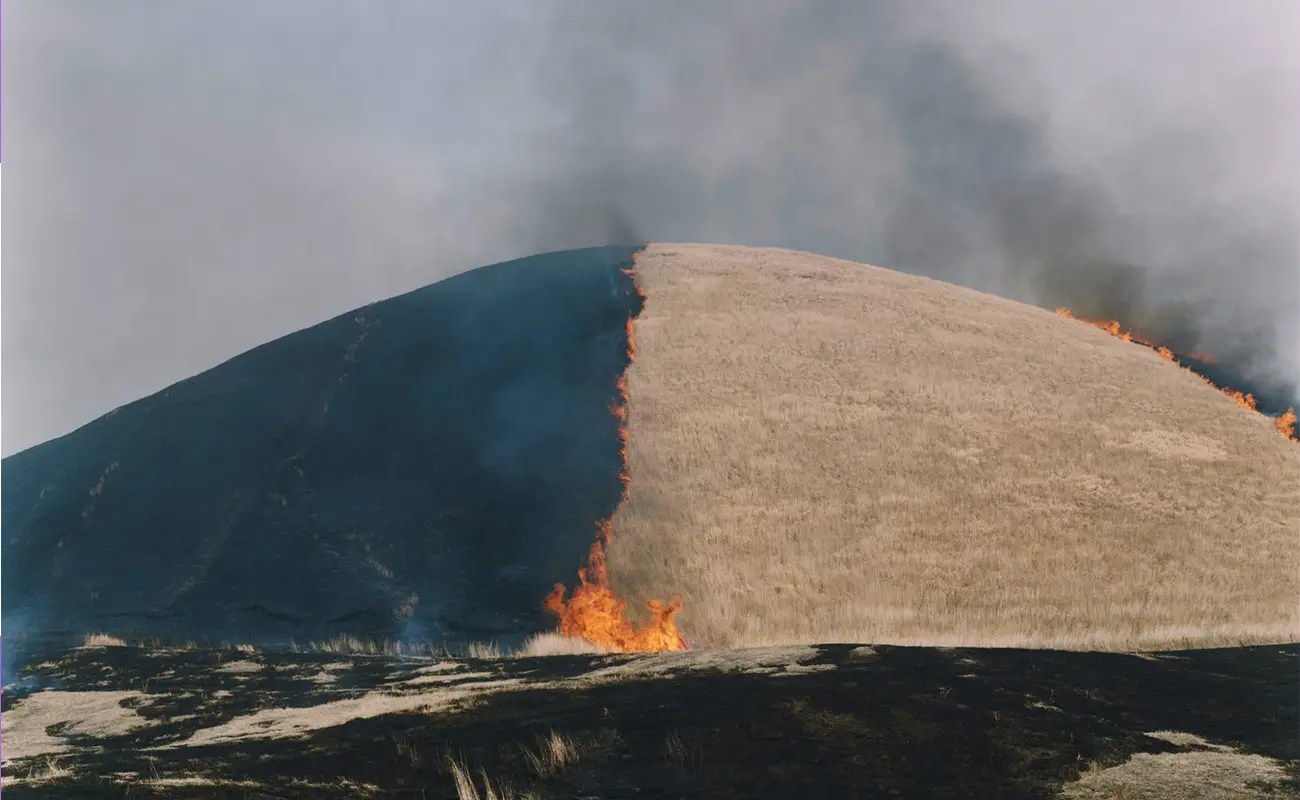
That sensitivity is vividly present in Ametsuchi, a project centered partly on Mount Aso and the ritual of yakihata, where fields are burned to preserve agricultural fertility without chemical methods. The practice stretches back many centuries and embodies destruction followed by renewal. Kawauchi responded not only to the visual force of scorched earth and rising smoke, but also to the deeper cycle of endings that permit beginnings. She remarked that after witnessing this rebirth of farmland, she felt as though an older version of herself had burned away as well. In that statement, one sees how external landscapes and internal transformation often mirror one another in her art.
Her later project Halo continued these concerns while widening the geographic frame. The series brought together images made in Japan, China, and the United Kingdom. She photographed sacred fire ceremonies in Izumo, where flames welcome the gods, and documented the striking Hebei tradition of throwing molten iron against walls to create showers of sparks resembling fireworks. Birds in coordinated flight also became an important motif after she photographed murmurations during the Brighton Photo Biennial in 2010. Across these subjects, light and darkness, order and chaos, devotion and celebration all coexist. Halo demonstrates Kawauchi’s gift for finding common spiritual currents across different places and customs.

Rinko Kawauchi: Memory, Family, and Human Tenderness
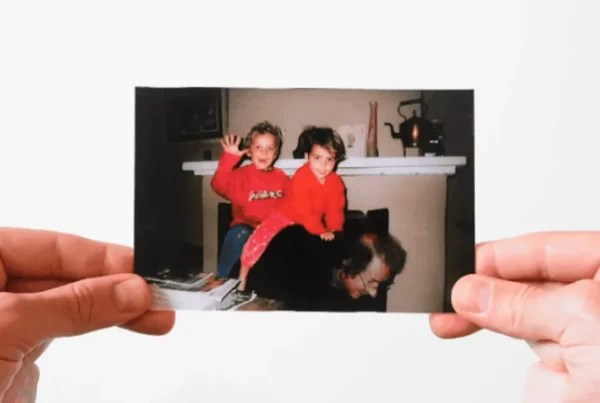
While many of Kawauchi’s themes are expansive, some of her most moving work begins at home. In Cui Cui, she turned toward family life through photographs made over more than a decade. The book gathers scenes marked by affection, vulnerability, birth, aging, and death. Rather than presenting family history as a formal archive, she treats it as a living stream of emotions and fleeting moments. The pictures hold both joy and sorrow without forcing either sentiment. This balance is one reason the work resonates widely. Even viewers who know nothing of the specific people depicted can recognize the universal rhythms of kinship and loss.
Her sensitivity to collective memory also appeared in the project The river embraced me, created for an exhibition in Kumamoto. Residents were invited to submit memories of meaningful places and personal recollections connected to the region. Kawauchi then used these responses to guide her image-making. She was not illustrating stories literally. Instead, she responded to emotional traces embedded in names, landscapes, and remembered experiences. Accompanying texts assembled from submitted fragments created a chorus of voices rather than a single narrative. Through this process, photography became a meeting point between strangers, memory, and place.
This ability to awaken personal reflection in viewers is among Kawauchi’s most distinctive achievements. Her photographs often feel familiar even when depicting unknown people or distant locations. They activate memory and imagination simultaneously, allowing viewers to project their own experiences into the frame. A river may recall childhood, a shadow may suggest absence, light on skin may evoke tenderness, birds turning in the sky may symbolize unseen connection. Such responses help explain her broad international appeal. Kawauchi’s images cross language and geography because they speak to conditions shared by all: being alive, passing through time, and searching for meaning in brief luminous moments.