“Whenever I returned to myself, photography was always there.”
The Journey Between Islands, Cities, and Inner Landscapes
Kazumi Sakurai has built a photographic life shaped by movement, memory, and an attentive eye for the quiet signals that many people overlook. Born in Japan, she grew into photography early, not through abstraction, but through family history. Her father purchased a camera when she was born in order to photograph her, creating an object that would later become central to her own artistic path. That beginning carries emotional weight because it links image-making to care, observation, and time itself. After spending ten years in New York, she is now based in Kauai, Hawaii, where another shift in geography has opened new ways of seeing. Each place has contributed to her sensibility, not by imposing a rigid identity, but by offering changing weather, altered rhythms, and different forms of human presence. Her practice emerges from these transitions, where relocation becomes more than travel and instead becomes a method of perception. Through this layered background, Sakurai presents photography as both witness and companion, rooted in lived experience rather than performance.
Her professional path began in her early twenties after receiving several awards in Japan, a recognition that helped confirm what had already been growing within her for years. Long before public acknowledgment, she had imagined herself as a photographer. In her kindergarten graduation album, she wrote that aspiration down, placing it alongside childhood dreams of becoming a ballerina or a baker. That small memory reveals something essential: photography was not a sudden decision, but a recurring certainty that continued to return. Even during periods when art was not her conscious focus, the medium remained close, waiting for her. This continuity matters because it explains the steadiness behind her changing output. Sakurai’s career has evolved across countries and contexts, yet the impulse to photograph has remained constant. Such persistence often distinguishes enduring artists from those guided only by trend. In her case, the camera became less a career tool and more a lifelong language through which personal history and external reality could meet.
Living in Japan, then New York, and later Kauai has also sharpened Sakurai’s sensitivity to atmosphere. She speaks of noticing small details such as light, shifts in presence, and subtle changes in mood. These are not decorative interests. They are the foundation of how she understands an image. Many photographers pursue spectacle, but Sakurai is drawn to moments that almost disappear before they are recognized. This attention creates photographs informed by patience rather than urgency. A room’s tone, the way daylight touches a surface, or the emotional residue of a passing encounter can all become meaningful subjects. Her surroundings therefore act less as scenery and more as active collaborators. Whether in a dense city or on an island marked by natural intensity, she searches for traces that reveal how a place feels rather than merely how it looks. That approach gives her work emotional texture and helps explain why movement between locations has been so important to her development.

Kazumi Sakurai: Photography as Return and Recognition
Sakurai has described photography as something that always reappears whenever she returns to herself. This statement offers a powerful key to her practice. For some artists, making images is a strategy for reaching outward toward audiences or institutions. For Sakurai, it is equally a route inward. The act of photographing becomes a means of recognition, a way to locate emotional truth through what stands before the lens. She does not define herself through a fixed style, and that refusal is revealing. Instead of protecting a signature look, she allows her visual language to change naturally over time. Such openness suggests confidence rather than uncertainty. It means she values authenticity over repetition. Some images begin in daily life, while others emerge from conceptual starting points, yet she sees both paths as connected through reflection. This flexible method keeps her practice alive, responsive, and difficult to reduce to formula. It also places experience at the center of creation, where thought and instinct remain in dialogue.
An early formative memory came from seeing a Robert Capa exhibition when she was young. She recalls realizing in a direct and simple way that being a photographer could mean going to war. That realization stayed with her. The importance of this memory lies not in imitation, but in awareness. It showed her that photography could carry consequence, danger, and historical urgency. Even if her own work follows a different emotional register, the lesson remains significant. The camera is not only a device for beauty or personal memory. It can confront reality, bear witness, and move through difficult spaces. Such knowledge likely broadened her understanding of what an artist can be. It also may help explain why her work values presence so strongly. To be present, attentive, and receptive is fundamental whether one is documenting conflict or noticing a brief shift of light in everyday life. In both cases, photography becomes an act of engagement with the world.
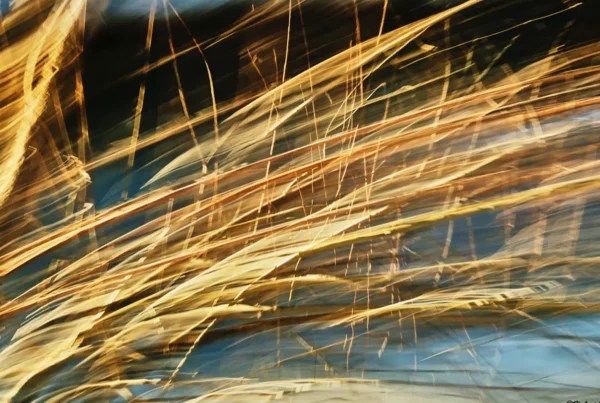
Because she resists rigid definitions, Sakurai’s style is better understood through tendencies than labels. She is drawn to what calls her attention naturally, whether ordinary scenes or ideas shaped more consciously in advance. This balance allows spontaneity and intention to coexist. Her images can arise from chance encounters, changing weather, emotional afterthoughts, or a theme she wishes to pursue. Recently, she has become especially interested in color, selecting photographs under that theme even though they were made across a wide span of years from 2000 to 2025. This detail is telling because it shows continuity within change. A recent fascination can illuminate work made decades earlier, revealing connections that only become visible later. Her archive is therefore not static storage but an evolving field of meaning. By revisiting images through new concerns, she demonstrates how artists continue interpreting their own histories. Style, in this sense, is not fixed appearance but an ongoing relationship between past seeing and present understanding.

Encounters, Emotion, and the Quiet Force of Experience
When asked about influences, Sakurai points less to famous artists and more to lived experience. This distinction helps clarify the emotional architecture of her photography. Encounters with people, places she moves through, and states of feeling remain with her physically, later resurfacing in her work in altered form. She describes these impressions as staying in her body, which suggests memory operating beyond language. Many creative practices begin with references to other makers, but Sakurai’s source material is more immediate and intimate. Human presence, passing landscapes, tenderness, overwhelm, and subtle shifts of mood all become part of her internal archive. Such influences cannot be neatly cataloged, yet they often generate the most resonant art because they are deeply absorbed before they are expressed. Her photographs may therefore contain traces of experiences viewers cannot name directly, but can still sense. This gives the work emotional depth without relying on overt explanation or narrative instruction.
The places she has inhabited likely intensify this process. Japan, New York, Kauai, and now time spent in Spain through residency work each carry distinct tempos, colors, social energies, and relationships to space. For a photographer attentive to atmosphere, such changes matter profoundly. New York may sharpen awareness through density and speed, while Kauai offers another kind of concentration shaped by land, sea, and weather. Residencies add temporary displacement, where unfamiliar routines can awaken perception. Sakurai appears to use these shifts not as branding points, but as catalysts for sensitivity. Rather than photographing locations as trophies, she absorbs their emotional climate. This approach can transform even ordinary scenes into records of relation. A street, room, or horizon becomes meaningful because of how it was inhabited in a particular moment. Through this method, travel is less about collecting views and more about entering temporary conversations with place. The resulting images can feel both specific and open, grounded yet contemplative.
Her attention to gentle and overwhelming emotional states also reveals a broad understanding of human experience. She does not separate softness from intensity, nor calm from disruption. Both kinds of feeling can later appear in the work, translated into visual terms. This might occur through color, framing, emptiness, texture, or the charged stillness of a scene. Such translation is one reason photography remains powerful. It can suggest emotion without declaring it. Sakurai’s sensitivity to subtle presence means she often works in that suggestive register, where viewers participate by sensing rather than being told. The result can be quietly moving because it respects complexity. A photograph may hold serenity and unease at once, just as real life often does. By allowing varied emotional experiences to shape her practice, she avoids sentimentality and avoids cold distance as well. Her images can become spaces where contradictory feelings coexist, reflecting the layered truth of memory and perception.

Kazumi Sakurai: The Camera, New Directions, and the Book Yet to Come
When asked to name a meaningful piece, Sakurai chose not a single photograph but the camera itself. The object is a Nikon FM, bought by her father when she was born. This response is striking because it places value on the instrument that has accompanied her life rather than on one celebrated image. The camera links beginnings, family affection, artistic growth, and the passage of time. She still uses it occasionally, preserving an active relationship with an object that has witnessed decades of change. In an era that often prizes constant upgrades, this loyalty carries symbolic force. The Nikon FM represents continuity, memory, and trust. It also shows that tools can gather emotional significance through repeated use and inherited meaning. For Sakurai, the camera is not nostalgic decoration. It remains part of practice while reminding her where everything started. Few statements reveal an artist’s values more clearly than choosing a companion object over a masterpiece.
Her current professional moment is marked by transition. She recently decided to step away from portrait photography as a primary focus in order to devote more energy to her own artistic practice. At the same time, she remains interested in changing the direction of her portrait work rather than abandoning it entirely. This nuance is important. It suggests a rebalancing of priorities and a desire for deeper alignment. Many artists reach periods when commercial or service-oriented work no longer satisfies the need for personal exploration. Sakurai appears to be entering such a stage with clarity. By creating room for her own projects, she is making space for risk, concentration, and renewed authorship. Yet her continued interest in portraiture indicates that she still values collaboration and human presence. The next phase of her career may therefore unite independent artistic inquiry with transformed approaches to photographing others. Such shifts often lead to the most compelling chapters in a creative life.
From spring through early summer, she has been participating in several artist residencies and is currently at Joya in Spain. She views this period as an opportunity to develop and clarify direction, a statement that captures the purpose of residencies at their best. Removed from routine demands, artists can test ideas, revise habits, and listen more carefully to intuition. Sakurai is also working on multiple projects simultaneously, with one major goal standing out: publishing a photobook. That ambition suits her practice. A photobook allows sequencing, rhythm, and relationships between images that walls or screens often cannot fully provide. It can hold years of photographs in meaningful conversation, especially for an artist reflecting on color across images made between 2000 and 2025. Such a publication could gather movement, memory, and changing vision into one coherent form. Given her history of seeing across places and decades, the photobook feels less like a future product and more like the natural next vessel for her evolving body of work.