“My photographs are intentionally more suggestion than description.”
The Hidden Architecture of Seeing
Gregor Radonjic has built a long and sustained photographic career through an uncommon blend of persistence, curiosity, and reflective inquiry. Based in Maribor, Slovenia, he has been creating and presenting photographs since the early 1990s, shaping a body of work that reaches far beyond simple scenic representation. His record includes dozens of solo exhibitions, many group shows in Slovenia and abroad, published photobooks, and multimedia collaborations with other artists. Yet the most striking quality of his practice is not the number of achievements, but the continuity of his search. Across decades of changing technology and shifting visual trends, he has remained committed to asking what a landscape truly contains. For him, terrain is never only terrain, and a riverbank is never merely a place. Every surface may conceal systems, memory, tension, and unseen relationships. This perspective gives his photographs a rare depth, inviting viewers to reconsider environments they might otherwise pass without notice. Rather than offering immediate answers, his images create space for contemplation and patient looking.
His route into photography began in the analogue period, when technical skill required time, discipline, and practical knowledge of process. Radonjic learned numerous darkroom methods and experimented with colour slide film, using chemistry and craft as tools for discovery. That background was strengthened by his education in chemical engineering, which gave him a practical understanding of materials and reactions that proved valuable in pre-digital photographic work. Instead of treating technique as separate from imagination, he used technical knowledge to support artistic exploration. Even then, he was motivated by the feeling that reality contains dimensions not instantly visible. Photography became a means of approaching what cannot be fully grasped, a medium capable of suggesting presences that remain just beyond direct capture. This early commitment to experimentation continues to define his outlook. He has never limited himself to one formula or one accepted style, preferring to test how visual language can approach mystery, complexity, and subtle perception through evolving methods.
When digital tools matured, Radonjic adopted them not from convenience alone, but because they expanded what he could express. Working outdoors in remote areas and low light conditions often demands technical capacities that analogue systems could not easily provide. Digital photography allowed him to pursue distant locations and atmospheric scenes with greater flexibility while preserving the precision his ideas required. Even so, he has not abandoned the physical importance of the photographic print. He works closely with a highly regarded printer in his region so that his strongest images appear on papers worthy of their tonal richness and texture. This balance between innovation and material care mirrors his larger artistic identity. He welcomes new tools while preserving respect for craftsmanship. In doing so, he demonstrates that contemporary photography need not choose between technology and substance. It can still be tactile, thoughtful, and rooted in the discipline of making while opening fresh paths toward imagination.

Gregor Radonjic: Landscapes Beyond Description
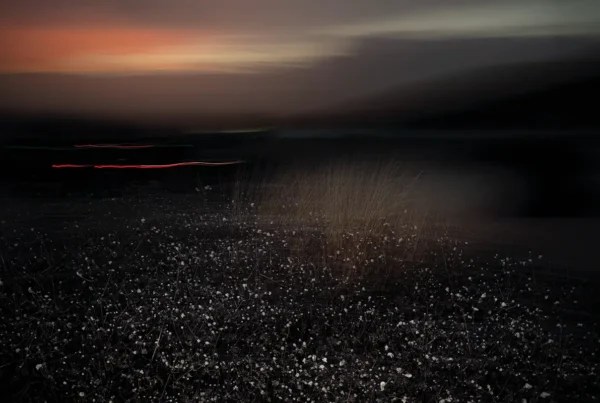
For Radonjic, landscape photography is not the recording of scenery but an encounter with forces that shape both outer and inner life. He often speaks of entering a world beyond ordinary appearance when photographing nature. In this view, hills, coastlines, forests, and watercourses are not passive objects waiting to be documented. They become carriers of emotion, subconscious associations, and psychological energy. His images therefore resist the straightforward language of travel imagery or naturalist cataloguing. They are intentionally suggestive rather than descriptive, positioned somewhere between observation, abstraction, and metaphor. Viewers are invited to sense rather than simply identify. A shoreline may feel like a threshold, a forest edge like an encrypted message, and darkness on water like an opening into another state of awareness. This orientation gives his work a contemplative charge. It also explains why his photographs often linger in memory, because they function less as records of places and more as catalysts for thought.
One of his key series, Metascapes-Interfaces, expresses this philosophy with particular clarity. In that project, Radonjic proposes that landscape exists not only outside us but also within us. Human beings carry remembered spaces long after leaving them, and those experiences continue to influence mood, imagination, and perception. He uses the term “metascape” to describe this transformed internal territory shaped by visual memory and psychological response. The series focuses especially on sites where three states of matter meet, where solids, liquids, and atmospheric conditions interact in unstable harmony. Such transitional zones fascinate him because they suggest beginnings, change, and the origins of life moving onto land. In these photographs, shorelines, mist, stone, water, and shifting light become collaborators in visual alchemy. The result is neither strict realism nor fantasy. Instead, the images occupy a charged middle ground where environment and consciousness appear to merge.
This approach also reveals why Radonjic seeks locations that are often absent from tourist itineraries. He is less interested in celebrated viewpoints than in places where character emerges through subtle tensions. Remote coasts, austere terrain, weathered margins, and overlooked spaces can offer richer psychological resonance than famous landmarks. By stepping away from conventional destinations, he frees himself from inherited expectations about what a landscape should look like. That independence allows him to pursue atmosphere, ambiguity, and emotional truth. His photographs ask viewers to meet place with sensitivity rather than checklist recognition. In a culture flooded with instant images of iconic scenery, this is a significant stance. It restores slowness to seeing and treats environment as something to experience deeply instead of consume quickly. Through that method, Radonjic expands the meaning of landscape photography and shows how terrain can become a mirror for states of mind.

Networks Under Soil, Currents Under Skin
Another major series, Nexus, turns attention toward ecological interdependence and the hidden systems that sustain life. Radonjic uses the word “nexus” to describe elements within ecosystems that are inseparably linked, where changes in one area inevitably affect another. This concept moves beyond symbolism into a practical recognition of how nature functions. Trees, water flows, roots, soil, and atmosphere do not exist as isolated subjects. They are participants in a vast exchange of nourishment, communication, pressure, and adaptation. By focusing on these relationships, Radonjic shifts environmental photography away from spectacle and toward structure. Rather than showing only grand forests or dramatic disasters, he asks viewers to consider the delicate networks that often escape attention. Such an approach carries ethical weight. If people learn to perceive connection, they may become more alert to what damage in one zone can mean elsewhere. His photographs therefore operate both aesthetically and intellectually, encouraging a more relational way of seeing the natural world.
The most distinctive feature of Nexus is his use of diptychs that pair photographs of roots with images of water. Roots usually remain hidden below ground, visible only in fragments near exposed soil or riverbanks. Because they do not conventionally attract the gaze, they are rarely treated as central artistic subjects. Radonjic reverses that neglect. He presents roots as intricate structures full of tension, rhythm, and implied intelligence. Scientific observations about tree communication through underground networks and airborne signals reinforce his fascination with these unseen systems. By placing roots beside water, he emphasizes the dependency between nourishment below ground and movement above it. The diptych form allows each image to transform the meaning of the other. Water appears less decorative and more vital; roots appear less static and more dynamic. Together they suggest circulation, exchange, and life sustained through constant interaction.
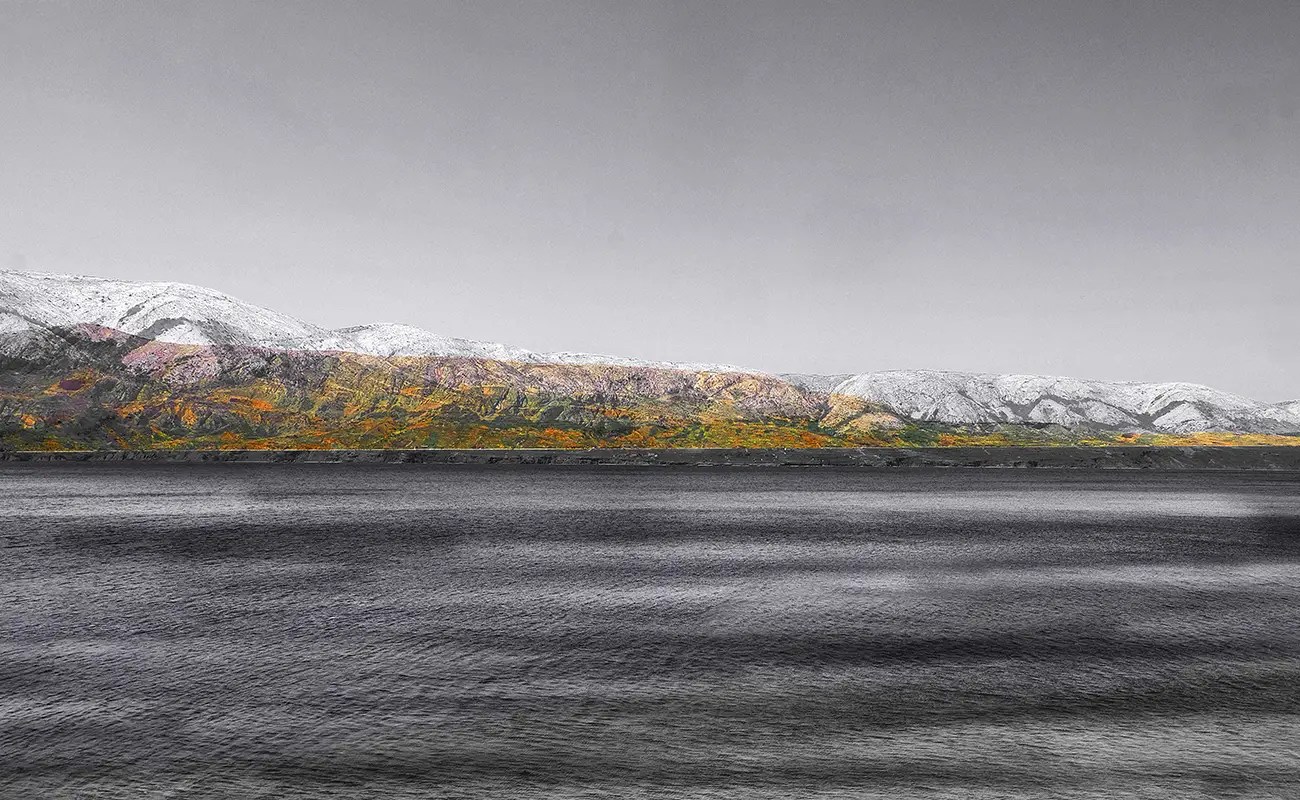
One meaningful image from the series emerged during a cloudy day on the deck of a ship. Radonjic observed the water turning dark grey, nearly black, and recognized an unexpected visual kinship with the subterranean world of roots. That moment became important because it united two environments usually separated by perception: the visible surface of water and the concealed darkness beneath soil. By pairing such an image with root structures, he created a meditation on continuity between what is seen and what is concealed. The work matters because it transforms a simple observation of weather and colour into a statement about environmental awareness. Instead of warning through scenes of pollution or catastrophe alone, it invites intimacy with natural processes and respect for what remains vulnerable. Through this contemplative strategy, Radonjic suggests that protection begins not only with alarm, but with renewed attention.

Gregor Radonjic: Art, Influence, and the Next Horizon
Radonjic’s influences are broad, and that breadth helps explain the layered quality of his photographs. He does not trace his direction to a single master or a narrow lineage of image-makers. Music, painting, cinema, and books have all informed his sensibility. One early formative experience came from jazz album covers released by the German ECM label. The photographs used on those records struck him as radically different from anything he had seen before. Their atmosphere, restraint, and emotional openness likely resonated with his own instinct toward suggestion over literal explanation. Today he remains an active collector of photobooks and regularly studies how other landscape photographers approach their subject. Yet admiration has never led him toward imitation. He has consistently used exposure to others’ work as a stimulus for independence rather than replication. That balance between awareness and autonomy is central to his development.
Beyond artistic sources, Radonjic is strongly motivated by scientific and spiritual inquiry. He is drawn to the invisible complexity of nature, the mysteries of the mind, and the layered operations of subconscious experience. These interests do not appear in his photographs as illustrations of theory. Instead, they shape the questions he brings to each place and each frame. He is equally attracted to contemplative dimensions of art, believing that modern technological intensity has increased rather than reduced the human need for reflection. In that sense, his work offers a counterpoint to speed and distraction. Viewers are not pushed toward immediate consumption of meaning. They are encouraged to remain with ambiguity, texture, silence, and gradual recognition. Such an ethos benefits both artist and audience. It restores attention as an active practice and positions photography as a site where inner stillness can coexist with visual complexity.
His current working life reflects the same dedication that has sustained him for decades. He spends as much time outdoors as possible, travelling to regions that are often overlooked and searching for places with distinctive character. After fieldwork comes careful post-production in his digital darkroom, where image decisions continue with precision and restraint. At present, he is preparing a new solo exhibition scheduled to open in early June, while also continuing work on a forthcoming photobook that will appear as a self-published limited edition, following the model of his previous publication. These parallel efforts reveal an artist who values both public presentation and intimate book form. Exhibitions allow images to command space; books allow them to be revisited privately and slowly. Through both formats, Gregor Radonjic continues to extend a photographic language grounded in wonder, discipline, and the search for realities that lie just beyond immediate sight.