Shadows Beneath the Surface
Allen Williams has spent decades constructing visual worlds that exist somewhere between waking memory and dream logic. His imagery, often populated by spectral figures, hybrid anatomies, and psychologically charged environments, has become instantly recognizable within contemporary fantasy and imaginative realism. Working across illustration, fine art, publishing, and cinematic design, Williams has cultivated a career grounded in both technical discipline and instinctive invention. The result is a body of work that resists easy categorization while maintaining an unmistakable emotional intensity. Whether producing graphite studies filled with fragile textures or elaborate paintings layered with symbolic detail, he continuously returns to questions surrounding transformation, perception, and the uncertain boundaries of reality itself. His compositions rarely offer direct narrative resolution, instead inviting viewers into spaces shaped by intuition, memory, and unease. That atmosphere has become central to his influence across multiple creative industries.
Drawing first emerged as a private refuge during childhood. A pencil and paper became tools through which Williams could reinterpret the world around him, establishing a deeply personal connection to image making long before professional recognition arrived. Over time, that private practice evolved into a lifelong discipline. Since working full time as an artist beginning in 1988, he has developed an approach rooted equally in obsessive practice and careful observation. Parenthood further intensified his focus, reshaping his understanding of time and creative commitment after the births of his son and daughter. That sharpened concentration helped propel his artistic output into new territory while reinforcing the importance of consistency and growth. Throughout interviews and conversations, Williams repeatedly emphasizes the value of studying stronger artists, examining not only their strengths but also their imperfections in order to better understand visual language and personal direction.
His influences reveal the breadth of his artistic curiosity. Classical painters such as John William Waterhouse, Frederic Leighton, Jean Leon Gerome, and Bouguereau informed his appreciation for structure, atmosphere, and figurative elegance, while the intricate darkness of Jheronimus Bosch introduced another dimension entirely. Williams also absorbed inspiration from fantasy illustrators and surrealist figures including Frank Frazetta, H.R. Giger, Zdzislaw Beksinski, and Hans Bellmer. The influence of sculptors further shaped his understanding of anatomy and dimensionality, giving his creatures a tactile and physically convincing presence. Rather than imitating these predecessors directly, Williams studied how each artist approached gesture, color, symbolism, and emotional impact. This ongoing dialogue with both historical and contemporary creators helped him develop a visual language capable of merging refined draftsmanship with unsettling imaginative distortion.
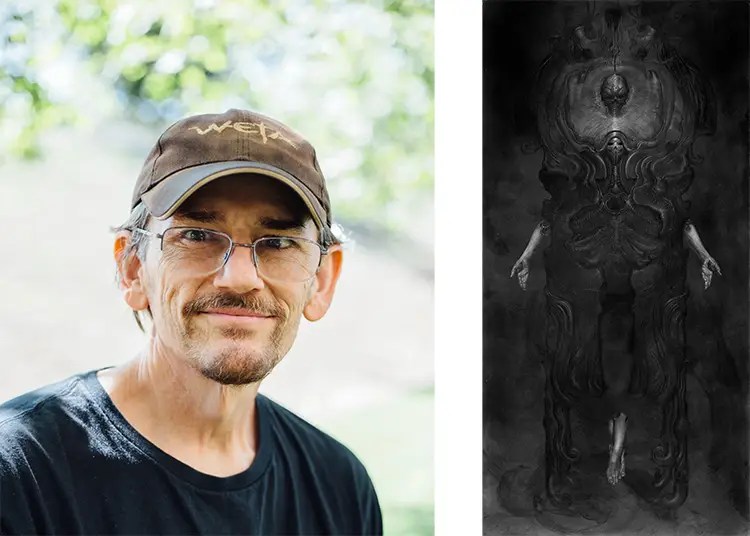
Allen Williams: Drawing the Unfamiliar Into Existence
Williams became widely recognized through his extensive contributions to fantasy illustration and speculative fiction publishing. His work for Magic: The Gathering established him as a defining visual voice within gaming culture, where his cards introduced audiences to beings that appeared ancient, haunting, and psychologically layered. At the same time, his illustrations for White Wolf properties including Vampire: The Masquerade, Mage: The Ascension, and Werewolf: The Apocalypse deepened his reputation for atmospheric storytelling. Rather than approaching fantasy imagery as simple spectacle, Williams infused these projects with emotional ambiguity and symbolic complexity. Characters often appear caught between states of becoming, while environments suggest histories that remain partially concealed. This ability to balance narrative clarity with emotional uncertainty distinguished his work from more conventional fantasy illustration and expanded the possibilities of genre imagery itself.
His transition into film and television concept design felt like a natural progression. Williams contributed creature and conceptual development to productions including Pacific Rim, Noah, Hellboy, Star Trek Beyond, Carnival Row, Monster Trucks, and Space Jam 2. Across these projects, his designs introduced beings that felt biologically plausible while retaining an otherworldly strangeness. His sculptural understanding of anatomy allowed him to create creatures that possessed both physical weight and expressive personality. Rather than relying solely on surface detail, Williams constructs forms through intuitive visual associations, often transforming ordinary references into unsettling hybrid structures. This method gives his designs an uncanny familiarity, allowing audiences to emotionally connect with even the most fantastical entities. Within large scale productions, his artwork helped shape worlds that feel immersive, tactile, and psychologically coherent.
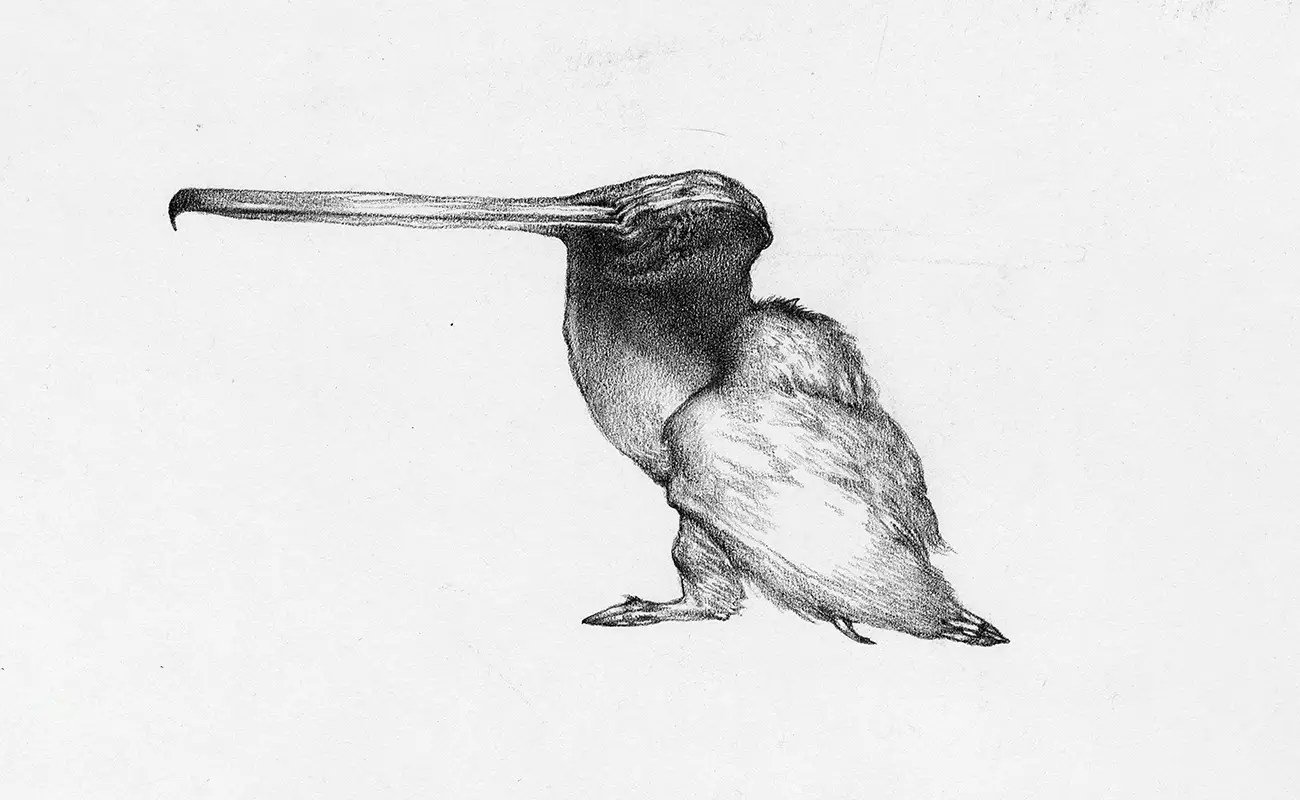
Despite his success in entertainment industries, Williams has continued to maintain a deeply committed fine art practice. His exhibitions, including Covenant, Gods of the Wyld, and The Hidden Light, expanded his reputation beyond commercial illustration and into contemporary gallery spaces focused on imaginative realism and dark art. These exhibitions revealed a more personal dimension of his visual thinking, where mythological symbolism and subconscious imagery take center stage without the constraints of existing narratives. Figures emerge from darkness with ambiguous intent, while compositions often suggest cycles of metamorphosis and emotional fracture. Graphite remains especially important within this practice. Williams frequently works with Tombow Mono100 6B and Mitsubishi Hi Uni pencils alongside graphite powder, kneaded erasers, and carefully selected papers including Stillman and Birn Zeta Series and Fabriano Hot Press watercolor paper. His technical precision never overwhelms emotional atmosphere, allowing texture and gesture to remain active participants within the work.

Materials, Discipline, and the Language of Transformation
The physical process behind Williams’ artwork reflects his commitment to both craftsmanship and experimentation. His studio contains a wide range of pencils, sharpeners, papers, paints, and mediums, each selected according to the demands of a particular piece. Graphite drawings may require anywhere from several days to several weeks, depending on complexity and scale, while paintings involve more layered procedures that can extend over a month. Williams often seals completed graphite works with fixative sprays and occasionally transparent matte acrylic coatings, preserving the delicate tonal structures developed through extensive labor. His paintings move fluidly between acrylic gouache and oil techniques, with oils frequently applied in thin washes before building texture where necessary. This willingness to adapt materials according to emotional and visual needs demonstrates a practical flexibility beneath the dreamlike quality of his imagery.
At the center of his creative philosophy is the belief that artistic growth depends upon relentless practice. Williams frequently compares artistic development to the training of a pianist, emphasizing repetition, discipline, and observation as essential foundations. He encourages artists to study creators whose work surpasses their own abilities, not to imitate them blindly but to understand differences in gesture, color, composition, and emotional communication. Equally important is learning to recognize limitations within admired influences, allowing for deeper understanding rather than passive admiration. This perspective reflects Williams’ own career trajectory, which has been shaped by decades of sustained study and experimentation across disciplines. His ability to navigate illustration, publishing, cinema, and gallery work without losing a coherent artistic identity stems directly from this rigorous approach to continuous learning.
Publishing has provided another avenue through which Williams expands his imaginative universe. His authored and illustrated book The Witches’ Kitchen revealed his ability to construct complete narrative environments where text and image reinforce one another through atmosphere and symbolism. Later, his collaboration with Guillermo del Toro and Cornelia Funke on Pan’s Labyrinth: The Labyrinth of the Faun aligned perfectly with his fascination for folklore, transformation, and psychological darkness. The partnership placed Williams within a creative lineage deeply invested in mythic storytelling and emotional complexity. Across every medium he touches, whether graphite studies, cinematic creatures, gallery paintings, or illustrated books, Williams remains committed to exploring the unstable threshold between beauty and unease. His art does not simply depict fantasy. It investigates how imagination shapes emotional experience, memory, fear, and wonder within the human mind.

Allen Williams: The Persistence of Imagination
One of the defining qualities of Williams’ work is its resistance to rigid interpretation. His images rarely function as straightforward illustrations of a single narrative event. Instead, they operate through emotional resonance, visual suggestion, and symbolic ambiguity. A creature may appear simultaneously vulnerable and threatening, while a landscape can feel ancient yet impossible to locate within ordinary geography. This ambiguity allows viewers to project their own associations and anxieties into the work, creating intensely personal experiences. Williams often begins with fragments drawn from everyday observation before transforming them through distortion and subconscious association. Familiar forms become unstable, producing compositions that feel suspended between memory and hallucination. That tension between recognition and uncertainty has become one of the most compelling aspects of his artistic language.
His long career also reflects an unusual ability to move between industries without sacrificing artistic integrity. Commercial assignments, cinematic productions, collectible card games, publishing projects, and gallery exhibitions all carry traces of the same visual sensibility. Rather than compartmentalizing these disciplines, Williams approaches each as an opportunity to expand his exploration of mythology, psychology, and transformation. Even within highly collaborative productions, his contributions remain identifiable through their atmospheric complexity and tactile realism. The emotional coherence across such varied formats demonstrates a disciplined commitment to personal vision. Audiences encounter not isolated commissions but interconnected fragments of a much larger imaginative universe shaped over decades of focused creative practice.
Living on the Gulf Coast with his wife, children, and dogs, Williams continues to produce work that bridges fine art and speculative storytelling with rare consistency. His influence stretches across generations of artists, gamers, readers, and filmmakers who have encountered his imagery in books, galleries, films, and fantasy worlds. Awards and industry recognition have acknowledged his contributions, including numerous Chesley Award nominations, yet the enduring impact of his career lies elsewhere. Williams has shown that fantasy imagery can carry emotional depth, psychological complexity, and philosophical uncertainty without abandoning technical excellence or narrative accessibility. His art persists because it speaks to something instinctive and difficult to define, drawing viewers toward spaces where beauty, fear, memory, and imagination remain permanently intertwined.