“Art saved me.”
The Power of Looking Closely
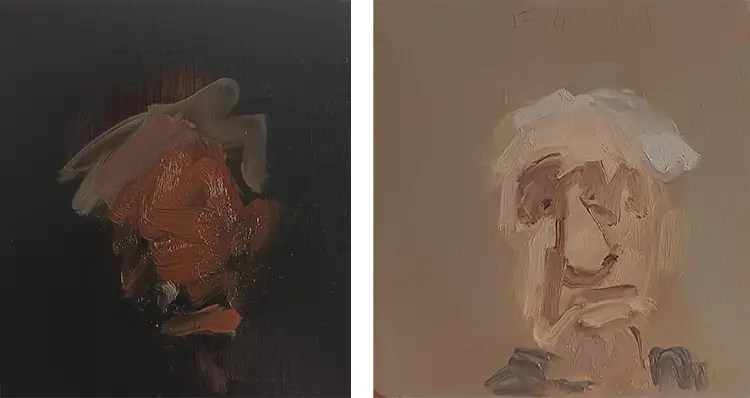
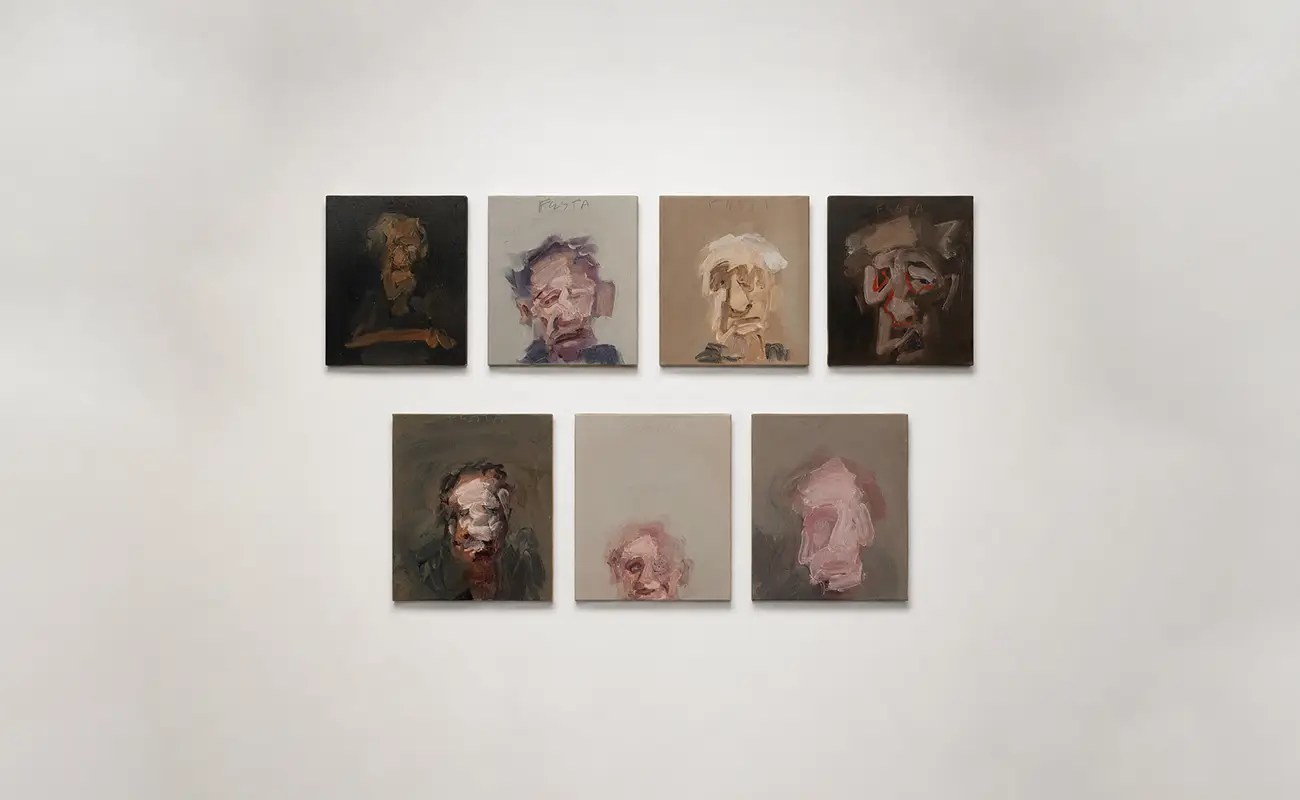
Donna Festa creates paintings that ask viewers to come nearer, not because they are quiet, but because their force lives in compression. Based in Bangor, Maine, the American painter has built a practice around small oil works that hold intense psychological charge within modest dimensions. Many of her paintings measure about six inches square, a scale that resists spectacle and demands intimacy. Rather than compete with the speed and noise of contemporary visual culture, Festa slows the act of seeing. Her work turns the face into a site of memory, tension, endurance, and emotional truth, making portraiture feel urgent without becoming theatrical.
Her commitment to smallness is deeply connected to lived experience. Festa has described art as a place of survival, a protected space where she could have a voice after a difficult upbringing. The feeling of having to make herself small, to avoid attention and remain safe, became part of the physical language of her paintings. When someone suggested she work larger, she answered that larger paintings would no longer feel like hers. This scale is not a limitation. It is a form of authorship, a way of transforming vulnerability into structure, presence, and visual authority.
Faces have occupied Festa since childhood, when reading expression was tied to safety. That early sensitivity became an artistic instrument, sharpening her ability to notice subtle shifts of mood, distance, fear, fatigue, and tenderness. Her portraits are not simply studies of appearance. They carry the emotional residue of watching, waiting, and understanding what a face might reveal before words arrive. Through oil paint on prepared wood, Festa turns observation into an act of emotional precision, allowing each subject to become both individual and deeply connected to her own inner life.

Donna Festa: Where Smallness Becomes Strength
Festa’s path as a painter was shaped by rigorous training and meaningful mentorship. As a teenager, she apprenticed with Patricia Vanaman Witt, sweeping studio floors and helping wherever needed in exchange for art lessons. That early exchange gave her more than technical instruction. It offered access, discipline, and a sense that painting could become a serious life. Witt helped prepare her for the Pennsylvania Academy of the Fine Arts in Philadelphia, where Festa continued her development in a demanding environment rooted in the traditions of drawing, painting, and close study.
At the Academy, she studied with Seymour Remenick, whom she remembers as both an extraordinary painter and a remarkable human being. His influence joined a wider constellation of artists who helped shape her vision, including Goya, Hiroshige, Rembrandt, Soutine, Vuillard, and German Expressionism. These references suggest a painter drawn to psychological intensity, atmosphere, distortion, and the expressive weight of the human figure. Yet Festa does not imitate these influences. She absorbs their seriousness and transforms it through her own scale, pace, and emotional vocabulary.
Her education later continued with a BFA in painting with teacher certification from the University of the Arts in Philadelphia and an MFA in painting from the University of Hartford in Connecticut. This foundation supports a practice that values both craft and immediacy. Festa prepares wood panels until their surfaces are smooth as glass, allowing the brush to move freely and quickly. She often starts and finishes a painting in one sitting, preserving the rawness of the encounter. The result is work that feels spontaneous yet grounded, fragile yet resolved, intimate yet unmistakably forceful.

A Face Like a Raw Nerve
One work that holds special significance for Festa is “Yellow Hair,” a tiny four by four inch oil painting of a woman who appears, in her words, like a raw nerve. The description reveals much about the emotional current running through her practice. Her figures often seem exposed, inward, or suspended in private feeling. They do not perform for the viewer. Instead, they appear to carry sensation just beneath the surface, allowing color, gesture, and expression to suggest anxiety, sadness, alertness, or endurance without reducing the subject to a single explanation.
Festa has said that no matter who appears in the painting, every work is also herself. This does not mean her portraits are literal self-portraits. Rather, they absorb the emotional state she brings to the studio on that particular day. Her nerves, sadness, anxiety, and sensitivity enter the paint, giving each face a charged atmosphere. The sitter may be known or unknown, older or younger, observed or remembered, but the painting becomes a meeting point between subject and artist. Through this process, portraiture becomes less about likeness alone and more about emotional transfer.
The material language of oil paint is central to this effect. Festa values its fluidity, depth, and ability to carry subtle changes in light and texture. On wood, the paint can glide, catch, blur, and thicken, allowing a face to emerge quickly while retaining psychological density. Her paintings often feel like glimpses caught before they disappear, but their small size intensifies their presence. Viewers must step closer, and in doing so, enter the painting’s emotional range. What first appears modest becomes deeply confrontational in its honesty.

Donna Festa: The Studio as Shelter and Witness
For Festa, the studio is more than a workplace. It is the place where she feels she belongs. The smell of paint and chemicals draws her back whenever life allows, and music fills the room while she works through feeling, memory, and pressure. This atmosphere of solitude and concentration supports a practice built on speed, instinct, and trust. The presence of a dog or two only makes the space feel more complete, grounding the intensity of painting in companionship and everyday warmth.
Her broader practice includes painting, drawing, and three-dimensional experimentation, though oil painting remains central. She has explored figures, dolls, auto graveyards, birds, mice, black paintings, and small clay works inspired by ancient clay heads. In her terracotta pieces, she uses her fingers to echo the movement of brushstrokes, later painting the fired clay with oil. These works extend her interest in touch, surface, expression, and human presence into sculptural form, while staying connected to the sensitivity that defines her painted portraits.
Festa has exhibited in New York, San Francisco, Chicago, Philadelphia, Miami, and the United Kingdom, with work held in public and private collections. The State Museum of Pennsylvania includes her painting “Conversation” in its permanent collection, and her work has appeared in publications such as Cleaver Magazine, Fresh Paint Magazine, INPA, and New American Paintings. Across these achievements, the heart of her practice remains unchanged. Donna Festa paints what it means to look closely, to survive through seeing, and to turn small surfaces into vessels of profound human intensity.