“I dreamed it was forbidden to dream, but I dreamed anyway.”
Shadows That Refuse to Disappear
Photography becomes something far more unstable in the work of Conrado Krainer. His images resist the certainty often associated with the medium, choosing instead to exist in a suspended condition between documentation, dream, and erosion. Working across analog photography, digital processes, mixed media interventions, and AI reconstruction, Krainer constructs visual experiences rooted in memory and emotional residue rather than direct representation. Flowers, fragmented portraits, landscapes, and distressed surfaces appear repeatedly throughout his practice, not as decorative subjects but as symbolic carriers of fragility, transformation, and temporal collapse. Every photograph feels touched by disappearance. Light isolates details with extraordinary precision while scratches, overlays, grain, and ruptured textures interrupt the image before it can settle into clarity. Through this tension between visibility and absence, Krainer creates works that feel simultaneously intimate and distant, as though recovered from an uncertain archive shaped by time itself.
His artistic trajectory developed through an early fascination with art as a way of understanding perception and emotional experience. Photography first emerged as a method for capturing atmospheres that language could not fully contain. Over time, the camera ceased to function as a documentary device and instead became part of a poetic and philosophical investigation into memory, silence, and instability. Krainer became increasingly interested in how photographs operate not only as records of events but as mutable spaces shaped by emotion, deterioration, and interpretation. This perspective transformed his approach to image making. Rather than pursuing technical perfection or fixed narratives, he embraced accidents, imperfections, and process-based experimentation as essential components of the work itself. Distortion and incompleteness became meaningful visual strategies capable of expressing the instability of lived experience more honestly than polished representation ever could.
Education and academic research also shaped Krainer’s approach in significant ways. His investigations into art, time, and human experience encouraged slower forms of observation and image construction, deepening his sensitivity toward process and contemplation. Experience within early childhood education and collective creative environments further expanded this outlook. Watching children interact intuitively with materials, images, and sensory experiences influenced his own creative methods, encouraging openness, experimentation, and reduced attachment to rigid control. These influences remain visible throughout his practice, particularly in the way images appear to emerge gradually through layering, fragmentation, and transformation. Krainer often works without fully predetermined outcomes, allowing visual associations and emotional resonances to reveal themselves over time. This openness gives his photographs a distinct atmosphere of uncertainty and vulnerability, where meaning remains fluid and continually evolving.

Conrado Krainer: The Fragile Architecture of Images
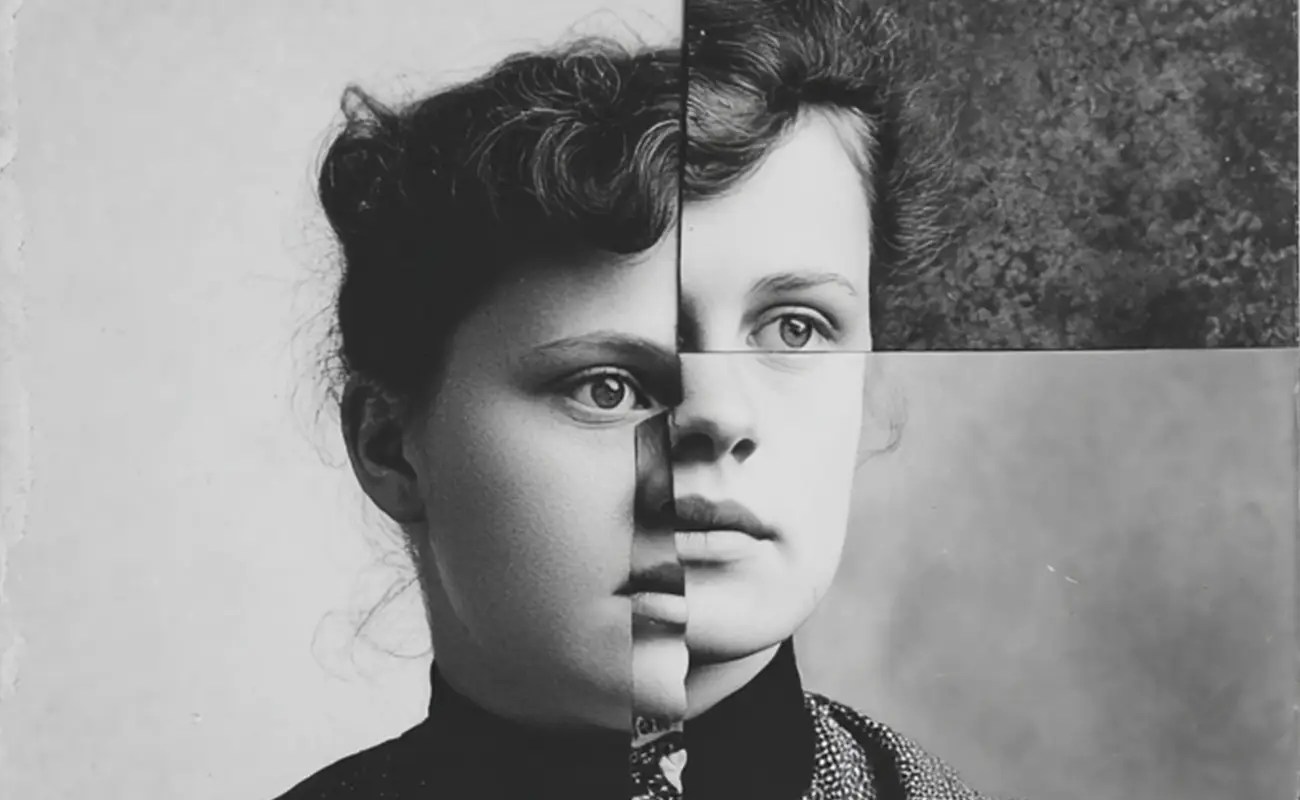
One of the clearest manifestations of Krainer’s artistic concerns appears in his ongoing series To Remember and To Forget. The project investigates the unstable relationship between memory, dreams, historical trauma, and visual reconstruction through an intricate combination of archival photography, physical manipulation, and artificial intelligence. Drawing from photographs originating in the early twentieth century alongside dream accounts written by individuals living under the Nazi regime in Germany, the work transforms historical fragments into emotionally charged visual environments. Rather than reconstructing historical events directly, Krainer focuses on psychological atmospheres shaped by fear, silence, displacement, and uncertainty. The dream narratives become catalysts for transformation, guiding the restructuring of archival imagery into fractured visual spaces that hover between hallucination and document. In this process, photography loses its authority as stable evidence and becomes a living territory where history remains unfinished and continually rewritten.
The physical treatment of the images forms a central component of the series. Krainer cuts, layers, fragments, deteriorates, and reorganizes archival photographs before integrating them into AI systems informed by textual dream descriptions. These interventions create compositions marked by rupture and instability. Faces dissolve into geometric structures, bodies become fragmented mosaics, and landscapes emerge through fractured visual planes that resist coherence. Memory itself becomes visible as something incomplete and discontinuous. Dreams, in Krainer’s interpretation, reveal collective emotional conditions produced by political violence and social collapse, while also resonating with contemporary anxieties surrounding catastrophe, uncertainty, and displacement. Artificial intelligence functions less as a tool of precision than as a mechanism of unstable imagination, generating images that feel simultaneously historical and synthetic. The resulting works occupy an uneasy threshold where technological reconstruction collides with emotional fragmentation.
Several dream statements embedded within the project carry profound emotional weight. One recurring phrase, “I dreamed it was forbidden to dream, but I dreamed anyway,” encapsulates the conceptual force of the series with haunting clarity. Another describes becoming blind and deaf because seeing and hearing were forbidden, while another recounts the inability to speak despite screaming collectively alongside multiple versions of oneself. These accounts transform the work into something deeply psychological and political without relying on explicit representation. Krainer approaches surrealism not as a stylistic exercise but as a strategy for confronting fractured historical realities. Mosaics, interruptions, distressed textures, and layered imagery become visual equivalents for the ruptured nature of remembrance itself. Through these methods, To Remember and To Forget positions photography as an unstable emotional artifact shaped as much by silence and absence as by visibility.

Nature, Silence, and the Emotional Weight of Form
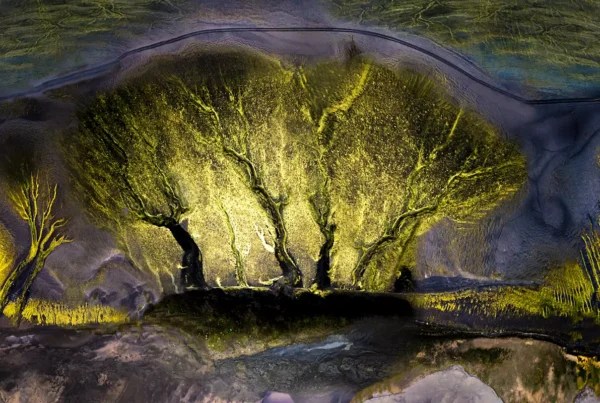
Floral imagery occupies a particularly important position within Krainer’s practice. Flowers appear repeatedly throughout his photographs, yet they are never presented as decorative still life subjects. Instead, botanical forms operate as meditations on temporality, vulnerability, and transformation. Enlarged reproductive structures, bent stems, decaying petals, and isolated organic fragments become symbolic traces of impermanence and physical fragility. High contrast lighting often amplifies minute textures and intricate details, allowing flowers to appear almost sculptural against expansive fields of darkness. These compositions create a meditative silence that draws attention toward material presence while simultaneously suggesting disappearance. The botanical image becomes both intensely physical and strangely ghostlike, suspended between vitality and erosion. Through this approach, nature transforms into a sensory archive where cycles of growth, decay, and memory intersect continuously.
Black and white photography also plays a crucial conceptual role within his visual language. Rather than functioning as nostalgia, monochrome imagery strips away temporal certainty and intensifies the sculptural qualities of light and shadow. Krainer frequently isolates forms against negative space, allowing the photograph to operate through atmosphere and emotional tension rather than narrative explanation. Occasional moments of saturated color interrupt these monochromatic environments with deliberate intensity, creating visual ruptures that destabilize the otherwise suspended emotional atmosphere. The work often evokes the stillness associated with early modernist photography while simultaneously incorporating contemporary digital interference and material decay. This combination of historical reference and technological fragmentation allows the images to exist outside clear chronology. They feel recovered and invented at the same time, existing somewhere between archive, dream, and speculative reconstruction.
Materiality remains equally essential to the emotional impact of the work. Scratched surfaces, distressed textures, grain, and simulated deterioration give many pieces the appearance of damaged artifacts surviving incomplete transmission through time. These interventions suggest erosion, fragility, and survival while reinforcing the idea that memory itself is always unstable. Krainer’s photographs do not attempt to preserve reality intact. Instead, they expose the impossibility of complete preservation. Every image contains interruptions, absences, and unresolved spaces that invite contemplation rather than certainty. This quality aligns his practice with broader contemporary conversations surrounding post-memory, trauma, and the limitations of visual evidence. Yet despite these conceptual foundations, the work never loses its emotional softness. Fragmentation remains psychological rather than purely formal, allowing viewers to encounter the images not only intellectually but viscerally.

Conrado Krainer: Between Observation and Transformation
Krainer’s daily process unfolds through continuous movement between observation, photography, theoretical research, and technical experimentation. He often begins by collecting images intuitively without assigning them immediate narrative purpose. Landscapes, flowers, textures, and fragments accumulate gradually within personal archives before entering slower periods of editing and transformation. This approach allows visual relationships to emerge organically over time rather than through rigid conceptual planning. The process itself becomes central to the work. Accidents, distortions, and unexpected associations are not treated as mistakes but as generative elements capable of opening new directions within the image. Such openness reflects his broader interest in photography as an evolving experience rather than a fixed endpoint. The resulting works maintain a sense of discovery that remains visible even after extensive manipulation and reconstruction.
Series-based working methods further support this exploratory philosophy. Krainer gravitates toward extended investigations that evolve gradually across multiple images rather than isolated singular works. This structure gives him space to revisit recurring concerns surrounding memory, materiality, and emotional perception while allowing individual photographs to communicate collectively. Fragmentation and modularity frequently shape these series visually. Portraits become interrupted by opaque structures, botanical forms are dissected into grids, and landscapes merge with bodily fragments. These compositional strategies recall traditions of collage, conceptual photography, and post-photographic practice while retaining a distinctly emotional atmosphere. Identity within the work appears assembled from remnants and traces rather than fixed wholes, reinforcing the idea that both personal and collective memory are constructed through partial and unstable experiences.
Current investigations point toward increasingly immersive directions. Krainer has expressed interest in expanding the relationship between photography, projection, materiality, and spatial experience, pushing the work beyond the static image into environments shaped by sensory engagement and physical presence. This ambition feels consistent with the broader trajectory of his practice, which continuously seeks to destabilize conventional boundaries surrounding photographic representation. Whether through analog processes, AI reconstruction, physical intervention, or spatial experimentation, his work remains committed to exploring uncertainty as both visual language and philosophical condition. Images within his practice behave less like records of reality and more like emotional residues shaped by silence, transformation, and historical fragmentation. In this suspended space between visibility and disappearance, Conrado Krainer constructs photographs that continue to shift long after they have been seen.