“At a time when we’re losing our voices, I feel a real urgency to depict women as they actually are: strong, intelligent, and multi-dimensional.”
Light, Memory, and the Emotional Weight of Images
Alison Dias approaches photography as a form of emotional architecture, constructing visual environments that carry both intimacy and tension. Born in Hong Kong to an Indian background and now based in Queens, New York, she draws from a life shaped by layered geographies, shifting cultural references, and a constant awareness of identity. Those experiences have become central to her image-making practice, informing photographs that move fluidly between fashion, portraiture, and conceptual storytelling. Her work is rooted in atmosphere, often balancing polished visual sophistication with moments of vulnerability that prevent the images from feeling distant or ornamental. Instead of presenting beauty as a static ideal, Dias frames it as something lived, emotional, and deeply tied to memory.
Creative influence surrounded her from an early age. Family members working across artistic disciplines introduced her to visual thinking long before photography became a profession. Color, texture, and composition became instinctive ways of understanding the world. Cinema also played a defining role in shaping her aesthetic vocabulary, particularly the emotionally saturated films of Wong Kar-wai, where light and mood operate almost like characters themselves. Popular culture, internet imagery, and personal observation further expanded her visual language. These influences encouraged her fascination with the emotional qualities of illumination and color, leading her toward photographs that prioritize feeling as much as form. Even now, her imagery retains that cinematic sensibility, where every shadow, reflection, and gesture contributes to a broader emotional narrative.
Photography initially emerged through everyday acts of observation. Dias began by documenting friends, flowers, parks, and landscapes encountered during travel, treating the camera as a way to preserve fleeting emotional impressions. Over time, that curiosity evolved into a professional path centered on storytelling through visual construction. Her process does not rely on a fixed aesthetic formula. Instead, each project develops according to the subject, environment, and emotional tone she wants to communicate. Styling, lighting, props, and composition become narrative tools rather than decorative additions. This flexible approach allows her work to move across commercial and artistic contexts while maintaining a consistent emotional sincerity that anchors every frame.

Alison Dias: Constructing Intimacy Through Fashion and Portraiture
A defining characteristic of Dias’ photography is her ability to create images that feel both highly controlled and emotionally alive. Her compositions often appear carefully staged, yet subtle imperfections introduce a sense of humanity beneath the visual polish. Hair partially obscures faces, makeup smears slightly across skin, or hands grip objects with visible tension. These details disrupt the sterility often associated with luxury imagery and instead create portraits that feel inhabited by real emotional complexity. Subjects remain active participants within the frame, never reduced to passive symbols of beauty. Through this balance of precision and looseness, Dias creates photographs that maintain visual elegance without sacrificing emotional depth.
Her treatment of skin and adornment reveals another important dimension of her practice. Cosmetics, jewelry, fabric, and objects are not presented merely as fashionable accessories. Dias approaches them as symbols carrying cultural, emotional, and psychological meaning. Makeup becomes sculptural, gold pigments function like visual architecture, and accessories transform into extensions of identity. Skin itself is photographed with remarkable tactility, luminous yet never artificially perfected. This sensitivity reflects her interest in adornment as a language tied to ritual, self-expression, and empowerment. Rather than separating beauty from meaning, she merges them, showing how visual presentation can communicate personal history, resilience, and autonomy.
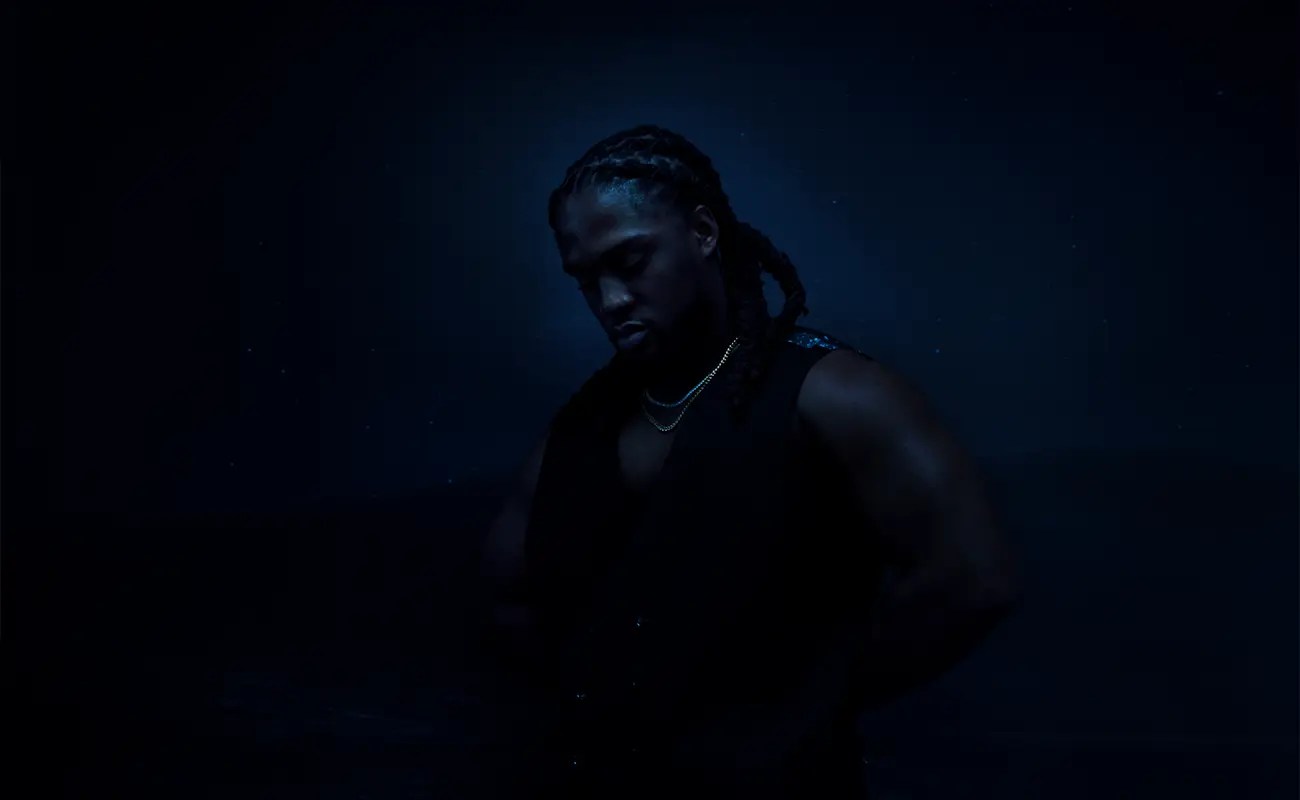
Color and illumination remain central to the emotional atmosphere of her photographs. Dias frequently employs restrained palettes filled with midnight blues, metallic silvers, muted neutrals, and sudden accents of crimson or pearl tones. Lighting carries narrative significance, shaping psychological space rather than simply revealing form. Shadows are allowed to remain dense and textured, creating images that feel suspended between glamour and introspection. Some photographs evoke nocturnal dream states, while others carry the clarity of contemporary beauty campaigns infused with emotional ambiguity. This interplay between darkness and radiance gives her work a cinematic quality where every visual decision contributes to mood, tension, and emotional resonance.

Images of Femininity Beyond Simplified Beauty
Much of Dias’ recent work is shaped by concerns surrounding women’s autonomy and representation. In response to contemporary political and cultural tensions, she feels compelled to create images that portray women as intelligent, powerful, layered individuals rather than decorative subjects. This perspective influences not only who she photographs but also how she frames them. Her subjects often appear confrontational, reflective, sacred, playful, or emotionally guarded all at once. The complexity within these portrayals resists the narrow visual expectations frequently imposed upon women within commercial imagery and broader visual culture.
This commitment to multidimensional representation extends into the symbolic structure of her photographs. Objects frequently carry emotional or conceptual weight, functioning almost like modern talismans. Jewelry, lace, perfume bottles, metallic elements, and crafted props become visual markers of ritual, femininity, and memory. Her still-life instincts reveal the influence of surrealist fashion imagery alongside devotional iconography, transforming familiar objects into emotionally charged symbols. Rather than functioning as commercial embellishments, these materials deepen the psychological atmosphere of the image and contribute to larger themes surrounding identity and transformation.
Dias also demonstrates a sophisticated understanding of world-building within portraiture. Some photographs feel suspended between reality and fiction, occupying spaces that seem neither entirely natural nor fully studio constructed. Blue-lit figures emerging from darkness or carefully staged fashion compositions evoke emotional environments rather than documentary scenes. This cinematic approach allows her to create photographs that operate symbolically while remaining grounded in human emotion. Even in highly stylized works, the emotional presence of the subject remains intact. That balance between conceptual construction and emotional authenticity has become one of the strongest defining characteristics of her visual language.

Alison Dias: Between Commercial Practice and Artistic Integrity
Alongside her conceptual work, Dias continues to expand her commercial photography practice through collaborations with small businesses and creative brands. She approaches these projects with the same emphasis on storytelling and emotional clarity that defines her artistic work. Rather than separating commerce from creativity, she sees visual storytelling as a way to support communities, communicate identity, and build meaningful narratives around people and products. This perspective allows her commercial projects to retain a sense of authorship while remaining accessible and visually compelling. Her ability to navigate both artistic and commercial spaces reflects a broader understanding of photography as both cultural expression and professional craft.
At the same time, maintaining personal creative work remains essential to her practice. Dias continues developing independent projects focused on themes of female empowerment, intimacy, and visual symbolism. Recently, she completed a fashion project that she both produced and photographed herself, describing it as an especially meaningful body of work that reveals a different dimension of her capabilities. These independent projects function as creative anchors, allowing her to experiment freely while staying connected to the motivations that first drew her toward photography. They also provide space for deeper conceptual exploration beyond the expectations of commissioned work.
Although she has frequently been encouraged to narrow her creative focus, Dias resists limiting herself to a single category or aesthetic identity. Her background in fine art continues to shape the way she approaches photography, encouraging experimentation across fashion, portraiture, and conceptual image-making. For her, maintaining artistic flexibility is not a distraction from professional growth but a necessary part of sustaining honesty within the work. That openness allows her photographs to remain emotionally authored rather than driven by trends or formulas. Through cinematic portraiture, symbolic adornment, and psychologically charged visual construction, Alison Dias continues building a body of work that treats beauty not as surface decoration, but as a site of identity, memory, and personal power.