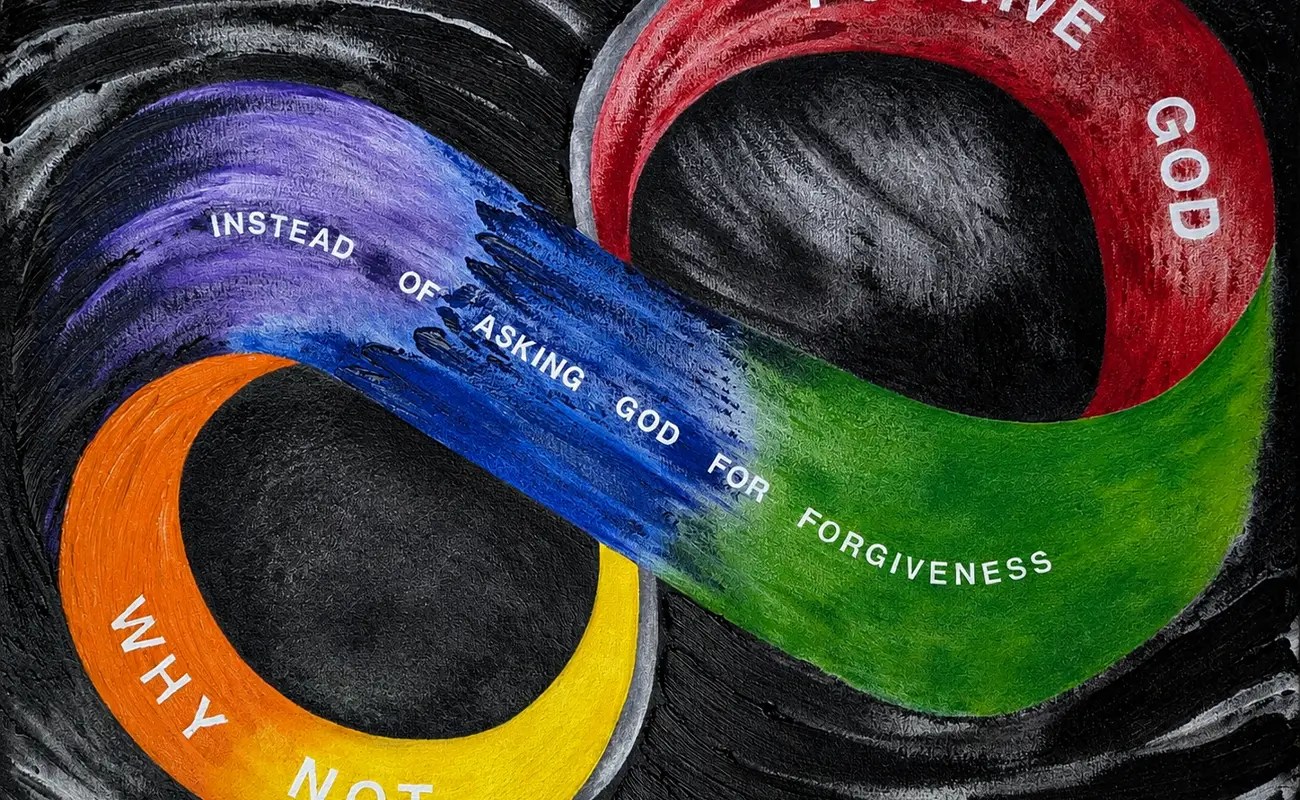
“Instead of asking God for Forgiveness, Why Not Forgive God?”
Where Vulnerability Meets the Weight of Existence
Grace Ann Cummings creates paintings that challenge viewers to confront difficult questions about mortality, responsibility, and the fragile nature of human existence. Rather than offering straightforward answers, she constructs visual experiences that encourage reflection on the tensions between innocence and accountability, connection and separation, certainty and doubt. Her work stems from decades of personal contemplation inspired by an extraordinary experience in 1995, when she encountered the phrase, “God is Forgiven.” Although those words initially seemed impossible to interpret, they gradually became the foundation of a lifelong artistic investigation into trauma, mortality, and the choices that define human life. Her practice is neither an endorsement nor a rejection of religious belief. Instead, it uses spiritual language as a framework for examining universal psychological and existential questions that affect every individual regardless of personal faith.
Central to Cummings’ philosophy is the belief that birth inevitably introduces mortality, placing every person in a relationship with vulnerability that cannot be escaped. She argues that human existence is marked by the unavoidable awareness that life begins without consent while ending with personal annihilation. Rather than assigning blame to external forces, she explores how this awareness grants every individual the power to choose compassion or cruelty in response to life’s uncertainty. This perspective transforms her paintings into spaces where viewers are invited to confront their own assumptions about autonomy, suffering, and responsibility. Each composition functions as a conversation rather than a declaration, encouraging reflection instead of certainty while allowing multiple interpretations to exist simultaneously.
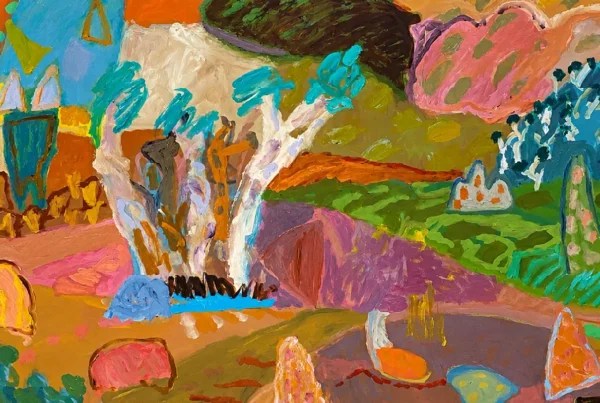
These ideas shape every aspect of her visual language. Cummings combines fractured structures, expressive movement, and vivid color to communicate the instability of lived experience while celebrating the uniqueness of each individual perspective. Her paintings refuse simple narratives, preferring layered symbolism that unfolds through prolonged observation. Conflict, contradiction, and emotional complexity become active visual elements that encourage audiences to reconsider familiar concepts from unexpected angles. Rather than presenting fixed conclusions, she positions every artwork as an invitation to witness the continuing dialogue between certainty and uncertainty that accompanies every human life.

Grace Ann Cummings: Painting Time Through Fracture and Motion
Time occupies a central role within Cummings’ artistic vocabulary. She approaches the traditional two dimensional canvas as a way to visualize time not as a straight progression but as broken motion that nevertheless continues forward. She imagines every painting as possessing both a visible surface and an unseen reverse side, with each existing independently while remaining permanently connected. This relationship echoes the structure of classical music, where individual notes and rhythms emerge, interact, and gradually fade into silence while contributing to a larger composition. Drawing from her professional life as both a concert pianist and music educator, she extends this musical understanding into visual form, suggesting that human lives function like individual frequencies carrying existence onward despite their temporary nature.
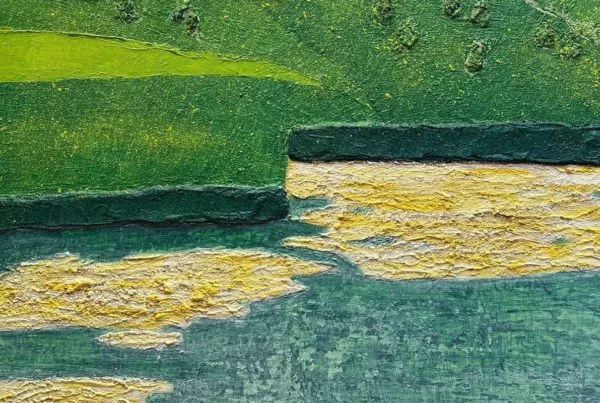
Her distinctive style reinforces these philosophical ideas through energetic brushwork, fractured compositions, and carefully directed movement across each canvas. Vortex formations suggest the inescapable pull of interconnected experience, while narratives of conflict reveal emotional oppositions existing within a single consciousness. Directional brushstrokes symbolize changing movement through time, emphasizing transformation rather than permanence. Vivid colors celebrate individuality even while acknowledging the fragility of existence. Rhetorical wordplay incorporated into her works invites viewers to question their own assumptions, while recurring imagery of weapons symbolizes humanity’s complicated relationship with vulnerability, fear, and personal agency.
Among the most recognizable elements of her practice are the broken mirrors embedded within her paintings. These mirrors serve both symbolic and experiential purposes by incorporating the viewer directly into the artwork. Reflection becomes participation, making every observer an active witness rather than a passive audience member. The fragmented reflections suggest that consciousness itself can experience division without losing continuity. Looking into the work becomes an encounter with personal choice, emphasizing her conviction that every individual possesses the right to recognize life through their own perspective. Through this interaction, the artwork extends beyond its physical surface and becomes a shared space between artist, object, and viewer.

Music, Observation, and the Shared Experience of Consciousness
Cummings identifies two major influences that continually shape her creative practice: the experimental legacy of DADA and the structural language of classical music. DADA’s willingness to challenge convention resonates strongly with her desire to question accepted ideas surrounding identity, belief, and meaning. At the same time, her extensive musical career informs her understanding of harmony existing within apparent conflict. Years of performing and teaching have cultivated an awareness that opposing forces often depend upon one another to create coherence. This understanding becomes a recurring principle throughout her visual practice, where division is never presented as complete separation but instead as an essential component of unity.
Observation also occupies a profound place within her work. She distinguishes between the physical experience of looking and the physical experience of listening, describing each as producing fundamentally different forms of awareness. Looking projects attention outward toward the surrounding world, while listening draws external experience inward into the body. This distinction informs the presence of mirrors throughout her paintings, allowing viewers to simultaneously observe themselves and become absorbed into the visual experience. Reflection therefore becomes both external and internal, reinforcing her broader interest in fractured consciousness and the interconnected nature of perception.
This interaction between visual observation and inward reflection supports her conviction that brokenness does not eliminate connection. Instead, consciousness remains capable of holding contradiction without losing coherence. Her paintings transform this philosophical position into physical experience, encouraging audiences to recognize themselves within fragmented imagery while considering how identity persists through uncertainty. Rather than resolving these tensions, Cummings preserves them, suggesting that human awareness gains richness through the coexistence of opposing experiences. This openness to complexity gives her work an enduring capacity to generate new interpretations with every encounter.

Grace Ann Cummings: Expanding Conversation Beyond the Canvas
One of the most significant works within Cummings’ practice is her large oil painting God’s Identity Crisis, created with oil paint and mixed media paper. The painting explores belief through humor while raising a provocative question: with countless religions throughout the world, which religion would God choose to practice? Rather than criticizing faith, the work examines how identity often distinguishes people from one another while belief itself remains a universal function of consciousness. By including the written phrase questioning divine religious practice, she encourages audiences to consider belief not merely as doctrine but as the fundamental human ability to assign value, make judgments, and construct meaning.
For Cummings, belief extends beyond organized religion into every aspect of conscious experience. Individuals constantly evaluate themselves, others, and the surrounding world according to assumptions shaped by education, innocence, experience, or external validation. This capacity to believe also creates the power to determine what deserves value and what does not. Through God’s Identity Crisis, she examines how these everyday acts of judgment influence relationships, identity, and vulnerability. The painting therefore functions simultaneously as philosophical inquiry, social commentary, and personal reflection, inviting viewers from every background to interpret its message through their own lived experiences.
Her current project expands these investigations into a large scale installation inspired by a painting completed the previous year bearing the phrase, “Instead of asking God for Forgiveness, Why Not Forgive God?” After completing the canvas, Cummings felt that the message no longer belonged solely to her because it seemed capable of speaking differently to every viewer. Conversations with friends representing many different beliefs confirmed the remarkable diversity of interpretations surrounding the work. Motivated by these responses, she began designing an installation that explores vulnerability, forgiveness, belief, and the complexity of miscommunication. Scheduled for exhibition in 2027, the project represents the next stage in her continuing effort to transform deeply personal questions into shared experiences that encourage thoughtful dialogue across differing perspectives.