“By sitting and being in the landscape, you feel you’re part of the transience of the world. Gradually a silence occurs and my work and I enter a different place.”
Beyond Observation: Painting as an Experience of Presence
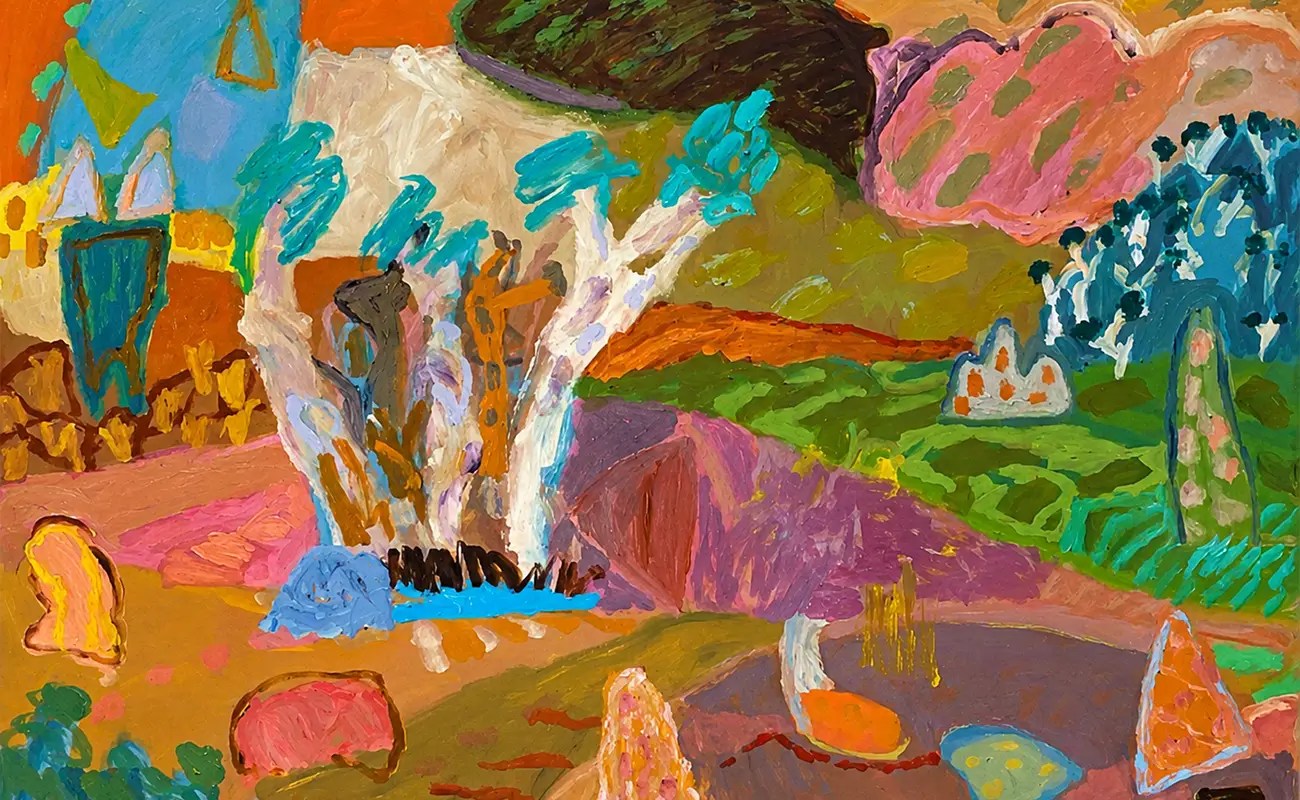
Landscape has long occupied a central position in the artistic practice of Sally Stokes, yet her paintings are never intended as literal records of place. Instead, they emerge from an intimate process of observation that extends far beyond appearances. Time spent outdoors is not undertaken with the goal of producing exhibition-ready works. Her plein air sessions function as periods of immersion, allowing her to absorb the shifting rhythms of the environment while gathering visual and emotional material that later informs her studio practice. Every excursion becomes an opportunity to notice subtle relationships between colour, movement, atmosphere and memory, gradually building an expansive visual vocabulary rooted in direct experience.
Working outdoors encourages an attentiveness that deepens with patience. Rather than simply looking at the landscape, Stokes describes reaching a state in which she begins to perceive her own place within it. Constant changes in light, wind and weather, together with seemingly minor encounters such as insects moving through grass or unexpected colour combinations in nature, become meaningful participants in the creative process. These fleeting moments reveal themselves only through sustained observation, reinforcing her belief that every landscape contains endless possibilities waiting to be discovered. Such experiences encourage spontaneity, allowing fresh compositions, expressive marks and emotional responses to arise naturally before the environment shifts once again.
This gradual immersion eventually gives way to a quieter psychological space where artist and surroundings become closely connected. Stokes speaks of a silence that develops while sitting within the landscape, transforming both perception and creative intuition. This state becomes less about documenting scenery and more about participating in its continual change. The experience provides the emotional foundation for paintings that later evolve in the studio, carrying traces of wonder, uncertainty, affection and even everyday inconveniences. Through this deeply personal engagement with nature, her work reflects an understanding that landscapes are living experiences rather than fixed images, inviting viewers to share in the same sense of presence that inspired their creation.

Messages Arrive
Oil on canvas
102 × 122 cm
Sally Stokes: The Unknown as a Creative Compass
Throughout her career, abstraction has emerged not through a deliberate rejection of realism but through an enduring attraction to mystery. Even during childhood, Stokes felt drawn toward artists whose use of colour and atmosphere suggested meanings beyond direct representation. Later encounters with painters including Paul Gauguin, Paul Cézanne, Henri Matisse and Pierre Bonnard strengthened this fascination, encouraging an understanding of landscape as something emotionally expansive rather than merely descriptive. These influences shaped an artistic outlook in which colour, structure and suggestion carry greater significance than precise visual replication, allowing the landscape to become a space for imagination as much as observation.
Each new painting begins without predetermined conclusions. Although years of practice have established familiar working habits, Stokes describes every canvas as presenting its own unique questions and demands. Extended field trips, particularly to Australia’s East MacDonnell Ranges, generate an enormous archive of sketches, charcoal studies, gouache works and acrylic paintings. Returning to the studio, she surrounds herself with this accumulated material while developing several paintings simultaneously. The preliminary studies serve not as templates to copy but as catalysts that reactivate memories, sensations and intuitive responses gathered during her time in the landscape, allowing each composition to evolve independently.
The resulting creative process is driven by exploration rather than routine. Colour gradually becomes the dominant force, determining relationships within the composition and shaping the movement of space across the canvas. Some paintings develop quickly while others require considerably more time, yet Stokes regards every work as part of an ongoing continuum rather than isolated achievements. Doubt, discovery and unexpected visual solutions remain essential companions throughout this journey. Instead of seeking certainty, she embraces uncertainty as the condition through which a painting acquires vitality, enabling each finished work to express the invisible energy that first drew her into the landscape itself.

Joyous Summer
Oil on canvas
122 × 152 cm
Art, Humanity and the Quiet Power of Connection
For Stokes, visual art possesses an extraordinary ability to connect people across centuries, cultures and personal histories. She believes artworks nurture a deeper appreciation of humanity by encouraging reflection on the mystery of existence itself. Personal preferences among artists such as Giotto and Titian illustrate that responses to art reveal something meaningful about individual character and perception. Rather than offering fixed answers, artworks provide opportunities to recognise aspects of ourselves that might otherwise remain hidden. This capacity for self-discovery contributes to the enduring relevance of artistic expression regardless of historical period or geographical origin.
Her appreciation extends across remarkably diverse artistic traditions. The elegant simplicity of Cycladic sculpture, the energetic force of Willem de Kooning’s paintings and the expressive vitality of Chinese calligraphy all demonstrate different approaches to communicating essential human experience. Although separated by culture and time, these works participate in a shared conversation that continues to inspire contemporary practice. Stokes views this ongoing artistic dialogue as evidence that creativity transcends national and historical boundaries, allowing people to encounter common emotional truths despite vast differences in circumstance and tradition.
This conviction also informs her understanding of art as a source of hope within an increasingly complex world. She acknowledges the violence, environmental destruction and injustices that shape contemporary life while maintaining that art offers a quieter but significant form of renewal. Paintings invite prolonged attention, encouraging viewers to slow down, reflect and engage emotionally rather than simply consume images. Joy, within this context, is not presented as constant happiness but as an unexpected consequence of searching through uncertainty. Rich colour relationships, expressive textures and layered marks become vehicles through which moments of insight and emotional connection can emerge naturally, offering space for contemplation amid everyday distractions.

Dance of the Mangroves
Acrylic on canvas
61 × 61 cm
Sally Stokes: Poetry, Nature and an Ongoing Search for Life Force
Literature occupies an important place alongside painting in Stokes’ creative life. A longstanding daily ritual shared with her husband involves listening as he reads poetry aloud to her, a practice that began during extended journeys through the Australian deserts. These readings provide a reflective beginning to each day while strengthening their awareness of the larger questions surrounding human existence. Australian poets including Les Murray, Sarah Holland-Batt, Robert Adamson and Philip Hodges have all contributed to this ongoing conversation. However, the writings of Mary Oliver hold particular significance because of their profound exploration of humanity’s relationship with the natural world and the quiet energy that exists within ordinary experience.
These literary influences resonate closely with Stokes’ own artistic ambitions. She is especially interested in conveying moments when individuals recognise both their smallness and their belonging within nature’s immense complexity. Australia, with its extraordinary ecological diversity and deep cultural histories, continually shapes the way she experiences the landscape and responds to it visually. Rather than treating nature as scenery, she approaches it as an active presence that encourages humility, curiosity, affection and wonder. Many of her painting titles acknowledge these poetic influences, extending the dialogue between visual language and literature while enriching the emotional atmosphere surrounding each work.
Looking toward the future, Stokes expresses a simple yet profound aspiration. She hopes viewers encounter the same life force that motivates her painting process, whether they spend hours contemplating a work or experience only a brief moment before it. Continuing to draw, paint and spend time immersed in nature remains central to this ambition, allowing each new experience to deepen her understanding of the world. Community also plays an understated role in sustaining this practice. Although painting itself remains a solitary pursuit, gallery visits, drawing alongside fellow artists and engaging with creative achievements across history reinforce her sense of participating in a much larger artistic conversation that continues to inspire each new body of work.
For more information, follow Sally Stokes on Instagram: @sallystokespainter