“Painting is not simply what I do. It is my soul. It is the place where my inner world becomes visible.”
An Inner Language Shaped by Emotion and Resilience
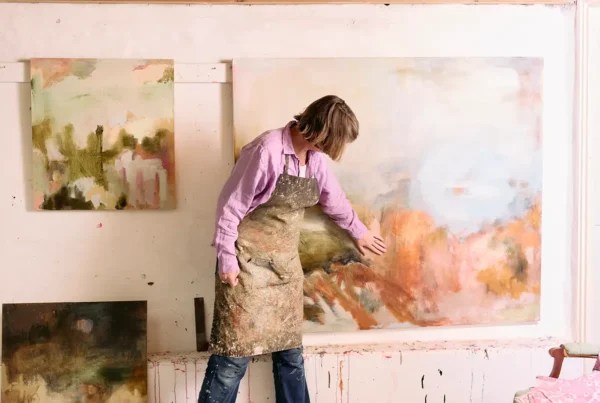
Painting has accompanied Olha Svieshnikova throughout her life, beginning in childhood in Kyiv, Ukraine, where drawing first became an instinctive form of expression rather than a pastime. Early experiences in an art studio revealed an attraction to ambitious, large-scale compositions, but even more importantly, they established painting as the means through which she could interpret both herself and the surrounding world. Over time, that relationship matured into a deeply personal artistic philosophy in which intuition consistently outweighs planning. Rather than approaching a canvas with fixed sketches or predetermined structures, she allows each work to emerge from an emotional impulse, trusting instinct, movement, and the evolving behavior of her chosen materials. This open process transforms every painting into an unfolding conversation instead of a carefully calculated destination. The resulting works invite viewers into spaces where emotion assumes physical form, demonstrating that abstraction can communicate experiences that words often struggle to express while remaining accessible through color, texture, rhythm, and atmosphere.
This intuitive approach gained even greater significance during one of the most challenging chapters of her life. Forced to rebuild her future after leaving Ukraine with her mother and son because of the war, Svieshnikova found that painting became more than creative practice. It offered stability, reflection, and emotional restoration during a period marked by profound uncertainty. Each canvas became an opportunity to convert deeply felt experiences into visual expressions of endurance, hope, and personal renewal. Whether working in complete silence or accompanied by music, she seeks complete immersion in the creative act until awareness of time disappears and the painting gradually reveals itself. Rather than imposing meaning upon the surface, she believes she uncovers something that already exists within her consciousness. This philosophy gives her paintings a distinctive emotional honesty because every composition develops through discovery instead of control, allowing unexpected relationships between gesture, material, and intuition to shape the finished work.
Human connection remains another essential source of inspiration throughout her practice. Instead of concentrating on physical appearance, Svieshnikova is captivated by emotional presence, shared conversations, invisible bonds, and the subtle energies exchanged between people. These encounters often become the emotional spark from which an entirely abstract composition evolves. Her paintings intentionally avoid illustrating specific narratives, preferring to communicate universal experiences such as memory, transformation, vulnerability, resilience, and hope. She also resists declaring a painting completely finished, believing that every work contains another possible layer or gesture until the moment arrives when it has expressed everything it needs to communicate. Once released, the artwork begins an independent existence, inviting viewers to discover their own emotional reflections rather than simply witnessing the artist’s personal journey. That openness defines her broader vision, encouraging every audience member to encounter something intimate within the abstract language of color, movement, and form.
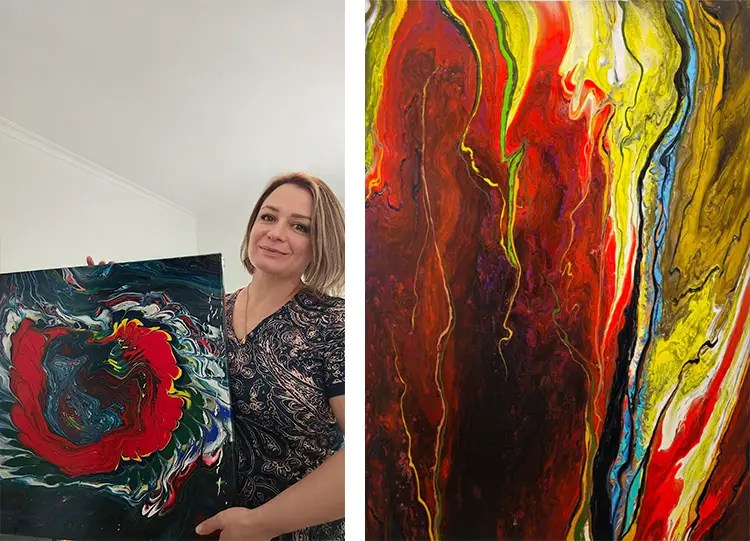
Olha Svieshnikova: Building Emotional Worlds Through Material and Movement
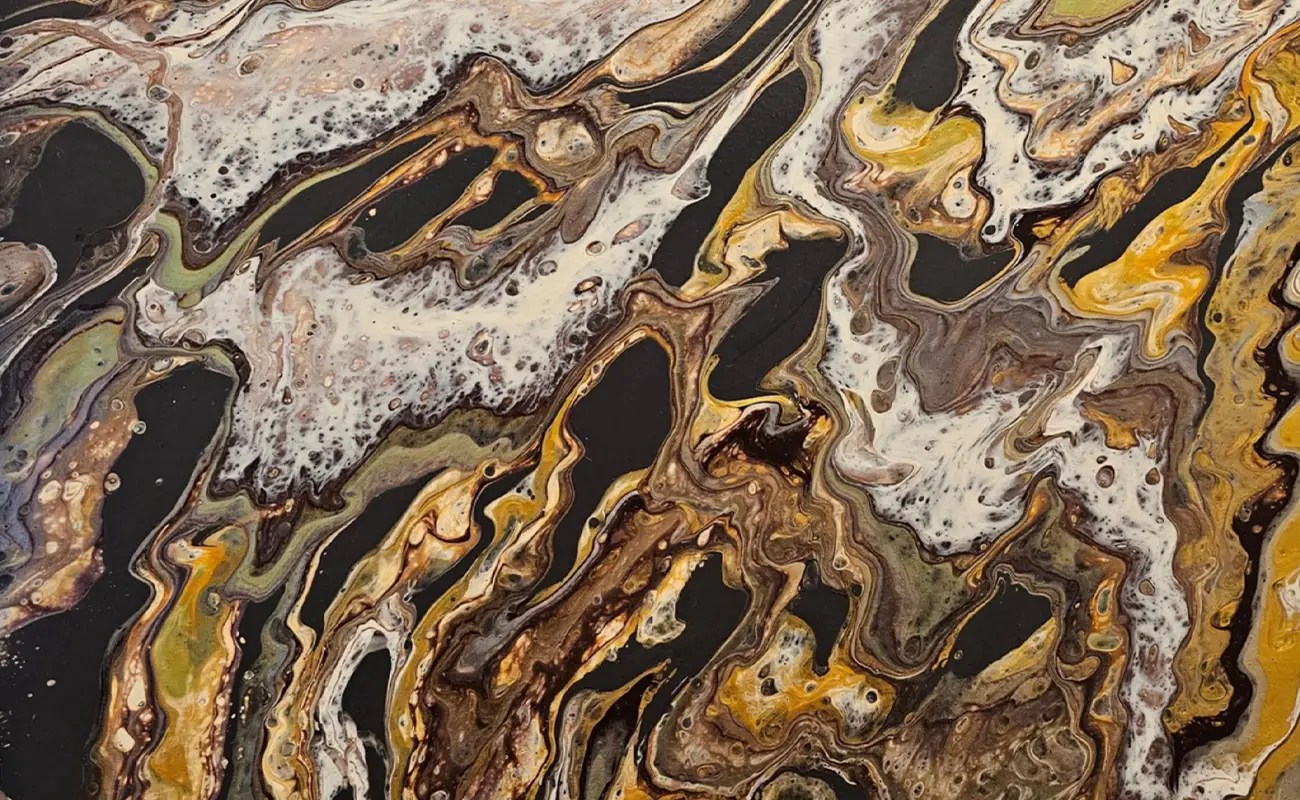
The visual identity of Svieshnikova’s paintings is founded upon lyrical abstraction, where emotional states become expansive environments instead of recognizable scenes. Working primarily with acrylic, mixed media, texture paste, and occasional metallic elements, she transforms intangible psychological experiences into richly layered compositions filled with movement and atmosphere. Rivers, geological formations, cosmic structures, botanical growth, and shifting weather patterns appear as suggestive visual metaphors rather than literal representations. Sweeping currents of pigment intersect with cellular structures, mineral textures, and swirling formations that seem suspended between natural processes and internal consciousness. This deliberate ambiguity allows each painting to occupy multiple identities simultaneously, functioning as emotional landscape, living organism, and evolving energy field without settling into a single interpretation. Such flexibility encourages prolonged engagement, inviting viewers to construct their own meanings through personal memory and emotional response instead of relying upon fixed symbolic narratives.
Her technical process reinforces this fluid visual language through a sophisticated combination of spontaneity and compositional awareness. Fluid pouring techniques interact with expressive brushwork, palette knife applications, sculptural textures, and carefully layered mixed media, producing surfaces that possess remarkable tactile complexity. Paint is treated as an active participant in the creative process rather than merely a carrier of color. It flows, accumulates, fractures, crystallizes, and forms intricate spatial relationships that continue changing under shifting light. This physical engagement becomes especially evident in works such as Blooming Force, Eternal Bloom, and Balance, where textured relief extends the visual experience beyond the flat surface of the canvas. Light continuously interacts with these raised forms, generating subtle transformations that keep the paintings visually active while reinforcing the sense that emotional experience itself remains dynamic, evolving, and impossible to reduce to a single fixed moment.
Color functions within her paintings as both emotional expression and structural foundation. Deep blues evoke expansive introspection, graphite blacks establish gravity, ochres and mineral earth tones introduce organic warmth, while luminous golds, vivid crimsons, and radiant whites generate moments of emergence and renewal. Rather than describing recognizable objects, these chromatic relationships establish psychological climates filled with tension, release, anticipation, and reflection. Gold occupies a particularly meaningful position within this vocabulary, appearing not as decorative embellishment but as an indication of illumination, resilience, and internal awakening. Through these carefully orchestrated interactions of pigment, texture, and movement, Svieshnikova creates immersive abstract environments where viewers encounter emotion as a sensory experience. Every material decision contributes to a cohesive visual language that demonstrates how abstraction can communicate complex inner realities with remarkable clarity while remaining open to diverse individual interpretations.

Transformation as a Continuous State of Becoming
One of the defining themes throughout Svieshnikova’s artistic practice is transformation understood as an ongoing condition rather than a singular event. Her paintings consistently examine moments where instability gradually gives way to renewal, where uncertainty becomes momentum, and where fragmentation slowly evolves toward balance. This exploration is especially visible in works including State Shift, Heart of Chaos, Fragments of Becoming, Threshold, Core of Light, and Transition. These paintings resist storytelling in a conventional sense, preferring to immerse viewers within emotional processes that remain universally recognizable despite their abstract presentation. Instead of depicting identifiable experiences, they construct visual environments where change itself becomes the central subject. Through layered surfaces, fluid gestures, and shifting compositional rhythms, the paintings encourage contemplation of life’s continuous movement while reminding audiences that growth frequently emerges from periods of tension, vulnerability, and adaptation rather than certainty or stability.
Rhythm plays an equally significant role in reinforcing these ideas. Diptychs and triptychs appear frequently throughout her portfolio, extending visual movement across multiple panels instead of confining it within a single frame. These multipart compositions function as interconnected sequences in which energy travels from one surface to another, creating conversations between adjacent works while emphasizing continuity instead of separation. The resulting structures echo the broader concerns of her practice by illustrating that emotional evolution rarely occurs in isolation. Every gesture influences another, every shift generates new possibilities, and each panel contributes to a larger visual progression. This serial approach strengthens the sensation of ongoing movement while reinforcing themes of interconnectedness, equilibrium, and gradual transformation that consistently define her artistic vision across individual works and larger bodies of practice alike.
Although her paintings resonate with several established artistic traditions, Svieshnikova has developed a distinctly personal vocabulary that remains unmistakably her own. The expressive gestures suggest connections with Abstract Expressionism, yet her compositions replace confrontation with contemplation. Fluid structures acknowledge contemporary process painting and acrylic pouring practices, while layered textures and geological references invite comparisons with Earth Art. Organic forms occasionally recall biomorphic abstraction, and luminous expanses of color suggest distant relationships with Color Field painting. Rather than echoing historical precedents, however, she integrates these influences into a cohesive language centered on emotional resonance, material exploration, and natural transformation. This synthesis enables her paintings to communicate with broad audiences while maintaining an individual identity rooted in intuition, psychological depth, and an enduring commitment to expressing experiences that exist beyond literal representation.

Olha Svieshnikova: A Practice Defined by Hope and Human Connection
Material presence and psychological inquiry remain inseparable throughout Svieshnikova’s work. Texture never serves as decoration alone but instead embodies accumulation, erosion, resilience, memory, and the passage of lived experience. Likewise, movement functions as far more than compositional activity because every flowing gesture represents emotional development, spiritual resilience, or the gradual process of becoming. Her paintings consistently negotiate relationships between seemingly opposing conditions such as chaos and harmony, turbulence and stillness, vulnerability and strength, fragmentation and unity. Rather than presenting these ideas as conflicts requiring resolution, she reveals them as complementary aspects of human existence that coexist within every individual. This balanced perspective allows the paintings to communicate emotional complexity without surrendering to despair, encouraging thoughtful reflection while maintaining an atmosphere of openness, possibility, and quiet endurance that remains central to her artistic identity.
Despite engaging profoundly with struggle, displacement, and emotional uncertainty, the prevailing atmosphere across her portfolio remains remarkably hopeful. Even compositions emerging from darkness or intense visual turbulence ultimately suggest regeneration, persistence, and the discovery of inner vitality. Light frequently appears as something uncovered from within layered complexity instead of something imposed externally, reinforcing the idea that resilience develops through lived experience rather than easy resolution. This perspective mirrors her own artistic philosophy, where creative practice becomes a process of recovery, reflection, and transformation instead of escape. Such emotional authenticity gives her paintings enduring relevance because they acknowledge difficulty without allowing it to define the human experience. Instead, every composition offers an invitation to recognize the quiet strength that exists beneath uncertainty and the possibility of renewal that accompanies continuous personal change.
International exhibitions throughout the United States and Europe, recognition through museum, gallery, and curated presentations, multiple international awards, and features in magazines and television all reflect the growing visibility of Svieshnikova’s artistic career. Recent distinctions include Director’s Choice recognition at Viridian Artists in New York and selection for Arts to Hearts Project’s 100 Emerging Artists of 2026. Her continued participation in international collaborations, competitions, and exhibitions, including Voltage of Hope in Los Angeles and presentations in Lisbon and Barcelona, demonstrates an expanding global presence while remaining faithful to the deeply personal values that guide her work. For Svieshnikova, however, achievement extends beyond professional recognition. The greatest measure of success lies in creating paintings that genuinely move people, inspire reflection, and encourage viewers to reconnect with their own emotions, memories, and inner resilience. Through a practice grounded in intuition, material richness, and poetic abstraction, she has established a compelling visual language that transforms invisible emotional experiences into immersive works capable of speaking across cultures while preserving the unmistakable authenticity of her own creative voice.