“For me, every drawing remains a bridge: a way of translating subtle internal landscapes into an enduring dialogue between tradition, place, and the universal human condition.”
A Line Shaped by Memory, Rhythm, and Place
For Irena Ocepek, drawing has never been simply a method of making images. It is a language for tracing what often escapes speech: psychological undercurrents, inherited memory, the atmosphere of a landscape, and the emotional charge held within a story. Based in Ljubljana, Slovenia, the visual artist, illustrator, and designer moves between fine art drawing, sequential art, and contemporary illustration. Her practice combines attentive draftsmanship with a narrative sensitivity shaped by literature, music, folklore, and close observation of human experience.
That sensitivity began in a childhood where scientific inquiry and artistic culture existed side by side. Her grandfather, a scientist with a strong devotion to literature and the arts, encouraged intellectual curiosity while exposing her to technical museums, galleries, opera houses, and concert halls. Entering music and ballet school at the age of five instilled another essential layer. Discipline, rhythm, physical movement, and improvisation became part of the way she understood expression long before they entered her visual work.
Growing up around her mother’s work in fashion design, puppetry, and art therapy fostered a deep respect for craft and an attentiveness to psychological nuance. This focus naturally informs her editorial illustrations for the Slovenian cultural magazine Razpotja (Crossroads), which examined conspiracy theories, existential anxiety, modern mythology, distrust, and collective silence.
Later, coming of age during the Balkan conflicts gave questions of rupture, resilience, and cultural connection a more immediate weight. Those experiences eventually encouraged collaborations, exhibitions, and dialogues across the post-Yugoslav cultural landscape.

Irena Ocepek: Finding a Language in Drawing
Ocepek describes drawing as her earliest vernacular. Translating her surroundings into images was a constant childhood practice leading to her first outdoor mural before she even began formal schooling. During early adolescence, she sought the practice of life-drawing studios alongside university painting students. This early commitment naturally evolved into rigorous formal training across the Secondary School of Design and Photography, the College of Visual Arts, and the Academy of Fine Arts and Design in Ljubljana, where she focused on visual communications and illustration.
Her student years also included award-winning analogue art photography, typography, and conceptual design, disciplines that sharpened her sense of composition and visual structure. During this period, her student visual identity project for the 25th International Biennial of Graphic Arts, developed under Eduard Čehovin, was selected for Steven Heller and Lisa Talarico’s book Design School Confidential. Despite that breadth, drawing repeatedly pulled her back to her primary creative anchor, keeping illustration and graphic narrative at the center of her practice.
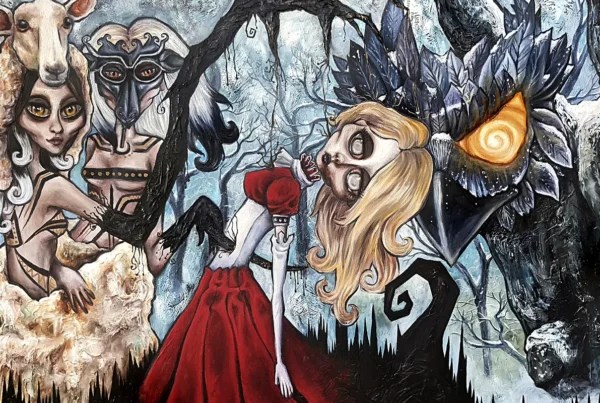
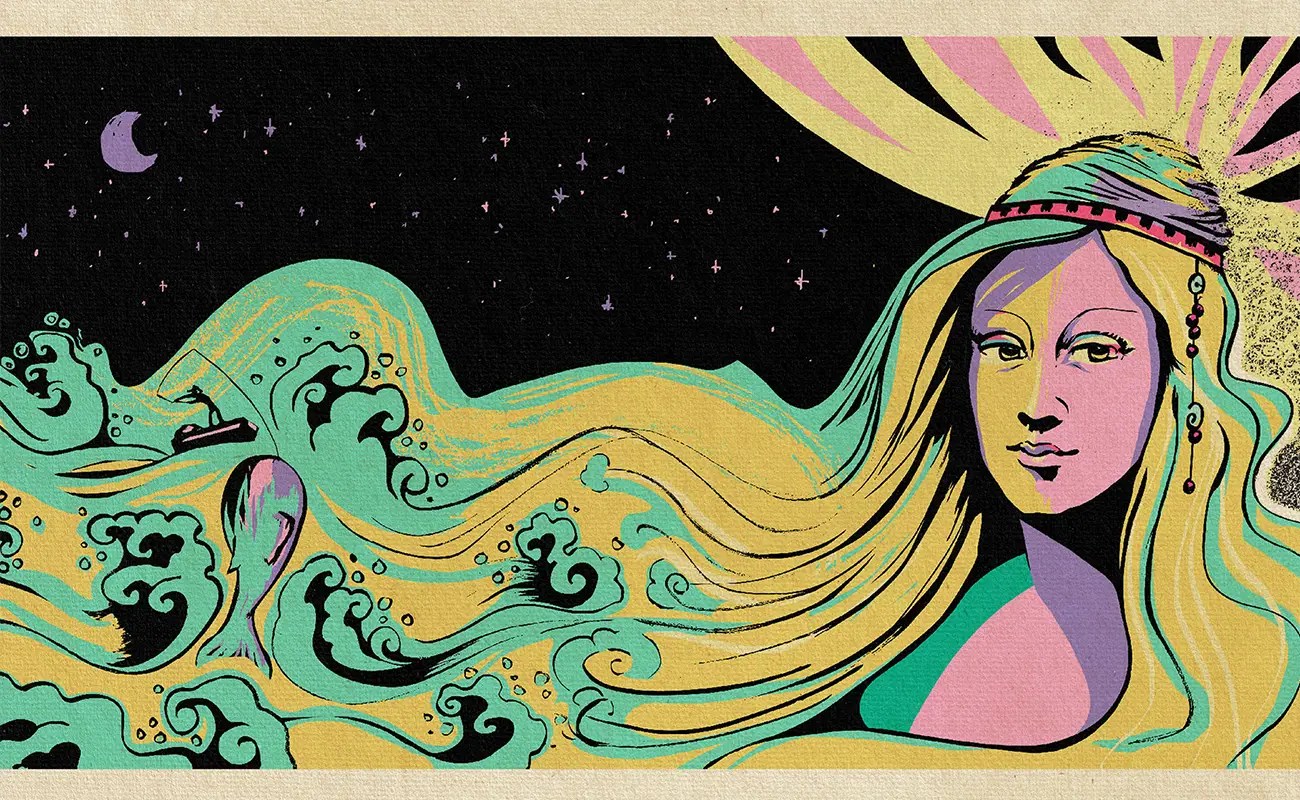
Today she works in mixed media, drawing with soft pastel, charcoal, graphite, and pen and ink to build atmospheric images around memory, transience, heritage, and psychological experience. Literature and philosophy frequently become points of departure. The Red Terrace translated original verse into visual sequences, while her broader sequential art has been featured in Slovenian comics anthologies and histories. Illustrating Michel Tournier’s philosophical short story La Reine Blonde became a sustained investigation of semiotics, portraiture, and the silent image, considering how an image can simultaneously conceal meaning and invite attentive interpretation. Beyond these literary dialogues, her visual language continually unfolds across broader interdisciplinary spaces. Her vibrant contemporary digital illustrations for an innovative music school in Ljubljana earned her an iJungle Illustration Merit Award, while her wider practice has been presented at established illustration biennials across the region and in exhibitions spanning from New York and Washington to Vienna and Osaka.

Where Landscape Becomes a Living Archive
The geography of Slovenia is inseparable from Ocepek’s imagination. Forests, caves, alpine rivers, mountains, the Adriatic coast, and especially the Karst and Istrian landscapes appear not as neutral scenery but as places dense with stories. Early encounters with these diverse terrains established an enduring relationship with natural forces. Folklore and supernatural tales gave those environments another dimension, connecting the tangible landscape with cultural memory and the narratives communities weave to anchor their sense of belonging.
Research into the relationship between geography, memory, and identity sharpened this direction. Reading regional literature and studying authors whose work remained closely bound to their native soil led Ocepek toward cultural heritage as a central artistic concern. Local figures and archetypes could then carry questions extending beyond a particular region, including belonging, resilience, vulnerability, and survival. Cinema, animation, literature, and graphic art reinforced her commitment to sequential storytelling, while dance and music continued to influence movement, pacing, and spatial tension within her draftsmanship.
Those interests became especially tangible in Istrian Legends, a cycle made during an artist residency in Kubed in the former home of celebrated Istrian poet Alojz Kocjančič, allowing the dry, tactile grain of pastel to suggest the weathered character of the land, fragile atmosphere, and mythical transformation. In Kubejski, she pays homage to the poet’s dedication to protecting the Slovenian language and his deep spiritual kinship with the Istrian soil, while offering a glimpse into the Šavrinka’s path—a vital artery of regional heritage. In her work Šavrinka, she honors the women who undertook days-long journeys on foot across the peninsula to collect eggs, balancing baskets of hundreds of eggs on their heads all the way to Trieste markets to support their families—elevating their endurance into a universal archetype of female resilience, inner strength, and quiet dignity. The pastel ‘Be Water!’ Said the Fairy summons the mythical birth of the river Rižana from barren rock, transforming folklore into an urgent contemplation on water as both an ancestral life force and an ecologically fragile gift.

Irena Ocepek: Stories Built of Traces and Thresholds
For The Historic Village of Kubed, Ocepek shifted from pastel to pen and ink. The medium’s precision suited the settlement’s enduring stone architecture, dominated by its rare five-sided defensive bell tower, medieval remnants, and expansive views toward the Karst Edge and Mt. Slavnik. Created on the initiative of the local community, the drawing is slated for a limited hand-printed edition on a historic Gutenberg press in collaboration with a master printmaker, designated for Kubed’s medieval cultural gatherings and heritage commemorations. Across the cycle, the dialogue between soft pastel and archival ink allows atmosphere and architectural memory to articulate complementary aspects of the same cultural landscape.
Her current studio practice is dominated by long-form sequential storytelling. Ocepek is developing an original graphic novel with a writer, a satirical period project that recovers overlooked fragments of cultural history. Her work moves from character design to scene composition, requiring humor, psychology, pacing, and visual clarity to coexist within each panel.
A forthcoming project centers on a fragile coastal wetland, conceived as an evolving visual archive of a unique natural habitat. These drawings will explore its shifting thresholds, creating an independent poetic space where fine art drawing and natural history meet—extending her continuing attention to vulnerable landscapes, cultural memory, and the stories carried through place.