“Perhaps I have always been searching for who my mother was.”
A Life Shaped by Water, Movement, and Observation
The story of Wim de Groot begins in the Dutch countryside, in Aalst, where rivers, waterways, and shifting landscapes formed the backdrop of his earliest experiences. Born into a strict religious family and growing up as one of nine children, he encountered an environment marked by constant change. His father pursued a career in education, resulting in frequent relocations across different regions of the Netherlands. These moves repeatedly disrupted friendships and familiar routines, creating a sense of instability that left a lasting impression. During this period, drawing emerged as more than a pastime. It became a private language through which he could interpret the world, build personal narratives, and establish a sense of continuity amid uncertainty. The harbours, waterfronts, and working landscapes he explored by bicycle offered both inspiration and refuge, nurturing an attentive eye that would later define his artistic practice.
Books and music expanded these formative experiences. His father’s extensive collection of educational materials, encyclopaedias, and recordings provided access to worlds far beyond the immediate surroundings of family life. Long before digital technology transformed the circulation of images and ideas, De Groot immersed himself in printed reproductions of artworks, literature, and cultural histories. Museums became destinations of discovery, while art books functioned as gateways to centuries of artistic achievement. These encounters cultivated a deep fascination with how artists communicated meaning through form, colour, and composition. The desire to become an artist grew steadily stronger, driven less by formal instruction than by curiosity and self-motivated exploration. Even at an early age, the process of studying art became inseparable from the process of understanding life itself.
Although he pursued formal art education through evening classes and later an art academy, these experiences proved unsatisfying. The institutional framework did not align with his expectations, nor did it accommodate the independent path he wished to follow. Rather than abandoning his ambitions, he embraced self-education as a lifelong commitment. That decision became a defining characteristic of his career. Continuous observation, reading, travelling, and practical experimentation replaced academic structures. Over time, this approach enabled him to construct a personal visual language rooted in both discipline and freedom. The artist who emerged was shaped not by adherence to a particular school or movement but by decades of sustained inquiry into art, history, and human experience.

Wim de Groot: Between Restoration and Creation
A significant chapter in De Groot’s development unfolded through his professional work as a conservator and restorer. Seeking a way to support himself while maintaining an active artistic practice, he built a career focused primarily on works on paper. Restoration required extraordinary patience, technical precision, and historical knowledge. The discipline brought him into direct contact with masterpieces from earlier centuries, allowing him to study artistic processes at a level unavailable to most contemporary artists. Rather than merely preserving objects, he gained insight into the decisions, methods, and intentions that shaped them. This intimate engagement with historical works strengthened his understanding of artistic continuity across generations.
Among the most influential experiences was his commission to restore the monumental preparatory drawings for the stained-glass windows of Saint John’s Church in Gouda. Created by sixteenth-century masters Dirck and Wouter Crabeth, these large-scale cartoons placed him in direct physical contact with remarkable achievements of Dutch art. The work demanded concentration and perseverance, often performed in relative isolation and away from public attention. Yet the impact was profound. Through this painstaking process, De Groot encountered the craftsmanship, ambition, and visual intelligence of artists whose achievements had endured for centuries. Their presence became part of his own artistic education, enriching his understanding of technique while encouraging deeper reflection on artistic purpose.
His professional experiences extended beyond the Netherlands. Time spent at the Statens Museum for Kunst in Copenhagen introduced him to Scandinavian artistic traditions and broadened the geographic scope of his studies. Travel throughout Europe further expanded his visual vocabulary. Museums, archives, galleries, and historic collections became classrooms without walls. Through these journeys, he developed a perspective that embraces artistic achievements from diverse periods, cultures, and stylistic approaches. Rather than limiting himself to a single influence, De Groot absorbed lessons from many sources. This openness remains central to his practice, allowing historical knowledge and contemporary intuition to coexist within the same creative process.

The Human Figure as Mystery and Mirror
At the centre of De Groot’s artistic concerns lies a sustained exploration of the human figure, particularly representations of women. This interest originated early and gradually evolved into a lifelong investigation of identity, vulnerability, beauty, and emotional complexity. Inspired by artists such as Titian, Velázquez, and many others encountered through books and museum visits, he became fascinated by how the female body has been interpreted throughout art history. Yet his engagement with these subjects extends beyond formal study. The figure functions as a vehicle through which he examines personal questions, emotional memories, and enduring mysteries about human relationships. For De Groot, painting and drawing become methods of searching rather than merely depicting.
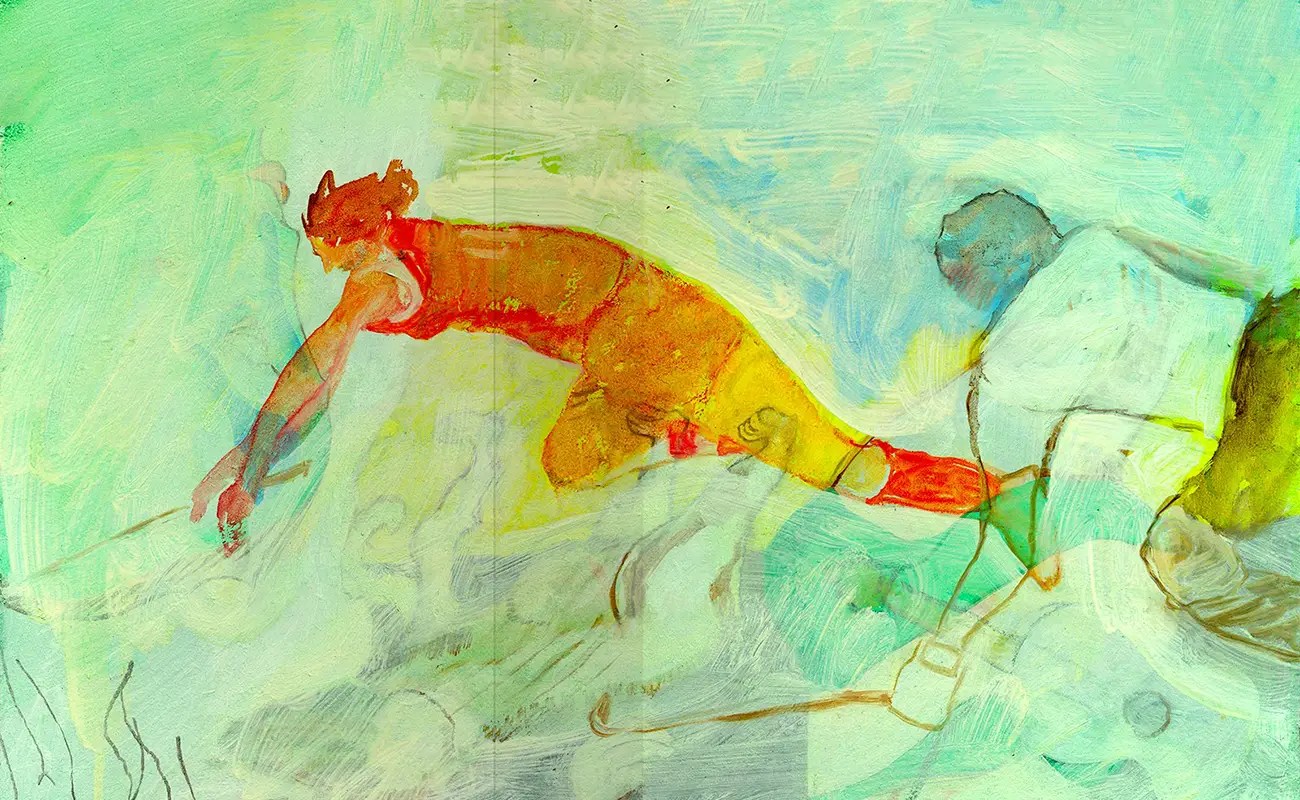
One work that encapsulates these concerns is his 1997 interpretation of Paul Cézanne’s Five Bathers. The painting occupies a special place within his artistic journey because it reflects both admiration for a master and a personal response to enduring themes. Through this engagement with Cézanne, De Groot examined the representation of women not as idealised figures but as individuals existing in a state of natural vulnerability. The bathers inhabit a landscape where observation and privacy coexist, creating a subtle tension between exposure and introspection. The work demonstrates his commitment to studying historical masterpieces while transforming them into opportunities for personal reflection. It also illustrates his belief that artistic dialogue across generations remains a vital source of creative growth.
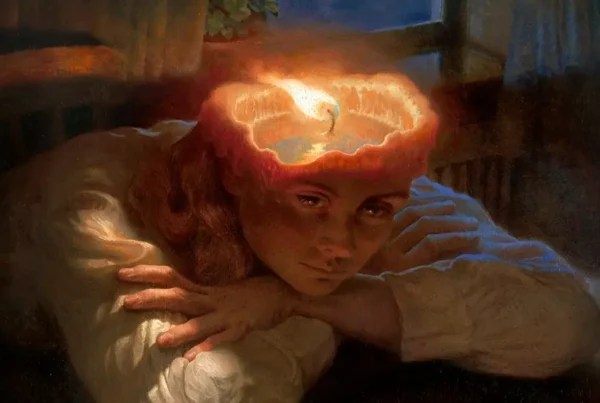
The emotional foundations of this inquiry reach even deeper. Reflecting on his fascination with the female figure, De Groot connects it to questions surrounding his relationship with his mother and the challenge of understanding another person’s inner life. This search continues in later works such as Woman in Turtles Trance, completed in 2025. Here, themes of strength, sensitivity, consciousness, and mystery converge within a powerful visual statement. Throughout his career, the female figure has served as a means of exploring universal human experiences while remaining attentive to individuality. The result is a body of work that combines observation, empathy, and introspection in equal measure.

Wim de Groot: Intuition, Craft, and the Continuing Journey
Despite embracing modern technology as a useful tool, De Groot remains committed to traditional artistic materials and craftsmanship. Oil paint, pastel, pencil, and chalk continue to occupy a central place in his practice. His work emerges through a balance of intuition and learned technique, combining spontaneous impulses with extensive study and revision. A painting may begin with a fleeting impression but evolve through numerous stages, accumulating layers of thought and transformation over time. Some works undergo substantial changes before reaching a state that feels complete. Even then, completion remains provisional. New insights may inspire adjustments months or years later, reflecting his conviction that art remains connected to an ongoing process of living and learning.
Drawing from life also continues to play a crucial role in his creative routine. Regular attendance at model drawing sessions allows him to engage directly with the human form in all its diversity. These gatherings bring together individuals of different ages, body types, backgrounds, and identities, offering opportunities for concentrated observation. Beyond anatomical study, he seeks emotional resonance within posture, gesture, and presence. The immediacy of these encounters aligns with his appreciation for artistic traditions that value a sober, expressive style, including certain Asian approach in which a single mark can carry extraordinary significance. Such experiences reinforce his belief that observation and intuition must work together rather than exist as opposing forces.
Today, after more than six decades of artistic exploration, De Groot continues to produce new work while revisiting earlier pieces. His recent paintings reveal a tendency toward greater clarity and realism, yet they remain guided by the same intuitive instincts that shaped his earliest efforts. Contemporary events, personal experiences, and changing perspectives continue to inform his imagery. Alongside studio practice, he is developing a catalogue of his life’s work through his website, creating a comprehensive record of an extensive artistic journey. The project reflects both pride and independence, allowing viewers to engage directly with the breadth of his achievements. Across more than sixty years of study, restoration, drawing, and painting, De Groot has remained committed to a singular pursuit: understanding life through the act of making art.