“Fragility is the opposite of hardness, it is not solid, it is brittle.”
Restlessness as a Creative Compass
Nicholas Winter has shaped a photographic language rooted in movement, displacement, and introspection. Born in 1973 and living in Basel as a British and Swiss citizen, his upbringing unfolded across England, Germany, and Switzerland, guided by the professional paths of his parents and frequent travel throughout Europe. Relocations prevented the formation of permanent roots, creating instead an internal condition of searching that later became central to his artistic identity. Rather than focusing on geography itself, Winter became fascinated by the emotional consequences of instability, especially the tension between transition and belonging. This underlying restlessness quietly informed his creative instincts from an early age before evolving into a conscious framework for his work. Photography eventually became the medium through which he could process this ongoing psychological and philosophical investigation.
Creative subjects consistently stood apart during his school years, while conventional academic disciplines failed to hold his attention. The influence of his father’s interest in photography introduced him to the camera, leading to his first photography course at sixteen. That experience opened a direction that would continue through art school in the United Kingdom. Winter first attended The Kent Institute of Art and Design in Canterbury in 1991, completing a two year foundation course before focusing more intensely on photography. He later continued his studies at Bournemouth and Poole College of Art and Design in 1993. Looking back, he describes his early years as uncertain and fluid, shaped more by intuition than structured ambition. The absence of a rigid goal became unexpectedly important because experimentation, observation, and gradual accumulation eventually allowed a clearer artistic purpose to emerge with age and experience.
This slow formation of identity remains visible throughout Winter’s reflections on artistic development. He openly acknowledges the influence of other artists and visual traditions while resisting the pressure to follow stylistic trends or external expectations. His imagery grows from personal necessity rather than market direction. Winter describes his body of work as the construction of a visual home assembled from interconnected photographic series, each acting like an individual component in a larger emotional architecture. These series are not isolated projects but fragments of an ongoing search for clarity and emotional grounding. Through this evolving structure, photography becomes more than representation. It transforms into a method of understanding instability, vulnerability, and the human condition itself. His practice operates less as documentation and more as a deeply internal attempt to establish coherence within a constantly shifting psychological landscape.

Nicholas Winter: The Texture of Fragility
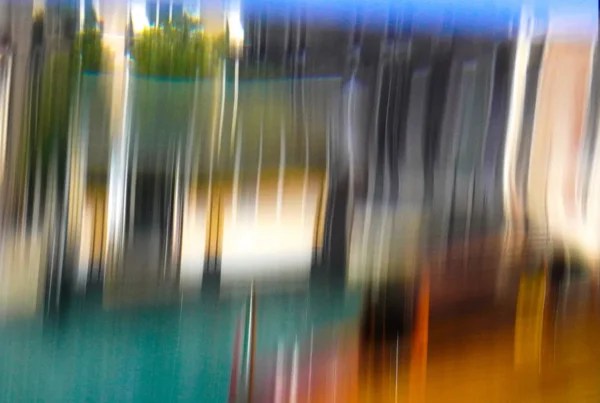
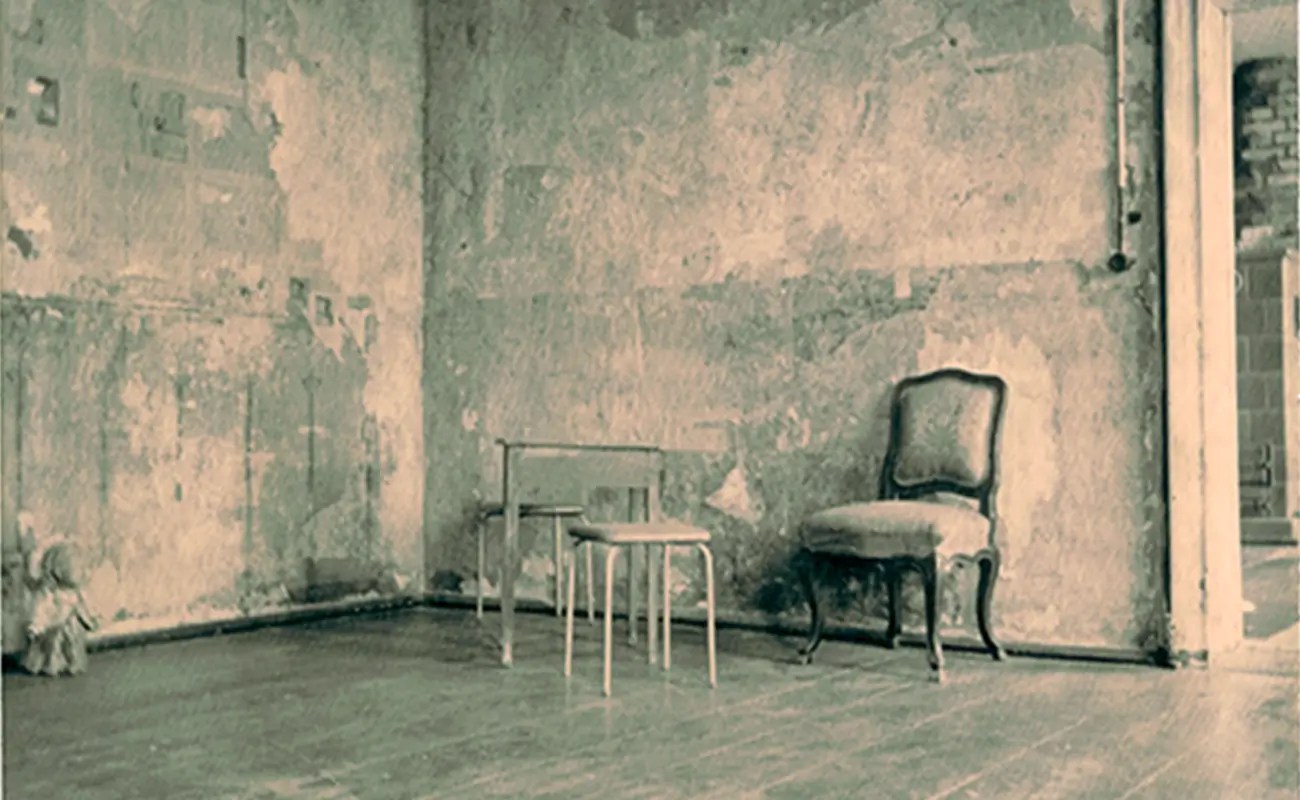
Winter’s visual philosophy is inseparable from his attraction to analogue photography and the tactile qualities of early photographic processes. Black and white imagery, with its subtle tonal variations and atmospheric softness, became a lasting foundation of his work. He was captivated by the experimental pioneers of photography whose techniques carried visible imperfections, physical vulnerability, and material presence. Rather than pursuing polished clarity or glossy precision, Winter gravitated toward texture, grain, and the emotional resonance embedded in fragile surfaces. He viewed overly perfected imagery as disconnected from lived experience, while older photographic methods carried traces of time, decay, and humanity. These characteristics continue to define his visual language today. Although digital tools are incorporated during scanning and printing, every image begins through analogue capture, preserving the tactile sensitivity that remains essential to his process.
Technique and subject matter function together within Winter’s practice, neither existing independently from the other. He approaches photography as a tandem relationship where visual process enhances emotional meaning rather than simply illustrating a subject. Central to this relationship is his ongoing exploration of fragility. Winter repeatedly returns to the idea that fragility exists between reality and possibility, occupying a delicate threshold where vulnerability becomes perceptible. He is interested in revealing what often remains hidden beneath immediate appearances, encouraging viewers to sense impermanence rather than merely observe it intellectually. This conceptual thread extends across his varied themes and series, binding them together despite differences in subject matter. Fragility, for Winter, is not weakness. Instead, it represents a condition of awareness where the brittle nature of existence becomes visible through subtle visual atmospheres and restrained emotional tension.
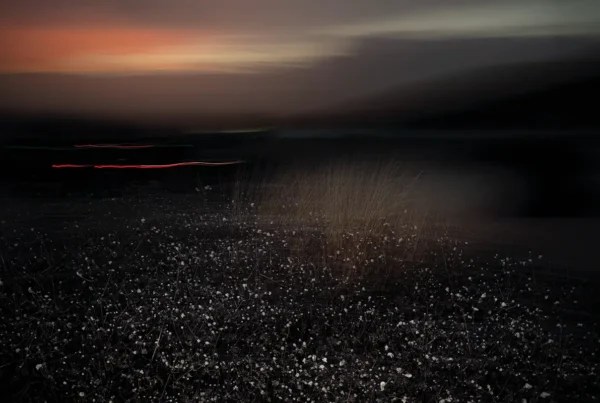
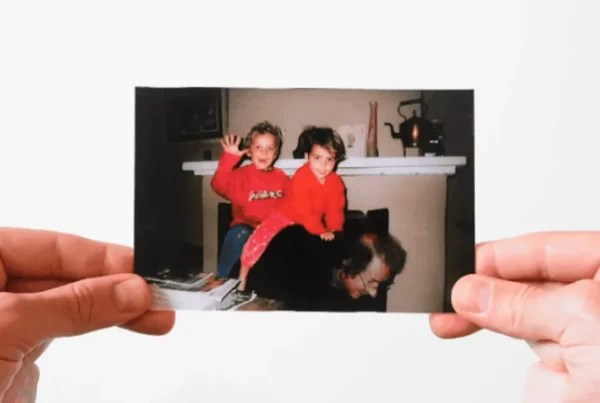
His photographs invite viewers into spaces that feel suspended between memory, dream, and material reality. The visual softness of analogue processes reinforces this sensation, creating imagery that resists certainty and encourages reflection. Winter’s photographs rarely function as direct records of the external world. Instead, he uses surroundings as emotional metaphors capable of expressing internal states and philosophical concerns. Through this approach, ordinary subjects become charged with psychological significance. A photograph is never simply an object or landscape but part of a larger process of self examination and reconstruction. The images carry traces of longing, instability, and the persistent search for meaning. Their restrained visual language avoids spectacle while maintaining a profound emotional gravity that slowly unfolds through sustained viewing.

Spaces Between Environment and Self
Although Winter insists he is not a documentary photographer, contemporary environmental concerns have increasingly entered his work in recent years. The changing state of the natural world has become impossible for him to ignore, and these themes now intersect with his broader exploration of vulnerability and impermanence. Environmental transformation becomes both a social reality and a personal metaphor within his imagery. Rather than presenting direct activism or straightforward commentary, Winter integrates these concerns into his existing visual framework, allowing ecological instability to mirror psychological fragility. This dual perspective gives his photographs an unusual complexity where external conditions and internal emotions continuously reflect one another. The environment becomes a site where existential uncertainty, collective anxiety, and personal introspection converge through visual interpretation.
This layered relationship between external observation and inward reflection defines much of Winter’s artistic process. He describes his work as an attempt to look beneath the first visible layer of experience in order to expose subtleties that are often overlooked. Photography allows him to investigate hidden emotional zones that exist beneath ordinary perception. Through carefully constructed visual atmospheres, he seeks to create spaces where viewers can encounter vulnerability with greater clarity. His images often avoid direct narrative resolution, preferring ambiguity and emotional openness instead. This resistance to fixed interpretation mirrors the instability that has shaped both his life and artistic thinking. By avoiding rigid conclusions, Winter leaves room for viewers to bring their own memories, uncertainties, and emotional responses into the work.
The philosophical dimension of his practice remains deeply connected to self reflection. Winter describes the act of creating photographs as a process of taking himself apart in order to rebuild a form of visual belonging. This reconstruction unfolds gradually through multiple series and recurring motifs, each contributing to a larger emotional structure. Photography becomes a means of negotiating identity, purpose, and stability within an unpredictable world. His recurring interest in hidden emotional layers reflects a desire to move beyond surface appearances toward something more enduring and truthful. The resulting images hold a quiet intensity that resists immediate consumption, encouraging slower engagement and sustained contemplation instead of instant visual gratification.

Nicholas Winter: Constructing a Visual Home
Winter’s creative rhythm stands deliberately apart from the accelerated pace of contemporary culture. He embraces slowness as an essential component of his artistic method, allowing ideas to emerge gradually over time rather than forcing immediate results. Projects evolve through prolonged reflection, experimentation, and accumulation, often developing across years instead of fixed production schedules. This patient approach mirrors the philosophical concerns embedded within the work itself. In a world increasingly dominated by speed, immediacy, and constant stimulation, Winter’s process becomes a form of resistance. Each image contributes another fragment to what he describes as a larger visual home, assembled carefully piece by piece through sustained introspection and lived experience. The work remains unfinished by design because the search for clarity continues to evolve alongside his own life.
This ongoing construction process gives his photography an unusual sense of openness. Winter does not claim certainty about where his artistic path will ultimately lead, nor does he attempt to impose definitive meanings onto his imagery. Instead, he accepts that understanding develops incrementally through experience, age, and continued experimentation. He speaks of building his practice brick by brick, with future directions often remaining unknown until they naturally emerge. This willingness to remain within uncertainty reinforces the authenticity of his work. The photographs are not created to provide answers but to sustain a process of questioning, reflection, and emotional recognition. Their strength lies in their honesty about instability and the incomplete nature of human understanding.
Connection with viewers becomes especially meaningful within this framework. Winter finds confirmation when fragments of his personal search resonate with the experiences of others. Shared recognition creates temporary moments of stability within the broader uncertainty explored throughout his work. His photographs therefore operate on both individual and collective levels, reflecting private introspection while also touching universal emotional conditions. Fragility remains the central thread uniting these dimensions. By creating visual spaces where vulnerability can exist openly, Winter transforms photography into an act of quiet philosophical inquiry. His images encourage viewers to pause within uncertainty rather than escape it, revealing how impermanence itself can become a source of emotional depth, awareness, and human connection.