“In art, the most important thing is to be different, not the best.”
Beyond Technique: When Precision Meets Emotional Freedom
The creative philosophy of Ladislav Lakatoš is built upon an unusual but deeply complementary relationship between technical precision and artistic freedom. While many people view engineering logic and abstract painting as opposing forces, he sees them as essential companions that continually strengthen one another. His professional background has cultivated discipline, structure, analytical thinking, and respect for materials, qualities that remain present every time he approaches a canvas. Rather than separating his technical career from his artistic identity, he allows each to reinforce the other. Painting becomes neither an escape from daily reality nor a rejection of order. Instead, it provides the necessary balance to a life grounded in rational thinking. Within this balance, careful planning creates a stable foundation that allows intuition, emotion, energetic brushwork, and expressive textures to emerge naturally. This combination enables his work to remain emotionally open while retaining compositional clarity. The result is an artistic language that is spontaneous without becoming chaotic and structured without sacrificing emotional depth.
This relationship between discipline and freedom also defines Lakatoš’s creative process. Acrylics, oils, textured informel pastes, brushes, and palette knives become instruments through which invisible emotional states acquire physical presence. His technical awareness informs the handling of materials, yet every painting ultimately evolves according to intuition rather than rigid formulas. Fast gestures, layered surfaces, subtle underpainting, and carefully modulated color combine to create works that encourage prolonged contemplation instead of immediate interpretation. Every texture carries psychological significance, while each color contributes to an emotional atmosphere rather than representing recognizable objects. Instead of illustrating reality, his paintings investigate states of consciousness, memory, imagination, and spiritual awareness. Through abstraction, he invites viewers into a visual environment where certainty gives way to possibility. The canvas becomes an arena in which reason establishes the framework while instinct determines the final destination.
This philosophy reflects Lakatoš’s conviction that art should raise meaningful questions rather than provide definitive answers. Technical professions often demand solutions that are measurable and precise, whereas painting offers space for uncertainty, exploration, and reflection. He embraces this contrast, allowing rational structure to support emotional discovery instead of restricting it. His compositions therefore remain grounded even when they appear turbulent or highly expressive. This harmony between opposing forces mirrors the complexity of human existence itself, where logic and feeling constantly coexist. Rather than viewing these qualities as contradictory, he considers them necessary partners in understanding life more completely. Every finished work stands as evidence that analytical discipline and intuitive creativity can occupy the same space, producing paintings that are intellectually considered while remaining emotionally immediate and spiritually resonant.

Ladislav Lakatoš: Painting the Invisible Dimensions of Human Experience
Ladislav Lakatoš comes from Slovakia, where he was born and continues to live and work today. For him, becoming an artist was never simply a professional decision. It emerged as a response to an internal necessity that gradually shaped his understanding of both creativity and existence. His guiding belief remains remarkably direct: paint what is seen, what is felt, and what is genuinely desired. This principle extends beyond artistic practice into a broader philosophy of living. He compares life to an untouched canvas where every individual holds the colors and the brush, yet emphasizes that genuine freedom requires discipline. Vision alone cannot produce meaningful work without persistence, consistency, and unwavering commitment. Every painting therefore begins long before pigment touches the surface. It starts with contemplation of emotions, energy, consciousness, and those intangible experiences that cannot easily be described through ordinary language. His objective is not simply to produce attractive compositions but to translate invisible psychological and spiritual realities into visual form.
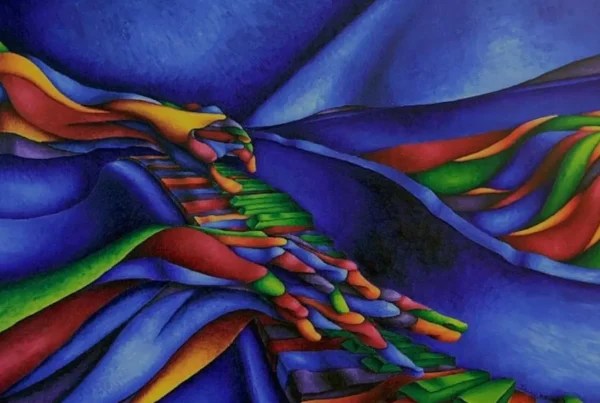
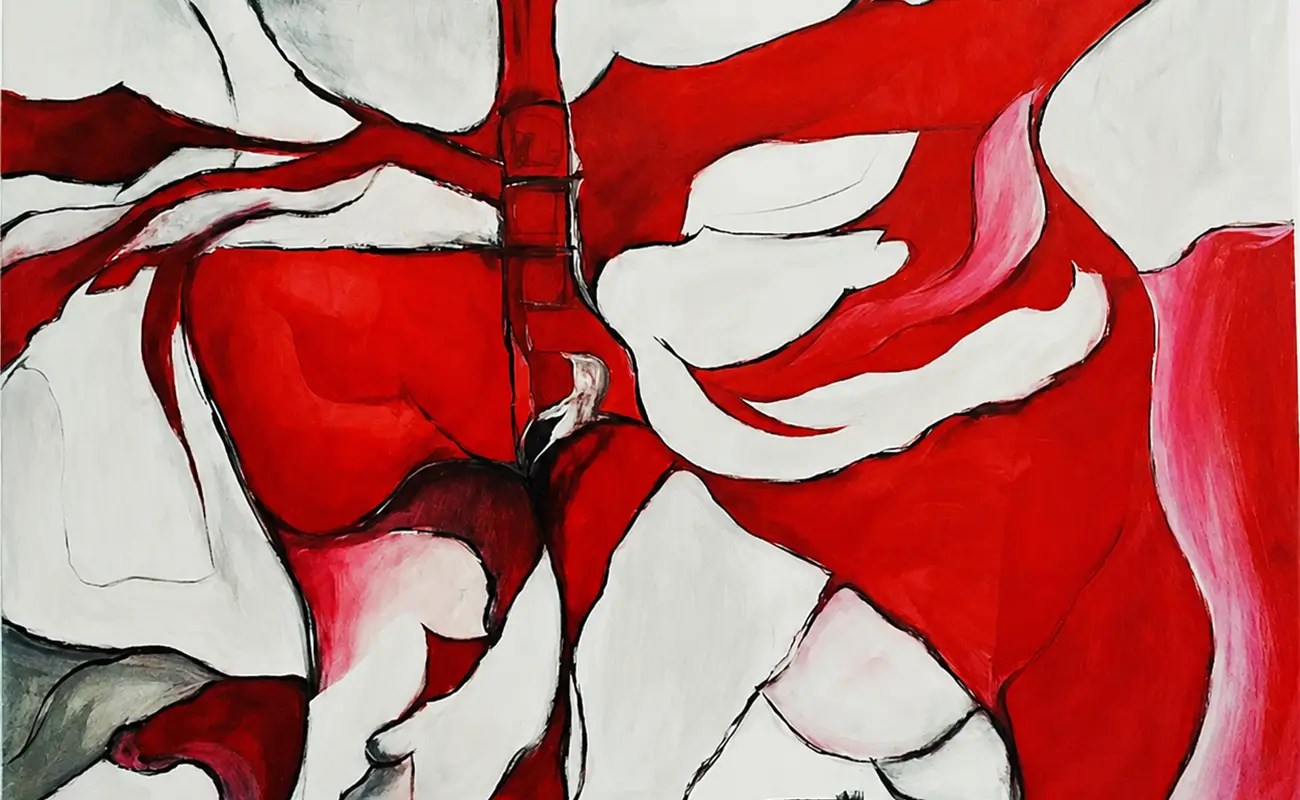
His mature style combines influences from abstract expressionism and European informel while remaining firmly rooted in personal experience rather than imitation. Dramatic movement, expressive brushwork, richly layered textures, and dynamic palette knife marks work together to create compositions filled with emotional intensity. Classical representation gives way to abstraction, allowing forms to emerge through gesture and material rather than recognizable imagery. Informel provides an important structural influence because of its emphasis on spontaneity, physical texture, and freedom from traditional composition. At the same time, Lakatoš introduces carefully considered color relationships that carry emotional and symbolic weight. Every surface becomes a record of lived experience, revealing traces of movement, hesitation, conviction, and transformation. His paintings function less as illustrations of external reality than as visual manifestations of internal perception, inviting viewers to experience emotional complexity without predetermined interpretation.
Central to this philosophy is his belief that abstraction creates a deeper understanding of reality instead of distancing us from it. He expresses this through the conviction that abstract expressionism first removes him from ordinary reality before helping him understand that reality more profoundly. Illusion therefore becomes a meaningful creative force rather than a distraction. He refuses to abandon imagination because he believes that losing one’s illusions diminishes the vitality of human existence itself. This perspective gives his work a distinctive spiritual dimension where abstraction serves not as decoration but as a method of exploring consciousness, identity, and the hidden layers of everyday experience. Standing before a blank canvas becomes an act of faith, requiring courage, openness, and trust in intuition. Every new painting represents another attempt to transform unseen emotional realities into tangible visual experiences capable of speaking directly to the viewer.

The Spiritual Conversation Between Artist and Viewer
Life experience and personal spirituality remain the strongest influences within Lakatoš’s artistic development. While he openly acknowledges the importance of abstract expressionism and European informel, he regards authentic experience rather than artistic perfection as the true source of creative growth. This emphasis on sincerity shapes every stage of his practice. Painting becomes a spiritual exercise in honesty where pretension cannot survive because the canvas immediately reveals insincerity. During the layering of colors and construction of textured surfaces, he intentionally relinquishes excessive control in favor of intuition. Such openness requires vulnerability, yet he considers this willingness essential to creating meaningful art. His paintings therefore record not only visual decisions but also emotional and spiritual encounters. They preserve moments of uncertainty, confidence, reflection, and transformation, allowing viewers to sense the authenticity embedded within each surface.
Equally important is the role assigned to the audience. Lakatoš does not expect viewers to decode hidden symbols or identify literal subjects within his abstract compositions. Instead, he encourages personal interpretation and emotional participation. According to his philosophy, meaningful engagement requires more than observation. It demands emotional openness, reflected in his statement that understanding art requires opening not only the eyes but also the heart. This invitation transforms the viewing experience into an active dialogue rather than passive consumption. Every observer contributes memories, emotions, beliefs, and personal experiences that complete the work in unique ways. Because no two viewers share identical lives, no two interpretations can ever be identical. This openness ensures that each painting continues evolving long after the artist has finished applying paint to the canvas.
Lakatoš extends this dialogue through what he describes as a letter to the viewer. His paintings deliberately avoid fixed geographical settings and historical references because they are intended to function as mental landscapes and spiritual mirrors. Rather than directing attention toward recognizable places or events, they invite reflection upon internal experience. He hopes that viewers will pause amid the intensity of everyday life and enter a quieter psychological space where imagination can operate freely. The artwork reaches completion only when someone brings personal emotion into the encounter, allowing a genuine exchange between painting and observer. Even a brief feeling of silence, liberation, curiosity, or emotional unrest fulfills his creative purpose. When those experiences accompany viewers back into ordinary life, encouraging greater kindness, calmness, and awareness, the artistic conversation continues far beyond the gallery wall.

Ladislav Lakatoš: An Ongoing Search for Meaning Through Abstraction
Daily discipline forms the practical foundation beneath Lakatoš’s philosophical approach to painting. Every working day begins with reflection upon his own thoughts and an effort to balance emotional unpredictability with purposeful structure. He believes that inspiration alone cannot sustain artistic growth because vision without discipline remains unrealized potential. This consistent practice allows him to approach each new canvas with both openness and preparation. Instead of waiting for extraordinary moments of creativity, he develops conditions in which creativity can emerge naturally through commitment and repetition. Such dedication reinforces his belief that artistic independence requires perseverance as much as talent. Remaining faithful to one’s own vision becomes especially important when confronting uncertainty, self doubt, or the apparent emptiness that often accompanies the beginning of a new work.
Looking toward the future, Lakatoš is preparing a new series of large format paintings designed to expand his exploration of informel textures and expressive layering. Larger surfaces provide greater physical freedom while also creating broader psychological space for complex emotional investigation. Through these ambitious works, he intends to deepen his examination of the spiritual dimension of human existence against the backdrop of an increasingly chaotic contemporary world. The planned series continues many of the central themes that define his practice, including abstraction as a vehicle for introspection, textured surfaces as emotional records, and painting as a bridge between inner and outer experience. These future works seek to encourage viewers to discover their own truth, peace, and imagination by engaging with visual language that remains intentionally open rather than prescriptive.
His broader creative philosophy ultimately rests upon the conviction that art is not a competition for superiority but an honest expression of human experience. This belief echoes his opening declaration that artistic value lies in being different rather than being the best. He also embraces the idea that art makes visible what would otherwise remain unseen, reinforcing his commitment to revealing emotional and spiritual realities beyond ordinary perception. His paintings never attempt to deliver final conclusions. Instead, they remain open questions that invite continuing reflection. Each canvas becomes an opportunity for personal discovery, encouraging viewers to contribute their own stories and emotional responses. Only through this shared participation does the artwork achieve its fullest meaning, transforming abstraction into a living conversation between artist and audience.
To learn more about Ladislav Lakatoš and follow his work, visit his Instagram profile: @lad.lakatos.