“I have never wanted to repeat what I already know.”
A Long Apprenticeship to Freedom
Hans Rudolf Weber’s artistic path stands apart because it did not begin with youthful haste or fashionable urgency. Born in 1935, he gathered experience across many decades before dedicating himself fully to visual creation, and that long preparation now reads as one of the defining strengths of his work. Early encouragement came through family influence, especially a sister who taught art at a Zurich Gymnasium, as well as creative acquaintances of his parents. Those first encounters with image-making planted ideas that remained active even while other responsibilities took center stage. Rather than disappearing, art developed quietly in the background, waiting for the moment when time, discipline, and curiosity could meet. This layered beginning gives Weber’s story unusual depth, because his practice emerged from memory, observation, and patience rather than impulse alone. He represents the rare artist whose mature years became a launch point, proving that creative identity can arrive gradually and still carry remarkable force.
After completing his studies, Weber established himself in Zurich in 1967 as a business attorney and asset manager. Those professions required exact judgment, structure, strategy, and control, qualities that later found another purpose inside his studio methods. For years, he balanced a demanding professional life with an inner commitment to visual thought. During middle age, he painted occasionally on weekends, using limited time to maintain contact with creation. Even these periodic sessions mattered, because they preserved a direct relationship with experimentation. Many artists move from studio to career, but Weber moved through law and finance before returning to the studio with broader knowledge of systems, institutions, ambition, and contradiction. That unusual route sharpened his perspective. He understood order from the inside, yet also recognized the emotional and moral tensions hidden behind polished surfaces. Such awareness would later inform symbolic series and recurring themes that question power, illusion, and social performance through wit rather than direct slogans.
A decisive change came after he sold his business in 2002. Freed from earlier obligations, Weber turned his attention mainly toward art, first through figurative works and later through abstraction shaped by admired modern masters. What might have been retirement for others became expansion for him. He increased production dramatically, creating several thousand works that were digitally photographed, catalogued, and inventoried. This detail reveals not only productivity but also a lifelong respect for organization, showing how his previous career habits became tools for sustaining artistic output. Weber’s life demonstrates that reinvention need not reject the past. Instead, he transformed legal precision, financial discipline, and accumulated life experience into fuel for visual invention. By the time many people narrow their horizons, he widened his. His story therefore becomes more than biography. It becomes evidence that art can flourish after multiple identities have already been lived, and that maturity can produce daring rather than caution.

Hans Rudolf Weber: From Landscape to Living Symbols
Weber’s earliest publicly shown works, beginning in 1982, explored figuration with a particular interest in landscape. Yet even in representational images, he was never satisfied with simple description. Mountains became structures, horizons became compositional pressures, and color gradually detached itself from strict realism. These developments suggest an artist already searching for what lies beneath appearances. He did not paint scenery as postcard comfort. Instead, he treated visible nature as a gateway to deeper organization, emotion, and rhythm. This early phase matters because it shows continuity with later abstraction. The seeds were already present: fractured perspective, intensified color, and the sense that a painting could hold both seen reality and inner response at once. Many viewers separate figurative and abstract periods as opposites, but in Weber’s case they are connected chapters. His landscapes were not endpoints. They were training grounds where he learned how space, balance, and feeling could exceed literal depiction while still remaining anchored in experience.
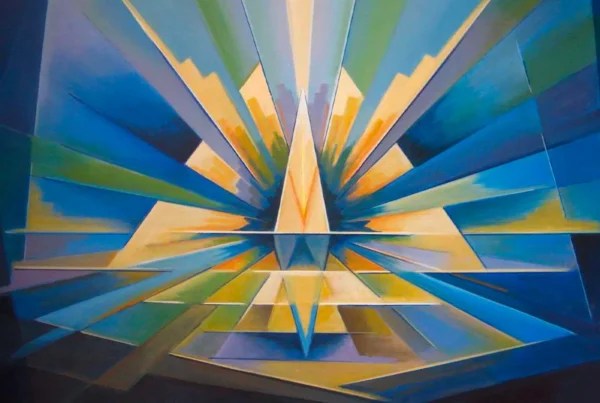
The year 1989 marked a major turning point. Weber associated the fall of the Berlin Wall with rupture, transition, and the collapse of inherited barriers, and his own work entered a phase he called Transit. During this period, figuration gave way to signs, geometry, and symbolic structures. Architecture became ordered shape, objects became coded forms, and landscapes transformed into psychological maps. Rather than reproducing surfaces, he sought hidden language within them. This shift was not retreat from reality but a different way of approaching it. The world of politics, movement, division, and change required new visual grammar. Weber responded by simplifying forms while increasing meaning. A line could suggest border or passage. A shape could imply crowd, machine, memory, or pressure. Transit therefore stands as a bridge between earlier observation and later freedom, showing how historical events can alter artistic thinking without needing literal illustration. He answered upheaval not with reportage, but with transformed structure.
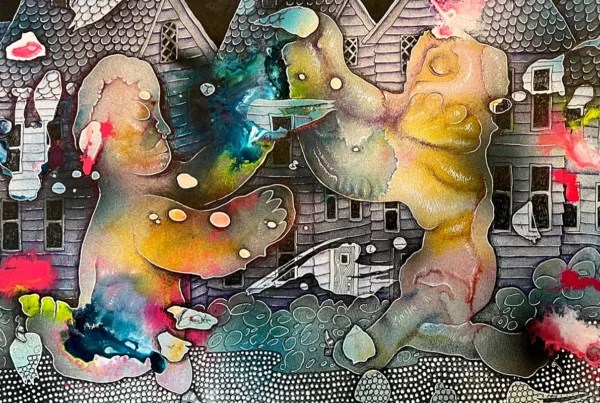
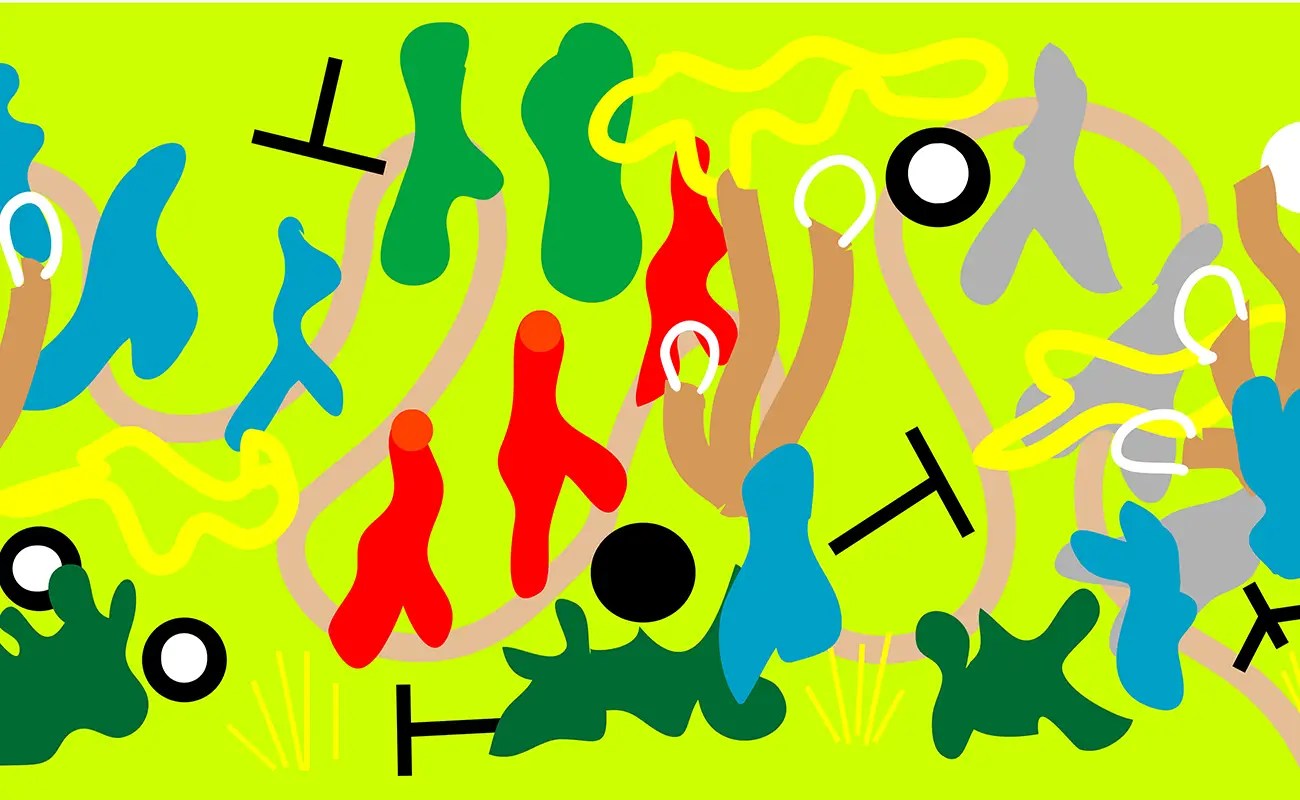
From that stage onward, abstraction became central to Weber’s practice. He treated it as concentration rather than distance, a means of removing noise so essentials could speak more clearly. Repeated circles became especially important, functioning as sun, eye, machine, orbit, wound, celebration, or surveillance depending on context. Through variation and repetition, his compositions began to resemble societies, arguments, or internal conversations. Language also entered the work through letters, fragments, codes, and symbols, reflecting how thought itself often arrives in flashes rather than polished sentences. Weber’s portraits, including self-portraits, followed the same philosophy. A face was never merely likeness. It became memory, role, vulnerability, humor, distortion, and evidence of passing time. Across all these approaches, his art resisted fixed identity. Every image remained open to multiple readings. That flexibility gives Weber’s abstract language lasting vitality, because it invites viewers not simply to look, but to participate in meaning.

Materials, Motion, and the New Digital Studio
Material choice has always carried conceptual importance for Weber. He worked on canvas, cardboard, Forex, acrylic glass, steel, and digital surfaces, selecting each support for what it could express rather than for prestige alone. Acrylic glass offered transparency and layered depth, allowing overlapping forms that suggest simultaneous thoughts or shifting memory. Steel introduced weight, permanence, and public presence, yet he shaped it into lively forms that appear playful or dancing. This contrast between heaviness and lightness reveals a recurring intelligence in his practice. He enjoyed reversing expectations. Hard materials could feel joyful, while bright surfaces could carry serious themes. Such decisions show an artist who treated substance itself as language. Instead of separating content from medium, Weber fused them. A viewer encounters not just an image, but a conversation between idea and physical form. That sensitivity to materials helped him move confidently across painting, sculpture, and digitally generated works without losing coherence.
His outdoor sculptures hold particular significance because they place thought within shared environments. Installed in nature or architectural settings, they interrupt routine and become part of daily movement. Weber understood that a sculpture in public space need not shout to have impact. It can stand quietly while introducing humor, elegance, irony, or mystery into ordinary surroundings. This approach aligns with his broader belief that art should remain active rather than passive. A work encountered unexpectedly on a walk or near a building can shift mood, sharpen attention, or invite reflection. Public placement also extends his interest in systems and social behavior. Once outside the studio, an object enters weather, traffic, changing light, and human habit. It becomes relational. Weber’s sculptures therefore continue themes already present in his paintings: movement, contradiction, and transformed perception. They ask viewers to reconsider familiar surroundings through form, balance, and surprise.
In later years, Weber embraced digital creation with striking enthusiasm. He rejected the assumption that age should resist technology and instead saw new tools as opportunities for expanded possibility. Working on the computer allowed rapid experimentation, revision, mutation of forms, and immediate comparison between options. He developed many motifs digitally, then reviewed drafts before selecting works to print through serigraphy on Forex in formats often measuring 100 x 100 or 100 x 200 centimeters. This process joined speed with discernment. The computer became a laboratory where ideas could be tested before physical realization. Importantly, digital practice did not replace earlier methods. It completed them. The same enduring questions remained present: order and chaos, nature and code, memory and invention, freedom and structure. Weber simply moved those questions through contemporary instruments. His late embrace of technology stands as another chapter in a life defined by adaptation, proving that curiosity can remain youthful long after convention expects otherwise.

Hans Rudolf Weber: Humor, Critique, and the Energy of the Next Question
Weber’s art draws power not only from formal invention but also from sharp awareness of social systems. Having spent many years in finance, he understood institutions from within and recognized their seductions, abstractions, and concealed damage. Rather than offering blunt propaganda, he translated such insights into symbolic series. His Gnomes and Worms are especially telling examples. These figures are not decorative fantasy creatures. They function as moral allegories that address greed, hidden influence, engineered illusion, and the theatrical masks worn by respectable corruption. By using wit and imaginative transformation, Weber made critique more durable than slogans. Symbols remain active because they can shift across contexts while preserving their sting. This strategy reveals an artist who trusted viewers to think. He did not hand over conclusions. He constructed images that invite recognition. In that sense, his professional past became source material, converted from private knowledge into visual commentary with both humor and edge.
Specific work groups further illuminate his continuing vitality in advanced age. Among cited examples are Riding motives numbered 2025-036, 2025-033, and 2025-030, which connect to his recurring interest in movement, bicycle tours, and the rhythms of travel through space. Also notable are Tohuwabohu 2025-024 and 2025-025, titles suggesting energetic disorder, collision, or fertile chaos. The Worms works numbered 2025-014 and 2025-013 continue his allegorical language around hidden systems and unsettling transformation. These references matter because they show Weber still producing organized series rather than isolated pieces. Even at ninety, he remained engaged in thematic development, numbering works, refining ideas, and sustaining momentum. His schedule, by his own account, had no fixed routine. He worked spontaneously whenever the mood felt right. That freedom is significant. It suggests discipline internalized so deeply that external timetables became unnecessary. Creation could arise naturally, guided by instinct sharpened through decades of practice.
Weber openly acknowledged artists who inspired him, including Salvador Dalí, Pablo Picasso, Sigmar Polke, Sam Francis, Anselm Kiefer, Yves Klein, and David Hockney, among many others. The range itself is revealing. It spans surreal imagination, radical reinvention, painterly energy, historical gravity, chromatic daring, and playful clarity. Yet influence in Weber’s case never meant imitation. He absorbed examples of courage, experimentation, and refusal to stay fixed. Across his own long career, one principle remained constant: change of approach. He noted a later preference for lighter colors rather than heavy solemn tones, not as superficial brightness but as earned lightness after long struggle with form. Humor also stayed essential to him, because art that cannot smile often sees less clearly. After nine decades of life, he still described himself as interested in the next reduction, the next contradiction, the next material, the next question. That statement may be the clearest portrait of Hans Rudolf Weber: an artist whose greatest loyalty was always to discovery.