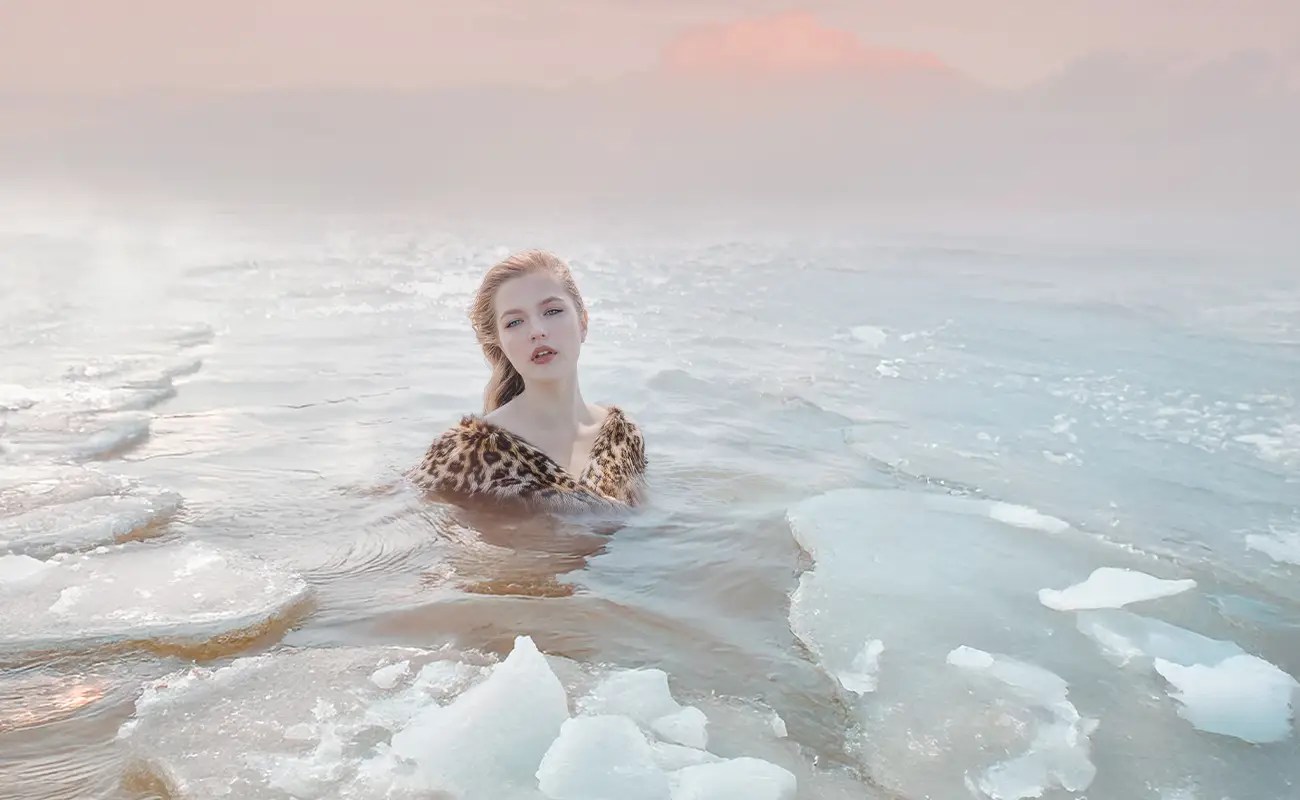
Banner image featuring Ekaterina Epifantseva
“Photography was the therapy that saved my life; there is no truer way to articulate its impact.”
Between History, Humanity, and the Search for Meaning
David Degelin arrived at photography through an unexpected sequence of experiences rather than a carefully designed artistic ambition. His academic path began with a Master’s Degree in Archaeology from Louvain University in Belgium before continuing into postgraduate studies in Social and Cultural Anthropology. Although these disciplines appear distant from visual art, they became the intellectual foundation of his photographic practice. Archaeology cultivated an instinct for uncovering forgotten traces of human existence, while anthropology shifted his attention toward the emotions, rituals, and social realities that give those traces meaning. Together, these fields developed an unusually layered perspective that continues to shape every image he creates. Instead of separating artistic expression from scholarship, Degelin allows both ways of thinking to coexist, resulting in photographs that investigate not only appearance but also memory, identity, and emotional presence. His camera therefore functions as more than a recording device. It becomes an instrument through which multiple chapters of his life converge into a singular visual voice.
Long before photography became central to his identity, visual culture surrounded his childhood. His father, a film director, immersed the family in cinema, literature, classical music, and fine art with relentless enthusiasm. During those early years, these influences often felt overwhelming rather than inspiring, leaving the young Degelin eager to distance himself from a world that seemed imposed upon him. Even so, one important connection quietly formed when, at the age of nine, he began photographing everyday moments with a pre-Second World War Kodak Model B that had also belonged to his father. Those first photographs carried no artistic ambition. They simply documented holidays and ordinary experiences. As adolescence brought increasing conflict between father and son, photography became something he intentionally abandoned. Determined to establish an independent identity, he pursued archaeology instead, believing that the study of history offered a completely different future. Ironically, museum visits and archaeological expeditions slowly reintroduced him to artistic expression, reopening interests he had once tried to suppress.
Life eventually carried Degelin even farther from the creative world. After completing his studies, he entered the corporate sector, building a career as a programmer, project leader, and team manager. Years spent navigating structured professional environments gradually replaced the curiosity that had driven his academic life. Although the work provided stability, it also produced an increasing sense of emotional exhaustion that ultimately led to profound personal despair. During this difficult period, his spouse encouraged him to return to photography without any expectation of professional success, simply as a way to rediscover joy. That decision transformed his life. Photography became both a creative discipline and a deeply personal form of healing, restoring clarity during a period when everything else seemed uncertain. Looking back, Degelin recognizes that every previous chapter contributed essential qualities to his artistic identity. The analytical precision of archaeology, the empathy of anthropology, the discipline acquired in technology, and the lessons learned through personal hardship now coexist behind every photograph he produces.

Photographer David Degelin
Featuring Qian Zhao
David Degelin: Painting with Light Instead of Pigment
Rather than drawing his strongest inspiration from photographers alone, David Degelin constructs his visual language from centuries of artistic traditions that extend far beyond the camera. Belgian Surrealists René Magritte and Paul Delvaux occupy a particularly important place in his imagination, encouraging him to blur the line between reality and psychological suggestion. Their ability to transform ordinary settings into spaces filled with ambiguity resonates deeply with his own approach. Additional influences emerge from the dramatic contrasts of French and Dutch Baroque painting, the emotional gravity of Spanish Classicism, the lyrical qualities of the Pre-Raphaelites, and the refined elegance associated with French Rococo. Together these traditions contribute a sophisticated understanding of atmosphere, composition, and narrative tension. Degelin does not imitate these historical movements directly. Instead, he translates their visual principles into contemporary photographic images that balance theatrical beauty with emotional restraint, allowing each frame to function as a carefully constructed scene rather than a spontaneous snapshot.
Japanese aesthetics also play a defining role in the evolution of his work. The ukiyo-e masters Utamaro and Hokusai shaped his appreciation for disciplined composition, generous negative space, and elegant simplicity. These principles align naturally with his preference for images that communicate through quiet visual relationships rather than overwhelming detail. Their influence combines with his admiration for film noir and European cinema, both of which reinforce his fascination with controlled light, stillness, and psychological atmosphere. Rather than relying on dramatic action, Degelin often creates tension through silence, inviting viewers to slow their pace and consider what remains unspoken inside the frame. This cinematic sensitivity gives his photographs an unmistakable rhythm in which gesture, shadow, and environment work together to create narratives that remain intentionally open to interpretation.
Photography itself nevertheless provides an equally rich source of inspiration through practitioners whose approaches vary dramatically. Yamamoto Masao and Asako Narahashi demonstrate the expressive power of quiet observation, while Nobuyoshi Araki and Zhang Haier encourage fearless engagement with intimacy and vulnerability. Saul Leiter, Vivian Maier, and Dorothea Lange reveal how ordinary urban environments can contain remarkable emotional depth when approached with sensitivity and patience. Experimental innovation emerges through the influence of Man Ray, while Peter Lindbergh and Helmut Newton inspire his understanding of portraiture, fashion, and human presence. These references never exist as isolated quotations. Instead, Degelin absorbs them into a broader artistic vocabulary that continually evolves. Painting, cinema, printmaking, and photography become interconnected influences that allow him to create images where atmosphere carries as much significance as subject matter, and where visual beauty always serves deeper emotional inquiry.

Featuring Cassandra Balle
The Beauty of Solitude Beyond Convention
Among the photographs that define David Degelin’s artistic direction, one image from the series If the Wind Scares You occupies a particularly important position. Created in the windswept dunes of Oostduinkerke on the Belgian coast and featuring model Cassandra Balle, the work was inspired by the coastal paintings of Belgian Impressionist Anna Boch. More than a visual tribute, the photograph marks a significant point in Degelin’s continuing movement toward a painterly approach to photography. The landscape becomes more than a backdrop. It functions as an emotional environment where atmosphere, movement, and human presence merge into a unified composition. This work established the two principal concerns that continue to define his practice: the reclamation of solitude and the reconsideration of accepted standards of beauty. Both themes continue to guide his artistic development while offering viewers an invitation to reflect on experiences that often remain overlooked within contemporary visual culture.
For Degelin, solitude represents a complex emotional condition rather than a negative state to be avoided. He observes that many Western cultures frequently associate being alone with abandonment, isolation, or emotional suffering, creating a vocabulary that leaves little room for more positive interpretations. His photography seeks to challenge this assumption by presenting solitude as a place of reflection, renewal, and creative possibility. The frequent appearance of a single figure within his compositions is therefore a deliberate artistic decision rather than a stylistic coincidence. These solitary characters encourage viewers to consider silence not as emptiness but as an opportunity for personal transformation. Instead of portraying loneliness as defeat, Degelin presents moments in which individuals reconnect with themselves beyond the noise and distractions of contemporary life. Through carefully controlled environments and restrained visual storytelling, he transforms isolation into a source of quiet strength.
This same photograph also reflects his commitment to expanding conventional ideas of beauty. Degelin questions contemporary ideals that reduce attractiveness to narrow expectations involving age, gender, or standardized physical characteristics. Rather than accepting those limitations, he approaches beauty as something fluid, subjective, and constantly evolving. Some photographs intentionally pursue an almost impossible idealization reminiscent of classical painting, while others embrace the Japanese philosophy of wabi-sabi, celebrating imperfection, transience, and incompleteness. The Oostduinkerke image balances these seemingly opposite approaches with remarkable subtlety. Within the open landscape, the human figure exists neither as an object of perfection nor as a rejection of beauty itself. Instead, beauty becomes something discovered through authenticity, atmosphere, and emotional honesty. This philosophy allows Degelin to create photographs that resist simplistic categorization while encouraging viewers to redefine their own understanding of aesthetic value.

Featuring Cassandra Balle
David Degelin: Trusting Intuition in an Unscripted World
David Degelin’s creative process has gradually shifted from strict preparation toward openness and intuition. Earlier in his career, mood boards and carefully planned concepts played a much greater role in shaping each photographic session. Over time, however, he recognized that excessive planning often limited the unexpected discoveries capable of transforming an image. Today he begins each project with only a general direction, allowing the final composition to emerge through observation and responsiveness. Because he primarily photographs on location, changing weather, passing strangers, shifting light, and unforeseen circumstances naturally become active participants within the creative process. Rather than treating these variables as obstacles, he welcomes them as collaborators capable of introducing authenticity that cannot be manufactured. This willingness to surrender complete control reflects his broader artistic philosophy, where openness often produces stronger emotional truth than rigid perfection ever could.
Collaboration occupies an equally central place within his practice. Degelin approaches photography as an encounter built on trust instead of authority, giving significant importance to the emotional state and personality of each model. Rather than imposing fixed directions, he listens carefully to the energy they bring to the session and allows those responses to influence the evolving image. This shared vulnerability creates photographs that feel emotionally genuine while preserving space for individual interpretation. The relationships formed during these collaborations extend far beyond the duration of a single shoot, becoming an essential component of his artistic language. Models are not passive subjects within his work but creative partners whose sensitivity, intuition, and presence shape the final result alongside his own vision. This collaborative spirit reinforces his belief that meaningful photography grows through mutual understanding rather than complete artistic control.
Looking ahead, Degelin plans to continue his long running exploration of the Beauty of Solitude by introducing it to the energetic streets of Brussels. This new project will place the refined visual language of his fine art practice within an environment defined by movement, unpredictability, and constant public activity. The contrast between intimate emotional reflection and the city’s restless atmosphere offers fresh opportunities to investigate how solitude can exist even in crowded spaces. He also intends to continue working closely with trusted collaborators including Qian, Clothilde, Cassandra, Silvy, Naomi, Sien, Ulrike, Mili, and Ekaterina, whose contributions remain fundamental to his creative process. Together they will seek images that prioritize sincerity over spectacle, allowing emotional authenticity to emerge naturally from encounters between people and place. Through this evolving body of work, Degelin continues to use photography as both personal reflection and artistic inquiry, creating images that invite contemplation rather than immediate certainty.