“I never became an artist. I believe I always was one.”
Between Observation and the Impossible
Cylee Gunn builds images around a productive tension: the world as it appears and the world as imagination might reconstruct it. A first generation Asian American illustrator based in Long Beach, California, Gunn works across acrylic and oil painting, colored pencil, graphite, mixed media, and digital art. Her practice is grounded in realism, yet observation rarely represents an endpoint. Instead, recognizable forms become foundations for environments shaped by curiosity, memory, play, and visual invention. After growing up in Michigan and later moving to California, Gunn developed a heightened respect for the natural environment, an awareness that gradually redirected her artistic priorities. Earlier work concentrated on imaginary settings and ideas of utopia, while her post graduation practice increasingly turned toward the beauty and vulnerability of nature. Across these shifts, she has maintained a commitment to visual storytelling and to illustration as a culturally meaningful form capable of connecting generations, encouraging creativity, and restoring a sense of wonder.
That visual language was strengthened through Gunn’s education at Laguna College of Art and Design, where she studied illustration and earned a Bachelor of Fine Arts. Her training gave her experience with both traditional and contemporary approaches, supporting the technical range that now allows her to move between physical and digital processes. Yet her relationship with art began long before formal study. Gunn remembers childhood as a period driven by creativity, when she drew and painted with whatever supplies her parents could provide. Art offered an escape from ordinary reality and a way to construct spaces governed by her own imagination. That impulse remains central even as her style continues to change. Realism supplies the structural foundation, but Gunn repeatedly stretches its boundaries through explorative surrealism. By combining convincing observation with invented situations, she creates images in which familiarity can shift into fantasy without completely losing its connection to lived experience.
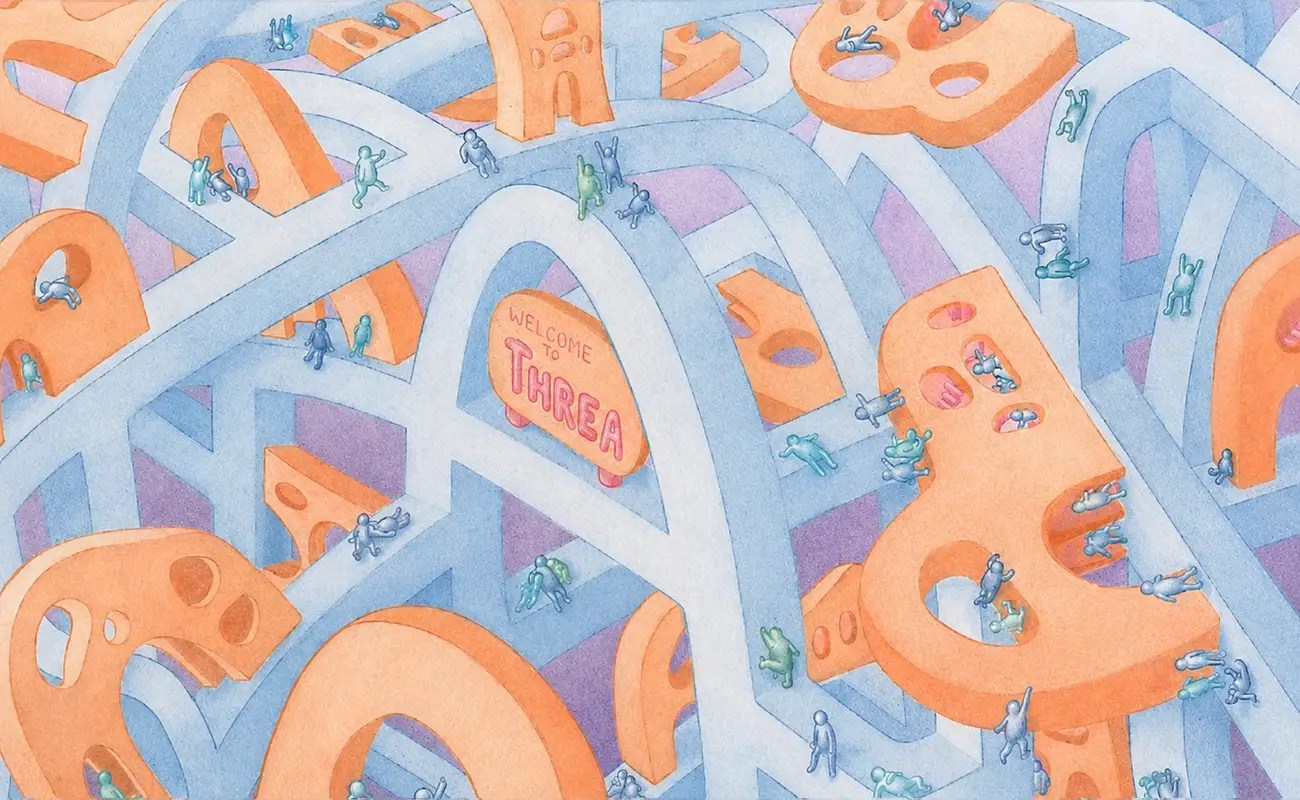
Youth and imagination provide an important emotional current throughout Gunn’s work. Rather than treating fantasy simply as visual spectacle, she uses imaginary worlds to awaken curiosity, nostalgia, and the freedom associated with childhood invention. Her interest in crossing reality with fiction is partly informed by M.C. Escher and Dr. Seuss, two figures whose approaches demonstrated different possibilities for disrupting normal perception. Gunn is drawn to Escher’s manipulation of perspective and to the imaginative freedom of Seuss, particularly the ability of both artists to transform recognizable structures into something beyond everyday logic. Those influences can be sensed in Gunn’s looping architecture, unusual spatial relationships, rounded forms, roads, vehicles, arches, and miniature figures. Still, the resulting environments belong to her own developing vocabulary. They are less concerned with menace than discovery, inviting viewers to wander visually through spaces where complexity is softened by gentle color and where the impossible can feel strangely welcoming.

Cylee Gunn: Finding Freedom Inside Shifting Perspectives
Gunn’s imagined landscapes often accumulate into elaborate systems, balancing density with an underlying sense of play. Architecture repeats and curves, pathways seem capable of leading in unexpected directions, and familiar objects become components within spaces that resist conventional perspective. The influence of spatial puzzles is apparent, but Gunn tempers structural complexity through soft pastel colors and rounded shapes that lend her invented places the atmosphere of recollection or childhood dreaming. This approach allows surrealism to function as an invitation rather than a source of unease. Viewers encounter worlds that seem to possess their own gentle internal rules, even when those rules contradict ordinary physical experience. Such scenes connect directly with Gunn’s earlier interest in imaginary environments and utopian possibilities. They also express her enduring belief in art as a route away from the restrictions of immediate reality. Escape, however, does not necessarily mean withdrawal. Through invention, Gunn creates room to reconsider how reality itself might be organized, perceived, or emotionally experienced.
Her understanding of illustration extends beyond its ability to describe a scene. Gunn wants the form to operate as a meaningful cultural force, capable of generating connection and reawakening creativity across age groups. This ambition is closely related to the role imagination has played throughout her own life. Drawing and painting initially gave her access to a private world, while her mature practice turns that capacity outward by offering viewers spaces in which observation and invention can coexist. The resulting work asks people to look carefully while also permitting their minds to move beyond what is immediately visible. Gunn’s realism gives the imagery credibility, but surreal alterations prevent familiarity from becoming passive. A road can become part of a visual puzzle, an architectural structure can resist predictable logic, and an ordinary landscape can develop into a setting with its own imaginative possibilities. Through this combination, illustration becomes not merely descriptive but participatory, requiring viewers to navigate, interpret, and complete the experience themselves.
Gunn’s evolving style also resists the idea that an artist must remain fixed within one recognizable formula. She identifies realism as the continuing foundation of her work, yet the ways she builds upon that foundation remain open to change. Traditional painting, drawing, mixed media, and digital processes each offer different possibilities for translating observation into an image. That flexibility reflects the multidisciplinary character of her practice and allows subject matter to influence material choices rather than forcing every idea into a single technique. Her current interest in making flowers more whimsical and free flowing illustrates this ongoing experimentation. Botanical forms already give her an observational anchor, but their natural movement and flexibility offer opportunities to loosen composition and introduce greater visual freedom. The progression feels consistent with Gunn’s larger artistic concerns: reality supplies something tangible to begin with, while imagination creates the possibility of transformation. The result is a practice that can change direction without abandoning the principles that hold it together.

When Discarded Matter Becomes a Living Surface
Environmental consciousness has introduced another dimension to Gunn’s work, connecting her material decisions with questions about contemporary consumption. Moving from Michigan to California strengthened her respect for the environment and prompted her to consider how her art might express that concern. She became increasingly troubled by the abundance of waste around her, eventually incorporating grocery advertisements and newspaper into her work. These disposable materials are significant precisely because they are so easily overlooked. Grocery advertisements are designed for short term usefulness, quickly becoming unwanted paper that can accumulate as waste. By placing them within artworks, Gunn redirects materials associated with disposability into objects intended for sustained attention. The decision also expands the function of mixed media within her practice. Paper fragments are not simply added for surface variation. Their previous role within consumer culture remains visible, allowing the material itself to participate in the ideas of the finished work and connecting ecological awareness with questions about what society produces, uses, and abandons.
Against these fragmented advertisements and newspaper surfaces, Gunn introduces flowers, fruit, and sweeping organic lines. The contrast establishes a visual conversation between accelerated consumption and the slower processes associated with living things. Printed prices, commercial language, and product imagery create dense fields of information, while botanical subjects introduce growth, fragility, renewal, and physical presence. Gunn’s observational skill gives these natural forms enough specificity to remain recognizable, yet she also allows gesture, silhouette, and color to carry emotional significance. This balance makes the mixed media works both materially direct and symbolically open. Consumer paper retains evidence of its former purpose even after being transformed into an artistic ground, while flowers interrupt that commercial noise with forms shaped by biological rather than economic cycles. Through this juxtaposition, Gunn brings sustainability into the physical construction of the artwork. The environmental idea is therefore not restricted to subject matter, because the reused material itself demonstrates an effort to reconsider the value and lifespan of something commonly discarded.
This ecological direction does not replace Gunn’s earlier interest in invented environments. Instead, it extends her ongoing concern with how imagination can alter a viewer’s relationship with the familiar. Previously, that transformation might have occurred through impossible architecture or utopian spaces. In her mixed media work, it can begin with a grocery advertisement that has been removed from its expected context and converted into part of a permanent visual surface. Both approaches ask viewers to reconsider objects and environments they might otherwise accept without question. The difference lies in emphasis. Her imaginary worlds push reality toward fiction, while the newer works bring attention back toward physical materials, natural beauty, and patterns of waste. Gunn continues to plan further flower paintings on mixed media grounds, suggesting that this intersection of botanical observation and reused consumer material remains active within her practice. At the same time, her experimentation with more fluid floral movement indicates that environmental reflection and imaginative freedom are becoming increasingly interconnected rather than operating as separate artistic concerns.

Cylee Gunn: A Poppy Between Memory, Peace, and Renewal
Among Gunn’s botanical works, her painting of a red poppy carries particular personal significance. Although she often chooses flowers initially because of their appearance, the poppy was selected for the symbolism attached to it. For Gunn, the flower holds associations with bloodshed in conflict while also embodying regeneration and peace. Those meanings intersect closely with her own experiences, giving the painting an autobiographical weight that distinguishes it from a purely observational floral study. Gunn describes her life as having been marked by emotional strife and recalls needing to seek her own forms of tranquility during childhood. She also connects her history with the necessity of rebuilding and restoring her sense of humanity in several ways. Within that context, the poppy becomes more than a beautiful natural subject. Its capacity to signify both suffering and renewal gives Gunn a visual form through which she can consider the trials that shaped her life and the process of finding a way forward.
The significance of the poppy also clarifies why flowers occupy such a compelling place within Gunn’s broader visual language. Botanical subjects allow her to retain the realism that anchors her practice while opening space for psychological meaning. A flower can be carefully observed and immediately recognizable, yet its color, movement, cultural associations, and physical delicacy can communicate experiences that resist literal depiction. Gunn’s restrained treatment of botanical subjects can give individual specimens an emblematic presence, particularly when they appear against textured or visually active grounds. The poppy demonstrates this potential most clearly because its symbolic history and personal meaning overlap. Remembrance, peace, endurance, regeneration, and private struggle meet within one familiar natural form. This combination also connects Gunn’s personal concerns with her environmental interests. Nature is not treated merely as scenery. It can carry memory, represent emotional restoration, interrupt the visual language of consumption, and offer an image through which human resilience can be considered without abandoning the specificity of the natural world.
Gunn’s working routine reflects the same negotiation between practical responsibilities and creative exploration that appears throughout her art. Before beginning the day formally, she considers deadlines, required tasks, and the work she wants to make, dividing her attention between obligations and personal creative priorities. Paid artistic work comes first, after which she turns toward developing new pieces. Within that ongoing process, she intends to continue painting flowers over mixed media backgrounds while exploring their flexibility, natural movement, and potential for more whimsical compositions. The direction brings several strands of her practice together: observational realism, reused material, ecological awareness, personal symbolism, and the imaginative freedom that has accompanied her since childhood. Whether Gunn is constructing an impossible environment or isolating a single botanical form, she is interested in changing how familiar things are encountered. Her work creates opportunities for escape, but it also encourages attention, asking what might become visible when imagination, memory, nature, and everyday materials are permitted to transform one another.