“Art is the reason I awaken every day, not because I am so dedicated, but it is my breath, my energy, my self.”

Jazwiecki and Poe
Take Another Bite Of My Heart
Where Beauty Meets the Unconscious
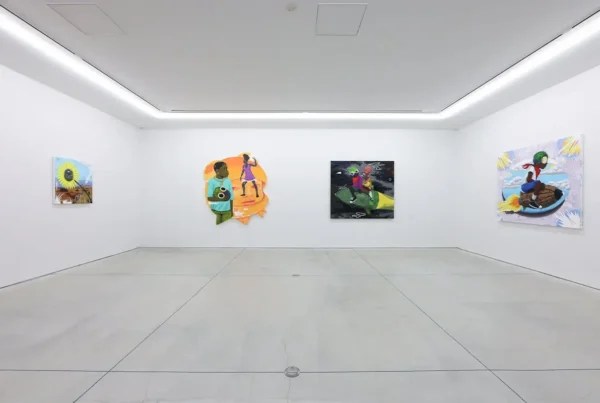
Leonard Jazwiecki treats painting less as a record of appearances than as a meeting point between observation, memory, instinct, and the shifting identities he has carried through life. His practice moves between large oil abstractions, figurative painting, and drawing, yet he does not see those forms as opposites. For him, each begins with the same impulse: to make visible an internal experience that is difficult to contain in ordinary language. His paintings can be calm, sensual, volatile, or intensely layered, but they remain connected by a persistent attraction to beauty and by his belief that an artwork should keep revealing itself rather than settle into a single reading.
That approach developed early. Jazwiecki remembers arranging sticks and stones as a child, watching insects move through the structures he made, and discovering that wet earth could become a drawing material. By seven he was studying the spiral structure of a rose and drawing it from observation. At fourteen, growing up near Lake Erie in Lackawanna, New York, he began painting with deliberate seriousness. The surrounding Bethlehem Steel plants supplied an overwhelming visual and physical environment: enormous furnaces, fire, noise, machinery, pollution, and constant industrial motion. In response, he painted large, furious abstractions on improvised supports made from bedsheets and packing wood.
His life did not follow a single artistic career path. He worked as a stevedore in Buffalo, cast gold jewelry in Queens, owned and operated Fauve, an art gallery in Amherst, Massachusetts, worked as an assistant art curator for the McCrory Corporation, and later taught drawing at college. He also worked in public relations for Mayor Ed Koch on issues affecting disabled communities and contributed to efforts around closed captioning for television, then worked as a graphic artist for the U.S. Department of Defense. Jazwiecki considers these experiences part of the same creative continuum as painting. Art, in his view, is not a separate professional compartment but a way of moving through work, relationships, memory, and change.

Live Action Thriller
Leonard Jazwiecki: A Life Built From Contrasts
Jazwiecki resists the idea that an artist can be adequately understood through an exhibition list. He has exhibited in different cities and artist run spaces, and he recalls showing with DePagan Galleries on 57th Street in New York in 1987, but he places greater value on the artwork itself than on institutional validation. That position also shapes the way he speaks about biography. Rather than presenting his life as a neat progression, he prefers fragments, vignettes, and seemingly improbable connections. The facts matter, but so does the way memory turns those facts into a personal narrative.
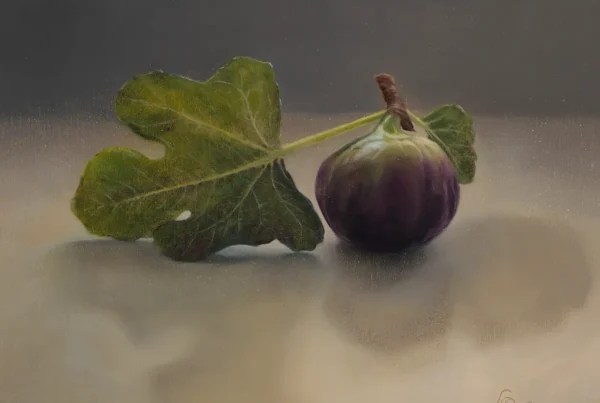
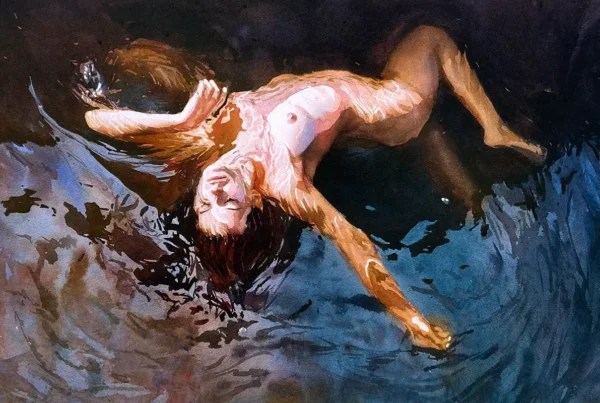
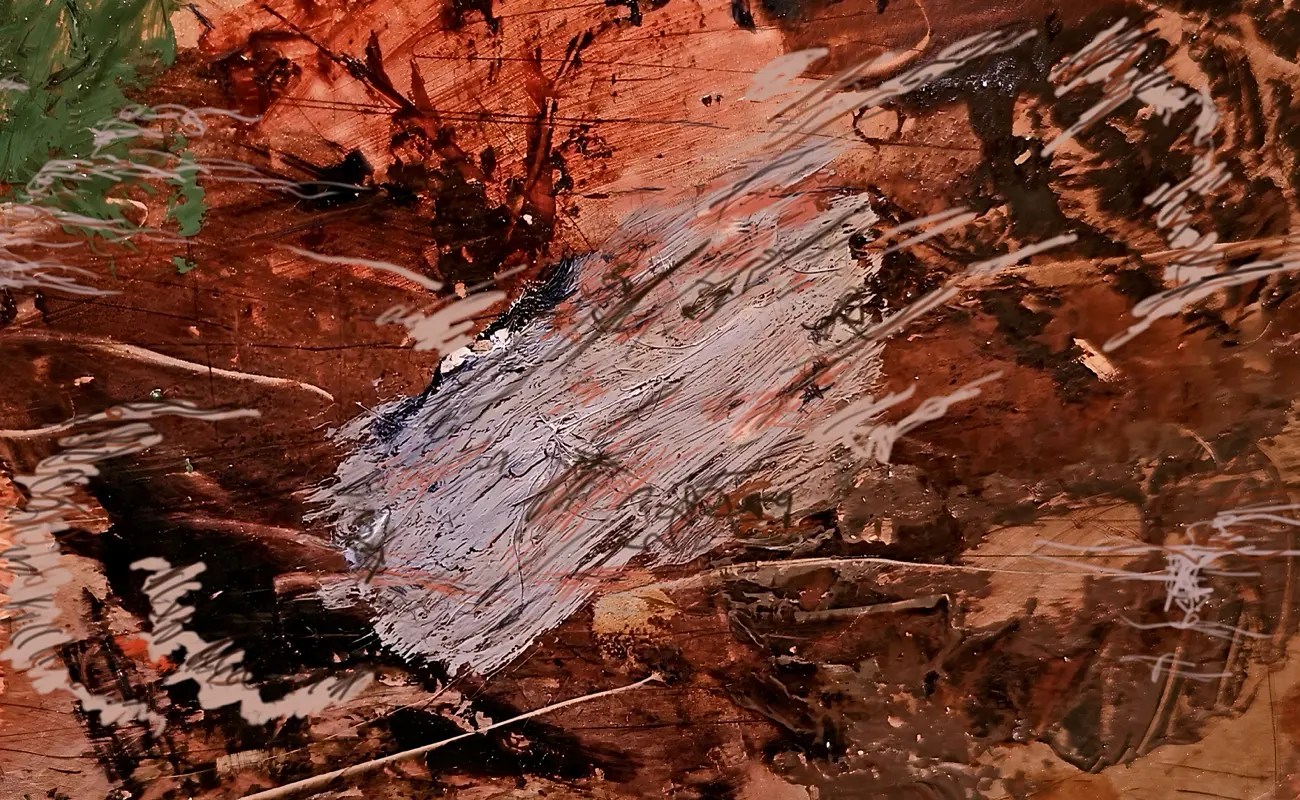
His visual work follows the same logic. Jazwiecki describes three broad currents within his practice: realistic drawings and paintings, sensual and expressive figurative works, and large nonrepresentational abstractions in oil on canvas. The abstract paintings are especially important to him because they allow color, movement, abrasion, and layered marks to develop without a predetermined image. He often finds figures, animals, and scenes emerging inside them after the fact, as though the unconscious had inserted its own imagery while his conscious attention was occupied elsewhere.
Beauty remains a constant, even when the work becomes dark or aggressive. Jazwiecki refers to his abstract paintings as “Pretty Serious Abstractions,” a phrase that captures the tension he enjoys between visual pleasure and psychological intensity. He has been told that some works are too pretty despite their darker emotional charge, but he accepts that quality rather than trying to suppress it. One painting, “I Just Want To Start A Flame In Your Heart,” continues to fascinate him for its combination of force, sensuality, movement, and play. Its title comes from a jazz era song, while the painting itself embodies the collision of seriousness and delight that defines much of his abstraction.

I just Want To Be The Flame In Your Heart
Figures Emerging From Color
The figurative painting “YesJaz 14” gives Jazwiecki a particularly clear way to explain how his realistic and abstract practices connect. He describes the work as a bridge between the two, with the figure appearing to emerge from the same colors, lines, and forces that animate his abstractions. The body is calm but charged, poised yet physically powerful. For Jazwiecki, that tension allows the image to operate psychologically as much as anatomically, suggesting a presence that could remain still or suddenly break beyond the picture plane.
He also sees the figure as occupying a transitional state of youth and gender, which gives the painting a further sense of ambiguity and intensity. The surrounding darkness, distant fires, obscured dancers, and saturated color create an atmosphere that he associates with rhythm, sensuality, and the deep unconscious. Oil on canvas is essential to this effect. Jazwiecki values oil partly because of its historical continuity, but also because it is physical, messy, slow, and capable of being repeatedly worked, erased, layered, and transformed.
His references reach backward as readily as they move through modern painting. Leonardo da Vinci is one of the artists who has remained especially important to him. Jazwiecki has repeatedly read Leonardo’s notebooks and is drawn to passages that encourage artists to discover images in marble, wood grain, stains, smoke, and random marks. He interprets these exercises as evidence of an imaginative method in which perception and invention remain fluid. That principle closely matches his own attraction to forms that are not planned in advance but discovered through attention, chance, and sustained looking.

Tossled
Grasp The Obvious
Leonard Jazwiecki: Painting as a State of Play
Jazwiecki’s studio process depends on entering a state in which conscious control loosens without disappearing. Before painting, he reconnects with the emotional and spiritual motives that make him work before dawn or late into the night. He compares this impulse to a parable about religious scholars who hear a shepherd singing with such joy that they assume he must be a learned mystic. When they finally meet him, they discover that his song comes not from formal study but from gratitude, care, and direct experience. Jazwiecki uses that story to describe the simplicity at the core of his own practice.

You’re Only Coming Through In Waves
His current focus is on expanding the large, colorful abstract paintings that allow the greatest room for play. That freedom, he emphasizes, is not the absence of discipline. It comes after decades of study, repeated attempts, mistakes, rejected works, and experience across different materials and styles. Jazwiecki wants the resulting paintings to feel alive enough to keep calling the viewer back. He speaks of art as breath, energy, and self, and that idea is visible in the restless movement of his practice: a lifelong effort to turn memory, beauty, contradiction, and unconscious impulse into forms that remain open to discovery.

Calm at the Heart of Turbulance
Explore Leonard Jazwiecki’s Work
Leonard Jazwiecki’s work spans expressive figurative painting, sensuous interpretations of the human form, and his extensive Pretty Serious Abstractions series. Readers interested in acquiring original artworks or signed limited-edition prints can contact the artist directly through his websites to discuss availability, commissions, and printing options, including canvas, paper, metal, glass, plastic, and wood.
Explore his three artistic collections:
Expressive Figurative Art: yesjaz.com
Sensuous Figurative Art: ohyesjaz.com
Pretty Serious Abstractions: omgyesjaz.com
His artworks can also be explored on Artsy.
Books and Other Creative Projects
Jazwiecki’s creative activities also extend to illustrated children’s books, including Space Ballerina, Itty Bitty Pretty Kitty, and Fiona’s Roman Adventure, created with Gabrielle Jazwiecki.
Art-inspired apparel and merchandise are available through Cat Celt Creative on TeePublic.