“People, like life itself, are made up of layers.”
The Art of Layered Expression
Caroline Kusters approaches painting as an extension of a life shaped by curiosity, creativity, and a fascination with visual culture. Before fully embracing painting, she explored interests that ranged from graphic design to fashion education, experiences that continue to echo through her artistic language today. The influence of haute couture, feminine silhouettes, intricate patterns, and expressive color palettes remains deeply embedded in her work. Rather than following rigid artistic conventions, Kusters gravitates toward openness and experimentation, embracing what she describes as “coloring outside the lines.” That philosophy defines both her creative process and her outlook on collaboration, culture, and human connection. Painting eventually became the place where all of her interests could coexist naturally, offering complete freedom to translate emotion, intuition, and observation into visual form.
Her paintings often balance between abstraction and figuration, creating a visual tension that feels both poetic and emotionally charged. Female figures frequently appear as central presences within compositions built from layered brushwork, expressive line structures, and textured surfaces. Acrylic paint on linen canvas serves as her primary medium, though she regularly expands the tactile quality of her works with sand, metallic spray paint, glitter, and applications of gold, silver, or copper leaf. These materials are never decorative additions alone. Instead, they function as emotional amplifiers that alter the atmosphere of a painting and deepen its physical presence. Muted tones interrupted by vivid accents create a rhythm that encourages quiet reflection while still holding dramatic intensity.
The emotional core of Kusters’ practice lies in her fascination with human complexity. She is drawn toward what exists beneath appearances, believing that people contain invisible layers formed through memory, vulnerability, experience, and transformation. This perspective appears repeatedly throughout her body of work, particularly in compositions where overlapping lines and fragmented forms suggest interconnected stories rather than fixed identities. Japanese aesthetics, symbolism from nature, and the discipline of design all contribute subtle influences, yet her work avoids becoming tied to any single reference point. Instead, she constructs visual environments where ambiguity, softness, and strength can exist simultaneously. Her paintings invite viewers to move slowly, observe carefully, and consider the emotional structures hidden beneath visible surfaces.

Caroline Kusters: The Language of Women, Nature, and Symbolism
Several of Caroline Kusters’ collections reveal how strongly symbolism and materiality guide her artistic direction. Her Japan-inspired works, for example, transform natural forms into contemplative visual studies rooted in emotional resonance and cultural reference. In ASPIRATION and HARMONY, overlapping Ginkgo leaves become meditations on balance, stillness, and connection. Built from textured mixtures of sand and paint, these compositions possess an earthy physicality that contrasts elegantly with touches of gold and silver leaf. Soft palettes of white, sand, gray, and metallic accents create an atmosphere of restraint and serenity. The compositions appear minimal at first glance, yet their layered surfaces and interconnected forms suggest emotional complexity beneath apparent calm.
Nature also becomes a vehicle for expressing devotion, grace, and personal strength. PURITY presents large red leaves charged with symbolic associations of passion and prosperity, while REGARD captures floral elegance through restrained purple tones once associated with imperial history. These works reveal Kusters’ ability to translate emotional themes into simplified but highly evocative forms. Rather than crowding the canvas with excessive detail, she allows space, texture, and color relationships to carry emotional weight. The paintings communicate quietly yet powerfully, encouraging contemplation through subtle visual cues rather than direct narrative. This measured balance between abstraction and recognizable imagery remains one of the defining characteristics of her artistic voice.
Her Gloves series expands these ideas further by placing women at the center of abstracted compositions that merge fashion references with emotional storytelling. In GOLDEN CONNECTION, a self-assured female figure emerges through sand tones, burnt sienna, and luminous gold details that travel across the canvas in thick linear gestures. The glove itself becomes symbolic, functioning almost as a focal point of identity and connection. ON POINT presents another woman portrayed with softness and confidence, surrounded by flowing red and gray forms accented with gold leaf. Throughout these works, realism dissolves into abstraction without ever losing emotional clarity. Rough lines, unfinished spaces, and layered surfaces create portraits that feel psychologically open rather than fixed, allowing viewers to project their own interpretations onto each figure.

The Power of Shared Creativity
While individual expression remains essential to Caroline Kusters’ practice, collaboration and co-creation have increasingly become central to her artistic philosophy. She believes art can function as a bridge between people of different ages, backgrounds, and experiences. This belief extends beyond the studio into projects designed to encourage participation and collective imagination. One of the clearest examples emerged during a 2025 collaboration with children from combined Year 1 and Year 2 classes at a primary school. Working around the theme of insects, each child was invited to reinterpret a chosen insect entirely in their own style using materials ranging from paint and pencils to glitter and stickers. Kusters intentionally encouraged unrestricted experimentation, prioritizing individuality over technical perfection.
The resulting collective artwork, an “insect tree,” became far more than a classroom exercise. Every insect retained its own identity while contributing to a larger interconnected composition. Kusters integrated her own visual signature into the final work through abstract lines and the inclusion of a feminine face woven into the structure of the tree. This balance between personal contribution and collective participation reflects the larger values present throughout her career. She views co-creation not as a compromise of artistic identity, but as an expansion of it. The project demonstrated how collaborative art can foster confidence, pride, and emotional connection while still maintaining artistic coherence and visual sophistication.
The emotional impact of the project stayed with her because of the children’s enthusiasm and sense of ownership. Watching them recognize their individual contributions within a much larger artwork reinforced her belief that creativity becomes most meaningful when shared. That philosophy now shapes many of her ambitions for future projects. Kusters hopes to create larger collaborations involving municipalities, musicians, elderly communities, and young people, building environments where creativity can encourage dialogue and collective participation. Her vision is not limited to producing finished objects for exhibition. Instead, she is interested in the social and emotional process that develops when people create together. For Kusters, the artistic journey itself becomes a form of connection capable of transforming both individuals and communities.

Caroline Kusters: Constructing Depth Through Texture and Imagination
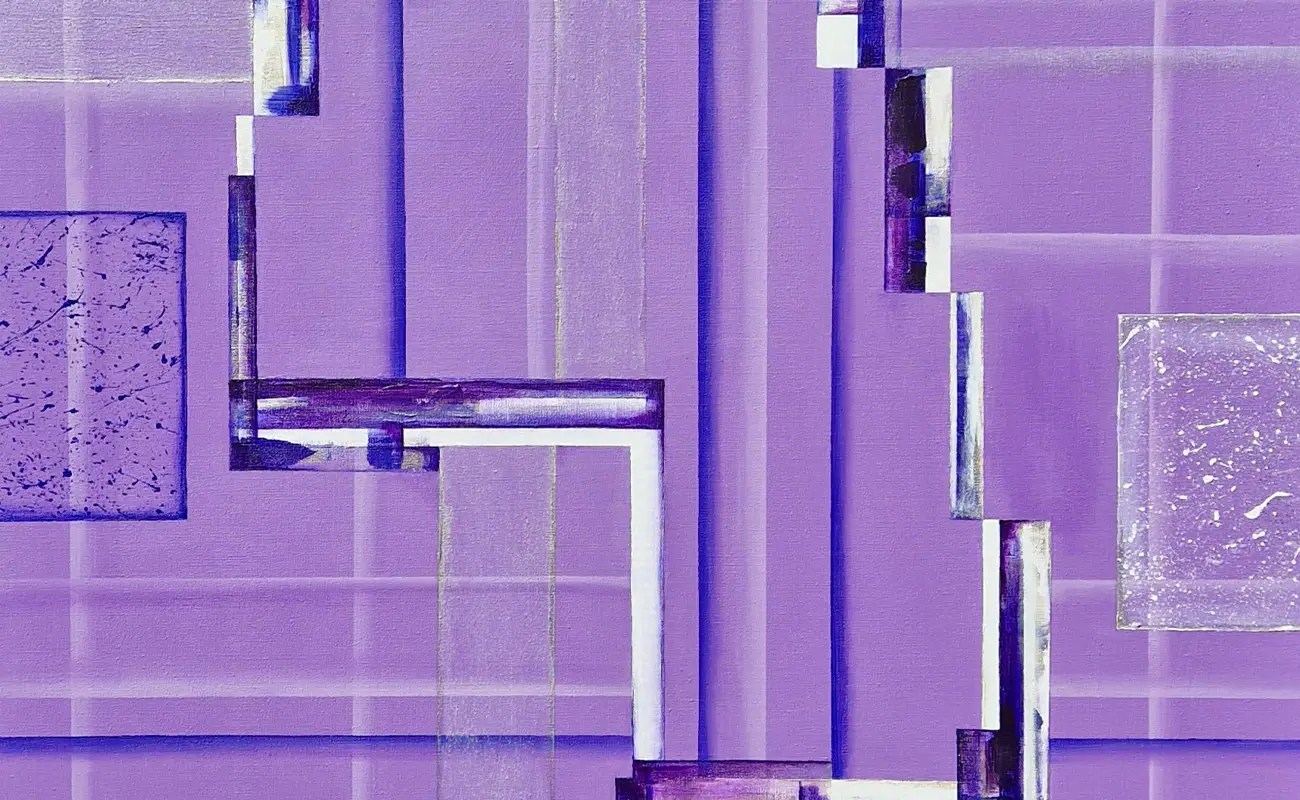
Texture functions as both a visual and conceptual device throughout Caroline Kusters’ paintings. Her Dimensions series explores the idea that people and life itself are constructed through interconnected layers. Lines stretch across the canvas in structured yet fluid arrangements, symbolizing invisible relationships, emotional histories, and overlapping experiences. Paint is applied through multiple techniques, including palette knife work, transparent washes, metallic spray paint, splatters, and textured sand applications. These contrasting methods generate surfaces that shift dramatically depending on light and perspective. Works such as SIGNIFICANCE and IMAGINATION demonstrate how restrained palettes can still produce emotional intensity through texture, movement, and reflective materials.
The painting Listening offers another compelling example of her layered visual language. Built from primary colors combined with black and gray forms, the composition centers on a woman quietly listening amid surrounding abstract shapes. Thick paint lines and gold leaf details create movement while emphasizing emotional focus within the work. Rather than presenting a literal narrative, Kusters constructs an atmosphere where attention, reflection, and human presence become central themes. This ability to suggest emotional states through fragmented abstraction allows her paintings to remain open to multiple interpretations. Viewers are encouraged to engage instinctively with color, gesture, and composition instead of searching for singular meanings.
That same openness appears in works such as Abstract Confidence and Starlet, where identity, femininity, and ambition become intertwined with expressive abstraction. Abstract Confidence presents a female figure divided between realism and distortion, surrounded by fluorescent paint, energetic splatters, and dramatic geometric forms. The painting feels theatrical, bold, and emotionally charged. Starlet introduces a young Indian woman whose colorful garments and metallic jewelry symbolize aspiration, determination, and inner richness. Thick lines and dynamic paint applications surround her figure, creating a sense of movement and momentum. Across these varied works, Caroline Kusters consistently transforms paint, texture, and symbolism into emotional experiences that feel both deeply personal and universally recognizable. Her art does not seek perfection or certainty. Instead, it embraces complexity, layered identity, and the beauty that emerges when emotion is allowed to remain visible.