“The medium itself becomes a living participant in the work, retaining the memory of time and gesture.”
Rooted in Heritage, Guided by Nature
Art has been part of Alain Churlaud‘s life from the very beginning, shaped by a remarkable family tradition that stretches across generations. The French painter inherited not only technical curiosity but also a profound appreciation for artistic expression through the women of his family. His great grandmother, Marie Louise, received first prize for porcelain painting in Geneva during the nineteenth century, establishing a creative legacy that continued with his grandmother Lena, whose oil landscapes and garden scenes reflected an enduring relationship with nature. His mother Jacqueline further reinforced this artistic environment by surrounding daily life with creativity and designing the family home as a tribute to the atmosphere of Monet’s Giverny. Growing up within this environment meant that painting was never an isolated activity but part of everyday experience, encouraging observation, patience, and an appreciation for beauty found in ordinary surroundings. These formative experiences established the foundations of a practice that continues to honor memory, inherited knowledge, and the expressive possibilities of natural materials while maintaining a deeply personal artistic identity.
Early encounters with museums and countless moments spent drawing landscapes beside his mother helped refine Churlaud’s visual sensitivity long before he developed his own artistic language. Rather than encouraging imitation, these experiences cultivated an attentive way of seeing, teaching him to notice subtle relationships between texture, light, and atmosphere. Nature became both subject and teacher, offering endless lessons through rivers, forests, mountains, and countryside views. These observations gradually evolved into a broader understanding of painting as a means of translating emotional experience instead of simply reproducing appearances. His appreciation for simplicity remains central to his work, allowing familiar landscapes to become places where memory, sensation, and physical gesture merge. Every canvas carries traces of these early influences, demonstrating how personal history can quietly shape artistic choices without limiting creative evolution. The result is a body of work that feels intimate while remaining open to universal emotional connections.
This inherited artistic foundation also nurtured an enduring respect for craftsmanship and material presence. Churlaud approaches every painting with an awareness that each mark reflects accumulated experience rather than isolated inspiration. Family traditions encouraged close observation, but they also fostered patience, discipline, and trust in intuitive discovery. These values continue to guide his studio practice, where the physical qualities of pigments and textured surfaces receive as much attention as composition itself. Instead of separating technical process from emotional expression, he allows both elements to develop together, creating paintings that invite viewers to slow their pace and experience the quiet intensity embedded within each surface. Through this combination of family heritage, personal reflection, and sustained observation of nature, Churlaud has established a distinctive artistic voice that honors the past while continually seeking new possibilities for visual expression.

Alain Churlaud: Constructing Balance Through Material and Gesture
Becoming an artist represented both continuity and transformation for Alain Churlaud. While his creative path emerged naturally from his family’s artistic background, it also required a personal decision to move beyond conventional representation and embrace experimentation. Granting himself permission to explore new visual directions became the defining moment of his development, opening possibilities that allowed abstraction, minimalism, figurative references, and the spontaneity associated with art brut to coexist within a single visual language. Rather than committing to one stylistic category, he embraces movement between multiple approaches, allowing each composition to determine its own balance. This flexibility reflects an artistic philosophy centered on curiosity rather than certainty, encouraging every painting to emerge through an active conversation between instinct and carefully considered structure.
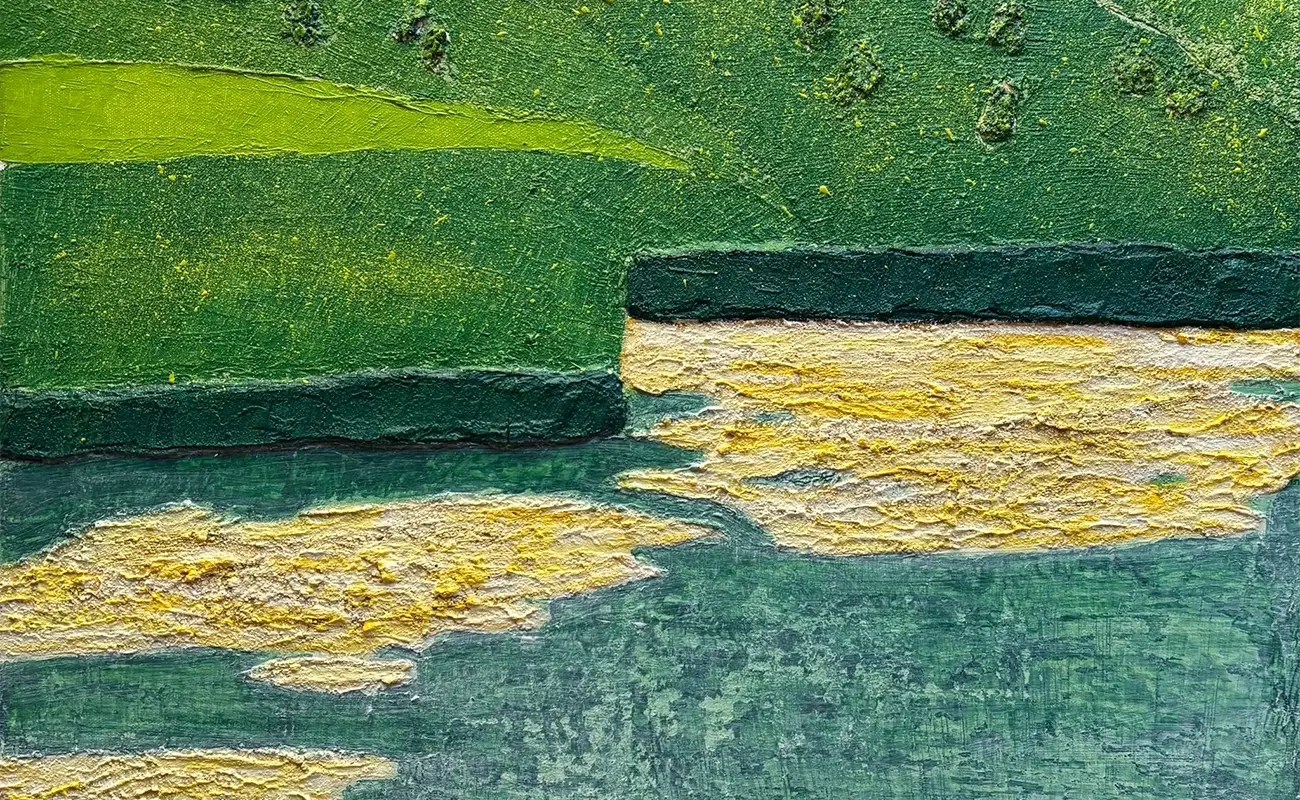
Material selection plays an equally significant role in defining Churlaud’s distinctive practice. His paintings begin with raw pigments, including a particular appreciation for genuine Cadmium Red Orange, whose intensity contributes to the emotional resonance of his compositions. These pigments are combined with natural materials such as sand and sawdust, creating richly textured surfaces that transform the canvas into something more physical than a traditional painted image. Palette knives, rollers, and brushes each contribute different forms of expression, allowing layers to accumulate through varied gestures and pressures. Rather than pursuing polished perfection, Churlaud values authenticity, embracing irregular textures and visible traces of the creative process. These tactile qualities reinforce the relationship between painting and landscape, allowing natural materials to become active contributors rather than decorative additions. Every surface records movement, decision making, and the passage of time, making the finished work both visual and deeply physical.
The search for equilibrium remains one of the defining characteristics of his artistic vision. Churlaud consistently balances intuitive freedom with thoughtful composition, ensuring that spontaneous discoveries remain connected to a coherent visual structure. His paintings invite viewers to engage slowly, encouraging attention to subtle shifts in color, texture, and spatial relationships instead of immediate narrative interpretation. Water, mountains, forests, and rural environments frequently inspire the emotional atmosphere of his work, yet these subjects rarely appear as literal representations. Instead, they become catalysts for exploring silence, rhythm, and emotional memory through abstraction. This careful balance between recognizable references and open interpretation allows each painting to communicate on multiple levels, offering both sensory richness and reflective depth while maintaining a visual language that remains unmistakably his own.

Influences That Shape a Quiet Visual Language
The artistic influences informing Alain Churlaud’s practice reveal a thoughtful dialogue between historical inspiration and personal experience. Among the painters he most admires, Georges Braque represents the freedom to rethink form, while Wassily Kandinsky demonstrates the emotional power of color independent of direct representation. Nicolas de Staël provides inspiration through the fragile beauty of layered impasto, and Gerhard Richter encourages openness to the unpredictable qualities of paint itself. Rather than adopting these influences directly, Churlaud draws from their individual approaches to expand his own vocabulary. Each reference contributes a different perspective on material, composition, and emotional expression, enriching a practice that remains grounded in personal experience instead of stylistic imitation. These varied inspirations create a foundation from which he continues developing an artistic language centered on atmosphere, texture, and thoughtful restraint.
Natural surroundings remain equally important sources of inspiration throughout his creative life. Water, mountain peaks, forests, and rural landscapes continually provide visual and emotional nourishment, offering spaces where silence becomes an active presence rather than an absence. Churlaud responds to these environments by translating their rhythms into abstract compositions that prioritize sensation over direct depiction. His paintings reflect the changing qualities of light, weather, and terrain without attempting literal representation, allowing viewers to experience the emotional character of a place instead of simply recognizing it. Family influence continues to resonate alongside these environmental inspirations, reinforcing a sensitivity to observation and a respect for artistic continuity. This combination of landscape and personal memory gives his work an emotional authenticity that extends beyond formal experimentation.
Sound also occupies an essential place within Churlaud’s creative process, establishing an atmosphere that shapes the rhythm of every painting session. Ambient and neo classical music creates the calm environment in which ideas gradually unfold, allowing brushstrokes and textures to develop with measured intention. Composers including Ian Hawgood, Wil Bolton, Enrico Coniglio, and Valgeir Sigurðsson provide sonic landscapes that influence the emotional pace of his work without dictating its outcome. Instead of functioning as background accompaniment, these compositions become creative partners that encourage concentration, patience, and subtle shifts in visual expression. Color expands across the canvas with the measured rhythm of these soundscapes, reinforcing his commitment to painting as a reflective and immersive experience. This dialogue between music, material, and nature contributes significantly to the meditative quality that distinguishes his artistic practice.

Alain Churlaud: Painting Beyond the Canvas
Among Alain Churlaud’s works, The forest, completed in 2026, occupies a particularly meaningful place within his artistic journey. Created using a mixed technique on canvas that combines acrylic paint, pure pigments, and genuine sawdust, the painting reflects his ongoing fascination with the physical presence of natural materials. Rather than simply portraying woodland scenery, the work seeks to communicate the profound silence, mystery, and tactile richness found within forests through an abstract visual language. Palette knives and specialized tools allowed him to shape the surface so that texture became inseparable from meaning, transforming the painting into an experience that extends beyond visual observation alone. For Churlaud, the materials themselves preserve the memory of gesture and time, giving the finished work a living quality that continues evolving through the viewer’s perception. This deeply personal piece demonstrates how abstraction can communicate emotional truth while remaining firmly connected to the physical character of the natural world.
The significance of The forest extends beyond the gallery through its selection as the cover artwork for an ambient music album. This connection perfectly reflects Churlaud’s belief that visual art and sound can enrich one another through shared emotional atmospheres. The painting’s quiet intensity aligns naturally with ambient music, allowing both disciplines to create a unified sensory experience centered on contemplation and stillness. Rather than treating painting and music as separate forms of expression, he recognizes their capacity to communicate complementary emotional rhythms. This collaboration represents an important milestone because it transforms a single artwork into part of a broader creative dialogue that reaches audiences through multiple artistic channels while remaining faithful to the contemplative qualities at the heart of his practice.
Daily studio life follows the same thoughtful rhythm evident throughout Churlaud’s paintings. He prepares his own paints from raw pigments and natural texturing materials before entering a focused period of creation accompanied by carefully selected ambient music. Palette knives, rollers, and brushes each contribute to a gradual process where intuition and structure remain in constant conversation until visual harmony emerges. Having already exhibited across France and cities including Rome, Venice, Barcelona, and Berlin, while also presenting his work through platforms such as Singulart and Artsper, he now looks toward expanding the relationship between painting and music even further. Building upon his collaboration with composer Enrico Coniglio on The Gentle Flow – From Peaks to Canals, he hopes to develop immersive exhibitions that unite textured paintings with specially composed ambient and neo classical soundscapes. These future projects aim to create environments where visitors experience reflection, serenity, and emotional connection through the combined power of visual and musical expression.