“Every painting begins with an idea, not an image.”
A Story Told Between Strength and Vulnerability
Every memorable artist develops a language that extends beyond technique, and Andreas Englund has shaped one through narrative, observation, and emotional honesty. Born in 1974 in Falun, Dalarna, a Swedish region celebrated for enduring folk traditions, he creates figurative oil paintings that invite viewers into carefully constructed moments filled with humor, symbolism, and reflection. After spending more than two decades in Stockholm, he returned to his hometown, where he now lives and works. That return has reinforced his connection to local culture while giving fresh energy to ideas that merge heritage with contemporary life. Rather than relying solely on visual spectacle, his paintings encourage audiences to pause and consider the stories hidden beneath familiar appearances. Each work functions like a suspended cinematic frame, suggesting events before and after the captured moment while leaving space for personal interpretation.
Englund reached painting through an unconventional path. Instead of formal art education, he built a successful career in advertising as an Art Director, producing campaigns that reached millions of people. The experience taught him that gaining attention carries responsibility and that an engaging idea should reward the audience rather than simply compete for visibility. Those years sharpened his ability to communicate with clarity, construct compelling concepts, and understand how visual storytelling shapes emotional responses. Yet commercial work also imposed limits that eventually became impossible to ignore. He wanted the freedom to follow a single concept without compromise, approval processes, or focus groups. That desire ultimately led him toward painting, where creative decisions could remain entirely his own while still drawing upon the communication skills developed throughout his previous profession.
Ideas remain the foundation of his creative process. Englund has often emphasized that every painting starts with a concept instead of an image, revealing an approach that values meaning before execution. Photorealistic oil painting becomes the vehicle through which these ideas are translated into believable scenes filled with subtle emotional tension. Identity, expectation, and the distance between who people truly are and who they believe they should become repeatedly emerge throughout his work. Humor acts as the essential point of entry in some of his work, lowering emotional barriers so viewers can engage with complex themes without feeling overwhelmed. Some audiences may simply smile before moving on, while others discover unexpected reflections of themselves within the same painting. Both responses are equally valuable because each represents a genuine connection with the work.

Andreas Englund: Painting Stories That Continue Beyond the Frame
Englund approaches painting much like a filmmaker preparing a production. Long before the first brushstroke touches the canvas, extensive planning establishes the structure, narrative, and emotional rhythm of the final image. He believes that if the preparation has been thorough, the finished brushwork should appear effortless rather than labored. This disciplined method allows technical precision to support storytelling instead of distracting from it. Every composition appears frozen in time while quietly suggesting movement outside the visible frame. That cinematic quality gives viewers the impression they have entered a larger narrative, encouraging curiosity about unseen events and inviting repeated encounters with the same image.
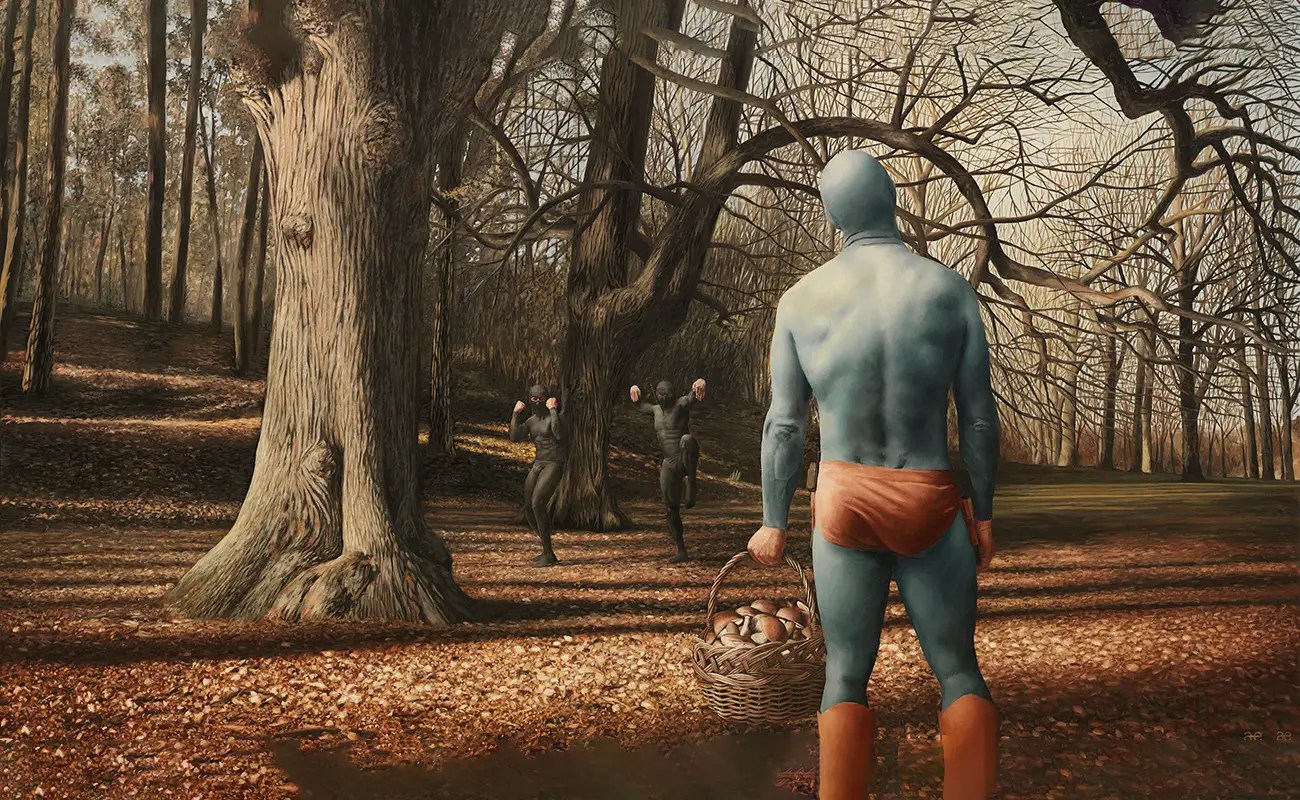
His best known inspiration comes from someone much closer than the history of art. Englund’s father became the model for the celebrated Aging Superhero series, portraying an ordinary man dressed in the costume traditionally associated with extraordinary strength. Through that simple but powerful contrast, the paintings explore universal experiences of aging, vulnerability, resilience, and dignity. The superhero outfit symbolizes power, yet beneath it stands someone navigating everyday life like everyone else. Englund credits his father not only as the visual inspiration for this body of work but also as a source of both creativity and humor. His father’s presence gives the series a deeply personal and emotional dimension, while humor provides an accessible entry point into its more human themes. The contrast between the superhero costume and the ordinary person beneath it allows everyday experiences of vulnerability, persistence, and aging to occupy the place normally reserved for fictional heroes.
Another important influence is Anders Zorn, one of Sweden’s most respected painters and a fellow native of Dalarna. Englund admires Zorn for making difficult achievements appear natural, an ability he values equally in painting and communication. That admiration extends beyond technique into a broader appreciation of storytelling rooted in place and tradition. Alongside artistic influences, everyday life continues to provide an endless source of inspiration. Englund pays close attention to ordinary moments that many people overlook, believing they often reveal more about human character than dramatic events ever could. Those observations feed directly into paintings that balance realism with metaphor, encouraging viewers to recognize pieces of their own experiences hidden within familiar scenes.

Heritage Reimagined Through Contemporary Narrative
Among Englund’s most meaningful works is Game On, the first painting in his Daughters of Dalecarlia series. Executed in oil on linen, it portrays women dressed in traditional Dalarna folk costume playing an intense game of ice hockey across a frozen lake. The image immediately combines historical visual references with unmistakably modern activity, producing a surprising encounter between past and present. Although the contrast is immediately surprising, the painting opens up deeper questions about continuity, identity, and cultural memory. Instead of treating tradition as something preserved behind glass, Englund presents it as a living presence capable of participating fully in contemporary life.
The personal significance of Game On reaches back to his childhood admiration for Anders Zorn and the artistic legacy of Dalarna. Over time, Englund repeatedly returned to those earlier paintings while sensing that the conversation surrounding regional identity remained unfinished. Daughters of Dalecarlia represents his own contribution to that ongoing dialogue. Rather than repeating historical imagery, he introduces present day narratives while maintaining visual connections with the past. As Englund puts it, “The visual language looks back, but the stories belong to today.” This balance allows familiar cultural symbols to acquire fresh meaning without abandoning their historical roots. The resulting works celebrate continuity instead of nostalgia, suggesting that traditions remain strongest when they evolve alongside the communities that created them.
Audience responses have become an equally meaningful part of the project. Englund has described the experience of watching viewers recognize something they did not realize they had been missing. At that point, the painting no longer belongs exclusively to its creator because it begins generating personal interpretations independent of his intentions. Strength, surprise, and tradition comfortably occupy the same image, demonstrating that emotional complexity does not require solemn presentation. Likewise, history and modern experience exist side by side without diminishing one another. Through this balance, Daughters of Dalecarlia expands beyond regional storytelling to address universal questions about belonging, memory, and the evolving relationship between cultural identity and everyday life.

Andreas Englund: The Journey Continues Beyond the Canvas
Englund continues to develop his artistic practice from Falun, where returning to his birthplace has strengthened both his creative direction and his connection to the cultural landscape that inspires much of his work. His daily routine reflects careful preparation rather than spontaneous execution, reinforcing his belief that successful paintings are built long before paint reaches the surface. Every decision contributes to a broader narrative, allowing technical excellence to serve emotional communication instead of becoming an end in itself. This combination of disciplined planning and conceptual clarity distinguishes his work while ensuring that each completed painting communicates with confidence and purpose.
Current attention is focused on expanding the Daughters of Dalecarlia series, a project that Englund believes is only beginning to reveal its full potential. Rather than approaching the collection as a completed statement, he sees it as an evolving conversation capable of leading him toward new discoveries. That openness reflects an artist willing to remain curious about his own practice instead of forcing predetermined conclusions. Each new painting has the opportunity to deepen the relationship between historical references and contemporary experience while introducing fresh perspectives on identity, community, and shared cultural memory. The series therefore continues to grow organically, guided by ideas rather than rigid expectations.
Throughout his career, Englund has demonstrated that compelling figurative painting can balance accessibility with intellectual depth. Humor welcomes viewers into some of his work, while other paintings find their point of connection through surprise, tension, or unexpected combinations. Photorealistic execution sustains attention, and thoughtful concepts encourage lasting reflection. His paintings acknowledge everyday vulnerability without surrendering optimism, reminding audiences that strength often appears in ordinary forms rather than extraordinary circumstances. Whether portraying an aging superhero or women transforming traditional costume into symbols of present day confidence, he consistently reveals unexpected emotional truths hidden within familiar subjects. By combining personal history, regional heritage, cinematic storytelling, and carefully developed ideas, Andreas Englund continues building a body of work that resonates far beyond the immediate image, encouraging viewers to reconsider both themselves and the stories that shape their lives.