“Painting is like taking a deep breath after holding my breath at every other moment.”
The Body as a Place of Truth
Samantha Paradise has built a practice that transforms intensely personal experience into emotionally resonant figurative painting. Based in Minnesota and educated at Minnesota State University in Mankato, she has developed a visual language that examines women’s sexuality, emotional connection, and the search for liberation with uncommon sincerity. Rather than approaching these themes through detached observation, her paintings emerge directly from lived experience, inviting viewers into spaces where vulnerability, intimacy, and resilience coexist. Every composition reflects an artist committed to questioning restrictive ideas surrounding femininity while celebrating the complexity of women’s identities through expressive, unapologetic imagery.
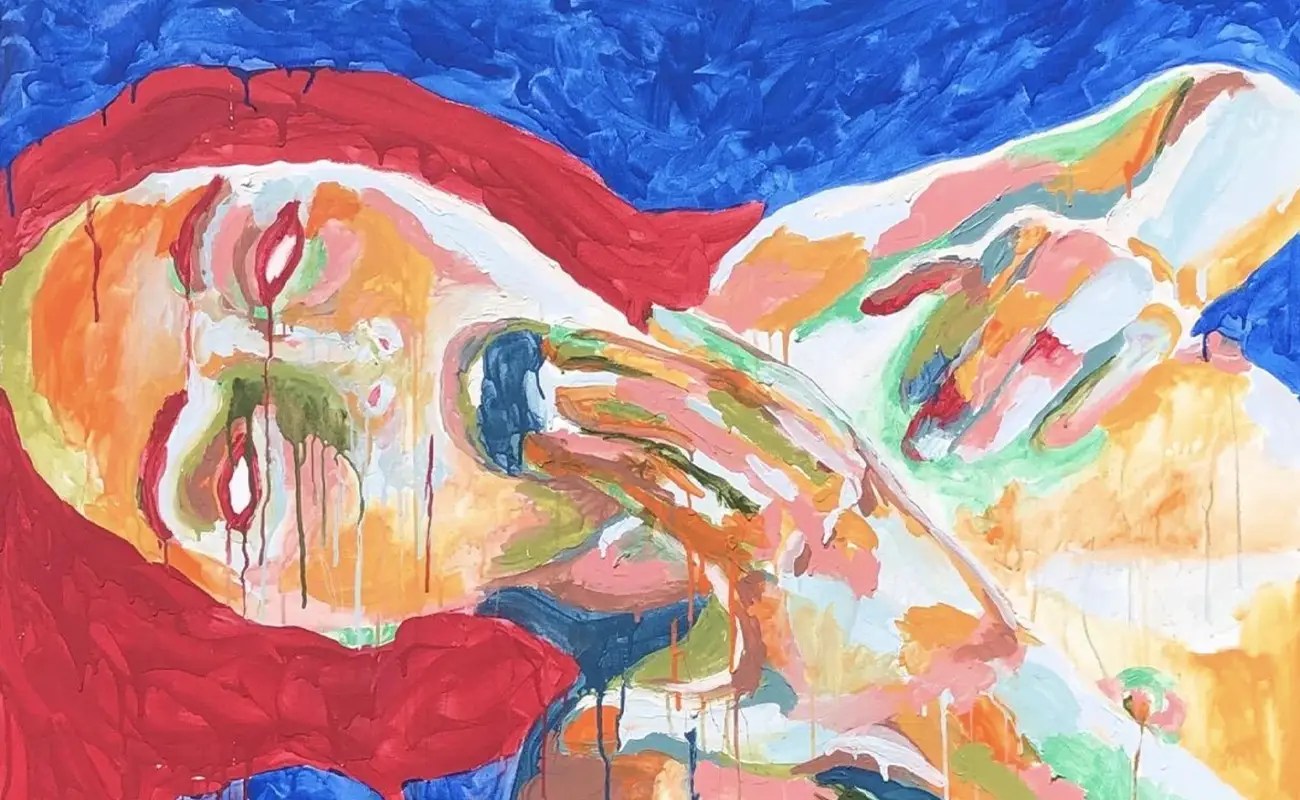
Her work consistently challenges conventional representations of the female body. Instead of presenting polished ideals, Paradise creates figures shaped by memory, emotion, and psychological depth. Saturated passages of pink, ultramarine, ochre, acid green, and white combine with energetic brushwork and fluid paint drips to produce images that feel simultaneously fragile and powerful. Flesh becomes more than anatomy. It operates as an emotional landscape where desire, healing, and transformation remain visible. This approach allows each painting to communicate experiences that extend beyond literal storytelling, encouraging viewers to recognize emotional truths within imperfect forms.
These visual decisions support larger conversations surrounding gender, equality, bodily autonomy, and self-expression. Paradise positions women’s sexual desire at the center of her artistic practice, refusing narratives that diminish or silence feminine agency. Her paintings celebrate individuality while encouraging broader discussions about freedom and empowerment. Throughout her work, embracing lovers, reclining female figures, fragmented faces, and symbolic interventions appear not as decorative motifs but as meaningful reflections of intimacy, identity, and emotional survival. The result is a body of work that balances expressive freedom with conceptual clarity, making each painting both deeply personal and socially relevant.

Samantha Paradise: Transforming Trauma into Connection
Personal history serves as the emotional foundation of Paradise’s artistic practice. Experiences of trauma and abuse did not lead her toward images of despair. Instead, they intensified her desire to paint love, tenderness, and genuine human connection. By creating images that embodied the affection and safety she longed to experience, she gradually discovered beauty in unexpected places. This creative process became far more than artistic production. Painting evolved into a way of imagining emotional possibilities while reclaiming experiences that had once been defined by pain. Through this transformation, her work demonstrates how vulnerability can become a source of remarkable creative strength.
Painting itself occupies a sacred position within her life. Paradise describes holding a brush as an experience unlike any other, one that provides freedom, intimacy, and profound emotional release. Long days in the studio become so immersive that her distinctive mark making continues into her dreams, while the imagined sound of paint moving across canvas echoes in her thoughts when viewing artwork. She compares the act of painting to finally taking a breath after holding it for far too long, expressing how inseparable artistic creation has become from her own sense of being. This intimate relationship with the medium infuses every canvas with extraordinary emotional authenticity.
Life experiences continue to shape both subject matter and philosophy. Paradise believes that human existence finds its deepest meaning through connection with others, whether expressed through friendship, family, or romantic relationships. Even difficult experiences have reinforced her appreciation for gentleness, compassion, and emotional safety. Her paintings of lovers and intimate encounters therefore represent far more than romantic imagery. They celebrate trust, tenderness, and the comfort of finding security within another person’s presence. Love becomes an expansive force capable of transcending hardship, allowing emotional resilience to emerge through gestures of closeness and mutual care.

Power, Instinct, and the Expanding Language of Paint
Recent developments in Paradise’s practice reveal an artist continuously pushing both conceptual and material boundaries. A notable series introduced embroidered images of female predator animals layered directly over painted portraits of women. This combination of painting and textile techniques dramatically expands her visual vocabulary while reinforcing themes of feminine power and instinct. Embroidery, often associated with domestic tradition and conventional expectations of femininity, becomes an unexpected vehicle for disruption and empowerment. Rather than functioning as ornament, the stitched imagery actively transforms each composition into a statement about identity, emotional complexity, and personal agency.
This series also reflects the emotional atmosphere of the current political climate. Paradise has described these works as carrying greater anger than much of her earlier practice while remaining equally meaningful. Female predator animals symbolize instinctive strength and the full spectrum of emotional experience that women are frequently discouraged from expressing openly. Rage appears alongside tenderness rather than replacing it, reinforcing her belief that authentic femininity cannot be confined to simplistic stereotypes. The embroidered interventions interrupt painted faces in ways that acknowledge emotional conflict while simultaneously reclaiming power through symbolic transformation.
Material process remains inseparable from conceptual meaning throughout her work. Flowing paint, unfinished passages, layered surfaces, and stitched additions all contribute to narratives of memory, healing, vulnerability, and emotional release. These formal decisions are never merely stylistic choices. Instead, each physical gesture mirrors internal psychological experiences, allowing process and meaning to evolve together. Influences from Abstract Expressionism, Neo Expressionism, and contemporary feminist figuration can certainly be recognized within her paintings, yet Paradise maintains a distinctive voice rooted in autobiography, emotional honesty, and the celebration of women’s lived experiences.

Samantha Paradise: Reimagining Feminine Icons
Paradise continues to develop ambitious new bodies of work that expand her ongoing exploration of femininity and cultural identity. Among the projects currently capturing her imagination is a series inspired by the historical tradition of saint paintings. Rather than reproducing conventional religious figures, she intends to portray women from contemporary culture whose actions have positively influenced humanity. This concept creates a compelling dialogue between historical visual traditions and modern understandings of heroism, inviting viewers to reconsider who deserves reverence and why such recognition matters within today’s social landscape.
This forthcoming direction naturally extends themes that have defined her practice from the beginning. Questions surrounding women’s visibility, autonomy, and cultural significance remain central, yet the format introduces new opportunities to celebrate female achievement through symbolic portraiture. By adapting familiar religious imagery to honor modern women, Paradise proposes alternative narratives that elevate compassion, courage, influence, and resilience. The project reflects her continuing interest in challenging inherited systems while offering empowering new frameworks through which female accomplishment can be recognized and remembered.
Across every stage of her career, Paradise demonstrates an unwavering commitment to emotional authenticity. Her paintings embrace contradiction with remarkable confidence, allowing softness to exist beside anger, eroticism beside grief, vulnerability beside strength, and healing beside memory. These tensions are never resolved into simplistic conclusions because they reflect the complexity of lived experience itself. Through expressive mark making, layered color, symbolic imagery, and increasingly inventive mixed media approaches, Samantha Paradise continues to create work that speaks with compassion, honesty, and conviction while encouraging deeper conversations about love, liberation, identity, and the enduring power of human connection.