Cities Written in Dust and Memory
Stephan Zarmann stands apart through a practice shaped outside classrooms and built instead through patience, observation, and sustained contact with changing streets. He is a self-trained artist whose paintings arise from years spent noticing what many people overlook. Rather than seeking polished landmarks or celebrated architecture, he turns toward scarred facades, cracked plaster, torn posters, abandoned structures, stained concrete, and surfaces altered by weather and use. Living in Germany, Sweden, and the United Kingdom exposed him to sharply different city rhythms, building traditions, and public atmospheres. Some environments felt orderly and refined, while others carried visible signs of industrial fatigue or social transition. Those contrasts became a lasting source of inquiry. In Zarmann’s hands, neglected walls are not empty backdrops but records of presence and change. They contain marks of labor, neglect, repair, and movement. His work transforms those traces into images that invite viewers to consider how urban spaces store emotion long after people have passed through them.
The cities that informed Zarmann’s vision did more than provide scenery. They offered evidence of time working slowly across materials. Paint layers fade, signage peels, masonry fractures, and repairs sit awkwardly beside older damage. These moments of collision between past and present became central to his language. He describes spaces as carrying memory, and that idea helps explain the emotional weight of his paintings. Every scrape or discoloration can suggest vanished businesses, former residents, interrupted plans, or forgotten routines. Such associations give his abstract surfaces unusual depth, even when no literal street or building is named. A viewer may not identify a specific location, yet the sensation of having known that place often remains strong. This balance between familiarity and uncertainty gives the work lasting resonance. Zarmann does not romanticize ruin. Instead, he recognizes dignity within surfaces altered by use, exposing how cities continue to speak through their damaged skins.
His path into art also shaped the independence of his approach. Without formal institutional direction, he learned through trial, error, repetition, and direct response to materials. That freedom allowed him to develop visual instincts unconstrained by academic expectations. He followed what felt compelling rather than what appeared correct. Such a route often produces work with a personal cadence, and Zarmann’s paintings carry that quality. They are thoughtful yet unforced, disciplined yet responsive to accident. The urban world taught him to trust irregularity, and he treats wear as a source of meaning rather than a flaw requiring correction. This perspective underlies the contemplative atmosphere often found in his images. They suggest that what is weathered may still possess grace, and that broken surfaces can communicate more honestly than pristine ones. Through this lens, Zarmann offers a fresh understanding of the city, one where imperfection becomes evidence of life rather than decline.

Stephan Zarmann: Between Abstraction and the Street
Zarmann describes his style as existing between abstraction and realism, a definition that reveals much about how his paintings function. At first glance, viewers encounter layered compositions of texture, divisions, stains, abrasions, and muted color fields. Yet beneath that abstract appearance lies a strong connection to actual places. His references include walls, stairwells, factories, streets, construction zones, and forgotten corners where history lingers in material form. He does not copy these sites directly. Instead, he translates their atmosphere into painterly language. This allows the works to remain open and poetic while still grounded in lived experience. The result is imagery that feels discovered rather than invented. One senses concrete, metal, dust, rain, chipped paint, and accumulated years, even without seeing a recognizable building. Such tension between seen reality and transformed memory gives the paintings their particular force. They feel true to the city without becoming illustrations of it.
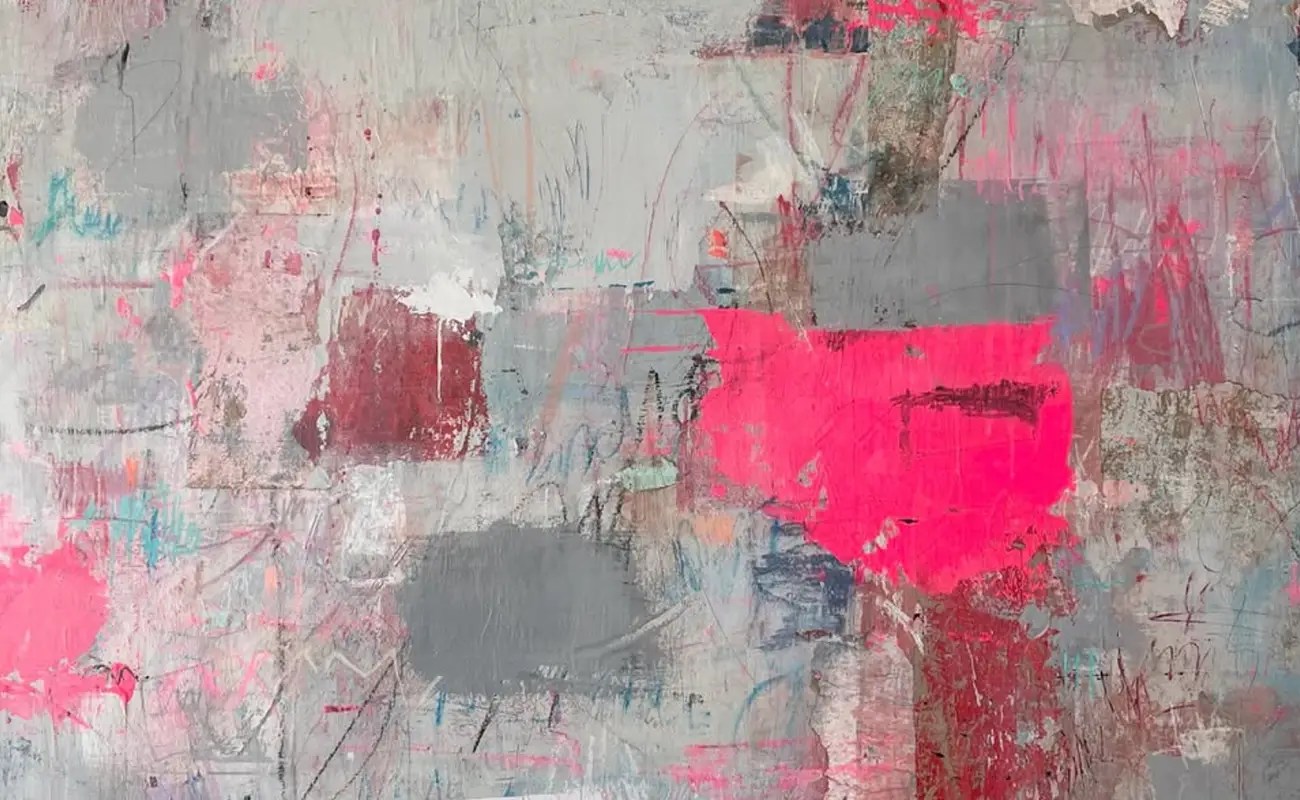
A defining concern in his practice is the conversion of urban damage into contemplation. Zarmann is interested in how erosion can become visually moving, how destruction may contain elegance, and how surfaces can express feeling without relying on figures or storyline. This ambition separates his work from documentary depictions of decay. He is not cataloging dereliction. He is asking what damaged matter can reveal about endurance, vulnerability, and passing time. A wall with repeated repairs may suggest persistence. A peeled layer exposing older color may imply buried memory. A scraped plane interrupted by a bright accent can feel like sudden hope within severity. Because these meanings emerge through material relationships rather than direct symbols, viewers participate in constructing the emotional reading. His paintings reward slow attention. The longer one looks, the more subtle shifts of mood appear across areas that first seemed purely formal.
Another important feature is the ongoing struggle between order and disorder. Structured grids, blocks, or measured divisions frequently meet scratches, drips, tears, and rough interruptions. This contrast mirrors city life itself, where systems are continually disrupted by accident, pressure, and human improvisation. Streets are planned, then altered. Buildings are designed, then weathered. Public order exists beside private chaos. Zarmann captures that friction through composition. Geometric elements may stabilize a painting, while distressed passages unsettle it. Clean edges can sit beside wounded textures. Such pairings generate energy without noise. They also prevent nostalgia from becoming sentimental, since the city remains a place of conflict as well as memory. Through these balanced oppositions, his work communicates complexity: discipline beside spontaneity, silence beside impact, permanence beside disappearance. Few contemporary approaches to abstraction engage urban experience with such restraint and emotional precision.

The Surface as Witness
When asked why distressed walls and aged architecture draw him so strongly, Zarmann offers a concise answer: walls remember. That statement captures the philosophical center of his art. A wall absorbs events without speaking. It receives layers of paint, careless impacts, weather stains, graffiti, repairs, and neglect. It stands through routine days and dramatic moments alike. Because of this endurance, surfaces become witnesses to human activity. Many people see deterioration as something embarrassing to erase, but Zarmann sees character in it. He notices how accidental marks can carry more expressive force than planned decoration. A fracture line may feel more alive than a flawless panel. A torn poster may reveal social history more vividly than a new advertisement. His paintings invite viewers to reconsider what they habitually dismiss. Damage becomes testimony, and wear becomes a form of language written across matter.
This idea extends beyond architecture into human experience. Zarmann compares urban surfaces to people who also carry layers, scars, repairs, and memories. That metaphor helps explain the emotional accessibility of his work. Even viewers unfamiliar with industrial neighborhoods or abandoned sites often respond because the paintings echo personal histories. We all know what it means to be marked by time. We all contain concealed versions of ourselves beneath newer layers. In this sense, his images are not only about buildings but about endurance and identity. A scraped area revealing older color can suggest forgotten chapters of a life. A patched section may imply resilience after injury. Through such correspondences, material abstraction becomes psychologically rich. The city turns into a mirror where private feeling and public space meet. Zarmann handles this connection with restraint, allowing suggestion to carry more power than explicit statement.
The emotional responses he hopes to inspire remain intentionally open. He does not prescribe a single reaction, preferring instead to create moments of reflection. Many viewers recognize places they once knew without being able to name them precisely: a childhood wall, a train station corridor, a shuttered factory, a side street, a room that no longer exists. Such memories often arrive unexpectedly when faced with his paintings. Melancholy can be present, yet so can calmness, silence, and steadiness. Forgotten places in his work retain dignity rather than despair. This balance is crucial. If the paintings were only sad, they would close down interpretation. Instead, they hold grief and grace together. They acknowledge loss while honoring survival. In an era that prizes novelty and replacement, Zarmann reminds audiences that what has been overlooked may still possess profound meaning.

Stephan Zarmann: Building Paintings Through Erasure
Zarmann’s working process is informal, intuitive, and deeply physical. He rarely begins with a rigid plan. Instead, surfaces are built gradually through layering, painting, sanding, scraping, covering, and revealing. This method echoes the very environments that inspire him, where structures accumulate histories through repeated alteration rather than single acts of creation. A painting may change direction many times before resolution appears. He might apply passages only to remove much of them later. Rich texture may be compressed into flatter planes. Strong areas can be concealed for weeks before returning in altered form. Such decisions give each work an internal chronology, as if it has passed through seasons of use and repair. The finished image therefore feels lived rather than freshly manufactured. This quality cannot be faked through decorative effects alone; it comes from genuine struggle between making and unmaking across time.
An intriguing tool within this process is a handheld detail sander, the type he mentions using from Black+Decker or a similar brand. Its practical purpose is revealing. He values the ability to reach corners and control abrasion on layered surfaces. That emphasis shows how central removal is to his art. Many painters think primarily in terms of adding paint, but Zarmann treats subtraction as equally expressive. Sanding can expose hidden strata, soften transitions, damage certainty, and create the accidental beauty associated with weathered walls. It also introduces chance while remaining responsive to intention. Too much pressure changes everything; too little leaves the surface mute. This conversation between control and unpredictability parallels the city itself, where planning constantly meets unforeseen consequence. By using tools associated with labor and maintenance, he further connects studio practice to the material world that inspires him.
Color in his paintings follows a similarly grounded logic. Rather than relying only on theory, he draws palettes from the urban environment around him. Concrete whites, ash greys, oxidized blacks, rust tones, faded blues, dusty pinks, municipal greens, worn signage hues, and occasional flashes of synthetic red or fluorescent brightness all appear in his vocabulary. These are colors generated by weather, industry, utility, and prolonged use. Yet he arranges them with sensitivity, seeking softness against severity and warmth emerging from cold surfaces. Even restrained combinations carry atmosphere. Through color, texture, and layered revision, Zarmann pursues themes that continue to guide him: time, memory, disappearance, resilience, and the traces people leave behind. He once summarized his mission in a single sentence: he tries to paint the memory of the city through surfaces marked by time. Few statements describe his achievement more clearly.