
“One painting holds a hundred different stories and expands with every pair of eyes that meets it.”
The Studio Where Craft Becomes Presence
Birutė Jocaitė-Šliurpienė introduces herself first and foremost as a painter, a distinction that reveals much about her values and the way she approaches creative labor. For her, the word painter carries weight because it points directly to discipline, material knowledge, and the demanding physical act of building an image by hand. This preference is rooted in a life shaped by art from an early age. She began exhibiting her work as a child and excelled in formal art school, where she discovered her creative signature remarkably early. Initially forged through the precision of graphics, this aesthetic has naturally evolved into the layered painting practice she leads today. Though her academic and professional path later led to other fields, driven by a curiosity for different disciplines, art remained a constant. It has been a lifelong study of the same internal vision, refined steadily in the background for decades. This long-standing relationship with making images gives her work an authority that comes from consistent practice rather than fleeting fashion. Every canvas reflects the patience of someone who has lived beside art for decades and understands that true growth often happens quietly, layer by layer, year after year.
Her early creative foundation was built on graphics and watercolor, mediums where her technical precision was first recognized. This background remains visible in the carefully chosen fragments and fine edges that appear throughout her paintings today. Controlled passages and thoughtful composition suggest the eye of someone who values structure as much as expression. Acrylic painting became her primary medium later, allowing her to unite that early discipline with a new sense of atmosphere. Instead of abandoning her roots, she carried them forward, creating work that feels both instinctive and exact. This tension between sensitivity and structure gives her paintings a unique durability, rewarding close attention to craft. In a world of quick effects, her commitment to these standards sets a different pace, built on concentration and accumulated experience.
Five years ago, she established BIRUTE STUDIO in Vilnius, Lithuania, guided by the belief that art needs a dedicated place where focus can deepen. The studio is not imagined as a closed sanctuary cut off from life. Instead, it remains open to visitors who want to witness the process behind finished canvases, spend time in the atmosphere of creation, and share a simple coffee while conversation unfolds. That openness mirrors her broader understanding of painting as something meant to live among people rather than remain distant. The studio therefore functions as both workplace and meeting point, where private concentration and public connection coexist. It also reflects a mature return to her creative center after exploring success in other professional fields. Those experiences outside painting appear to have strengthened rather than distracted her practice, giving it steadiness and perspective. She returned not with uncertainty, but with clarity about what mattered most and how she wished to build a life around it.

Birutė: Atmospheric Abstraction and the Return Home
Although painting accompanied most of her life, Birutė describes the birth of her child as the moment that brought her back to the easel with renewed purpose. Motherhood did not interrupt creativity so much as sharpen it. Through that shift, she embraced a philosophy she describes as digging the same well, meaning a commitment to one path pursued deeply rather than many paths pursued briefly. The phrase suggests repetition with intention, where each return carries greater understanding. Instead of chasing novelty, she seeks refinement, emotional truth, and technical excellence through sustained attention. This mindset helps explain the consistency and depth of her body of work. Each painting is not an isolated statement but part of a longer conversation with materials, memory, and self-knowledge. Such persistence is increasingly rare in a culture that rewards speed and constant reinvention. Her practice stands apart because it values devotion over distraction, showing how staying with one direction can produce ever richer results.
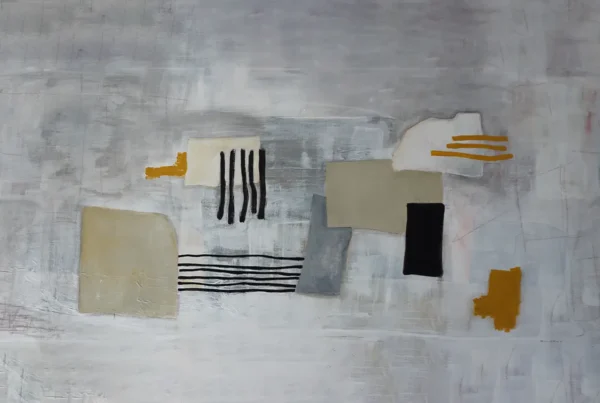
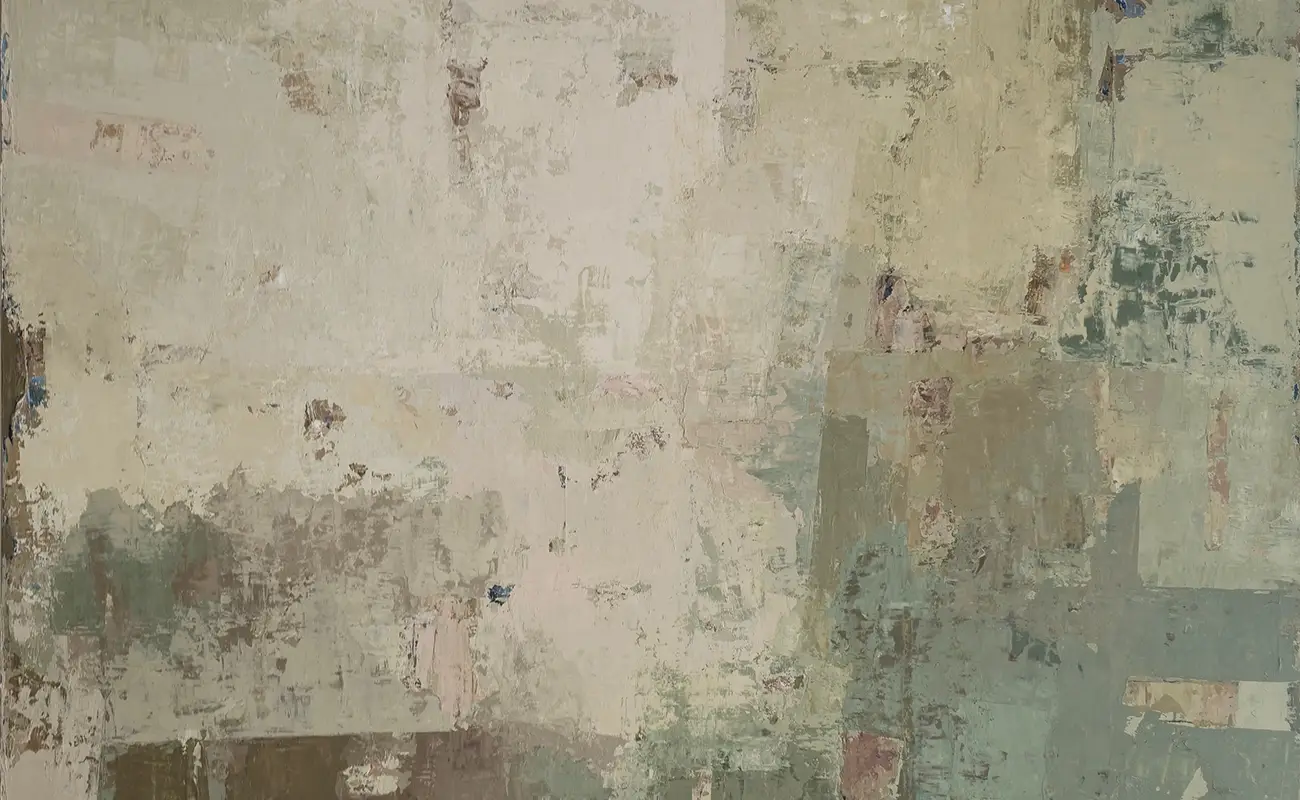
She defines her current visual language as atmospheric abstraction, a phrase that captures both mood and method. These works do not rely on excess gesture or loud dramatics. They are built through a signature multi-layered acrylic process that creates depth, relief, and subtle movement across the canvas. Viewers may sense distance, weather, terrain, or changing air without encountering literal description. The paintings hold space for interpretation while remaining grounded in material presence. Light behaves differently across textured surfaces, meaning the image can shift according to time of day, angle of view, or surrounding interior. This changing quality allows a work to continue revealing itself over time rather than surrendering everything at first glance. Her restraint is central to that effect. She does not overwhelm the eye with information. Instead, she creates conditions in which attention slows down and perception becomes more sensitive. What first appears quiet often proves richly layered, both visually and emotionally.
The landscape of Lithuania provides one of her deepest sources of inspiration. She speaks of its quiet, authentic beauty and of a character that cannot be replicated elsewhere. Yet she does not simply depict scenery. She translates the emotional sensation of being held by land, season, and atmosphere into abstract form. This is where her recurring theme of return home becomes especially meaningful. Home, in her paintings, is not merely a building or address. It is a state of grounding, recognition, and inward steadiness. Earth-based tones often support this feeling, offering warmth, calm, and connection to nature. The viewer may sense fields, forests, distant water, thawing soil, or the hush before weather changes, even when no object is explicitly shown. Such paintings can act therapeutically because they restore contact with something elemental. They remind people of places they knew, moments they felt safe, or emotions they struggle to name. Through abstraction, she reaches memory more directly than description often can.

Chapters of Nature, Chapters of Life
For Birutė, influence does not arrive primarily from celebrated names or external trends. She speaks instead about the invisible thread between artwork and viewer, a living exchange that completes the act of creation. In her view, one painting can contain a hundred stories, expanding each time a new person stands before it. This belief shifts importance away from fixed interpretation and toward human encounter. Collectors are often drawn to her work because it awakens something private: a forgotten memory, a lost sensation, or the image of an object only they can perceive. She regards that response as a highest form of success. The painter builds the structure, but the viewer brings the soul. Such an approach grants dignity to audience experience without diminishing authorship. It also explains the emotional openness of her paintings. They are not puzzles to solve but spaces to inhabit. Meaning is not imposed from above. It is discovered through relationship.
She also speaks candidly about the pressures of contemporary image culture, where social media can blur originality and encourage repetition. Rather than searching outward for inspiration in what is fashionable, she consciously turns inward and toward the cyclical changes of nature around her. This refusal to follow trends protects the integrity of her voice. It allows seasons, weather, and personal perception to guide decisions more than algorithms or public taste. There is courage in that stance because it accepts slower recognition in exchange for authenticity. Her paintings therefore feel anchored in lived experience rather than borrowed aesthetics. They emerge from observation of shifts that many overlook: the changing quality of spring light, the density of forest air, the moods of sea horizons, the textures of ground after rain. By trusting these sources, she creates work that feels timeless rather than momentary. It belongs to recurring human experience instead of temporary visual cycles.
Series play an essential role in how she develops ideas. Instead of treating each canvas as unrelated, she organizes paintings into chapters that allow a theme to mature fully. She has moved through a Forest Series and a Sea Series, each carrying distinct emotional and chromatic identities. Now she is immersed in her Spring Series, where new palettes and tonal nuances begin to dominate. This progression reveals how closely her life and surroundings are linked. Every series corresponds not only to subject matter but to an inner season as well. Forest may suggest depth, shelter, or rootedness. Sea may suggest openness, rhythm, and horizon. Spring introduces awakening, movement, and returning light. By staying with a subject over multiple works, she can test variations and pursue emotional peaks that a single painting might only hint at. The viewer encountering several works together can sense continuity, growth, and the unfolding of a sustained meditation.

Birutė: When a Painting Leaves the Room
Her daily process is guided by discipline, yet it resists mechanical routine. She does not work from sketches, choosing instead to begin with an intuitive palette and let each mark influence the next decision. This method demands sensitivity because nothing is fully predetermined. At the same time, intuition alone is not enough. She admits there are days when she cannot paint because the necessary inner feeling has not ripened. On other days, creative energy may be intense while family life and motherhood require attention elsewhere. Rather than treating these realities as obstacles, she accepts them as part of the conditions within which genuine work must happen. Because time at the easel cannot always be endless or guaranteed, focus becomes sharpened when it is available. The result is a practice built on concentration rather than quantity. She values meaningful progress over constant output, showing respect both for art and for life beyond the studio walls.
Completing a single piece often takes weeks because her paintings are built through many layers. Acrylic becomes more than pigment in this process. It becomes architecture. Surface accumulates gradually, creating relief, depth, and subtle interactions with light that cannot be rushed. She is clear that such work cannot be produced in a day. It asks patience, stamina, and the willingness to revisit a canvas repeatedly until it reaches coherence. In this sense, her method stands against the speed of contemporary habits that often reward immediate results. She reminds viewers that slowness can be a form of seriousness. Every added layer changes what came before, meaning the final image carries traces of decisions hidden beneath the visible skin. This concealed history gives the paintings emotional density. What the eye sees at last is only the upper register of a much longer conversation between hand, material, time, and restraint.
When asked about a meaningful work, she does not name a single favorite. That refusal reveals two principles central to her outlook. First, she is driven by the belief that each painting is a step toward something still better, so no completed work becomes a final monument. Second, she believes meaning reaches fullness only when a painting finds its home. She rejects the cliché that artworks are like children to be kept close. Instead, she feels most fulfilled when a canvas enters someone’s daily environment and begins sharing life with them. There it becomes a quiet companion, witnessing routines, celebrations, losses, and passing years. Her concern for how paintings live inside interiors is profound. Through texture and changing light, she wants them to remain emotionally active decades later. A work is complete not when it dries in the studio, but when it starts its own biography in the home of a collector.