“I don’t know if I ever became an artist, but I enjoy making art.”
The Architecture of Quiet Discovery
Daniel Jenney has spent more than eighteen years working behind the camera, balancing the practical demands of professional photography with a persistent desire to create art on his own terms. This dual path has shaped a distinctive voice within contemporary photography, one grounded in structure, atmosphere, and the silent character of built and natural environments. His images resist spectacle for its own sake, instead inviting viewers to pause and reconsider the spaces they thought they understood. Whether capturing a towering facade or a remote stretch of landscape, he approaches each subject with an instinct for form and mood that elevates the ordinary into something contemplative. Over time, this sustained commitment to both craft and curiosity has positioned his work within a conversation about how architecture and landscape can be reimagined through a disciplined yet emotionally resonant lens.
Client-driven assignments have played a decisive role in shaping how he approaches his personal projects. Commercial photography demands planning, coordination, and execution within defined parameters. Schedules must align, weather must cooperate, and expectations must be met. In response to those constraints, his artistic process has evolved in the opposite direction. When creating for himself, he avoids rigid shot lists and predetermined compositions. Instead, he searches, wanders, and observes, allowing the environment to guide the image rather than forcing it into a blueprint. This organic method is not accidental but a deliberate counterbalance to structured client work. Discovery becomes both method and motivation, an ongoing search for fleeting alignments of light, shadow, and geometry that cannot be manufactured through planning alone.
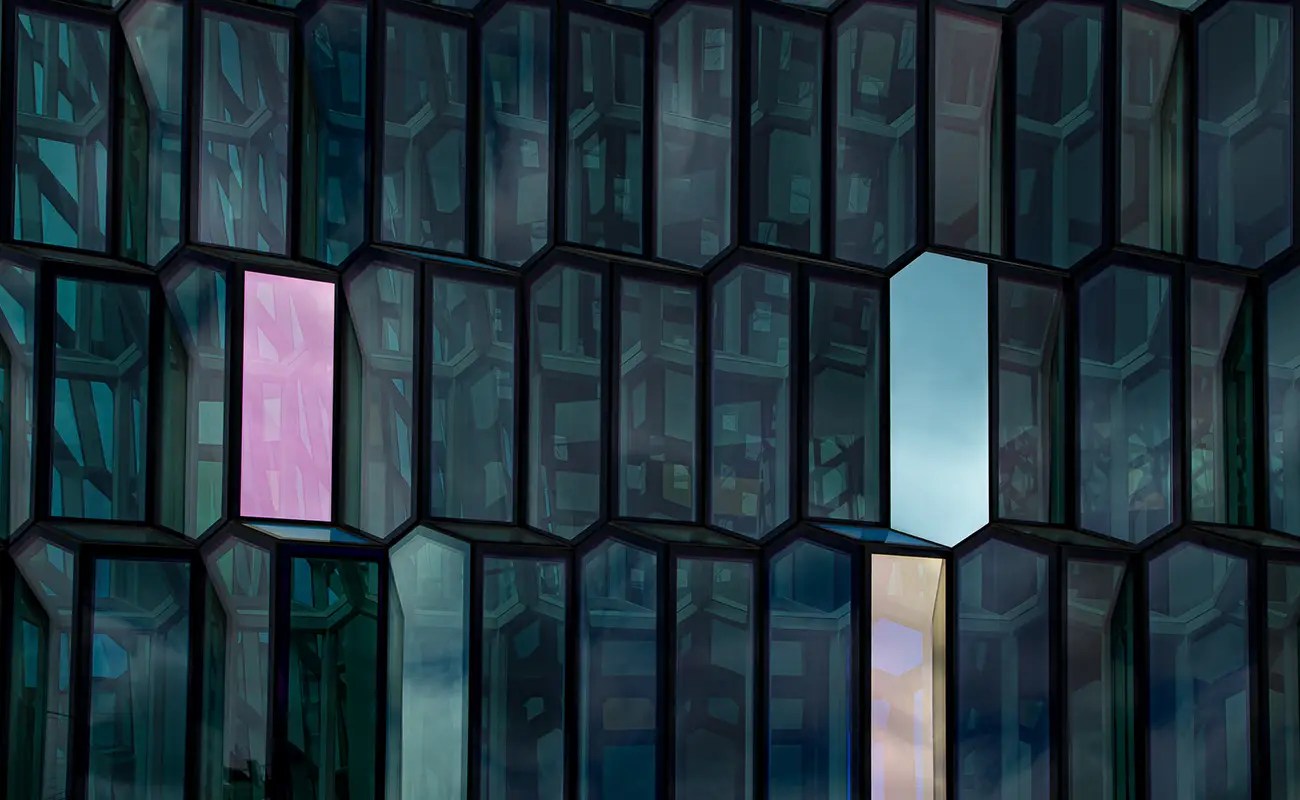
The resulting body of work reveals a sustained meditation on structure and atmosphere. Buildings are not treated merely as functional objects but as rhythmic systems of lines and planes. Glass panels reflect dusk skies in saturated hues, while concrete surfaces become studies in repetition and interruption. Even in landscapes, compositional clarity prevails. Roads cut decisive paths through forests and plains, and the night sky appears as a measured arc suspended above restrained foregrounds. Throughout these images, geometry operates as both visual device and philosophical anchor. Order emerges from complexity, and stillness is carved from environments that are otherwise crowded and loud. This preference for isolation and clarity establishes a consistent visual language that continues to evolve with each new discovery.

Daniel Jenney: Between Profession and Personal Vision
Professional photographer and art photographer may share tools, yet they represent distinct pursuits in Daniel Jenney’s career. For years he has attempted to embody both simultaneously, navigating the expectations of clients while nurturing an independent creative identity. The commercial side of his practice is rooted in reliability and workflow management. Coordinating project timelines, monitoring weather conditions, organizing shoot days, and maintaining efficient editing processes are everyday responsibilities. Establishing repeatable systems prevents late projects from accumulating and preserves his energy for future assignments. This disciplined infrastructure supports the practical realities of sustaining a long-term career in photography. It also creates the breathing room necessary for artistic exploration. Without such structure, creative freedom would be compromised by logistical overwhelm.
In contrast, his art photography emerges from a deeply personal impulse. He often questions whether he consciously chose to become an artist at all, describing his creative experimentation as a response to professional limitations rather than a predetermined ambition. Crafting a single image that belongs entirely to him offers a sense of meditation and focus. Editing becomes a quiet ritual, a space to refine color, shadow, and perspective until the image reflects his internal vision. The act of perfecting an image is less about external validation and more about personal satisfaction. Through this practice, he discovered that art did not require documentary fidelity. Digital photography could serve as an expressive medium in its own right, capable of conveying mood and atmosphere through deliberate manipulation of color and contrast.
Boldness defines his aesthetic, yet that boldness coexists with restraint. Heavy, saturated colors and pronounced shadows create immediate visual impact. Harsh angles, patterns, and strong diagonals establish structural intensity. At the same time, his compositions remain uncluttered and thoughtful. A single subject typically anchors the frame, and human figures are intentionally absent. This avoidance of the human form is not an oversight but a philosophical stance. In a world that often feels overcrowded and frenetic, he seeks moments when a place stands alone. An empty alley bathed in perfect light or a facade stripped of pedestrian traffic becomes a rare and precious sight. By removing people from the scene, he invites viewers to engage directly with space itself, unmediated by narrative distraction.

Chromatic Tension and Structural Abstraction
Color in Daniel Jenney’s work functions as emotional architecture. His palette frequently oscillates between cool twilight blues and the molten warmth of sunset and artificial illumination. Cyan reflections meet copper highlights, and deep indigo fields contrast with soft rose accents. These juxtapositions infuse rigid architectural forms with a sense of transience. Buildings that might otherwise appear static begin to pulse with atmospheric life. Light is never incidental; it animates surfaces, carves out texture, and transforms reflective glass into luminous mirrors. Through careful editing, saturation intensifies without overwhelming the composition, allowing mood to rise from contrast rather than chaos. This disciplined handling of color reinforces the idea that digital photography is not bound to documentation but can function as expressive interpretation.
Architectural abstraction is another defining element of his style. Facades become studies in repetition, tessellation, and layered perspective. The camera isolates fragments of larger structures, collapsing scale so that windows and panels read as abstract patterns. Diagonals intersect with vertical grids, and reflective surfaces multiply lines into complex visual rhythms. The resulting images often verge on the sculptural, transforming steel and concrete into compositions that feel both precise and poetic. By narrowing his focus to particular segments of a building, he encourages viewers to reconsider familiar landmarks as dynamic arrangements of shape and light. This approach aligns with his broader philosophy of discovery, revealing visual possibilities in spaces that may have been overlooked countless times.
When turning toward landscape, the same structural sensibility persists. Roads extend as deliberate leading lines across plains and through forests, guiding the eye toward distant vanishing points. Glaciers fracture into bold geometric masses, their fissures rendered with clarity and depth. Even expansive night skies are framed with restraint, the Milky Way positioned within balanced negative space rather than dominating the composition. Subtle moments of irony occasionally appear, such as a retro trailer beneath a vast desert sky or an unexpected object interrupting an otherwise serene scene. These details introduce cultural texture without compromising compositional rigor. Across architecture and landscape alike, his images consistently seek equilibrium between intensity and stillness.

Daniel Jenney: A Defining Image and the Road Ahead
Among the many works that mark his artistic progression, one image stands apart as a turning point. Created in 2017, “Gehry at Sunset” captures a portion of the Walt Disney Opera House while facing west from the middle of a busy downtown Los Angeles intersection. The photograph isolates the building’s sculptural surfaces as they absorb and reflect the fading light of day. Shot with his Canon 50D, the image represents the moment he recognized his own stylistic direction. Heavy color, bold angles, and a commanding interplay of shadow and reflection coalesce into a composition that feels both architectural and expressive. Printing the piece on Fujiflex Silver Halide further enhances its luminous qualities, allowing the colors and tonal transitions to achieve striking clarity.
The significance of “Gehry at Sunset” extends beyond aesthetics. It was the first photograph that garnered meaningful recognition and respect within the artistic community. That acknowledgment validated years of experimentation and uncertainty. Without this image, he believes his trajectory might have unfolded differently. The photograph crystallized the elements that now define his body of work: structural abstraction, saturated color, and an absence of human presence. It also affirmed his belief that artistic growth can emerge from professional constraint. Standing in a bustling intersection yet choosing to frame only the architecture encapsulates his commitment to isolating stillness within chaos. The image remains both milestone and compass, guiding subsequent projects.
Looking forward, his ambitions continue to revolve around exploration and research. A long-envisioned project aims to document the industrialization of the American West against picturesque backdrops. Such a series would require extensive scouting, careful timing, and thoughtful consideration of how industry intersects with landscape. The concept aligns naturally with his established interest in structure and environment, promising a visual dialogue between human construction and expansive scenery. While day-to-day assignments sustain his practice, reserving time for curiosity ensures that artistic growth remains central to his career. Through disciplined workflow and persistent discovery, Daniel Jenney continues refining a body of work that seeks clarity, order, and quiet intensity within the modern world.