“My ambition is to push the medium forward by inventing new visual languages through innovative in-camera processes.”
Between Two Cultures and One Restless Vision
William Joe Josephs Radford is a British-Spanish fine art photographer whose practice has been shaped by a childhood spent between cultures, languages, and contrasting ways of seeing the world. Born in Marbella and raised in rural Andalucía by British expatriate parents, he experienced a constant shift between Spanish life outside the home and British culture within it. This dual existence often left him feeling detached from both identities, creating an enduring awareness of belonging, difference, and personal contradiction. Rather than viewing this uncertainty as a limitation, he gradually transformed it into one of the defining forces behind his artistic practice, allowing photography to become a space where unresolved questions could be explored visually instead of verbally.
Creativity surrounded Radford from an early age. His mother worked as a silk screen artist while his father renovated houses, creating a household where artistic thinking and practical craftsmanship naturally coexisted. Life in the Andalusian countryside encouraged independence, curiosity, and a close relationship with the natural world. Days were spent building dens, lighting fires, and roaming isolated landscapes, experiences that also introduced him to the realities of life and death at an unusually young age. Those early encounters developed into recurring themes that continue to surface throughout his work, giving emotional weight to projects that examine mortality, memory, beauty, and loss through inventive photographic processes.
Studying Fine Art Photography at the University of Gloucestershire marked an important turning point by providing the framework to intentionally transform personal experiences into conceptual investigations. Questions that had lingered since childhood found visual expression through projects that challenged language, identity, and perception. His series Objectification emerged from confusion surrounding the gendered structure of Spanish nouns, pairing objects that physically fit together while placing a condom over the object assigned masculine qualities to question linguistic assumptions. This approach later evolved into Deflowered, where floral arrangements are illuminated solely by pornography displayed on a mobile phone screen, producing visually seductive images that confront contemporary desensitisation and encourage viewers to reconsider the relationship between beauty, consumption, and intimacy.

William Joe Josephs Radford: Inventing Emotional Languages Through the Camera
Photography functions as a language for Radford, with every new technique representing another means of communication rather than simply another visual effect. He approaches experimentation with the belief that mastering unfamiliar processes gradually expands emotional vocabulary in much the same way that learning additional dialects broadens verbal expression. This philosophy encourages continual technical exploration while ensuring that every creative decision remains connected to conceptual purpose. Instead of relying on digital manipulation as the primary means of constructing images, he seeks physical methods that allow emotion to emerge naturally during the act of making the photograph itself.
His practice is defined by an unwavering commitment to producing images entirely in camera. Long exposures, intentional camera movement, ghosting, lens masking, colour gels, light painting, and the application of Vaseline directly onto the lens all become expressive tools selected according to the emotional demands of each project. Intentional camera movement can communicate emotional detachment or escapism, while lens masking creates visual divisions that mirror fractured states of mind. Vaseline softens clarity into a blurred surface resembling tears or fading recollections. Rather than treating these methods as stylistic signatures, Radford carefully matches each process to the psychological atmosphere he wishes to create, allowing technique and subject to reinforce one another.
This commitment to innovation has produced a body of work that initially attracts viewers through striking aesthetics before gradually revealing deeper conceptual concerns. Identity, cultural duality, religion, sexuality, addiction, mortality, grief, beauty, decay, and social desensitisation repeatedly intersect throughout his photography, creating images that reward prolonged observation. His ambition extends beyond producing compelling individual photographs. He seeks to expand the possibilities of photographic practice itself by creating fresh visual languages capable of expressing experiences that conventional imagery often struggles to articulate. Every series therefore becomes both an emotional investigation and an experiment in discovering new ways for photography to communicate complex psychological realities.

Grief as Archive, Process, and Transformation
The death of Radford’s father profoundly redirected the course of his artistic practice, transforming photography from a means of personal reflection into an essential instrument for processing grief. Rather than documenting loss from a distance, he created work while experiencing each emotional stage, allowing the camera to accompany him through mourning in real time. Photographing became inseparable from remembrance, eventually creating a feeling that failing to make images meant risking further distance from his father’s memory. This deeply personal relationship with photography resulted in an interconnected sequence of projects that collectively map grief through evolving visual approaches instead of straightforward documentary narratives.
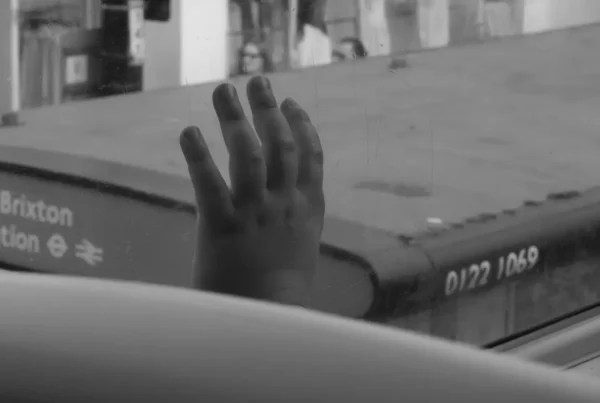
Each chapter employs a distinct photographic language that reflects a different emotional condition. White Knight, created immediately after his father’s death, uses Vaseline on the lens as a metaphor for fading memory while contemplating the uncertain boundary between physical existence and spiritual absence. Gradient Loss abandons the vivid colours that had previously characterised his practice, embracing black and white experimental self portraits incorporating lens masking and ghosting to communicate depression, emotional fragmentation, and the hidden divide between his public role as an outgoing waiter and his private mourning. Returning regularly to Spain inspired Residual Noise, where deliberately extreme ISO settings transformed digital grain into a metaphor for memories gradually dissolving as time widened the distance between childhood and adulthood.
Recovery eventually introduced quieter rituals that reflected acceptance without diminishing remembrance. Caring for his physical wellbeing became intertwined with creative routine, leading him to begin photographing the sky each morning from his apartment window as an act of reflection and tribute. This project, titled Mourning Routine, demonstrates how his approach to grief gradually shifted from documenting emotional intensity toward recognising continuity, repetition, and quiet presence. Across these interconnected bodies of work, recurring visual motifs appeared unexpectedly despite being created months or years apart, reinforcing his belief that grief leaves subtle traces beneath conscious awareness and continues shaping perception long after its most overwhelming moments have passed.

William Joe Josephs Radford: Reconstructing Absence and Looking Ahead
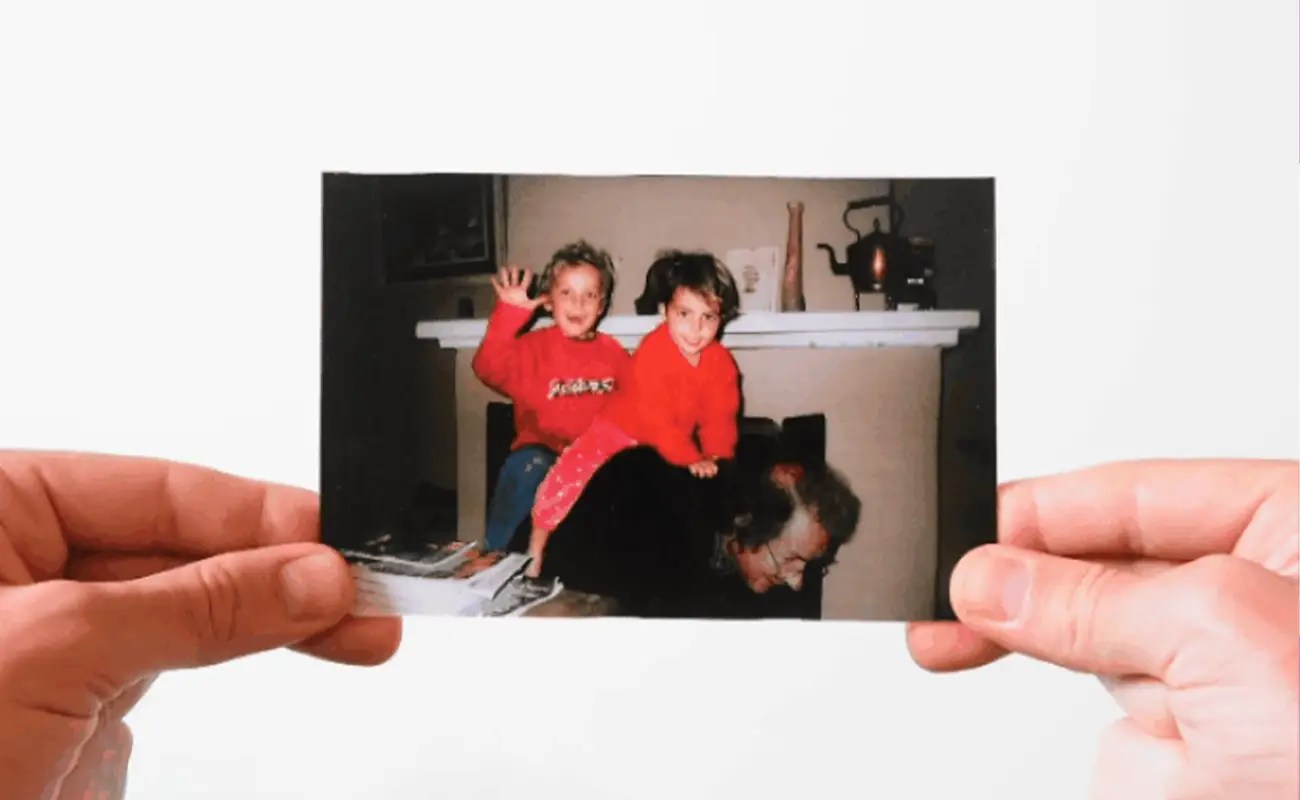
Among all of Radford’s projects, the work that currently holds the greatest personal significance belongs to Transparent, the concluding chapter of his five part exploration of grief. The central concept asks viewers to imagine family photographs that automatically erase loved ones after they die, leaving only the spaces where they once existed. This unsettling proposition transforms familiar family memories into meditations on absence, questioning how photographs preserve presence while simultaneously exposing the fragility of remembrance. Instead of presenting loss through symbolic imagery, the project directly confronts the visual architecture of memory itself.
The series was produced as lenticular prints using authentic photographs from his family’s personal archive. Radford spent six months carefully removing his father from every selected image while digitally reconstructing the surrounding environment so convincingly that his absence appeared entirely natural. The painstaking process became both an act of acceptance and a sustained inquiry into memory, family relationships, and perception. Working through the archive also prompted unexpected reflection after discovering how few photographs actually included his father. This observation encouraged difficult questions about childhood memories, emotional presence, professional commitments, and the possibility that remembered closeness had been more complex than previously believed.
Outside the studio, Radford intentionally separates artistic practice from financial survival by working as a waiter in a French restaurant. He believes maintaining employment unrelated to photography allows complete creative independence and protects his practice from commercial pressures that could compromise artistic integrity. Looking forward, his primary ambition is to transform the five interconnected grief projects into a photography book titled Memoirs of a Grieving Artist. Bringing these chapters together has revealed recurring symbols and unexpected relationships across images created over several years, demonstrating how grief quietly shapes artistic vision even when its influence is not immediately recognised. The publication represents not simply a collection of photographs, but a sustained examination of mourning expressed through continually evolving photographic language.