“Joy is radical political action.”
The Language of Emotion in Color and Form
Susan Carr creates art from a place of emotional openness, transforming deeply personal experiences into paintings and sculptures that feel both intimate and universal. Living and working on Cape Cod in Massachusetts, she describes her basement studio as a lifelong residency shaped by the surrounding Atlantic landscape, quiet roads, and contemplative atmosphere. That environment has become inseparable from her creative process. Every day revolves around making, whether through painting, drawing, or sculpture. Carr approaches artistic practice not simply as production but as a continuous act of reflection, meditation, and emotional release. Her work carries the accumulated weight of memory, spirituality, motherhood, grief, feminism, and resilience, all filtered through a vivid visual vocabulary that feels instinctive rather than calculated. The resulting imagery possesses a remarkable sincerity, allowing viewers to sense both vulnerability and strength within each composition.
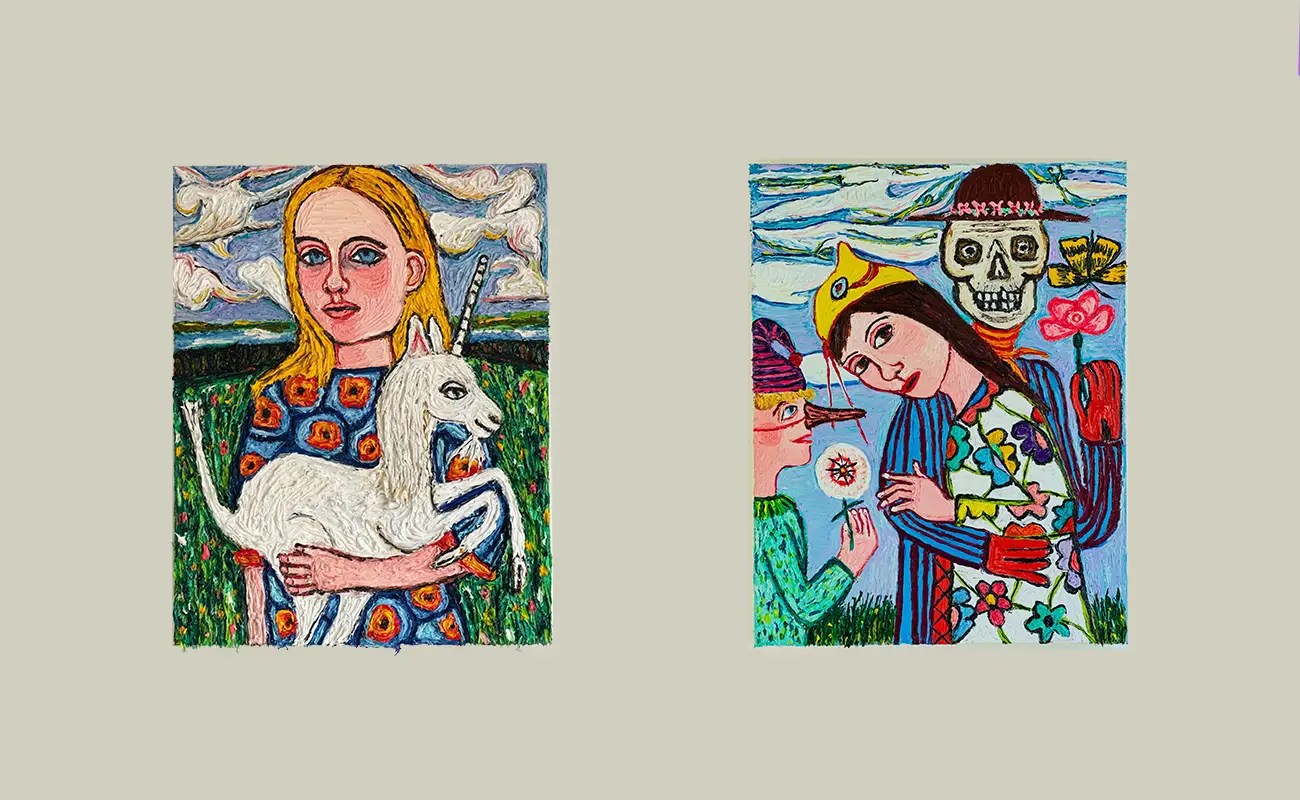
Her path toward becoming an artist began early. Carr attended a local artist guild at the age of five and recognized almost immediately that creative work would define her life. Years later, she earned an MFA from The School of the Museum of Fine Arts Boston at Tufts University in 2003 while balancing the demands of motherhood and an exhausting commute. Those years shaped her understanding of perseverance and commitment. Maintaining family responsibilities while pursuing an artistic career demanded patience, discipline, and belief in long term growth. Carr often speaks about the influence of her children, describing them as sources of love, balance, and emotional grounding. The loss of her middle son ten years ago profoundly altered her emotional landscape, yet his presence continues to move through her paintings. References to eyes, skulls, and recurring symbolic forms carry traces of remembrance and personal mythology, while paintings of her granddaughter preserve tenderness alongside grief.
The emotional texture of Carr’s work is intensified by her highly tactile surfaces and fearless use of color. Thick impasto transforms paint into physical matter, creating surfaces that feel almost sculptural. Saturated pinks, electric greens, bruised purples, acidic yellows, and deep reds collide with deliberate intensity, producing images that oscillate between celebration and unease. Her figures are flattened, elongated, and mask-like, often confronting the viewer with enlarged eyes that suggest contemplation, mystical awareness, or emotional exhaustion. Decorative elements such as cakes, butterflies, flowers, and patterned backgrounds become symbolic carriers of memory and identity rather than ornamental accessories. Carr creates visual allegories that resemble fragments of dreams, medieval icons, folk rituals, and tarot imagery. Every object appears charged with psychological meaning, contributing to compositions that feel ceremonial, emotionally raw, and spiritually resonant.

Susan Carr: Feminine Symbols Reimagined Through Resistance
A strong feminist perspective runs throughout Susan Carr’s visual language, particularly in her treatment of domestic imagery and feminine symbolism. Objects historically associated with decoration or passive femininity become sites of emotional complexity and political agency in her hands. Cakes, textiles, dolls, flowers, and ornamental motifs appear repeatedly, yet they are transformed into symbols of endurance, introspection, and psychological depth. Her female figures are not passive muses or idealized archetypes. Instead, they appear self-aware, burdened, mystical, resilient, and deeply human. Carr’s paintings resist polished perfection and instead embrace awkwardness, emotional honesty, and contradiction. This refusal to sanitize vulnerability allows her work to communicate with unusual immediacy. Beauty and discomfort coexist naturally, producing imagery that feels emotionally alive rather than formally restrained.
Her engagement with folklore, tarot symbolism, medieval manuscript marginalia, and visionary traditions further enriches the symbolic density of her compositions. Carr builds scenes that resemble contemporary devotional icons or fragments of private mythology. Flattened perspectives, ornamental borders, and carefully arranged symbolic objects create compositions that feel suspended between storytelling and ritual. The influence of contemporary folk art and outsider traditions is visible throughout her practice, yet her work avoids imitation by maintaining a deeply personal emotional register. Carr’s paintings feel instinctive and psychologically direct, recalling dream imagery or remembered stories that resist straightforward interpretation. The symbolic openness of her imagery encourages viewers to project their own memories, anxieties, and emotional associations onto the work.
Influences from artists such as James Ensor, Philip Guston, Alice Neel, and Joan Brown appear subtly throughout Carr’s practice, particularly in her commitment to emotional truth over technical refinement. Yet her visual vocabulary remains unmistakably her own. She combines expressionist intensity with folk aesthetics and narrative symbolism, creating paintings that are simultaneously playful and haunting. Carr frequently speaks about art as communication, growth, exploration, and lifelong commitment. Her comparison of artistic life to that of a curious hiker moving step by step toward an unseen destination reflects the openness that defines her practice. Rather than searching for fixed answers, she embraces uncertainty, transformation, and emotional evolution. That sense of continual searching gives her work its distinctive vitality and emotional authenticity.

Sculptural Worlds Built from Fragments and Memory
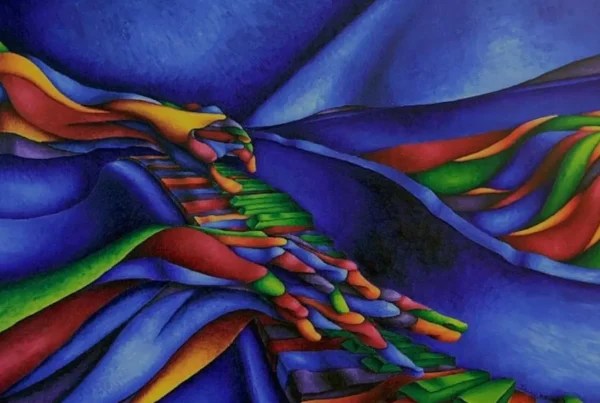
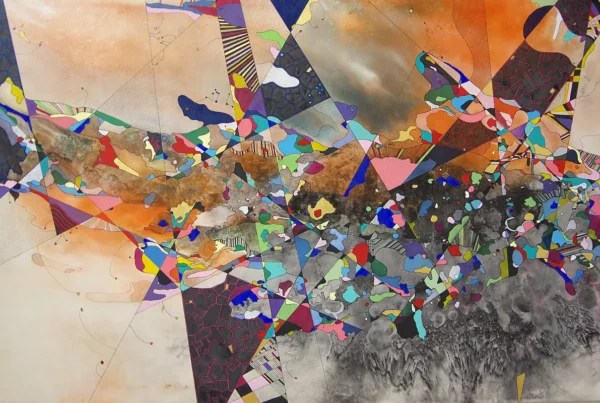
Although painting occupies a central place in Susan Carr’s practice, sculpture provides another important avenue for experimentation and emotional expression. Working with wood, ceramics, and fabric, she extends the symbolic and psychological concerns of her paintings into three dimensional forms that feel equally tactile and emotionally layered. Her wood sculptures are especially revealing in this regard. Constructed from cut fragments of abstract paintings that are reassembled into new configurations, these works carry visible histories within their surfaces. Each fragment retains traces of earlier gestures, colors, and marks, allowing the sculptures to function as reconstructed memories or physical manifestations of transformation. The assembled structures possess a totemic quality, emphasizing themes of fragmentation, resilience, and renewal that recur throughout her broader body of work.
Her ceramic sculptures introduce another dimension to her exploration of identity and emotional complexity. Carr describes these works as progressive Hummel figures, a phrase that captures both their playful charm and their subtle critique of idealized innocence. The ceramic forms are intentionally asymmetrical and exaggerated, embracing awkwardness rather than polished refinement. Their glossy surfaces and bright palettes create an immediate sense of delight, yet beneath that joy lies a deeper psychological tension. These figures resemble folk toys, carnival characters, ritual objects, and children’s drawings all at once. Their smiling expressions often contain undertones of vulnerability, absurdity, or emotional exposure. Carr refuses to separate humor from sorrow, allowing contradictory emotional states to coexist naturally within the same object.
Fabric sculpture introduces still another perspective within her evolving practice. Her large dolls function as extensions of her feminist concerns, transforming familiar forms associated with domesticity into powerful statements about identity and embodiment. These works resist passive categorization, instead presenting femininity as psychologically layered and socially charged. Carr’s sculptures collectively mirror the emotional directness of her paintings while expanding her visual language into physical space. Across every medium, she remains committed to handmade expression and emotional sincerity. Perfection is never the goal. What matters instead is the visible trace of process, memory, vulnerability, and human presence embedded within each object. This commitment gives her sculptures a sense of intimacy that feels immediate and profoundly personal.

Susan Carr: Painting as Communion and Survival
For Susan Carr, art is inseparable from life itself. Every painting reflects who she was emotionally and psychologically at the moment of its creation, making her practice an ongoing visual diary shaped by experience, loss, curiosity, and transformation. Painting functions simultaneously as meditation, communion, and release. Some works communicate joy and tenderness, while others confront grief, uncertainty, or emotional struggle. Yet even the darker images maintain a sense of openness rather than despair. Carr believes strongly that joy itself carries political significance, and this philosophy informs the emotional atmosphere of her work. Bright colors, playful symbolism, and decorative exuberance become forms of resistance against hopelessness and emotional numbness. Her paintings insist that vulnerability and celebration can occupy the same space without contradiction.
This balance between emotional pain and imaginative vitality distinguishes Carr’s practice from many contemporary approaches to figurative painting. Rather than pursuing irony or emotional detachment, she embraces sincerity completely. Her imagery feels spiritually handmade, filled with evidence of instinct, memory, and emotional immediacy. The paintings often resemble dream visions or personal myths unfolding across dense painted surfaces. Viewers encounter recurring symbols, ceremonial arrangements, and psychologically charged figures that invite contemplation rather than definitive interpretation. Carr trusts intuition and emotional truth over rigid conceptual systems, allowing her work to remain fluid and deeply human. This openness creates a strong emotional connection between artist and audience, encouraging viewers to engage with their own emotional histories through the imagery she constructs.
The enduring strength of Carr’s work lies in its refusal to prioritize one emotional state over another. Joy exists beside grief. Humor appears alongside anxiety. Spirituality coexists with political awareness. Decorative beauty shares space with emotional rawness. Through this complex emotional layering, Carr creates art that feels remarkably alive and resistant to simplification. Her paintings and sculptures communicate not through polished perfection but through honesty, contradiction, and emotional courage. Every work becomes part of a larger ongoing conversation about memory, resilience, family, feminism, and the transformative possibilities of artistic expression. Carr continues to move forward step by step, guided by curiosity and gratitude for the creative process itself. That sustained commitment to emotional truth gives her work its lasting resonance and singular voice within contemporary art.