“Life is fragile and can change overnight. All of this flows into my art.”
Landscapes Written in Time and Transformation
Margret Schopka has built an artistic practice shaped by observation, material experimentation, and a sustained fascination with change. Her path began in Hamburg, where she worked as a fashion illustrator for one of the city’s leading fashion houses before pursuing formal studies in painting at a private art school. That combination of visual sensitivity and artistic training established a foundation for a career that has continually evolved through curiosity and a willingness to explore new approaches. Since completing her studies, she has worked as a freelance artist, developing a body of work that resists fixed definitions and instead embraces movement, transformation, and the shifting nature of perception. Throughout her career, beautiful art itself served as a motivating force, encouraging her to pursue a creative life and to search for visual languages capable of expressing experiences that often remain difficult to articulate through words alone. Rather than remaining attached to a single medium, she has continually expanded her methods, allowing each idea to determine its own material form.
Growth and decay sit at the center of Schopka’s artistic concerns. Everyday materials, ordinary surfaces, and changing environments become points of departure for investigations into metamorphosis and impermanence. Her work examines how things emerge, transform, disappear, and survive through memory. This interest is not approached through grand statements but through subtle interventions that invite careful attention. Objects, landscapes, and materials are treated as living participants in an ongoing process rather than static subjects. Such an approach creates a practice grounded in observation while remaining deeply poetic. The passing of time is never presented as a distant concept but as a visible force acting upon every element within her work. By focusing on transitions rather than fixed states, she encourages viewers to consider how beauty can reside in temporary conditions and how meaning often emerges through change rather than permanence.
The importance of place has been equally significant in shaping her artistic language. Working in different locations has consistently generated new ideas and methods, but Iceland occupies a particularly special position within her creative life. Described as her second home, the country has provided inspiration for more than three decades. Its dramatic geological formations, shifting weather systems, expansive terrain, and powerful sense of isolation have profoundly influenced her way of seeing. Iceland offers a setting where transformation is constantly visible, where volcanic activity, erosion, wind, and seasonal changes reshape the landscape. These conditions align naturally with Schopka’s interest in fragility and transition. The landscape becomes more than a subject of representation. It becomes an active collaborator, contributing form, texture, atmosphere, and unpredictability to the work while reinforcing her ongoing exploration of memory, disappearance, and renewal.

Margret Schopka: Iceland as Collaborator and Muse
For more than thirty years, Schopka has returned to Iceland to create work directly within the landscape. This sustained engagement has allowed her to develop an unusually intimate relationship with a place defined by extremes. Rather than approaching the environment as a dramatic backdrop, she works with it as a living presence that influences every creative decision. The solitude, stillness, and immense scale of the terrain have inspired works that function as restrained visual responses to the forces of nature. Her interventions are often minimal, yet they carry substantial emotional and conceptual weight. By introducing carefully chosen materials into specific locations, she creates temporary encounters between human intention and natural processes. These moments remain vulnerable to weather, erosion, and time, emphasizing the fragile conditions under which the works exist. The resulting images suggest a dialogue between human memory and geological duration, revealing how even the smallest gesture can resonate within a vast landscape.
A defining feature of her practice is the symbolic role played by materials. Sand, coffee grounds, earth, and other organic substances are selected not merely for their visual qualities but for their ability to embody transformation. Through years of experimentation, Schopka developed working methods that respond directly to the characteristics of these materials and the environments in which they are placed. Their instability becomes an essential part of the artwork. Wind may scatter them, moisture may alter them, and time may erase them altogether. Such vulnerability is not viewed as a limitation but as an integral aspect of meaning. The materials mirror the fleeting nature of human experience while simultaneously connecting personal histories to larger environmental cycles. In this way, the physical substance of the work carries conceptual significance, reinforcing themes of emergence, disappearance, and continual change.
Her artistic language is also notable for the way it bridges intimacy and vastness. Delicate ornamental elements, traces of domestic associations, and carefully arranged forms often appear within remote Icelandic settings. This juxtaposition creates a compelling tension between personal memory and elemental nature. Human presence is suggested through subtle signs rather than direct representation, allowing viewers to sense histories that remain partially hidden. The landscape absorbs these interventions, transforming them into temporary marks that seem suspended between culture and geology. The resulting works avoid spectacle and instead cultivate contemplation. Through restraint and precision, Schopka creates images that encourage prolonged looking, revealing how seemingly modest gestures can illuminate profound relationships between people, place, and time.

The Intarsia Series and the Art of Impermanence
Among Schopka’s most meaningful projects, the series Intarsia occupies a particularly important position. Developed through her long engagement with Iceland, the works emerged from experiments involving sand, coffee grounds, earth, and landscape-based materials. Created in environments characterized by continual transformation, the series captures singular moments that can never be repeated. Each work arises from a specific encounter with place and conditions that exist only briefly before changing. This emphasis on uniqueness gives the series a powerful sense of immediacy. Rather than attempting to freeze nature into a permanent form, Schopka embraces instability as a creative principle. The works acknowledge that landscapes are constantly evolving and that artistic meaning can emerge from temporary configurations. In doing so, Intarsia becomes both a record of a moment and a reflection on the impossibility of preserving that moment indefinitely.
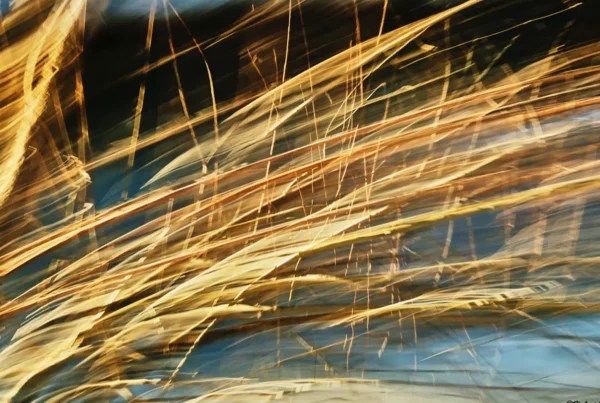
The visual structure of the series creates a fascinating relationship between material reality and photographic representation. Earth, gravel, and other substances appear to move beyond the boundaries of the image, challenging assumptions about where a photograph ends and physical space begins. Landscape is presented simultaneously as image and object, documentation and intervention. This ambiguity encourages viewers to reconsider the nature of representation itself. Rather than offering a straightforward depiction of place, the works create layered experiences in which reality and interpretation intersect. Physical materials retain their presence while photographs preserve their arrangement, producing compositions that feel both immediate and reflective. The viewer becomes aware of the processes through which landscapes are perceived, remembered, and transformed into visual narratives.
Underlying the series is a deep awareness of impermanence. Snow melts, wind disperses carefully arranged forms, and environmental conditions continually reshape the terrain. These changes are not secondary events but essential components of the work. Schopka accepts disappearance as part of creation, allowing natural processes to complete what the artist begins. The resulting images carry a quiet emotional force because they acknowledge the temporary nature of all things. They speak to memory, loss, and the passage of time without becoming sentimental. Instead, they offer a thoughtful meditation on existence itself, suggesting that value does not depend upon permanence. Through Intarsia, Schopka demonstrates how fleeting events can possess remarkable depth and how temporary gestures can leave lasting impressions within the imagination.

Margret Schopka: Preserving What Nature Erases
Photography occupies a unique position within Schopka’s practice because it serves as more than simple documentation. Many of her interventions are destined to disappear almost immediately after their creation. Weather conditions change, materials disperse, and landscapes continue their ongoing transformations. Under such circumstances, photography becomes a means of preserving experiences that can no longer physically exist. Yet these photographs are not neutral records. They function as artworks in their own right, capturing the atmosphere, tension, and vulnerability of temporary events. Each image holds evidence of a specific encounter between artist, material, and environment. What remains visible is not only the intervention itself but also the awareness that the moment has already passed. This relationship between presence and absence gives the photographs their distinctive emotional resonance and reinforces Schopka’s broader investigation into memory and impermanence.
The mood that emerges across her body of work is remarkably consistent. Expansive skies, open terrain, volcanic formations, snow-covered surfaces, and subtle interventions create images characterized by stillness and reflection. Although themes of fragility and disappearance are central, the work avoids pessimism. Instead, it presents change as an unavoidable and even beautiful aspect of existence. Human presence often remains indirect, suggested through traces rather than figures. This restraint encourages viewers to contemplate their own relationship with time, memory, and the environment. The simplicity of form found throughout the work enhances its emotional impact. By reducing visual distractions, Schopka allows attention to settle on essential relationships between material, landscape, and experience.
Looking ahead, Schopka continues to expand her artistic journey through significant upcoming projects. A solo exhibition scheduled for the autumn represents an important opportunity to present her evolving practice, while an art prize accompanied by an exhibition next year marks another major milestone. These events reflect the continued relevance of a body of work that has remained committed to experimentation, sensitivity, and thoughtful engagement with the natural world. Through decades of artistic activity, she has developed a distinctive visual language that connects environmental processes with personal reflection. Her work demonstrates that landscapes can function as archives of memory, that fragile materials can communicate profound ideas, and that temporary interventions can reveal enduring truths about transformation, longing, and the passage of time.