“I do not strive to replicate what I see, but I try to capture the glimpse of mystery that the landscape often evokes.”
Where Sky and Horizon Become Memory
Some painters approach landscape as a record of geography. Gregory Parker treats it as a living structure through which memory, emotion, weather, and visual rhythm can unfold. Based in Wichita, Kansas, Parker creates acrylic paintings that move between recognizable natural settings and expansive abstraction. Horizons, clouds, water, vegetation, and geological forms provide his foundations, yet the finished works resist straightforward description. Flowing contours, concentrated textures, geometric interruptions, splattered paint, and heightened color transform familiar surroundings into active visual systems. The landscape becomes less a location than a stage where order and spontaneity meet. Parker seeks the elusive sensation that can arise while looking across an open field or watching light change beneath a vast sky. His paintings preserve that uncertainty rather than resolving it. Through decades of drawing and painting, he has developed a language in which visible nature and intuitive invention remain closely connected, inviting viewers to experience the environment as movement, atmosphere, and emotional presence.
Wichita has played a lasting role in the formation of that visual language. Parker grew up in the city, spent many years elsewhere, and eventually returned to live and work there. Although Wichita is widely associated with aerospace, defense, and other major industries, Parker responds most strongly to the surrounding Kansas landscape. Two features have remained especially important throughout his life: the openness of the sky and the clarity of the horizon. Their scale gives the region a distinctive sense of distance, while daily sunsets introduce dramatic shifts of color, light, and mood. Parker describes these experiences as something that settles deeply into a person. When he travels to places where the horizon is blocked or the sky feels less expansive, he becomes aware of what is missing. This attachment does not lead him to reproduce Kansas scenery literally. Instead, the land supplies an emotional framework that continues to shape his compositions, color relationships, and interest in the mysterious qualities of open space.
Parker began pursuing art seriously at thirteen, responding to a creative impulse that has remained present across every stage of his life. His formal education strengthened that early commitment. He earned a Bachelor of Fine Arts in Drawing and Painting from Wichita State University in 1978, completed graduate studies at the University of Colorado Boulder between 1979 and 1980, and received a Master of Fine Arts in Drawing and Painting from the University of Kansas in 1985. Academic training gave him technical discipline, historical awareness, and sustained experience with materials, but his career did not develop through uninterrupted studio production. Family, children, employment, relationships, and practical responsibilities repeatedly competed for his attention. Now seventy one, Parker views those fluctuations as part of an honest artistic life rather than evidence of failure. His persistence matters more than a simplified story of constant productivity. Through periods of intense concentration and years of divided focus, the need to make images has continued to draw him back to painting.

Gregory Parker: Building Landscape Beyond Description
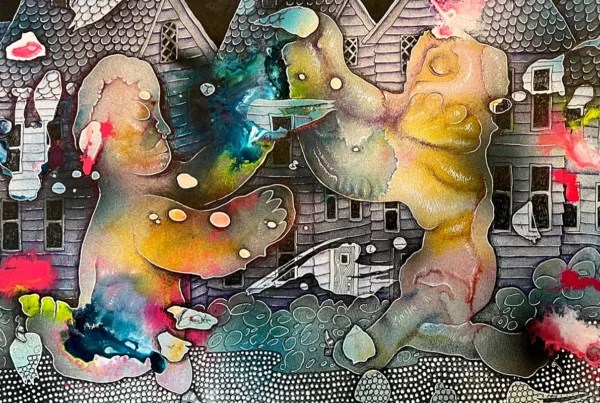
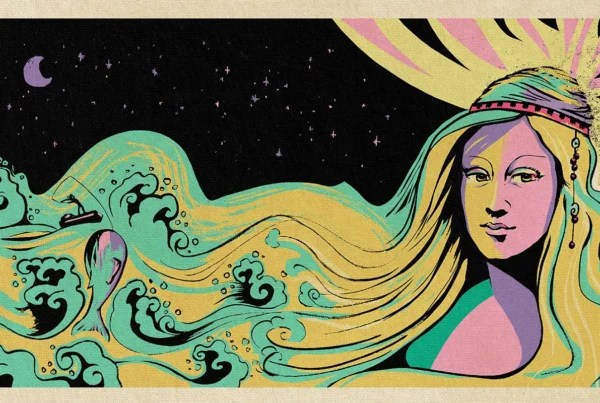
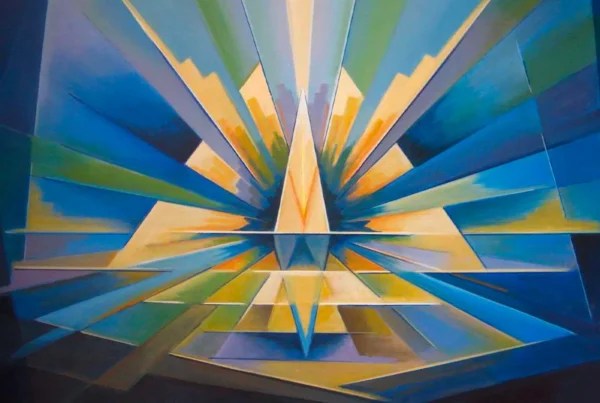
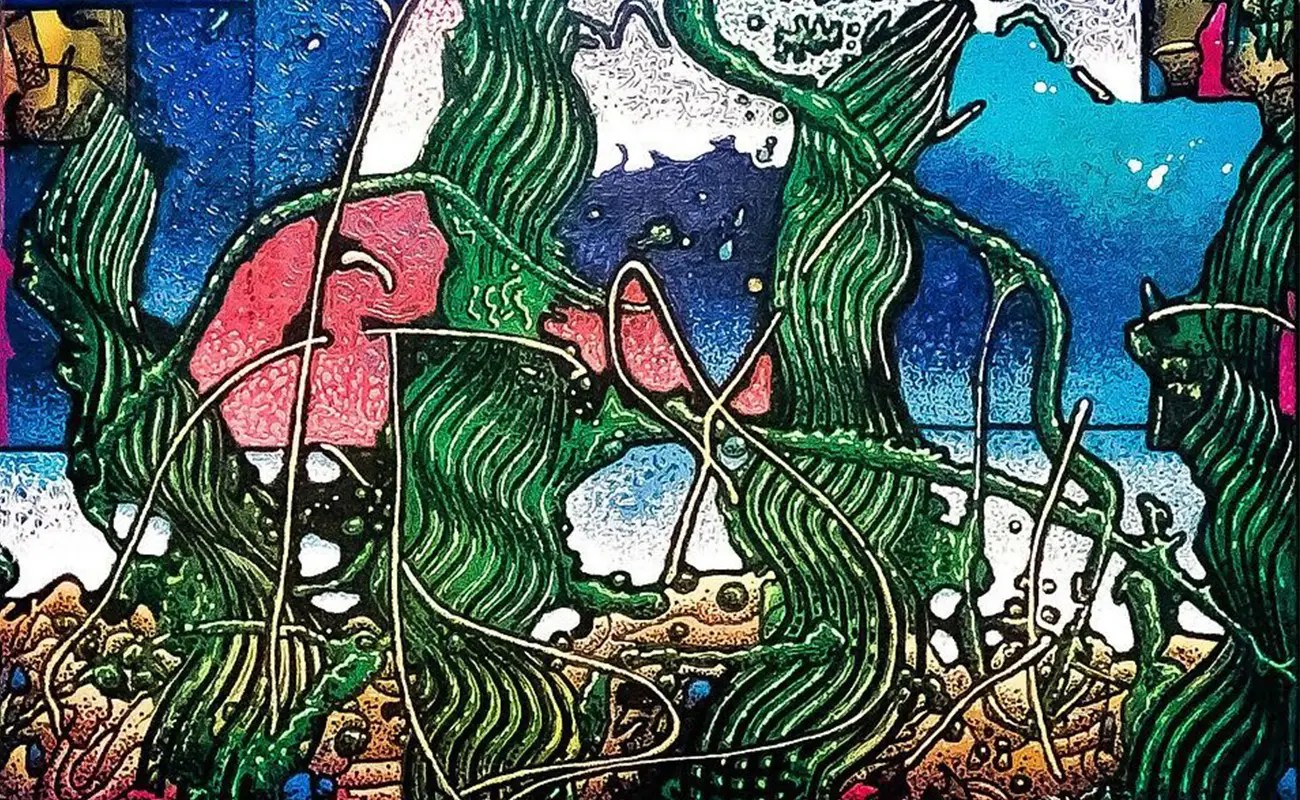
Landscape provides the underlying structure of Parker’s work, but observation is only the beginning of his process. He does not attempt to create faithful replicas of what appears before him. Instead, he searches for the brief sense of wonder, unease, or uncertainty that a place can produce. Within this atmospheric foundation, he introduces geometric forms, linear divisions, poured passages, splatters, and layered textures that challenge the stability of the scene. These additions function as visual counterpoints, interrupting the expected relationship between land and sky while opening the composition to abstraction. Surrealist qualities emerge when recognizable space begins to behave unpredictably, while expressionist energy appears through forceful color, gesture, and surface. The resulting paintings retain enough natural reference to feel grounded, yet they avoid becoming fixed descriptions of particular sites. Parker uses landscape as an adaptable framework through which internal sensation and external observation can coexist. What viewers encounter is not simply a field, shoreline, storm, or tree, but the emotional pressure surrounding it.
Many of Parker’s compositions are organized through dense networks of curving lines. These bands can suggest topographic maps, tree rings, roots, tides, wind currents, or layers of geological material without settling into one interpretation. Their repetition creates a sculptural impression, guiding the eye across ridges, channels, and shifting zones of color. Elsewhere, thick acrylic passages, drips, stippled marks, atmospheric swirls, and controlled edges create tension between deliberate construction and spontaneous action. Parker’s palette strengthens that contrast. Ultramarine, turquoise, emerald, ochre, orange, magenta, and violet frequently appear in combinations that intensify mood rather than imitate local color. Cool luminous areas may press against warm earth tones, reinforcing divisions between water and soil, sky and land, or quiet distance and active foreground. Small dots and geometric accents sometimes interrupt the larger movement, creating rhythms that recall musical notation, cellular activity, or signals passing through an interconnected system. Broad compositional forces remain visible from a distance, while intricate surface decisions reward slower observation.
A recent painting, AMBER WAVES #3, brings many of Parker’s central concerns into a single composition. Created in acrylic on canvas, the work combines an expansive sky, a pronounced horizon, expressive marks, tactile texture, and the atmosphere of uncertainty he continually seeks. Parker considers it a particularly successful expression of his intentions and identifies it as one of the paintings he especially values. Its importance comes not from documenting a specific view, but from balancing natural reference with visual disruption. The painting belongs to an approach shaped by his respect for artists who have reconsidered landscape through distinctive forms and personal invention. He points to David Hockney, Hokusai, Félix Vallotton, Hayao Miyazaki, Maxfield Parrish, André Derain, and Eyvind Earle as examples of creators who expanded the possibilities of environmental imagery. Their methods differ widely, yet each demonstrates that landscape can be reconstructed through rhythm, stylization, color, atmosphere, and imagination rather than confined to direct representation.

A Studio Practice Shared with Daily Life
Every Parker painting begins in the basement studio of his Wichita home. This space supports the most physical and unpredictable stages of production, including surface preparation, underpainting, splattering, pouring, and other spontaneous applications. Working there allows him to respond freely to paint without worrying about the disorder created by energetic methods. The basement becomes a place of initiation, where a composition acquires its first tensions, textures, and directional movements. Once that active foundation has developed, Parker often carries the canvas upstairs and continues working in the living room. The shift in location corresponds with a change in concentration. Detailed passages, refined edges, adjustments of color, and slower decisions can unfold in a more domestic setting. He frequently listens to audiobooks or watches television while painting. Nearby, his wife works on sewing projects. Their parallel activities have become a preferred household routine, joining separate creative practices within a shared room and allowing art to remain integrated with everyday companionship.
That integration reflects Parker’s belief that creativity is not limited to recognized artistic media. The impulse to invent can surface through remodeling a room, repairing a damaged object, constructing a patio, or solving an ordinary practical problem. He sees these activities as expressions of the same internal pressure that leads him to draw or paint. This understanding challenges the idea that serious art must remain isolated from work, family, maintenance, and domestic responsibility. Parker’s own history has required continual negotiation between creative ambition and the demands of daily life. Rather than separating those experiences, he recognizes how they contribute to patience, adaptability, and material awareness. He connects this broader creative instinct to childhood, when people often draw and imagine without embarrassment. Children invent unconventional images before they learn to measure themselves against technical standards. Parker believes the original urge comes before polished skill. Some adults retain contact with it, while others gradually suppress it through self judgment, convention, or fear of making something imperfect.
Parker is currently preparing paintings for a local gallery exhibition, a future commitment that gives his studio activity additional momentum. The show remains some distance away, yet its presence provides structure, encourages production, and pushes him to continue developing ideas. His paintings often take shape within bodies of work such as the Tallgrass Series, Rhythm of Wilderness Series, Amber Waves Series, Tempest Series, Wild Water Series, and Shade Trees Series. These titles establish recurring connections to grasslands, storms, water, vegetation, atmospheric change, and the movement of natural energy. Other paintings remain independent from any series, allowing individual images to establish their own identities. Regardless of classification, Parker treats each work as personally significant. He continues adjusting a painting until no further addition feels necessary, a process that requires both persistence and restraint. After reaching that point, he frames the completed piece himself. Presentation remains part of the same direct working method, keeping preparation, construction, resolution, and display within his own hands.

Gregory Parker: Letting the Painting Speak
Although Parker has spent decades studying and making art, he resists explanations that attempt to control the viewer’s response before an encounter begins. He regards his primary responsibility as creating the work, not translating every visual decision into specialized theory. Images may emerge from accumulated memories, intuitive reactions, material accidents, or sources that remain difficult to identify. Parker does not consider that uncertainty a problem. A painting can communicate before its origins have been fully converted into language. This conviction also informs his skepticism toward obscure artspeak, especially when elaborate terminology distances audiences from direct visual experience. Parker believes art possesses a beating heart rooted in the moment of making and renewed whenever someone stands before the finished object. Interpretation can deepen an encounter, but it should not become a barrier that suggests only experts are qualified to respond. The painting must retain enough independence to reach viewers through sensation, recognition, curiosity, and sustained attention.
His working philosophy remains open rather than doctrinal. Parker does not present a final definition of art, acknowledging that every proposed boundary can be questioned. Still, he understands artistic experience as something perceived through the senses and situated within time and space. Even when a work begins with an idea, that idea usually takes on a form through which another person can encounter it. Digital art complicates any definition centered on physical objects, but Parker’s own practice remains committed to acrylic paint, textured surfaces, canvas, framing, and the tangible presence of a completed image. Material decisions carry meaning through their scale, resistance, weight, and accumulation. Paint can flow, drag, collide, dry, cover, or reveal, producing information that cannot be separated from the object itself. The viewer then enters the process from another position, bringing personal associations that may differ from the artist’s intentions. Parker starts the conversation, but he does not attempt to dictate its final direction.
Continuity stands at the center of Parker’s artistic identity. His career has included changing responsibilities, interruptions, renewed periods of concentration, and the ordinary uncertainty that accompanies a lifelong creative commitment. What has endured is the recurring pull toward making. At seventy one, he continues to prepare canvases, pour and splatter paint, refine detailed passages, complete new bodies of work, and search for ideas that still surprise him. His paintings embody a sustained negotiation between discipline and instinct, structure and improvisation, recognizable landscape and abstract energy. They ask viewers to consider nature not as passive scenery, but as a field of interacting forces shaped by weather, growth, erosion, light, water, and memory. The Kansas horizon remains a steady emotional reference, yet Parker’s visual language carries it beyond any single location. Each painting becomes an independent encounter, holding the labor of its construction while leaving space for another person to discover meanings that the artist may never have named.