The Quiet Drama of Everyday Forms
Galina Munroe, born in 1993, has built a practice that turns familiar things into powerful visual statements. The French-British artist, based in London, works primarily through painting while also incorporating collage and stitched elements that expand the physical presence of the canvas. Her images often begin with subjects many viewers might overlook: flowers on a table, a bottle left after a meal, a bag set down after use, tools waiting in a studio, or fragments of the body caught in motion. Yet within her hands these objects gain emotional gravity. They become evidence of touch, routine, labour, and care. Munroe’s art is compelling because it does not depend on spectacle. Instead, it asks the viewer to reconsider the significance of what surrounds daily life. Through bold colour, reduced shapes, and layered surfaces, she transforms modest scenes into meditations on intimacy and self-awareness, revealing how personal history can gather quietly within common materials and repeated gestures.
Her earlier paintings were strongly associated with vivid floral arrangements, works energized by bright colour and a spirited sense of composition. Over time, however, those blooms shifted from leading role to supporting presence. Flowers remain visible, but now they often accompany hands, figures, containers, or objects linked to domestic routine and studio activity. This development marks an important change in her thinking. Rather than treating flowers simply as decorative subject matter, she uses them as symbols of continuity, tenderness, and cycles of growth. They sit beside gestures such as carrying, arranging, or reaching, and these actions become charged with psychological meaning. A hand moving a vase may suggest responsibility, affection, or fatigue. A gathered bouquet may hint at celebration, mourning, or maintenance. Munroe’s paintings show that portraiture does not require a face. Identity can emerge through habits, possessions, and the silent traces people leave in the spaces they inhabit.
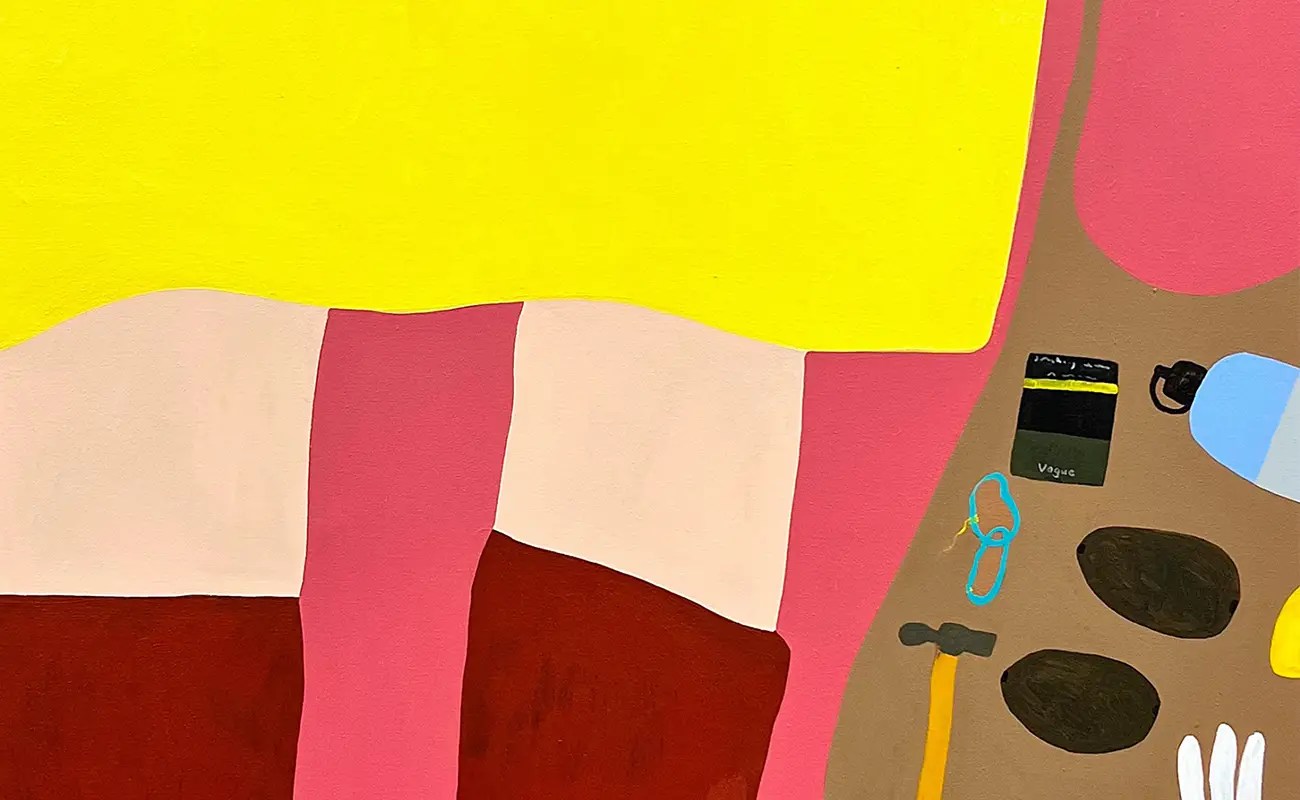
Her work often balances recognisable imagery with abstraction, creating a visual language that feels both immediate and elusive. A bottle may become a column of colour, a flower may flatten into a shape, and a figure may appear only through an arm, shoulder, or silhouette. This uncertainty slows the act of looking. Instead of reading a scene instantly, viewers must move through rhythm, colour relationships, and spatial tension. Munroe uses this ambiguity with precision, encouraging attention rather than narrative certainty. The result is a kind of inward viewing experience, where sensation and memory become as important as literal description. Her paintings hold energy without noise and complexity without clutter. They invite reflection on how people experience rooms, objects, and bodies over time. By making the familiar slightly unstable, Munroe opens a deeper emotional register in which everyday life appears newly vivid, layered, and worthy of sustained contemplation.

Galina Munroe: Material Histories Beneath the Surface
A defining strength of Munroe’s practice lies in the way each painting is physically built. Her canvases are not merely flat images but accumulated surfaces shaped through addition, covering, removal, and reconstruction. Many works begin with collaged components such as cut fragments of canvas or arranged grids of post-it notes. These pieces create an initial structure before layers of paint transform them into something less literal and more resonant. Even when hidden, the early stages remain active beneath the final image, giving the surface depth and tension. This process allows time itself to become visible. Decisions made early in the work continue to influence later marks, and traces of revision generate a sense of memory embedded in matter. Munroe treats painting as construction as much as depiction, making each canvas a record of changing thought. The viewer encounters not only an image but also the history of how that image came into being.
Sewing is another important aspect of her method, extending her interest in care, repair, and material connection. By stitching canvas fragments into the work, Munroe introduces gestures commonly associated with making, mending, and domestic labour. These sewn interventions are not decorative additions. They alter structure, create seams, and emphasize that a painting can be assembled rather than simply brushed into existence. This choice also deepens the conceptual language of her art. Stitching suggests joining separate experiences, preserving damaged surfaces, or strengthening vulnerable points. It resonates with her recurring themes of intimacy and emotional maintenance. Combined with paint, these sewn areas produce a tactile richness that rewards close viewing. The hand of the artist is present not only in visible marks but in acts of fastening and adjustment. Munroe therefore broadens what painting can contain, allowing textile sensibilities and traditional studio practice to meet on one surface.
Oil paint often enters these works slowly, sometimes over extended periods, reinforcing their layered temporality. Rather than rushing toward a polished finish, Munroe lets forms shift through repeated cycles of reconsideration. Areas are intensified, muted, rearranged, or nearly erased before balance is achieved. This patient rhythm gives the paintings density and assurance. Colour fields feel deliberate, edges carry tension, and compositions appear resolved only after sustained negotiation. Such methods mirror the emotional concerns within her subject matter. Just as relationships and routines are formed through repetition, her paintings mature through ongoing return. What might first seem playful or spontaneous is grounded in disciplined process. That combination of freshness and structure has become central to her reputation. Munroe’s canvases retain the excitement of discovery while holding the authority of careful making, proving that experimentation and control need not stand in opposition but can strengthen one another within a single work.

Between Home and Studio, Body and Object
Since returning to London in 2025, Munroe’s recent paintings have moved further toward the physical experience of the body and its relation to surrounding things. Bags, tools, containers, and gathered objects appear beside partial figures, suggesting a life divided and connected between domestic space and working space. These are not dramatic scenes of action. Instead, they capture transitional moments: carrying materials, setting something down, reaching across a table, pausing between tasks. Such images speak to labour that often goes unnoticed, especially the small acts required to sustain both creative practice and everyday living. Munroe recognizes that identity is shaped through these routines. The body is present not as idealized form but as working presence, marked by use, movement, and responsibility. Through cropped limbs and implied gestures, she turns practical actions into emotionally resonant signs, revealing how effort, repetition, and care can become central themes within contemporary painting.
The domestic motifs in her work carry broader cultural significance. Flowers, plants, kitchen objects, and interior references have often been dismissed within art history as minor or decorative subjects. Munroe resists that hierarchy by placing such imagery at the centre of serious formal inquiry. She demonstrates that softness does not equal weakness and familiarity does not diminish complexity. Floral forms, in particular, become tools for exploring rhythm, structure, and emotional tone while also carrying associations of nurture, grief, celebration, and renewal. Her approach repositions subjects linked to femininity and home life as intellectually rich and visually potent. This shift matters because it broadens the language of contemporary painting. Munroe shows that ideas about power, vulnerability, and memory can be addressed through a vase of stems as effectively as through grand historical themes. In doing so, she creates space for overlooked experiences to be seen with dignity and depth.
Many of her compositions function like perceptual environments rather than straightforward pictures. Shapes overlap, spaces compress, and objects hover between recognition and abstraction. A viewer may sense a room without clearly locating its boundaries or identify a figure only through a gesture. This ambiguity encourages slower looking and rewards patience. Colour becomes directional, guiding the eye across the canvas, while repeated forms create rhythm similar to movement through lived space. Munroe’s paintings therefore operate on emotional as well as visual levels. They can evoke calm, tension, warmth, or solitude without relying on explicit storytelling. Such subtlety is one reason her work has attracted sustained attention. She trusts viewers to complete meaning through observation and feeling. Instead of delivering a fixed message, she offers a responsive field in which memory, bodily awareness, and personal association become part of the encounter. The painting remains open, yet carefully composed.

Galina Munroe: Expanding a Distinct International Presence
Munroe’s education helped shape the technical and conceptual confidence visible in her mature work. She completed her undergraduate studies in 2014 at the European Academy of Art in Brittany, then earned a graduate degree two years later from Central Saint Martins in London. These experiences placed her within environments known for encouraging experimentation while demanding strong critical engagement. The combination appears significant in her later practice, where intuitive colour and playful imagery coexist with disciplined structure and thoughtful material decisions. Her career demonstrates how formal training can support individuality rather than limit it. Munroe did not emerge repeating inherited formulas. Instead, she developed a voice attentive to touch, domestic symbolism, and the changing relationship between figuration and abstraction. That distinctive direction has allowed her to stand apart within a crowded field of contemporary painting, offering work that feels personal yet broadly resonant, accessible yet layered with sustained inquiry.
Her paintings have been shown internationally through solo exhibitions in cities that reflect growing recognition across different art scenes. Venues include JARILAGER Gallery in Cologne and Seoul, PIERMARQ in Sydney, BRICKS Gallery in Copenhagen, UNION Gallery in London, COUNTY Gallery in Palm Beach, and Gallery RPH in Madrid. Such geographic range suggests that the concerns within her work travel well across contexts. Viewers in varied locations can respond to themes of care, labour, intimacy, and the emotional charge of ordinary things. At the same time, each exhibition offers new conversations about how domestic imagery and tactile abstraction operate within local traditions of collecting and criticism. This widening presence has strengthened her profile as an artist whose language is highly individual while remaining internationally legible. Rather than relying on trend, Munroe’s momentum appears rooted in consistency of vision and the evolving depth of her practice.
A wider audience has also encountered her through social media, where she shares glimpses of process and scale, sometimes standing atop large canvases while working. These images reveal the physical commitment behind paintings that may initially appear effortless. They show an artist willing to move across the surface, adjust compositions bodily, and treat the studio as an active site of negotiation. Yet visibility alone does not explain her following. Interest endures because the works themselves sustain attention. They reconcile exuberant colour with emotional nuance, humour with seriousness, and immediacy with accumulated complexity. Munroe continues to expand a body of work capable of holding memory, sensation, and lived experience within paint, cloth, and gesture. Her art reminds viewers that the most familiar objects can contain entire worlds of feeling when seen with sufficient patience and transformed through a rigorous imaginative practice.