“I am not attempting to reproduce reality; I am using photography to construct another reality.”
From Commercial Precision to Artistic Freedom
For more than three decades, Dirk Karsten built a career around images designed to make an immediate impression. The Dutch photographer and commercial film director worked at the highest levels of international advertising, creating campaigns and directing commercials across Europe, the United States, the Middle East and other regions. Clients including Toyota, BMW, KLM, Jumeirah Hotels and Resorts, Philips and the Red Cross placed him inside sophisticated production environments where visual decisions carried practical consequences. His photography has also received international recognition through awards and exhibitions, including presentations in contemporary art contexts. Today, that accumulated experience supports a fine art practice concerned less with delivering a prescribed message than with discovering what an image can become when its meaning remains open. Karsten is represented by David Grant Art.
Photography first entered Karsten’s life at fourteen, when his parents gave him a camera during a trip to North Africa. What began there eventually developed into an international profession. Advertising sharpened his ability to anticipate an image before production begins, while teaching him to work with people, light, narrative and exacting technical demands. It also reinforced a fundamental lesson about attention: an image often has only a fraction of a second to establish a relationship with its audience. Karsten retains that instinct for immediacy in his personal work, but the purpose has changed. There is no product to sell and no predetermined message to communicate.
The shift from commercial photography to fine art therefore feels less like a rejection of his earlier career than an extension of it. After decades of producing photographs for clients, Karsten became increasingly curious about what photography could accomplish without commercial requirements. Curiosity and intuition replaced the brief. The technical discipline remained, but the endpoint became less predictable. That freedom allows him to follow an image according to its own internal logic, whether the subject is a human figure, an animal, a landscape, an abandoned environment or something transformed so extensively that its original photographic identity begins to dissolve.

Dirk Karsten: Between Recognition and Abstraction
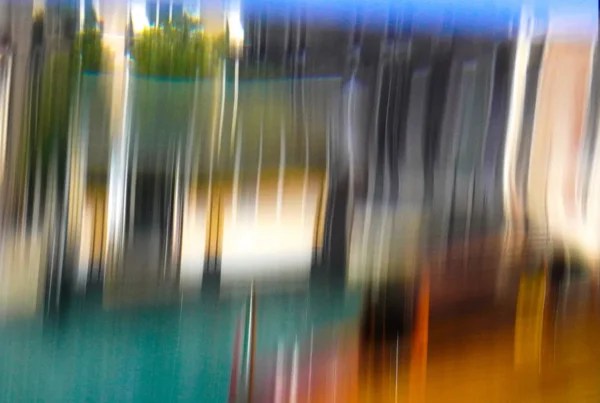
Karsten describes his work as occupying a territory between photography, painting and visual abstraction. Every image may begin with the camera, yet recording reality is only one possible function of the photograph. He is more interested in its capacity to alter what has been seen. Light, colour, texture, nature and the human form repeatedly become instruments for that transformation. The resulting works often preserve enough recognizable information to feel photographic at first glance, then complicate that impression through unexpected surfaces, atmospheric shifts or altered forms. This tension between familiarity and uncertainty gives the viewer room to encounter the work before trying to explain it.
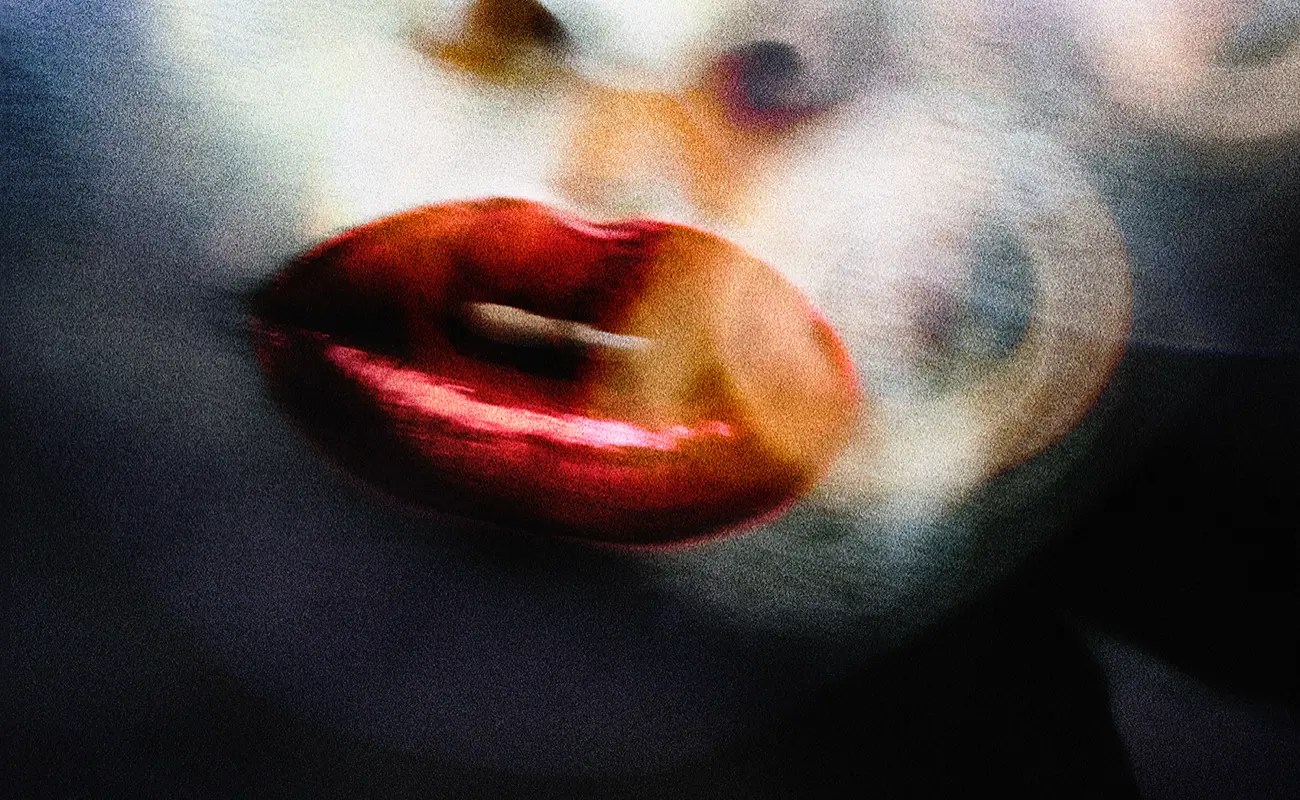
The human figure is particularly important within this approach. Karsten is fascinated by the body as a visual language in itself, encompassing shape, vulnerability, strength and an inherent capacity for abstraction. Rather than treating the person as the subject of conventional portraiture or straightforward figurative photography, he uses the figure as a point of departure. Identity can become secondary to atmosphere, bodily form, surface and composition. Reality remains present, but it is pushed toward imagination. This allows the photographed body to occupy an ambiguous position in which a recognizable figure can also operate as shape, colour, texture and emotional presence.
Works such as Posing Beauty and My Tuscany Horse illustrate Karsten’s willingness to transform an original exposure substantially when the image demands it. His process can combine photography with digital intervention, illustration and extensive post production, drawing on an analog background without treating any single technique as a rule. Light, colour, transparency, texture, scale and composition can all be reconsidered after capture. For Karsten, digital technology functions like an expanded darkroom rather than a replacement for photography. It extends the creative process beyond the instant when the shutter closes, giving him a degree of pictorial freedom that he compares to painting.

When Observation Resists Intervention
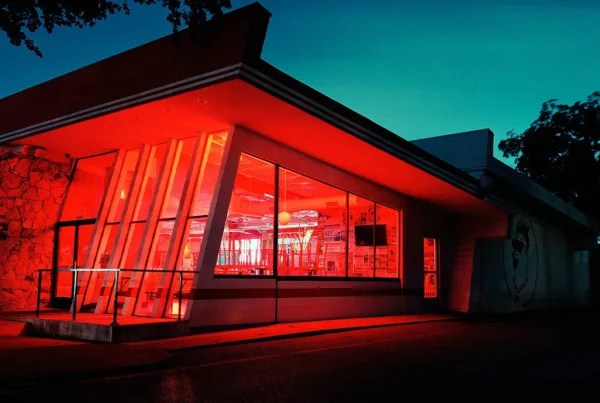
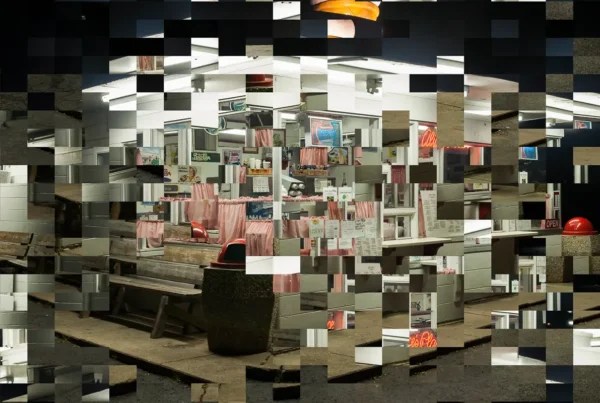
Not every photograph undergoes extensive transformation. Karsten’s practice also depends on knowing when the world itself provides sufficient strangeness. His Salton Sea project, begun in 2014 around the deteriorating settlements surrounding California’s Salton Sea, demonstrates this observational side of his work. Leaving behind the controlled conditions associated with advertising production, he photographed abandoned buildings, objects and traces of former occupation largely as he encountered them. The approach changed, but his attention to composition and atmosphere remained. Instead of constructing the entire visual environment, he searched within an existing one for images capable of holding both documentary information and emotional tension.
Photographs including This Was Home, Lost My Boat, Sit Next to Me and Have a Seat register places that seem suspended while remaining subject to continuous change. Abandoned structures and remnants of earlier lives become evidence of absence without requiring an imposed narrative. Karsten’s interest in neglected environments is closely connected to his attraction to overlooked beauty and ambiguity. A ruined location can be recorded directly while still appearing unfamiliar through framing, light and the careful organization of visual information. The Salton Sea series later entered international exhibition contexts, including Personal Structures: Open Borders in Venice in 2017.
A related sensitivity appears in the Big Boy series, although its subjects are animals rather than abandoned places. Karsten used large format film and available light to photograph animals with the formality normally associated with human sitters. Across such different subjects, his visual language remains connected by atmosphere. Muted colour, deep shadow, softened illumination and controlled composition can produce an impression of stillness or suspended time. Cinema, painting, architecture, fashion and nature have all influenced the way he sees, but light remains his most persistent source of fascination. Even after decades behind the camera, its capacity to transform a subject continues to direct his attention.

Dirk Karsten: Building the Image Beyond the Screen
Karsten’s studio practice begins without a fixed formula. A photograph might originate with an observation, an idea, a fragment of light or an impulse he cannot initially articulate. Experimentation follows. He adjusts scale, colour, transparency, composition and texture while testing how far photographic realism can move toward abstraction without losing its authority. This process reflects a broader change in his interests over time. Where commercial communication often rewards clarity, his fine art increasingly favors suggestion. He is drawn to images that do not exhaust themselves through immediate explanation, preferring work capable of revealing different qualities through repeated viewing.
The physical form of the photograph matters as much as its development on screen. Karsten conceives his finished pieces as objects intended to occupy architectural space. Paper, printing technique, framing and scale are therefore integral decisions rather than secondary presentation choices. His digitally developed figurative works become large format archival fine art photographic prints, generally issued in limited editions. At that size, photographic precision can coexist with painterly atmosphere, allowing fine detail to remain visible while colour, surface and bodily form gain a more immersive presence. The finished print carries the history of a photographic exposure while no longer being confined to the instant that produced it.
Karsten is now pushing this relationship between photography and abstraction further through a new body of large scale work. His aim is to make the photographic image increasingly painterly and atmospheric while preserving the detail and visual authority that photography can provide. It is a direction grounded in the full arc of his experience, from analog processes and commercial assignments to digital manipulation and exhibition work. After a professional lifetime devoted largely to creating images for others, he now values the ability to pursue an idea without knowing precisely where it will end. Beauty, mystery and emotion remain central, but so does the freedom to let photography construct a reality of its own.