“My style is defined by breaking away from the academic and using multimedia to express Human Rights, the Human Psyche and Human Spirituality.”
Art as a Living Record
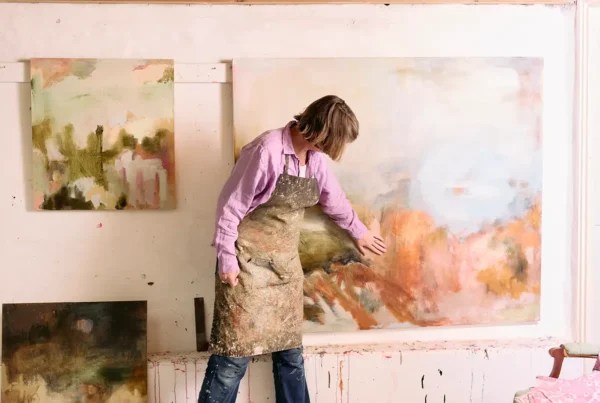
Denise Shaw is a New York City-based mixed-media artist whose work interrogates the intersection of global social narratives, human rights, and the philosophical concept of Anima Mundi—the “Soul of the World.” Operating from her studio in Tribeca,and Connecticut, Shaw constructs tactile, layered environments that function as both a visual record of our collective history and a call to action.
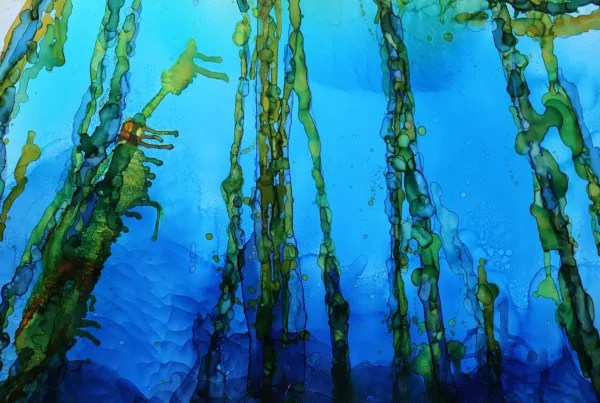
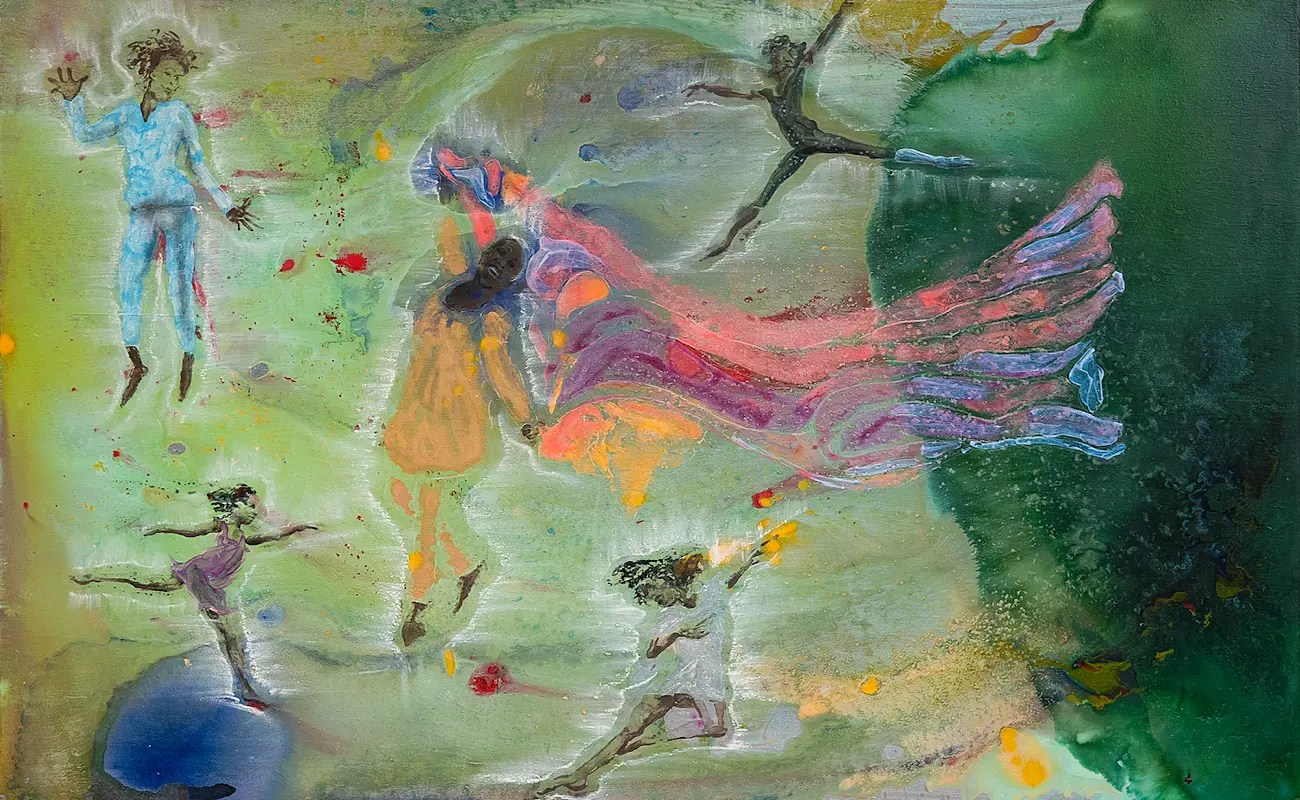
Her practice is a deliberate act of “fanning the flames” of consciousness. Utilizing a diverse array of materials—including acrylic, watercolor, photo transfers, metal leaf, pumice, and sand—Shaw builds surfaces that mirror the complexity of the human condition. Her work seeks to create an “authentic habitat” for memory and resistance, ensuring that our collective history remains vibrant, curious, and alive.
Shaw’s work has been featured in solo and group exhibitions across museums, galleries, and cultural centers in the United States and Europe. Notable venues include the National Museum of American Art (Washington, D.C.), the Reece Museum (Tennessee), The Copelouzos Family Museum (Athens, Greece), The Woodruff Arts Center of the Atlanta College of Art (Georgia), Metropolitan Dade Community College (Miami), the Vasilunas Gallery (Lithuania), and the Human Rights Biennial (Seattle and California). In New York City, her work has been showcased at the Museum of Arts and Design, the Swiss Institute, the Park Avenue Armory, LaGuardia College and the Viridian Gallery.
Beyond the gallery, Shaw is committed to public art as a revolutionary act of connection. Her public contributions include CowParade, In Celebration of Rescue Dogs, and the Save the Tigers project at the United Nations, as well as designing a flag for the Iconic Rink at Rockefeller Center. In 2003, she received the prestigious honor of designing and painting the White House Easter Egg commemorating the 9/11 attacks.
Shaw holds a BFA from the School of Visual Arts and a postgraduate certificate in Film from New York University. Her work is held in numerous private, public, and corporate collections, including those of Rockefeller Center, ESG Insignia, GHI Health Insurance, Phillip Morris, New Moves Dance Company, Cruise Norway, and Pfizer, Inc.

Vitarka
Acrylic and collage on canvas
36 × 36 in

Black Moon Lilith
Acrylic and mixed media on canvas
52 × 40 in
Denise Shaw: Between Beauty and Political Urgency
Shaw’s sensitivity to art, politics, and social consciousness began long before she established her practice in New York. She grew up surrounded by nature in a progressive Connecticut town where social, political, and artistic engagement was encouraged. Creativity was also embedded in family life. Her mother was a designer, while her father brought an intellectual influence into the household. Shaw describes herself as having been “born an artist,” but moving to New York City marked a decisive shift, placing her within the immersive, international culture she was seeking. Alongside her later studies at the School of Visual Arts and New York University, she also attended The New School.
Her mature artistic language developed partly through a conscious rejection of academic boundaries. Multimedia offered a way to address subjects that could not be contained within a single technique or tradition, particularly human rights, the human psyche, and human spirituality. Extensive travel has further shaped that outlook. Shaw has traveled widely and spent considerable time in India, experiences that exposed her both to artistic traditions across cultures and to the realities of injustice, suffering, and political systems she regards as destructive. The evolution of psychology, philosophy, spirituality, and human thought in Western and Eastern cultures continues to inform how she approaches an image.
Ancient art, mythology, metaphysical ideas, and classical and contemporary literature occupy an equally important place in her thinking. She is also fascinated by what she calls the living consciousness of water. These interests provide a longer historical and philosophical framework for subjects that might otherwise be confined to the politics of a particular moment. Shaw is acutely aware that overtly political art can quickly become dated, so she works to preserve beauty and timelessness even when responding to urgent events. Rather than softening political content, beauty becomes a way of sustaining attention and connecting present conflicts to broader questions of culture, memory, spirituality, and human behavior.

Sports Washing
Acrylic, gold metal leaf, and photo transfer on canvas
47 × 38 in

Ghost Paper
Acrylic and collage on wood panel
36 × 36 in
A Schoolgirl, a Memorial, a Cultural History
“Minab School Girl” brings many of Shaw’s central concerns into a single work. She created the painting as a memorial and commentary on the February 28, 2026 bombing of the Shajareh Tayyebeh Elementary School in Minab, Iran. According to Shaw’s account, the attack occurred during the first day of joint U.S. and Israeli military operations and killed 156 people, including 120 students and 26 teachers. Her response centers on the image of a young girl, allowing the human cost of the event to confront the broader geopolitical circumstances surrounding it. Shaw describes the painting as her response to what she considers horrific American aggression.
Rather than building the composition solely around contemporary political imagery, Shaw places the tragedy in dialogue with approximately 2,500 years of Persian cultural history. The girl wears a dress inspired by a seventeenth-century Isfahan tile design, an intentional reference to Iran’s traditions of architecture, painting, and weaving. Shaw renders the garment in fluorescent acrylic and sets it against a gold metal leaf background. The visual contrast connects a vivid contemporary palette with a surface associated with luminosity and preciousness, allowing the figure to carry associations that reach beyond victimhood and toward a much older cultural inheritance.
The painting also reveals how Shaw attempts to prevent political art from becoming trapped in the immediacy of a single event. Her critique encompasses both the circumstances of the bombing and what she identifies as the atrocities of Iran’s current regime, while the work simultaneously honors Persian artistic achievement. Culture, government, violence, and historical identity are therefore not collapsed into one another. By drawing from Isfahan design and placing a child at the center of the composition, Shaw creates a memorial in which aesthetic beauty and political anger remain deliberately intertwined. The work asks viewers to encounter history not only through statistics and military narratives, but through the cultural and human life endangered by them.

Minab School Girl
Acrylic, gold metal leaf, and charcoal on canvas
40 × 30 in

American Cartel
Watercolor on paper
30 × 22 in
Denise Shaw: From Looking to Making
Shaw’s daily practice is built around a continuous exchange between making and looking. She works between two studios, one in Manhattan and another in Connecticut. On days when she is not physically painting, she gathers reference material and follows ideas that may later enter the work. New York’s museums and galleries play a significant role in that process, giving her regular access to historical and contemporary art while allowing unexpected visual connections to emerge. Research, observation, and studio production are not separate stages for Shaw. They form a continuous rhythm in which one encounter can redirect an existing composition or initiate an entirely new one.
A recent visit to the Museum of Modern Art demonstrates how directly those experiences can feed her work. After seeing a Marcel Duchamp retrospective, Shaw found herself inspired to begin a painting concerned with the Strait of Hormuz. The work is currently in progress. The pairing is characteristic of her approach: an encounter with a major figure in twentieth-century art becomes a catalyst for thinking about a contemporary geopolitical location. Rather than borrowing a historical style mechanically, Shaw allows art history to trigger new conceptual associations, connecting what she sees in museums with the political and philosophical subjects already occupying her attention.
That openness helps explain the breadth of references that coexist within Shaw’s practice. Persian tile design, ancient art, literature, spirituality, political conflict, museum visits, global travel, and contemporary events can each become part of the same developing visual vocabulary. What binds them together is her insistence that art remain an active form of consciousness rather than a passive record. Whether working through a politically charged memorial or developing a new painting after an encounter with Duchamp, Shaw returns to the idea that art can keep memory alive, complicate familiar narratives, and create a space where beauty does not erase conflict but makes sustained attention possible.

Spiritual Alchemy
Acrylic and gold metal leaf on wood panel
36 × 36 in