“For me it marks the moment my work stopped trying to describe feeling and started trying to host it.”
Where Feeling Becomes Material
Chang Tingwei approaches painting as a place where emotion can take physical form. Working primarily in oil while also using watercolor, sketching, ink, and techniques informed by Dunhuang murals, she has developed a practice that moves freely between image, atmosphere, memory, and psychological experience. More than a decade of work across studio painting, cultural exchange exhibitions, art education, and art therapy has shaped an outlook that resists separating artistic expression from human connection. For Tingwei, a painting does not need to explain a feeling in order to make it present.
That position gives her work an unusual double orientation. Membership in several international artists’ associations, together with exhibitions in Berlin, Paris, Rome, New York, and Washington DC, has encouraged her to consider how an Eastern visual sensibility can communicate across cultural contexts. At the same time, her work in art therapy has pushed her toward a slower, more attentive relationship with images. In that setting, a line, color, or mark can carry emotional weight before it becomes formally resolved. Painting therefore becomes both visual language and a way of listening, capable of reaching people who may not usually spend time with contemporary art.
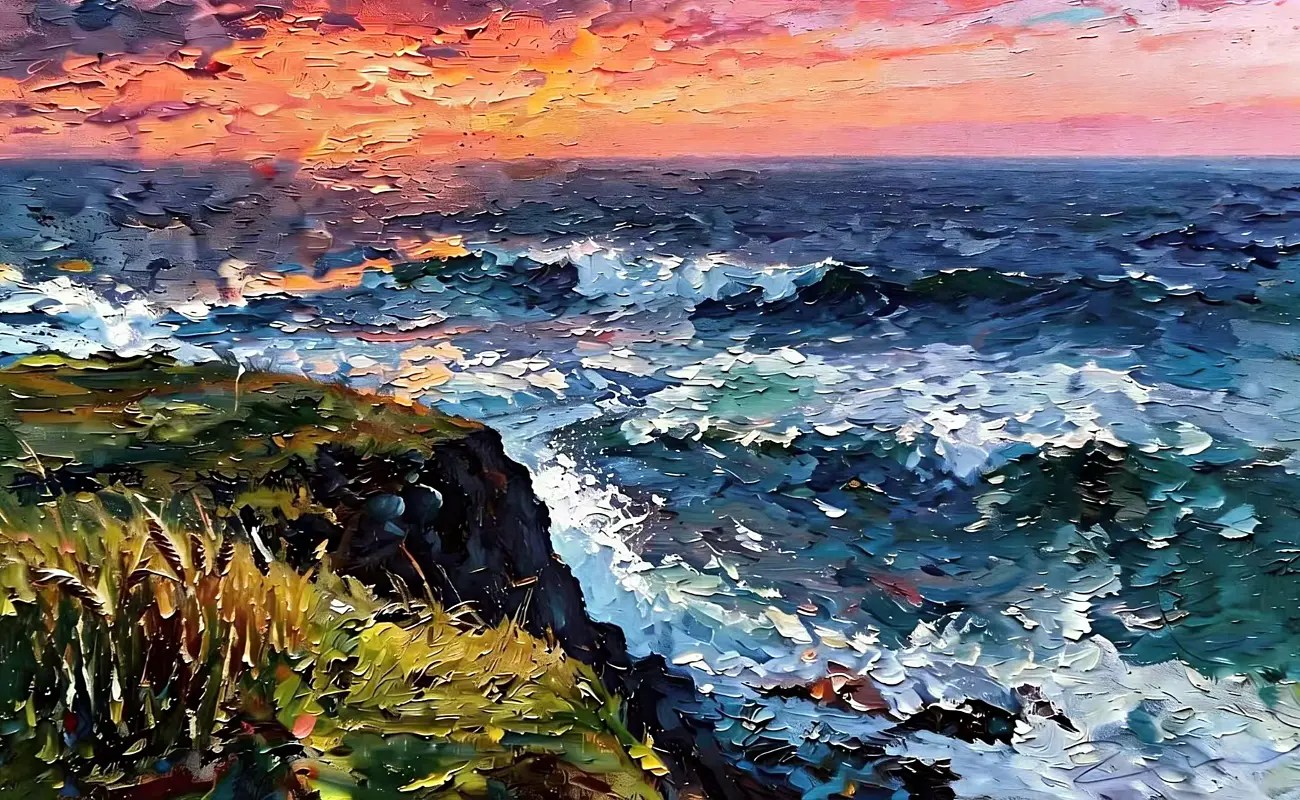
This tension between outward communication and inward attention runs through her recurring subjects. Landscapes are rarely only landscapes, just as flowers, mountains, seas, figures, and domestic animals are not treated as isolated motifs. They become vessels for affection, memory, relational pressure, cultural inheritance, and the search for stillness. Tingwei’s paintings often move between recognizable imagery and abstraction, allowing the viewer to enter through something familiar before encountering a more unstable emotional field. The resulting visual language can be lyrical and fluid while retaining the density of layered color and worked surfaces.

Chang Tingwei: Painting Between Memory and Place
Tingwei describes becoming an artist not through a single decisive event but through accumulation. Years of drawing were followed by sustained study of traditional mural language, oil painting systems, watercolor, and the gradual development of confidence in her own sense of color. Early recognition in local competitions helped confirm that direction, while later international selections in Berlin, Rome, and Paris suggested that deeply personal imagery could remain legible outside its original cultural setting. The process was less a break from one identity into another than a slow consolidation of many forms of attention.
Place has been especially important in that development, although Tingwei does not treat travel as documentary material. Macao, Lhasa and Barkhor Street, lakes, mountains, and small European towns enter her work as remembered atmospheres rather than direct records. A location may be reduced to a temperature, a color relationship, or a sense of distance. In this way, geography becomes psychological. What remains on the canvas is often not the site itself but the emotional residue of having stood there, filtered through memory rather than preserved as a postcard view.
Her influences stretch between historical tradition and modern painting. Dunhuang mural culture contributes mineral color, layered surfaces, sacred atmosphere, and a sense of extended time. Impressionist light, Post Impressionist color, and contemporary abstract painting offer other ways of organizing sensation. Yet one of the most distinctive influences comes from her art therapy practice, where vulnerability changes how she thinks about color. A painted area can operate like breath, wound, shelter, or pulse. Family life, solitude, motherhood, including the emotional context surrounding a Mother’s Day exhibition in Washington DC, and the contradictions of love add further pressure to that visual vocabulary.

The Wounded Surface of Love
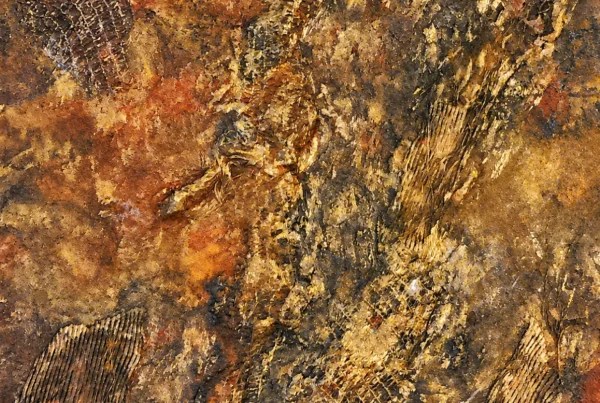
Those concerns converge with particular force in Affetto Tormentato / 焦灼之恋, an oil painting on canvas measuring 90 × 150 cm and completed in 2025. Tingwei identifies the work as a key point in her development, and it received the Leonardo Visual Art Prize in Rome. Despite its title, the painting does not present love as a narrative scene or recognizable exchange between figures. Instead, it treats love as a condition of pressure, something built through color, abrasion, accumulation, and uncertainty. Its importance lies as much in how it was made as in what its title suggests.
Yellows, scorched pinks, and eroded blues gather across the surface, are scraped back, and then rebuilt. Tingwei describes the result as “wounded material,” a phrase that clarifies how closely physical process and emotional content are linked in the work. The canvas holds itself between landscape and figure without settling completely into either. Intimacy appears alongside rupture, and tenderness is complicated by instability. Rather than illustrating a relationship, the painting gives relational tension a material structure, with each layer carrying the trace of what has been covered, disturbed, or allowed to remain visible.
For Tingwei, the significance of Affetto Tormentato lies in a shift of intention. She no longer wanted painting simply to describe an emotional state from a safe distance. She wanted the work to contain that state and allow viewers to encounter it without a prescribed interpretation or moral. “For me it marks the moment my work stopped trying to describe feeling and started trying to host it,” she explains. That distinction is central to her recent practice: feeling is not translated into a fixed message but held open as an experience that can remain unresolved.

Chang Tingwei: Building a Sanctuary Through Art
Tingwei’s daily process reflects the breadth of her materials and interests. She moves deliberately between oil, watercolor, ink, mural studies, and sketching according to what a particular idea requires. Oil allows for impasto and broad emotional fields; watercolor demands cooperation with water, speed, and breath; ink and mural related studies reconnect her with lineage and historical surface. She sketches observations and keeps color notes, often beginning with a mood rather than a fixed image. The guiding question is simple but demanding: what should this canvas feel like when someone stands before it?
Teaching and art therapy remain part of that rhythm rather than existing outside the studio. Encounters with students and clients keep her attentive to how images function for people with different levels of familiarity with contemporary art. Accessibility, in her work, does not mean simplifying an idea. It means leaving enough emotional space for viewers to recognize something of their own experience without requiring specialized knowledge. This helps explain why her work can hold cultural memory and psychological complexity while still seeking a direct sensory encounter. The aim is not to instruct viewers what to feel, but to create conditions in which feeling can surface.
That ambition is expanding into a proposed cross media project titled Sanctuary and Scar: Paintings, Murals, and Healing Rooms. Tingwei imagines oil paintings, Dunhuang influenced mural surfaces, watercolor chambers, and a small art therapy space combined within one exhibition. The intention is not only to present objects for viewing but to create an environment in which people can pause, sit, and experience art spatially. Memory, love, war and peace, and inner repair would coexist within a project that is Chinese in cultural grounding, psychologically intimate in tone, and open to viewers across different backgrounds. In Tingwei’s conception, the exhibition itself becomes a place for attention rather than explanation.