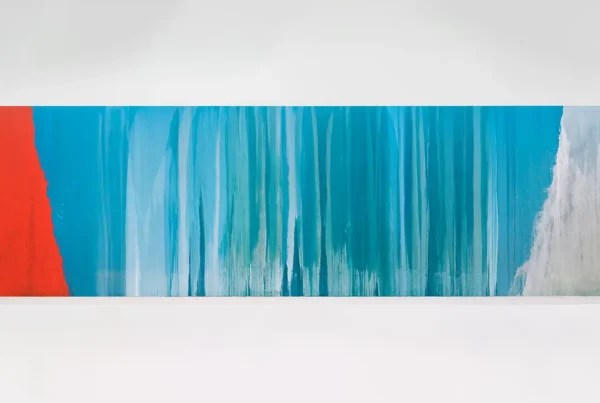
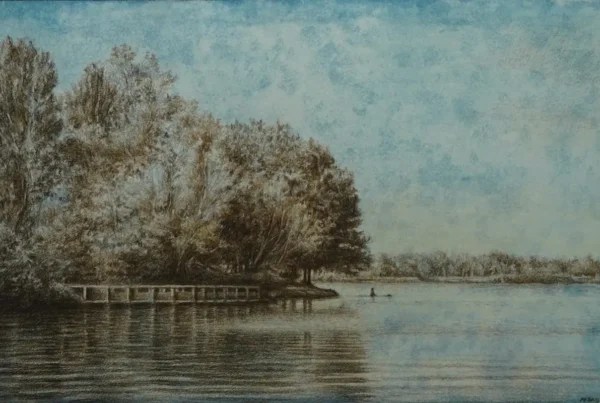
“Days are made of thousands of moments, ranging from dreadful to monotonous to extraordinary.”
The Details That Hold a Day
An ordinary day may pass without anyone noticing the detail that gives it character: a shape, a shift of color, or a brief change in how a familiar object appears. For Carrie Gangwish, those passing impressions are not incidental. They are the material of her painting practice. Working in oil, she draws attention to what people often leave unexamined, inviting viewers into a considered encounter with something they might otherwise overlook. Her subjects are inseparable from the moment in which she notices them, and from the experiences that determine why they matter.
Her interest in small observations begins with a broader understanding of time. She regards a day not as a single continuous experience but as thousands of distinct moments, some difficult, some uneventful, and others unexpectedly beautiful. Painting allows her to give one of those fragments room to be seen. Instead of insisting that an image must present an extraordinary subject, she looks for the potential of ordinary attention. A seemingly modest detail can hold far more emotional weight than its scale or familiarity suggests.
This attentiveness also shapes the encounter she wants to create for someone standing before a canvas. Gangwish is interested in building an environment within a painting, not simply recording the appearance of an object. Through her decisions about what to emphasize, she makes visible the particular way she has experienced it. The finished work asks for time in return: a viewer may recognize the subject immediately, then gradually become aware of aspects that were easy to miss at first. What matters is the movement from looking to noticing.

Carrie Gangwish: A Practice Learned by Hand
Long before she discovered oil paint, making things was woven into Gangwish’s childhood. She spent time beside her grandmother, who taught her to sew when she was three years old, with Carrie sitting on her lap. Their time together was filled with projects: sewing, painting, cooking, or learning something new. Her grandmother’s example placed creative work within everyday life rather than treating it as a separate, exceptional activity. At school and at home, art remained what she most wanted to do.
This early exposure gave her familiarity with the satisfaction of working directly with materials, but college brought a decisive change in what painting could mean to her. There she encountered oil paint and found a medium capable of creating the color and depth she had imagined. She began to see that the kind of painter she hoped to become was within reach, whether she chose to work realistically or depart from representation. The discovery felt to her like gaining fluency in a new language: ideas could be expressed through paint with a richness she had not experienced previously.
Just as important was the environment in which that discovery took place. Surrounded by mentors and peers, she found a community that encouraged sustained, productive work and gave her a sense of serenity. Painting became tied not only to individual expression but also to belonging among people who understood the pleasures and demands of making art. That combination of artistic possibility and shared commitment stayed with her. It helped establish a practice in which the act of painting, the handling of color, and the time spent looking could be meaningful in their own right.

The Freedom of Looking Differently
Among the artists Gangwish names as influences are Jenny Saville, Joan Semmel, Lucian Freud, and Georgia O’Keeffe. She is drawn particularly to the ways they use color, texture, and perspective. Rather than following a single model of what a painting should look like, she has found permission in their approaches to reconsider familiar subjects. A figure need not appear seated or standing in a conventional pose; a flower does not have to be gathered into a bouquet. Her attention is caught by the visual possibilities that emerge when subjects are considered outside such expected arrangements.
Those influences inform her thinking, yet Gangwish identifies lived experience as a force just as important to her work. She has spoken openly about the abuse she experienced as a child and the ways its effects can extend into adulthood. Living through abuse can place a person in a state of survival in which routines, relationships, and ordinary physical processes are disrupted. Her continuing efforts to understand her habits and create a more peaceful life have given the act of paying attention a particular importance.
Painting has provided a way to spend time with the feelings associated with those experiences without requiring them to be resolved in a single image. For Gangwish, concentrating on the present is neither automatic nor always comfortable. It is an ongoing practice, one that she considers worth pursuing. In this context, an observed object can become more than a subject for technical study. It can offer a point of focus amid complicated emotions, allowing her to acknowledge both a visible detail and the larger personal circumstances surrounding the time she chose to paint it.

Carrie Gangwish: The Many Lives of Persephone
That connection is especially apparent in Persephone, a four-foot-square oil painting of a dead flower. Rather than presenting a bloom at its freshest, Gangwish attends to a stage often passed over in favor of more conventionally appealing floral images. She wanted the petals to suggest a crisp, brittle surface, set against a center that appears deceptively soft and flowing. The difference between those textures unsettles the image. Forms that might initially seem delicate also communicate a compressed, almost crowded emotional quality.
The flower represents a single instant in its own life, yet for the painter it carries a much longer duration. During the period in which she worked on Persephone, Gangwish was also navigating personal difficulties and continuing to address the effects of trauma. The painting consequently holds two experiences at once: the visible state of the flower, fixed on canvas, and the successive feelings that accompanied its making. When she looks at it now, she recognizes not only the object she painted but also the fluctuations in her life that unfolded around it.
She understands the work as a reminder of her capacity to meet difficult circumstances, not as a claim that those circumstances disappear. This distinction matters to the way she approaches painting more generally. Throughout her days, she notices small details that might prompt a new idea or become the entire foundation of a picture. Translating them into oil gives those passing encounters a physical presence, shaped by the direct contact of her hand with the canvas rather than by technology. In that tangible surface, a particular moment remains available to be examined from another person’s point of view.