“Later, I developed an almost obsessive need to capture through his lens the fleeting instant that time relentlessly devours.”

A Lifelong Bond Between Photography and Place
For decades, Alessandro Piva has transformed the landscapes, culture, and atmosphere of the Po River Delta into an extensive visual archive. Born on December 22, 1957, in Adria, in the Polesine area of Veneto, Italy, he grew up in a family where artistic expression was part of everyday life.
Photography had been practised for three generations on his mother’s side, while sculptors, painters, and singers further enriched the family’s cultural environment. Piva encountered the medium at the age of ten, when an aunt who worked as a photographer gave him a twin-lens reflex camera. The gift introduced him not only to a craft, but also to a way of observing the world, preserving memory, and telling stories through images.
Growing up in the distinctive surroundings of the Po River Delta strengthened his connection to the land. Over time, that bond would lead him to approach the camera as both a means of personal expression and a tool for safeguarding local heritage.
In 1982, at the age of twenty-five, Piva began devoting his work to the promotion of Polesine and the Po Delta. Rather than treating image-making as an isolated artistic pursuit, he used it to celebrate local identity and document a landscape continually reshaped by nature and time.
His commitment was reinforced in 1990, when he obtained a certificate as an Environmental Tourism Animator. Over the years, his work has received 52 official endorsements, recognition of its contribution to the cultural promotion of the region.
Piva has organised more than ninety exhibitions throughout Italy and later brought his work to international audiences. His presentations combine traditional framed prints with large-scale video projections, bringing together the intimacy of physical photographs and the immersive possibilities of contemporary display technologies.
Publishing has also played a central role in his career. He has produced catalogues, brochures, postcards, posters, and three books devoted to the Po Delta. Explanatory texts have been translated into English and German, helping introduce the region’s cultural and environmental importance to a wider public.
His work has received awards of merit in New York, Los Angeles, Miami, and, more recently, Spain, where an art tour took him to Barcelona, Valencia, and Madrid.
Writing has developed alongside his visual practice. Piva has published four collections of poetry and a substantial autobiographical novel, Sangue del mio sangue (Blood of My Blood), which has been recognised in literary competitions. The two disciplines are closely connected within his work, both serving his interest in memory, emotion, and human experience.

Alessandro Piva: Searching for the Fleeting Moment
Piva traces the origins of his artistic vision in the reflections contained in Blood of My Blood. Although his interest in photography was inherited through his family, he describes his creative impulse as emerging from a deeper concern with the passage of time and humanity’s tendency to forget.
For him, taking a picture is not simply an act of documentation. It is an attempt to preserve something that begins to disappear almost as soon as it happens.
He compares the photographer’s gaze to that of a child trying to understand the surrounding world. Curiosity, sensitivity, and emotional openness guide his approach to each subject. During difficult periods in history, he believes art can encourage reflection, offer comfort, provoke a smile, or move viewers to tears.
This outlook gradually developed into what he describes as an almost obsessive search for fleeting moments. Each image becomes a form of resistance against disappearance, a way of holding onto what time would otherwise erase.
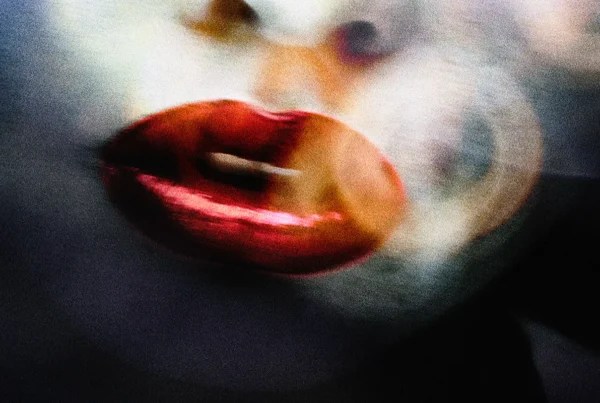
Two subjects shaped his earliest explorations and continue to influence his work. The first is the human face, whose expressions allow him to investigate personality, psychology, and emotion through subtle visual details.
The second is the nude, which he approaches through its sculptural qualities, formal harmony, and balance of light, shadow, line, and volume. His aim is not provocation, but the exploration of beauty, symbolism, and interpretation. Careful lighting and chiaroscuro are essential to this process, allowing emotional tension to emerge through composition.
These interests reveal the close relationship between technique and reflection in his work. His images are constructed with precision, yet they are intended to invite contemplation rather than immediate consumption.
Nature provides the link between the different areas of his visual language. Skies, water, flowers, and leaves are not simply decorative elements. They express the relationship between human beings and the natural environment, which Piva understands as a continuous and changing exchange of emotions.
His childhood attachment to the Po River Delta gave this idea a particular intensity. The landscape is never treated as a neutral geographical subject, but as a source of memory, feeling, and belonging.
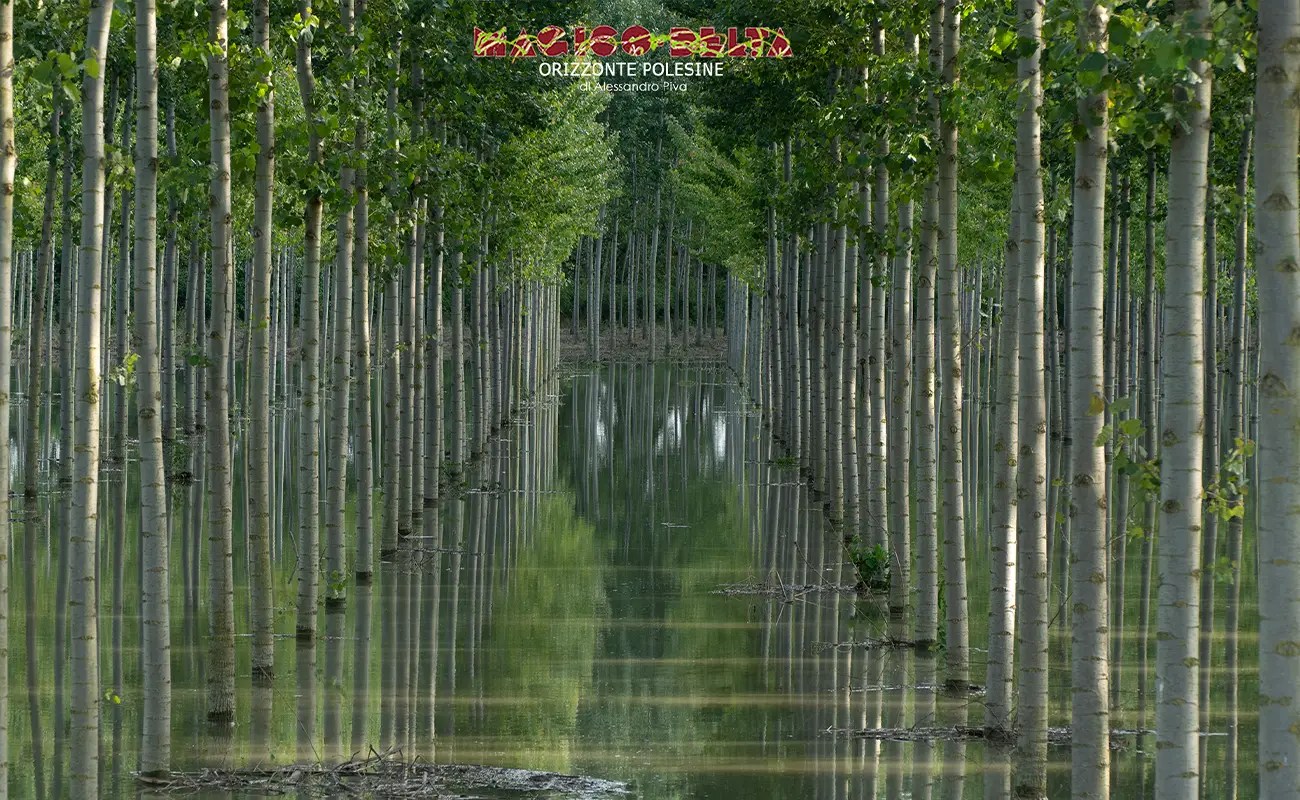
This vision lies at the heart of one of his most ambitious ongoing projects, MAGICO DELTA. Launched in 2023, the travelling exhibition was conceived to reach all fifty municipalities of the Polesine region. Through physical prints and large-screen projections, it celebrates the cultural character of the territory while bringing the work to a broad and varied audience.

Influences That Shape an Individual Visual Language
Piva’s engagement with art history has given him a wide visual vocabulary. Rather than following a single school or movement, he draws from several traditions and reshapes them through his own sensibility.
Classical harmony, symbolism, surrealism, graphic elegance, and expressive portraiture all appear in his practice. These references are not used as formulas to imitate, but as sources of ideas that can be interpreted through personal experience.
Among his strongest influences is the sculptural balance of Antonio Canova. He also points to the portrait tradition transmitted through his mother, who learned to retouch photographic negatives in her father’s studio before becoming a painter. She continued painting until a few years before her death at the age of 86.
Her experience introduced Piva to the importance of observation, patience, and craftsmanship. It also showed him how technical discipline could coexist with imagination.
The dreamlike visual worlds of Gustav Klimt and René Magritte provided another important point of reference. He was also influenced by his painter friend Giancarlo, whose experiments with chemical effects expanded his understanding of the expressive possibilities of the image.
Together, these influences helped him combine classical discipline with imaginative freedom, allowing contrasting ideas to coexist within the same body of work.
Graphic design added another dimension to his practice. His strong sense of geometry led him towards Art Nouveau and, in particular, the work of poster artist Alphonse Mucha. Mucha’s elegant compositions, decorative rhythm, and controlled balance continue to inform Piva’s approach to visual structure.
His interests also extend to science fiction and horror illustration, especially the visionary work of H. R. Giger. Though seemingly distant from classical sculpture or Art Nouveau, these references broaden his use of atmosphere, form, and symbolism.
Filtered through recurring images of water, vegetation, flowers, and open skies, they contribute to a style that moves between realism and imagination. The result is a continuing visual dialogue between people, nature, memory, and the unseen.

Alessandro Piva: Creativity Beyond the Camera
Photography is only one part of Piva’s wider creative activity. His interest in communication led him to graphic design and advertising layout, giving him direct control over the presentation of his exhibitions and publications.
Using professional software such as QuarkXPress, InDesign, and Photoshop, he designs promotional materials, exhibition graphics, catalogues, and other resources connected with his projects.
This multidisciplinary approach creates consistency across each stage of presentation. Design is not treated as a separate professional task, but as part of the same artistic process. Photography, publishing, and visual communication come together in a unified language intended to support both quality and accessibility.
Digital platforms have also become an important part of his daily work. Through his participation in numerous cultural, artistic, and social communities online, Piva shares his projects with a potential audience of approximately six million people.
This digital presence extends the reach of his exhibitions and publications, particularly those connected with the Po River Delta. It does not replace traditional displays, but complements them by introducing the work to people who may later encounter it in galleries, public spaces, or travelling events.
The balance reflects his openness to technological change and his continued belief in the value of printed photographs and direct contact with audiences.
Looking ahead, MAGICO DELTA brings together the central ambitions of Piva’s career. The travelling exhibition unites his dedication to photography, cultural heritage, education, and community engagement.
Its importance goes beyond the exhibition programme itself. The project continues a mission that began more than four decades ago, encouraging people to rediscover the landscapes and identity of the Po River Delta.
Through photographs, immersive projections, careful design, and years of accumulated experience, Piva shows how art can preserve memory and deepen the connection between individuals and the places that shape their lives.