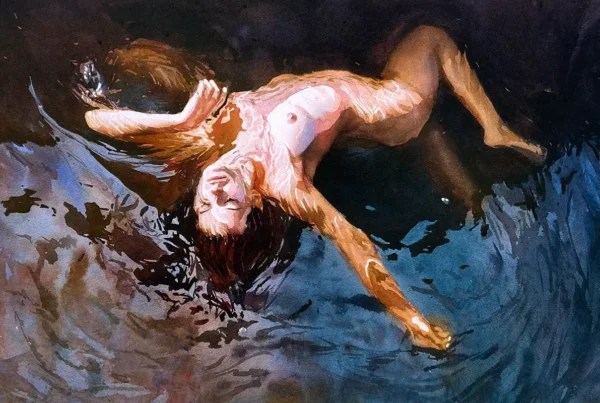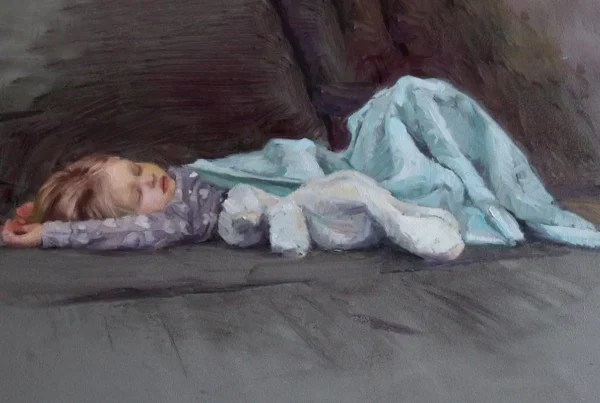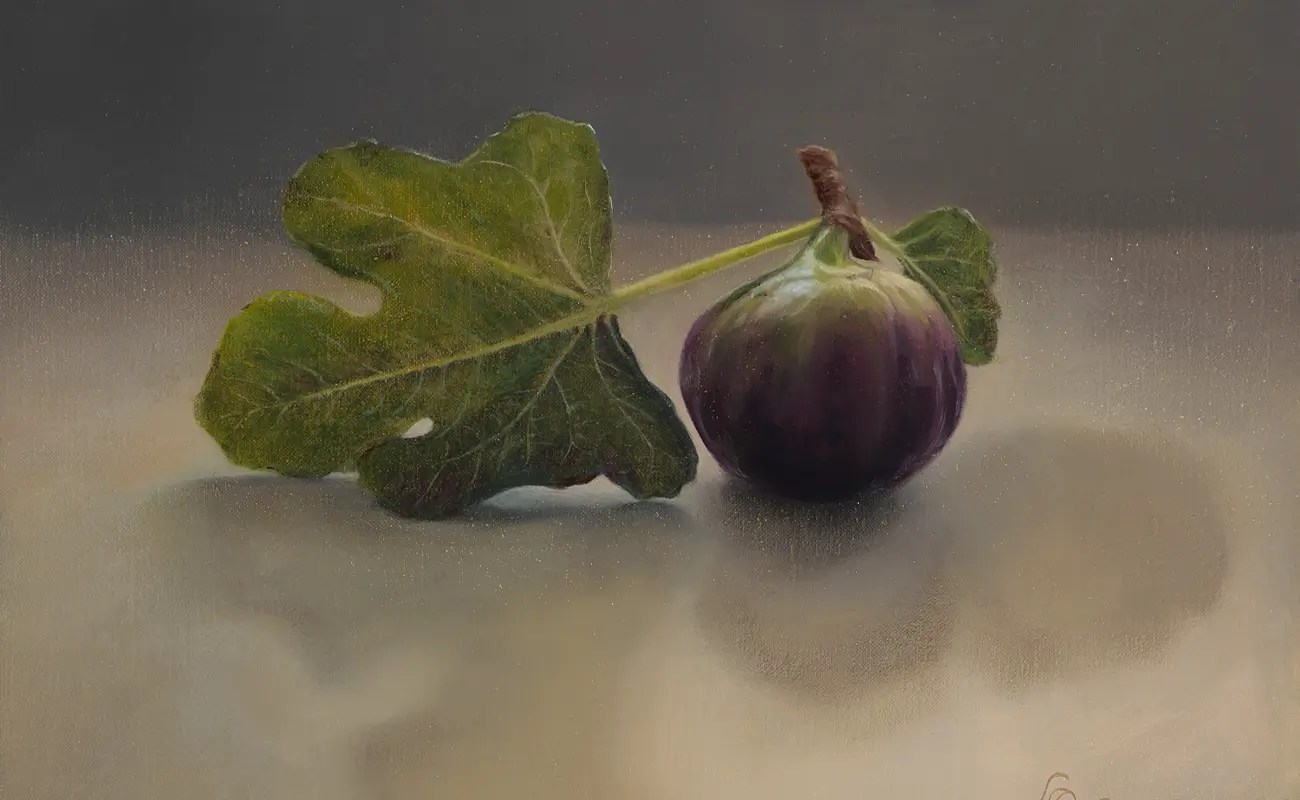
“There is a rhythm of beauty all around us, the interplay of light and shadows. Together they work in harmony. Without light there are no shadows and it is in the very presence of shadows that we become aware of the light.”
Lorraine Pichugin
Where Light Finds Its Shadow
Lorraine Pichugin’s practice begins with something simple but increasingly difficult: the willingness to stop and truly look. Across oil painting, drawing, pastel and charcoal, she watches light move through ordinary spaces and notices the shadows that give those spaces depth, atmosphere and emotional presence. A wall, a kitchen bench, a face or a landscape can suddenly become extraordinary when the light changes. For Lorraine, these moments are not merely visually beautiful. They offer stillness, hope and a sense of peace that she wants to share with the people who encounter her work.
That desire has deep roots. Lorraine describes herself, among other things, as a wife, mother, grandmother, sister, aunt, friend, cancer survivor and artist. Each role arrived at a different point in her life, but art has always been there. As a child, she filled schoolbooks with colourful illustrations and found comfort in creating, particularly during a difficult childhood when quiet places and drawing offered a form of refuge. Art was never something she consciously decided to pursue. It was simply part of who she was, and she believes she would continue painting and drawing even if she never sold another work.
Recent research into her family history gave that lifelong instinct an unexpected historical context. Her maternal ancestry includes Henry Bone RA, the celebrated miniature painter who worked under British royal patronage, and Elizabeth Van der Meulen, a direct descendant of Flemish painter Adam Frans Van der Meulen, known for his service to Louis XIV. The exacting detail in both artists’ work resonates with the way Lorraine instinctively paints and draws, while the atmosphere of Van der Meulen’s battle scenes particularly speaks to her own concern with mood and authenticity. Discovering them gave her confidence and a heritage to aspire to, although she readily admits that having such accomplished artists in the family tree can also be intimidating.
That tension eventually helped Lorraine embrace an idea that now shapes both her art and her life: progress over perfection. Earlier in her career, she could be unforgiving with herself when improvement seemed too slow or when the results did not meet the sometimes impossible standards she had set. Today, she sees even the smallest step forward as meaningful. Perfection, to her, is an illusion, while learning can continue for a lifetime.
Her experience with breast cancer deepened that belief in authenticity. It taught her that there is value in being honest about the difficult parts of life rather than hiding them. Shadows are unavoidable, but sharing sorrow can create moments of recognition, the reassurance of hearing “me too” or “I understand.” Lorraine’s paintings grow from that understanding. They are peaceful, but not because they pretend darkness does not exist. Their hope comes from the opposite idea: if there is a shadow, there must also be a source of light.
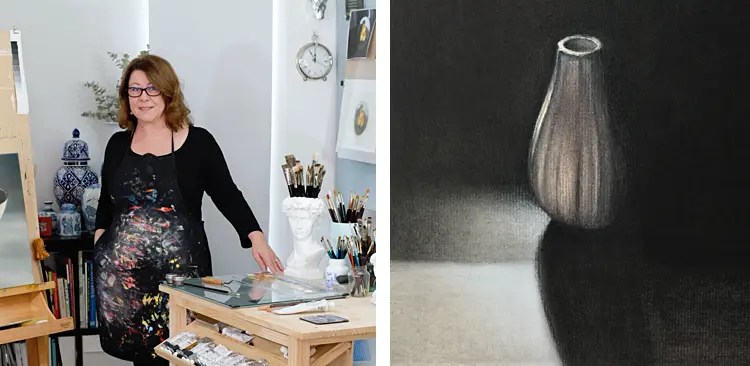
Lorraine: Painting the Everyday as Presence
Oil is now Lorraine’s primary medium, although coloured pencil, charcoal and pastel remain important to her. Largely self-taught, she has developed her practice through instinct, sustained observation and an ongoing desire to understand the techniques of the Old Masters. Over the years, she attended occasional weekend workshops in different mediums, but an important turning point came more than two decades ago when she took a six-week evening course in Brisbane with contemporary realist painter Marcel Desbiens. His classical approach to building oil paintings in layers introduced Lorraine to a medium with which she quickly fell in love, even though it would take years before she felt confident enough to work predominantly in oils.
A move across Australia to Perth temporarily placed those lessons on hold. Several years later, Lorraine left her position as an assistant manager of a shopping centre and enrolled in Fine Art and Visual Culture at Curtin University as a mature-age student. During her studies, she became increasingly frustrated by the quick-drying nature of acrylic paint, which resisted the slow blending and extended working time she instinctively wanted. She eventually took a year away from university to concentrate on commissioned work and develop her relationship with acrylics. The planned year became a permanent departure from the course, without regret, and helped clarify that oils were the medium best suited to the way she wanted to paint.
She is drawn to materials that can be worked slowly and blended with sensitivity. The buttery quality of oil paint allows her to push and pull colour until the transition between brightness, half tone and shadow feels almost seamless. Her paintings often take many months to complete, gradually accumulating layers of colour that give the work depth, solidity and presence. This layered approach, informed by her interest in classical realism, has become central to the technical language of her paintings.
Lorraine sees a natural connection between this layered process and life itself. Layers can bring beauty, complexity and sometimes darkness, but together they create form. That parallel sits quietly beneath much of her realism. Technical accuracy matters, yet realism is not the final purpose. What interests her is the possibility of capturing those brief moments when something ordinary stirs an emotional response, when beauty appears unexpectedly and asks to be noticed.
Her sensitivity to light has also been shaped by place. Born in a country town in South Australia, Lorraine has lived in four Australian states and has become acutely aware of the way geography and climate alter the character of light. In the tropical north, humidity softens and diffuses it. In the south and west, where she now lives, summer can bring an intense, almost blinding clarity. Travel through Europe, Russia and China expanded that awareness further, revealing how light can establish atmosphere, drama and the emotional temperature of a scene.
For that reason, Lorraine does not consider herself simply a still life painter. Objects may appear in her compositions, but they are often vehicles for something less tangible. Morning or evening shadows moving across a wall or kitchen bench can stop her in her tracks. The object caught within that passing light becomes part of a larger exchange between illumination and darkness.
These are the moments she describes as still, yet full of life, moments beautiful enough to make her catch her breath. She wants the viewer to experience something of that same feeling. In a world of devices, relentless media and constant distraction, her paintings offer an invitation to avert the gaze from the noise for a moment and discover what remains. The shadows are still present, but so is the light. For Lorraine, that recognition can bring hope, calm and peace, and reveal beauty in the everyday that might otherwise have gone unseen.

Flight, Stillness, and the Human Need to Look Up
That combination of observation, wonder and meaning comes into particular focus in Flight Daydreams, a 50 by 70 centimetre work made with tinted charcoals on Canson paper. The idea grew from Lorraine’s fascination with humanity’s enduring desire to become airborne. Despite everything people have invented to take themselves into the sky, she remains captivated by the effortless grace of birds in flight and, in her own understanding, the beauty bestowed upon them by their Creator.
Lorraine constructed the scene herself, using the light coming through her former 1970s-style kitchen window and making the paper plane that appears in the composition. She deliberately ignored conventional compositional rules when positioning the plane and the birds, hoping the relationship between the two would encourage viewers to consider human invention alongside natural flight.
The work has since received several awards, including first prize in its category for drawing, adding external recognition to a piece that already held considerable personal significance for Lorraine.
She documented the work’s development on Instagram, but once it was finished she found she could not part with it. Despite receiving several offers from collectors, Flight Daydreams remains with her and now hangs in her office. It is one of those works in which process, memory and meaning have become inseparable, carrying with it the light of that particular room, the handmade paper plane and the thought that first set the drawing in motion.
Family is equally central to Lorraine’s life and practice. She describes hers as a wonderful assortment of personalities whose members support one another through failures as well as successes. Their encouragement was instrumental in giving her the confidence to pursue art professionally. Without it, she says she would have been quite happy simply pottering in her studio, making work for herself, her family and her friends.
Her husband also created the studio she now describes as her sanctuary, converting a garage in their back garden into a spacious workspace with a pitched ceiling, air conditioning and everything needed for long days of painting. It overlooks a lillypilly tree where native birds gather. After an early studio improvised from a broom cupboard beside the laundry, the space feels positively luxurious to her. More importantly, it is a place in which she can become quiet enough to notice, think and make.

Lorraine: Building a Practice Around Quiet
Lorraine generally keeps Monday to Friday studio hours, although art and personal life have always felt naturally intertwined. The structure becomes useful when commissions and deadlines accumulate, but motivation itself has rarely been a problem. Making art is too deeply embedded in her life for that.
She is currently building a new body of work for another solo exhibition, while holding onto a larger dream: creating a site-specific group of works for a place where the paintings could bring peace and calm to the people using that environment. She does not yet know exactly what form such a project will take, but its purpose is clear. Lorraine wants her art to do more than occupy a wall. She hopes it can offer another person a moment of the stillness she herself discovers while looking closely at the world.
Over roughly the past twelve years, that commitment has brought increasing professional recognition. Lorraine’s work has received numerous awards to date and has appeared in publications including Art/Edit + Interior Design, Vanity Fair, House & Garden UK and the French contemporary art magazine Spotlight. She has also been juried in as a Professional Member of the International Guild of Realism and included in its annual realism exhibitions. In early 2026, she was invited to apply to Masters of Realism, an international initiative based in the Netherlands. Following review by its balloting committee, she was accepted and awarded the title Master of Realism, joining artists including Kees Blom, Svetlana Cameron and Henk Helmantel, whose work and life have been a particularly important inspiration.
Recognition, however, has not altered Lorraine’s commitment to remaining a student of her craft. She values the extraordinary amount of instruction and inspiration now available through social media, while believing that real artistic growth comes through developing one’s own voice with authenticity and integrity. The goal is not perfection, but continued progress and the freedom to allow her own experiences, observations and values to emerge through the work.
That is also why quiet matters so much. In a world where chaos can seem to shout from every direction, Lorraine sees stillness as a way of hearing more clearly what she wants to say. Light and shadow give her the visual language for that message, but the reason for painting reaches beyond the objects depicted. She paints in the hope of sharing with others the peace and calm she finds in ordinary moments, offering viewers and collectors a touch of beauty amid the noise and chaos of the world. Perhaps, too, her paintings can remind someone facing their own shadows that darkness is never the whole picture. For Lorraine, every shadow quietly announces the presence of light.