“Sometimes you just have to make your own joy, in life.”
Drawing Toward a Shared Human Story
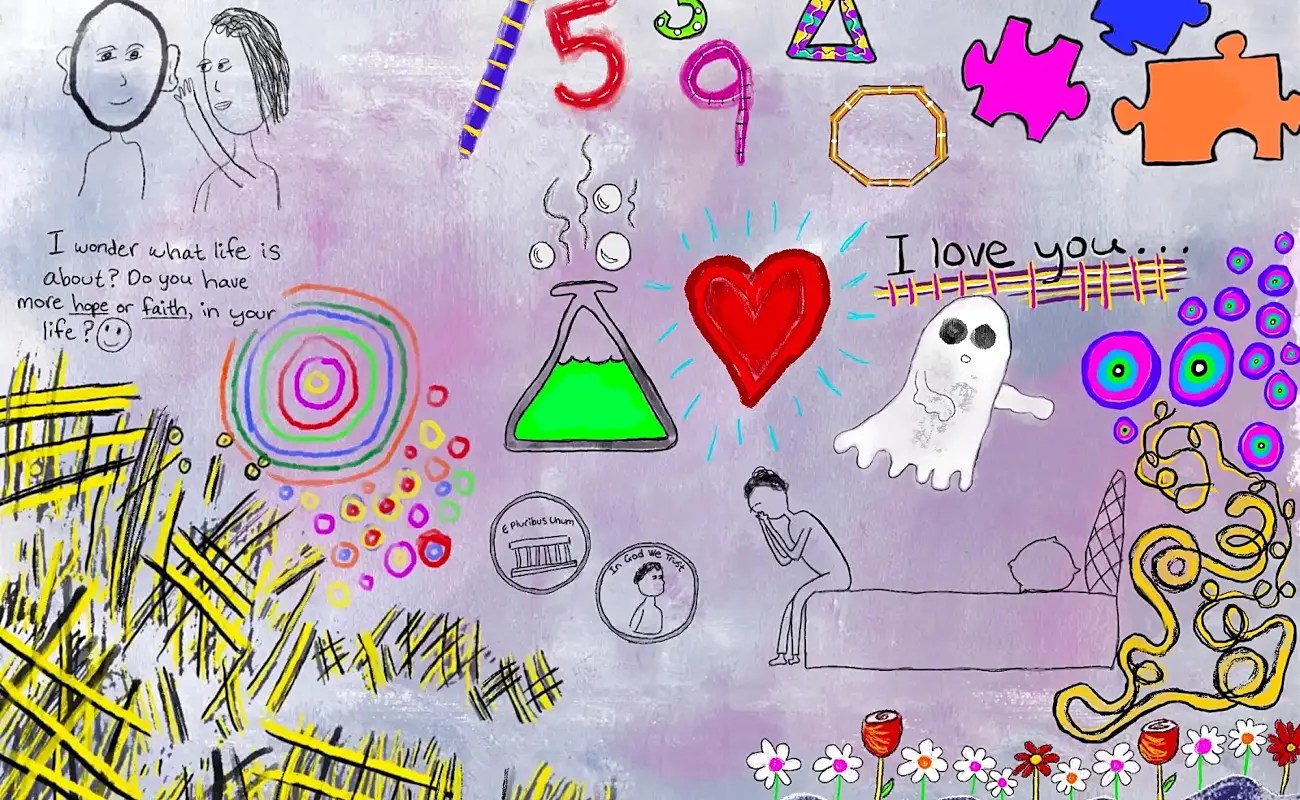
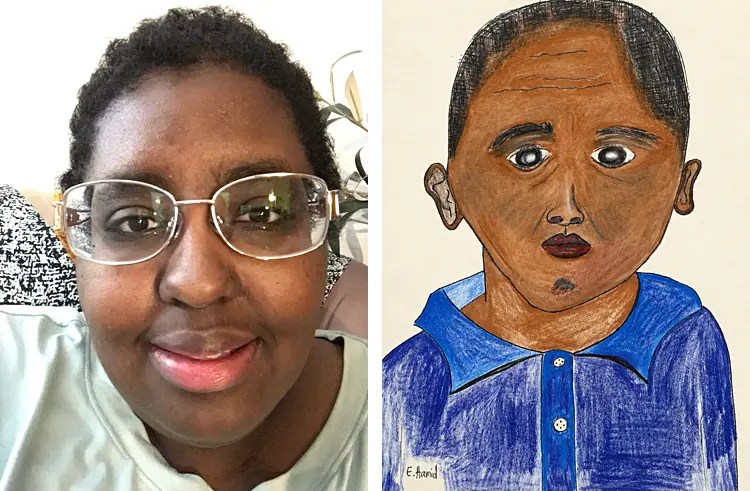
For Ethar Hamid, drawing has been a companion since early childhood, a private form of release that gradually became a way to speak about hope, healing, and connection. Born in Khartoum, Sudan, Hamid immigrated to the United States with her family at age five. That movement between cultures gave her what she describes as a broad frame of reference, one that informs artwork intended to feel globally inspired while remaining rooted in recognizable human concerns. Her images are less interested in distance or difference than in the emotional experiences people carry across borders: love, hardship, gratitude, growth, family, and the search for inner peace.
Hamid also connects her creative practice to serious mental health struggles she has experienced. Rather than treating art as separate from those difficulties, she sees it as a means of making work that can bridge divides and offer hope, healing, and happiness. The impulse is personal, but her themes reach outward. Religion and spirituality sit alongside literature, film, music, and memories from her own life, creating a set of references through which she considers maturity, coming of age, comfort, friendship, and the challenge of moving through difficult periods without surrendering faith in life.
This outlook helps explain why even her doodles and lighthearted scribbles can carry weight. Hamid began drawing at three or four years old on printer and computer paper, then became increasingly attached to art classes at school. By college, she was pursuing art more seriously outside her coursework, especially after classes and during summer breaks. She did not major in studio art, choosing English literature, general studies, and liberal studies instead, but drawing remained constant. It became an escape, a way to redirect attention and preserve a sense of brightness when circumstances felt heavy.
Ethar Hamid: Making Meaning Through Influence
Vincent van Gogh occupies a particularly important place among Hamid’s artistic influences. She is drawn not only to his paintings but to the story of an artist trying to create meaning amid suffering. Hamid has watched several documentaries about him and keeps a biography on her Kindle, reflecting an interest that extends beyond visual admiration. His life and work resonate with her because she recognizes in them an effort to transform difficult states of mind and being into images that can communicate something larger than individual pain.
Her reading of van Gogh moves across several works and emotional registers. She sees somberness and anguish in his self portraits, while “Wheat Field With A Reaper” prompts thoughts of death and mortality. “The Potato Eaters” interests her for its depiction of working class hardship and the grit of daily life. By contrast, “Sunflowers” and “The Starry Night” suggest to Hamid more nuanced, complex, and happier emotions. Taken together, these works reinforce an idea central to her own practice: art can acknowledge suffering without allowing suffering to become the only possible subject or emotional destination.
That balance also appears in the sources Hamid draws from beyond visual art. Profound literature, films, songs, spiritual ideas, and meaningful past experiences all feed her imagery and thinking. The themes she names are expansive but closely connected: hope, happiness, healing, growth, love, maturity, the hero’s journey, overcoming obstacles, gratitude, home, family, and friends. She understands these not as private symbols available only to her, but as parts of a shared human story. Individual lives differ, yet recurring emotional experiences can give an artwork a point of entry for viewers from many backgrounds.

A Calendar Scene Built Around Community
One work carries special significance because its message of connection was joined to a concrete act of service. Hamid created a scene in which an audience listens to a guitarist and singer, while elsewhere in the same image a girl flies a kite and another person works on a jigsaw puzzle. The composition gathers different forms of participation, leisure, and attention into one setting. It was not made solely as an independent studio piece. Hamid drew it while volunteering as an illustrator and graphic designer for Friends for a Nonviolent World.
The illustration became part of the organization’s calendar project, for which Hamid produced twelve drawings, one for each month of the year. Copies were sold during a winter fundraising event in 2022, with roughly nine or ten calendars purchased and a modest amount of income raised for the nonprofit. The project gave her drawings a practical social role, connecting illustration, volunteer work, and fundraising. It also offered a setting in which creative labor could support an organization whose work she had chosen to assist.
Hamid remembers the experience warmly, particularly the encouragement of her volunteer coordinator and the organization’s director, Leah Robinson. She describes Robinson as cheerful, positive, and consistently supportive. That memory matters within Hamid’s broader account of art because her practice repeatedly returns to the value of connection. The calendar was not only a collection of twelve images. It was made through a relationship with a community organization, shared with supporters at a fundraising event, and tied to the kind of hopeful social engagement that Hamid wants her art to carry.

Ethar Hamid: Books, Teaching, and Making Time for Art
Hamid’s daily creative life is built around making room for several interests rather than forcing them into a single professional identity. She plans to teach English language arts, English literature, and creative writing by day, while writing, drawing, and illustrating outside those hours. This arrangement reflects a principle she returns to often: creative work remains meaningful even when it is not a full time paid occupation. For Hamid, continuing to make time for an interest is itself a commitment. The important thing is to keep practicing, remain connected to what one loves, and find others through shared interests.
Her next projects bring her literary and visual interests together. She plans a children’s picture book centered on family life and familial love, along with an art or coffee table book composed of black and white sketches and drawings. She intends to self publish both through Kindle and print some physical copies as gifts for people in her life. Hamid is attracted to independent and DIY publishing for what she sees as its heart, grit, and capacity for meaningful stories. Traditional publishing appeals to her too, but she does not view it as the only route for placing creative work into the world.
A more intimate book project is also underway for her young nephew, Yousif, who was two when Hamid described the project and approaching his third birthday in January. She characterizes it as a picture book that is, more precisely, an art book of illustrations. The gesture brings several strands of her practice into close contact: drawing, family affection, books, and the desire to make something that can be given directly to another person. It also reflects her conviction that joy and inner peace need not wait for permission from an institution or authority. They can be cultivated through ordinary acts of making, caring, and sharing.