“Every painting begins with a memory, and ends as an emotional surface made entirely of color.”
A Life Shaped by Color, Design, and Creative Atmosphere
Growing up in Mexico City, Monica Morales was immersed in a world where architecture, design, and artistic expression were woven into everyday life. Born in 1972 into a family of architects and designers, she spent her childhood surrounded by construction sites, architectural drawings, vibrant materials, and endless conversations about creativity. Those early experiences quietly established the visual sensitivity that would later define her artistic voice. Painting was never an unfamiliar activity within her home. Her father regularly worked with both oil and watercolor, while artist friends frequently gathered to paint, exchange ideas, enjoy music, and share long conversations over coffee. Rather than viewing art as something separate from daily existence, Morales absorbed the belief that creativity could naturally become part of ordinary life. This atmosphere encouraged her curiosity long before she considered pursuing painting professionally, planting the foundations for an artistic language that would emerge years later through experience, observation, and personal discovery.
Her formal education further strengthened this visual foundation. Morales earned a degree in Textile Design, studying fabric development and print design while receiving comprehensive training in visual composition, drawing, photography, textile materials, and color theory. Each discipline contributed practical skills that continue to influence her paintings today. During her teenage years she devoted countless hours to creating highly realistic botanical studies with colored pencils and pastels, producing detailed representations of flowers and plants that demonstrated remarkable technical precision. Although she now reflects warmly on those youthful works, they reveal an early fascination with observation, structure, and the expressive potential of color. Upon graduating, professors and classmates encouraged her to continue studying Fine Arts because they recognized artistic potential within her work. Instead, she chose a different professional direction, building a successful career within the textile industry before later entering the fashion sector after relocating to Europe. That decision delayed, but never extinguished, her connection to painting.
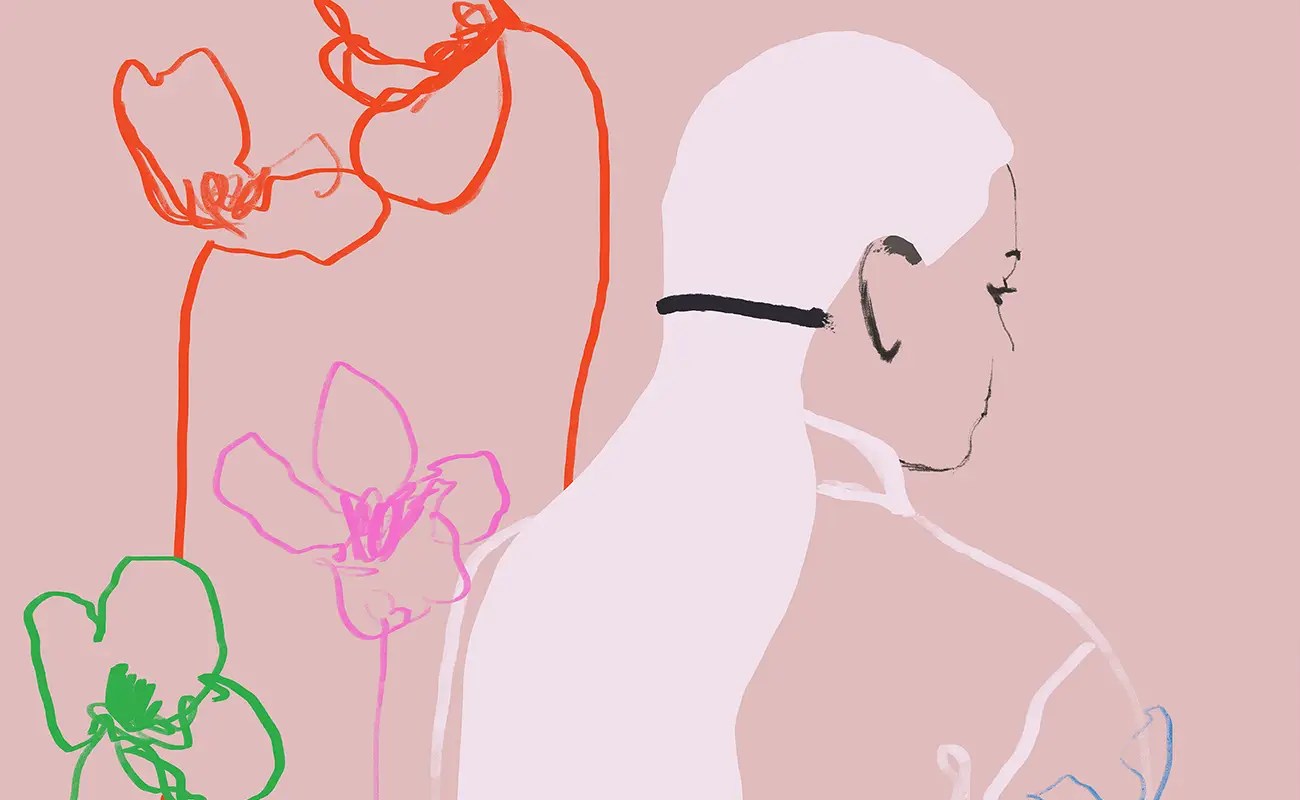
Alongside her abstract practice, Morales also creates a series of figurative paintings that explore the human presence through the same intuitive relationship with color and line. These works are not intended as traditional portraits but as expressive studies of mood, identity, and emotion. Simplified silhouettes, delicate gestures, and floral elements appear throughout the compositions, allowing personality to emerge through suggestion rather than detailed representation. Fashion, nature, and contemporary aesthetics often intersect within these paintings, reflecting both her background in textile design and her ongoing fascination with color as an emotional language. Whether working figuratively or abstractly, Morales approaches each composition with the same emphasis on balance, spontaneity, and the expressive power of carefully chosen color relationships.
Everything changed in 2014 when a simple moment transformed the course of her life. Watching a video featuring a professional painter awakened an immediate certainty that creating art was what she truly wanted to dedicate herself to. Morales describes this experience as discovering her ikigai, her reason for being. What had remained hidden throughout years of study suddenly became unmistakably clear. Today she works from her studio in Italy, where two cultural identities continually shape her creative vision. Her Mexican roots inspire rich saturation, vivid contrasts, and emotional intensity, while European life has introduced appreciation for restrained palettes, dusty tones, subtle harmonies, and deeply chromatic dark colors that avoid the use of pure black. These contrasting influences meet within every composition, allowing her paintings to become conversations between memory, culture, intuition, and carefully balanced color relationships.
Monica Morales: Building an Abstract Language Through Chromatic Harmony
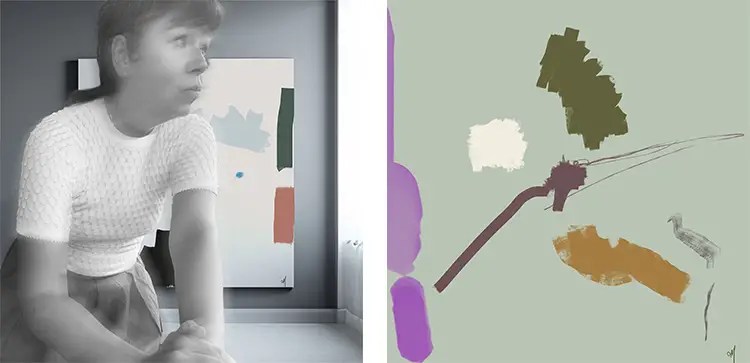
Morales creates abstract paintings that prioritize emotional resonance over literal representation. Simplicity forms the heart of her visual language, although achieving that apparent simplicity requires a sophisticated understanding of composition and color interaction. Some works emerge through one decisive brushstroke that immediately captures the desired feeling, while others gradually evolve through translucent layers or spontaneous scribbled marks that introduce rhythm and movement. She rarely spends extended periods refining a single canvas because each painting represents the emotional truth of a particular instant. Whether inspired by a fleeting memory, a passing sensation, or a powerful impression, the work must communicate its essence quickly. This approach allows instinct to remain visible within every gesture, preserving freshness rather than replacing it with excessive revision or unnecessary complexity.
Color functions as the primary subject throughout her paintings. Morales believes each hue derives its meaning from the neighboring colors surrounding it, making relationships more important than individual pigments. Layering, transparency, rhythm, and equilibrium become essential structural elements that shape the emotional experience of the viewer. Instead of relying on dramatic imagery or recognizable forms, she encourages the eye to travel naturally across the canvas, discovering subtle interactions between carefully selected tones. Black is almost entirely absent from her work because she prefers richly saturated dark colors that retain their chromatic character rather than collapsing into neutrality. This philosophy reflects years of experience within textile and fashion industries, where evolving color combinations communicate contemporary aesthetics more effectively than isolated seasonal shades. Her paintings therefore become explorations of visual dialogue, demonstrating how multiple tones can generate atmosphere, movement, and emotional depth through careful balance.
Several artistic influences have reinforced this philosophy while allowing Morales to develop an unmistakably personal voice. She has long admired abstract art, particularly Color Field painting, because of its ability to transform color into emotional experience instead of descriptive illustration. Mark Rothko remains one of her strongest inspirations for establishing a visual language that is both deeply personal and immediately recognizable. She also credits Helen Lundeberg and Helen Frankenthaler for encouraging intuitive exploration and confidence in abstraction. Architecture occupies an equally important place within her creative thinking. The expressive use of color in the work of Luis Barragán demonstrated how chromatic choices can shape physical space itself, while the fluid, organic forms created by Frank Gehry inspired her desire to translate architectural movement into painting. Combined with her design background, these influences continue to guide an artistic practice that seeks clarity, restraint, and emotional richness simultaneously.

Memory, Place, and the Emotional Landscape
Among all her paintings, Via della Spiga from the Milano Città collection occupies a particularly meaningful place within Morales’ artistic development. Created rapidly through instinct rather than prolonged planning, the work reflects her memories of one of Milan’s most iconic streets while capturing the essence of her evolving artistic identity. Rather than describing architecture directly, the painting communicates atmosphere through carefully orchestrated relationships between muted, sophisticated colors inspired by Italian fashion and urban elegance. Morales considers this work a turning point because it marked the moment when she stopped thinking about colors as isolated components and instead began understanding them as interconnected parts of a harmonious whole. Beneath its understated appearance lies a deeply personal statement about intuition, confidence, and the search for visual purity.
Her choice of materials complements this instinctive approach. Morales initially developed her artistic practice with acrylic paint before later incorporating digital art into her process. Sometimes she begins digitally before translating ideas onto canvas, while other works originate directly through traditional painting. Acrylics remain her preferred medium because their quick drying time supports the immediacy that defines her creative rhythm. Rapid transitions between colors allow emotional momentum to remain uninterrupted, preserving the spontaneity of each composition. Although she appreciates the richness, texture, and depth that oil paint can achieve, its slower drying process conflicts with the natural pace at which she prefers to work. Every technical decision therefore supports the expressive qualities that distinguish her paintings rather than imposing unnecessary limitations on instinctive creation.
Collections inspired by cities, countries, and natural phenomena further demonstrate her ability to transform memory into abstraction. Living near Milan encouraged Morales to reinterpret the city through emotional recollection instead of literal landscape. Architecture, people, materials, scents, textures, and changing light become lasting impressions that gradually evolve into abstract compositions. She later explored the extraordinary appearance of the Northern Lights in regions where the phenomenon had rarely been witnessed, using layered gradients to evoke awe rather than scientific observation. More recently, Greenland inspired another body of work developed through extensive visual research, photographs, and reading. Instead of reproducing documentary imagery, she translated the country’s expansive landscapes, floating ice, shifting light, silence, and evolving natural environment into expressive chromatic relationships that communicate emotional presence rather than geographic accuracy.

Monica Morales: Following Intuition Toward the Invisible
Daily studio practice begins not with sketches but with music. Morales finds silence far less conducive to creativity because sound helps establish the emotional atmosphere necessary for painting. She gathers visual impressions, personal memories, and subtle feelings before applying an initial background color that serves as the foundation of the composition. From there, a decisive gesture becomes what she describes as the painting’s main character, establishing rhythm and direction for everything that follows. Additional colors respond organically to previous marks, gradually creating a balanced visual conversation. She often introduces one unexpected tone that interrupts established patterns, refreshing the composition with a contemporary energy. The painting reaches completion only when she senses that every element has found its proper place and any further intervention would disturb the existing harmony.
Although her recent collections have explored geographical locations and remarkable natural events, Morales now feels increasingly attracted to subjects that cannot be seen directly. She hopes to investigate chromatic relationships inspired by sound, meditation, personal energy, and the unseen emotional landscape within herself. This shift represents a natural continuation of her longstanding interest in translating sensation rather than appearance. Instead of documenting external places, future works aim to visualize inner experiences through carefully balanced color interactions and intuitive abstraction. Such ambitions reflect the confidence she has gained by trusting instinct while remaining open to continual artistic evolution. Every new project becomes an opportunity to discover unfamiliar emotional territories through visual language that remains restrained yet profoundly expressive.
Despite growing clarity in her artistic direction, Morales openly acknowledges the challenges faced by emerging artists seeking recognition. Building an audience requires persistence, resilience, and unwavering belief in one’s creative purpose. She expresses heartfelt gratitude for opportunities that encourage visibility because each conversation reinforces her determination to continue painting. Throughout her journey, an inner conviction has consistently guided her forward, reminding her not to abandon the path she finally recognized in 2014. That quiet certainty continues to shape every canvas she creates, allowing memories, cultures, architecture, fashion, and deeply personal intuition to merge into abstract paintings where color becomes both language and emotion.