A Visual Language Shaped by Movement and Transformation
Kara Taylor has built a distinctive artistic practice around the idea that change is both unavoidable and deeply meaningful. Working across painting and mixed media, she creates images that reflect the constant movement of personal experience, cultural history, and environmental transformation. Her art is driven by an ongoing desire to observe and interpret the cycles of attachment and release that define human life. Rather than presenting fixed narratives, her works embrace uncertainty, inviting viewers into spaces where memory, symbolism, and shifting perspectives intersect. Through layered compositions and richly textured surfaces, she examines the connections between people, place, and time, producing work that feels both intimate and expansive.
Born and raised on Martha’s Vineyard, Taylor developed an early sensitivity to landscape and the forces that shape it. The island’s coastline, changing weather, and powerful sense of place became foundational influences that continue to inform her creative vision. Although landscape initially served as a primary subject, her practice gradually expanded beyond direct observation. Years of travel and exposure to different environments encouraged a broader investigation into how geography influences identity, emotion, and cultural understanding. This evolution transformed her work from traditional landscape painting into a more complex exploration of human experience.
The concept of transition remains central throughout Taylor’s oeuvre. Whether portraying figures dissolving into natural environments or constructing symbolic abstract compositions, she consistently returns to questions of impermanence and connection. Her paintings suggest that landscapes are never neutral settings. Instead, they are shaped by stories, histories, and personal encounters. By emphasizing these relationships, Taylor encourages viewers to consider how individual lives are intertwined with larger environmental and social realities, creating works that function simultaneously as reflections, meditations, and visual conversations.

Kara Taylor: Between Martha’s Vineyard and South Africa
A significant expansion of Taylor’s artistic outlook emerged through her enduring relationship with South Africa. Since arriving there in 2016, she has spent half of each year working in Cape Town, developing a creative dialogue between two dramatically different locations. This movement between Martha’s Vineyard and South Africa introduced new visual influences, emotional complexities, and cultural perspectives that broadened the scope of her work. The contrast between the familiar rhythms of island life and the layered realities of South African society encouraged a deeper engagement with questions surrounding history, community, and vulnerability.
South Africa’s influence can be seen not only in Taylor’s thematic concerns but also in her evolving visual vocabulary. Colorful African textiles, richer tonal contrasts, and symbolic human figures began appearing throughout her paintings. These additions expanded the emotional depth of her compositions while reinforcing her interest in interconnected systems. Beauty and hardship frequently coexist within these works, reflecting her observations of environments where resilience and struggle are often inseparable. Rather than offering simple commentary, Taylor creates nuanced images that acknowledge complexity while maintaining a sense of empathy and wonder.
The dialogue between these two homes has given Taylor’s work a unique dual perspective. Martha’s Vineyard continues to provide grounding through memory, familiarity, and personal history, while South Africa contributes broader social and environmental considerations. This ongoing exchange allows her paintings to move fluidly between the local and the global. As a result, her work addresses universal concerns while remaining deeply rooted in lived experience, creating a body of art that resonates across geographic and cultural boundaries.

Layers of Meaning, Material, and Symbol
Material experimentation plays a vital role in Taylor’s artistic process. Trained originally in ceramic sculpture at the Maine College of Art, she approaches painting with an understanding of surface as a physical structure rather than merely an image plane. This background remains evident in her use of texture, accumulation, and layered construction. Her paintings frequently incorporate oil paint, encaustic wax, photomontage, fabric, found materials, dried flowers, lace, gold leaf, and fragments of discarded texts. Each element contributes both visual richness and conceptual significance.
The materials Taylor selects often carry their own histories and associations. Fabric patterns evoke cultural narratives, photographs blur the boundaries between documentation and invention, and found objects introduce traces of previous lives into new contexts. Rather than serving decorative purposes, these components become active participants in the meaning of each work. Their presence allows multiple histories and perspectives to coexist within a single composition. Through this process, Taylor transforms the painted surface into a site where personal memory, collective experience, and symbolic storytelling converge.
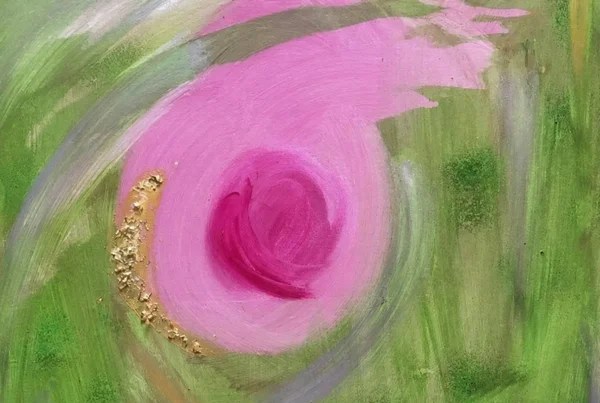
Symbolism further strengthens the emotional resonance of her art. Geometric abstractions featuring repeated diamond forms, luminous color fields, and wax layers have been interpreted as protective structures or navigational devices for uncertain times. Elsewhere, window-like openings and architectural motifs suggest thresholds, separation, and possibility. Whether working figuratively or abstractly, Taylor uses visual symbols to address themes of endurance, transformation, and hope. These recurring forms provide viewers with entry points into works that reward sustained contemplation and interpretation.

Kara Taylor: Art as Connection, Reflection, and Witness
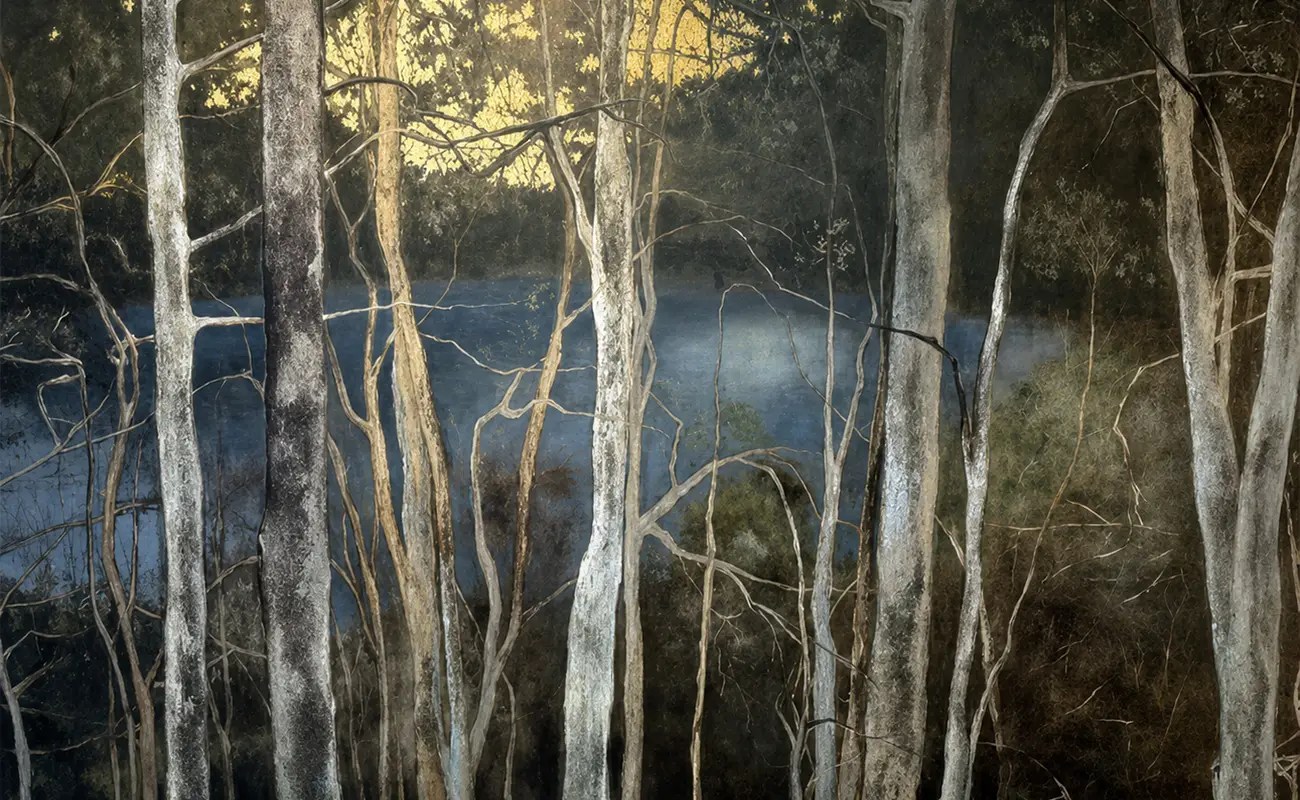
Throughout her career, Taylor has remained committed to portraying the fragile relationship between humanity and the natural world. Rivers, estuaries, plants, seedpods, dunes, and flowering forms appear repeatedly across her work, often functioning as metaphors for social and psychological conditions. Human figures may merge with waterways or emerge from patterned environments, reinforcing the idea that people and ecosystems exist in constant dialogue. Environmental concerns are therefore woven directly into her visual language, becoming inseparable from broader questions of identity, community, and change.
Portraiture represents another important aspect of Taylor’s practice. She has created works honoring influential women such as Jane Goodall, Marie Colvin, Benazir Bhutto, Ruth Bader Ginsburg, and L. Robin Rosenberg. Rather than presenting straightforward commemorations, these portraits explore the complexities that define each individual. Symbolically chosen flowers accompany many of the figures, adding layers of meaning related to perseverance, courage, dignity, and influence. Through this approach, portraiture becomes a vehicle for examining legacy, character, and the lasting impact of human action.
Taylor’s commitment to gathering, preserving, and reimagining materials extends beyond the studio. The home she designed and built on Martha’s Vineyard using salvaged architectural elements, repurposed materials, and collaborative craftsmanship reflects the same values present in her art. Across paintings, portraits, abstractions, and assembled environments, she consistently demonstrates a belief that beauty can emerge from connection and transformation. Her work offers viewers a contemplative space in which to consider how histories remain embedded in surfaces, how environments shape human lives, and how change, however challenging, can become a source of growth and understanding.