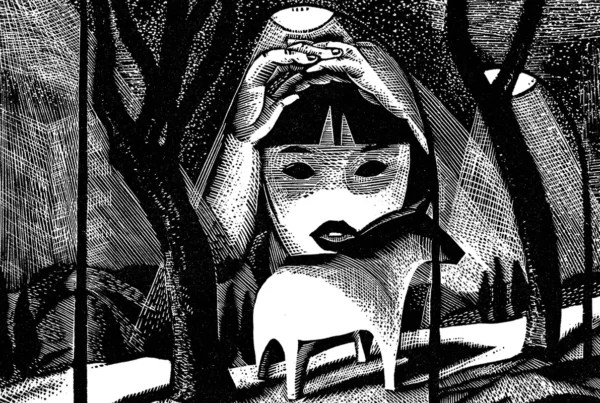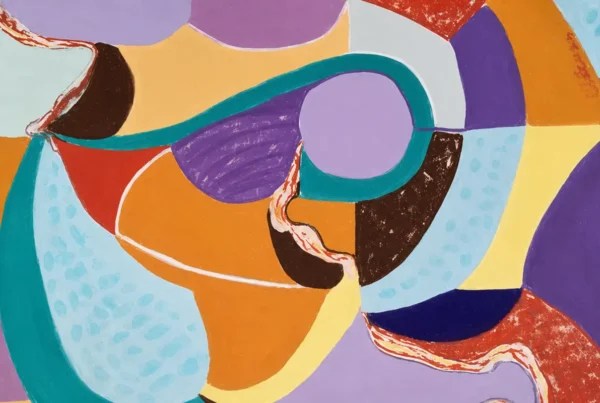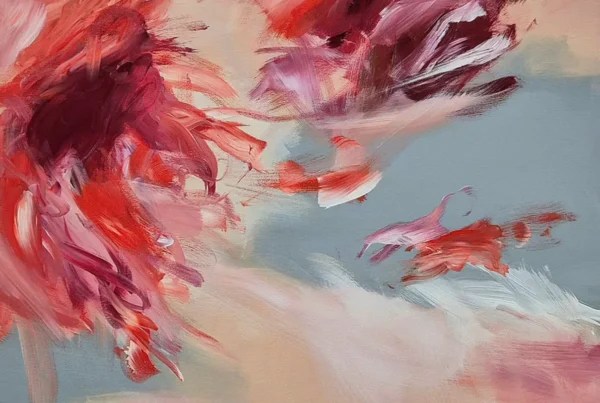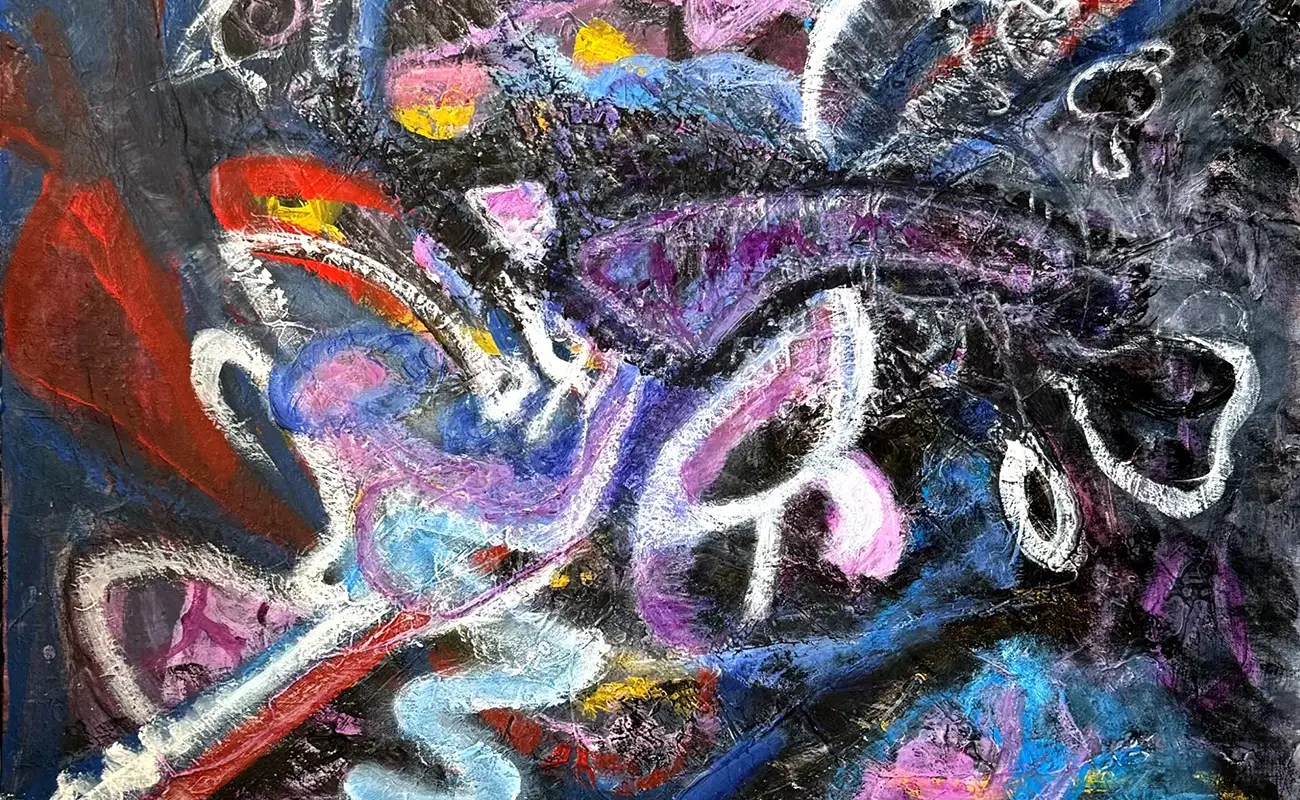
“The tension felt between color and form drives the paintings of Xiping H Rouben.”
From Microscope to Canvas: The Origins of a Transformative Vision
Xiping H Rouben’s artistic path unfolds as an uncommon evolution, one that bridges the analytical discipline of scientific research with the expressive freedom of contemporary abstraction. Her earliest encounters with visual wonder did not take place in a studio but within the controlled environment of a laboratory. While examining specimens under a microscope, she became captivated by the intricate structures, luminous colors, and organic formations that revealed themselves at a cellular level. These encounters sparked a lasting curiosity, planting the seed for a practice that would later translate these hidden worlds into visual form. What began as observation gradually transformed into interpretation, as Rouben sought to reimagine these microscopic phenomena through paint, texture, and gesture.
This transition was not immediate or straightforward. Without formal artistic education, the idea of becoming a professional artist initially felt distant and uncertain. Her turning point arrived through mentorship, which provided both technical grounding and conceptual expansion. Under the guidance of JenZ Shifu, a Chinese-Canadian iconographic artist, she developed a deep appreciation for the discipline and expressive potential of Chinese calligraphy. At the same time, workshops with Canadian abstract artist Suzanne Metz reshaped her understanding of abstraction, encouraging a more intuitive and liberated approach to composition. These influences did not impose rigid frameworks but instead opened pathways, allowing Rouben to construct a language uniquely her own.
Recognition followed this period of growth, marking her emergence within the contemporary art landscape. Features in publications such as Artistcloseup and a debut solo exhibition in New York City signaled a significant milestone. Her process remains rooted in spontaneity, often revealing meaning only after a work is completed. The studio functions as both a laboratory and a site of discovery, where experimentation drives each composition. A notable response from her New York exhibition at Artifact Gallery captured this dynamic energy, emphasizing the tension between color and form and highlighting her deliberate use of spectral intensity. This balance between intuition and control continues to define her evolving practice.

Xiping H Rouben: Between Gesture and Structure
Rouben’s visual language occupies a compelling intersection between organic emergence and gestural abstraction, where each painting appears to develop rather than simply be constructed. Her work echoes certain aspects of Abstract Expressionism, yet it resists the movement’s emphasis on individual dominance. Instead, her marks carry a sense of observation, as though they are recording processes rather than asserting control. This distinction reflects her scientific background, which subtly informs how forms materialize across the canvas. Shapes often resemble cellular clusters, neural pathways, or microscopic organisms, not as literal representations but as echoes of biological systems translated into visual rhythm.
A striking duality underpins her compositions, creating a dialogue between opposing yet complementary forces. On one hand, there is an intuitive flow, where gestures unfold freely and lines move with apparent spontaneity. On the other, an underlying sense of order becomes evident, suggesting hidden structures that guide the composition. Swirling formations often seem to orbit invisible centers, evoking systems found in nature such as circulatory networks or ecological patterns. This balance between instinct and organization gives her work a layered complexity, encouraging viewers to look beyond surface impressions and consider the processes at play.
Materiality also plays a crucial role in shaping her aesthetic. Her calligraphic lines, influenced by East Asian traditions, weave through dense surfaces where paint accumulates, erodes, and reforms. Color operates as an active force rather than a decorative element. High-contrast palettes generate tension and movement, with vivid hues activating certain areas while destabilizing others. Drips and gravity-driven marks introduce unpredictability, yet these elements integrate seamlessly into the composition, reinforcing a sense of ongoing transformation. The result is a visual experience that feels both immediate and evolving, capturing moments of change within a single frame.

Echoes of Heritage, Memory, and Multisensory Curiosity
Rouben’s creative sensibility is deeply rooted in personal history, particularly the influence of her mother, a skilled folk artist known for intricate embroidery. Childhood memories of watching detailed patterns emerge from simple sketches left a lasting impression, shaping her appreciation for craftsmanship and visual storytelling. These early experiences instilled an understanding of how art can transform everyday materials into something meaningful and expressive. The presence of floral and animal motifs in her upbringing contributed to her sensitivity toward organic forms, which continue to surface in her abstract compositions in more subtle and interpretive ways.
Despite this early exposure, societal expectations in late 1970s China directed her toward scientific pursuits. Like many of her peers, she followed a rigorous academic path, excelling in entrance examinations and enrolling in a leading medical school to study pharmacy. Her professional life progressed through roles as a hospital pharmacist and later as a research scientist at the University of Toronto. It was during this period that her artistic impulse reemerged with renewed intensity. The visual complexity of microscopic imagery reignited her fascination with form and color, ultimately guiding her back to creative exploration with a deeper perspective shaped by years of scientific inquiry.
Her influences extend beyond personal history into a broader artistic and sensory landscape. Training in Chinese calligraphy, particularly inspired by Huang Tingjian’s expressive cursive style, provided a foundation for her gestural approach. Western artists such as Jackson Pollock, Wassily Kandinsky, and Joan Miró further expanded her visual vocabulary, encouraging experimentation with movement, emotion, and symbolic form. Beyond painting, her engagement with music, performance, travel, and culinary practices enriches her work. Collaborations with the ST. MARLYN Technology Inc. professional sound system group in Toronto reflect her interest in merging visual and auditory experiences, creating immersive works that invite audiences to engage through multiple senses.

Xiping H Rouben: Painting as Experiment and Ongoing Discovery
Rouben approaches each canvas as an open-ended investigation, where the act of painting mirrors the exploratory nature of scientific experimentation. Rather than adhering to predetermined outcomes, she allows the process to unfold organically, responding to the interplay of color, texture, and movement as it develops. This method fosters a sense of freedom, enabling unexpected forms and relationships to emerge. The studio becomes a site of continuous inquiry, where each decision contributes to a larger, evolving narrative. Her work does not seek to provide immediate answers but instead invites sustained engagement, encouraging viewers to interpret and reinterpret what they see.
The psychological dimension of her paintings adds another layer of depth, as abstract forms often suggest fleeting impressions of figures or structures without fully resolving into recognizable imagery. Faces appear to dissolve into motion, while skeletal outlines hint at underlying frameworks before disappearing into abstraction. These moments of recognition create a dynamic interaction between the viewer’s perception and the painting’s resistance to fixed meaning. This ambiguity is central to her practice, reflecting a belief that art should remain open, allowing space for individual interpretation and emotional response.
Looking ahead, Rouben remains committed to expanding her artistic boundaries through continued experimentation with materials, techniques, and interdisciplinary collaboration. Her work reflects an ongoing dialogue between past experiences and future possibilities, shaped by curiosity and a willingness to explore the unknown. Each painting serves as both a record of her journey and an invitation for others to engage with its layers of meaning. Through this evolving practice, she continues to redefine the relationship between science and art, offering a body of work that is as intellectually engaging as it is visually compelling.