
“Creativity starts with an idea, and that should be the most important factor.”
A Multicultural Perspective Shaped by Constant Evolution
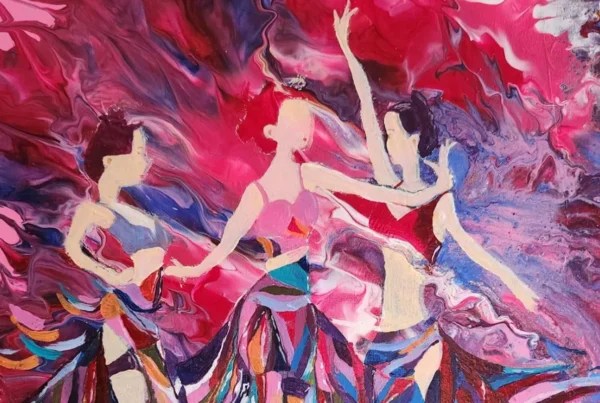
Zena Dabbous has built an artistic practice that refuses to be confined to a single visual language. A Lebanese-Canadian visual artist, she draws from a multicultural upbringing that informs both the subjects she explores and the methods she employs. Rather than pursuing stylistic consistency for its own sake, she embraces change as an essential part of creative development. This openness has led viewers to describe her work as distinctive, reflecting an artist who continually adapts while remaining anchored in deeply personal ideas about identity, memory, and human experience. Her paintings, drawings, and murals demonstrate an ability to move comfortably between conceptual abstraction and realism, creating a body of work that feels unified through intention rather than repetition. Women remain at the center of many compositions, serving as symbols of resilience, elegance, cultural identity, and emotional complexity. Throughout her career, Dabbous has treated artistic growth as an ongoing process, allowing every new project to become an opportunity for exploration rather than a repetition of established formulas.
Her path into the arts developed through determination instead of formal academic training. Although creativity had always been part of her life and she admired accomplished artists from an early age, she initially lacked traditional drawing and painting skills. Choosing to educate herself, she gradually developed her technique through continuous practice and study, applying each new discovery directly to her work. This commitment to lifelong learning explains why her visual language continues to evolve instead of settling into a single recognizable style. For Dabbous, artistic development is inseparable from personal discovery, with every completed piece reflecting another stage of that journey. She believes that conceptual thinking forms the foundation of meaningful creativity, maintaining that ideas should always lead the artistic process before technical execution follows. This philosophy allows her to shift naturally between realism, abstraction, minimalism, and conceptual approaches while preserving a coherent artistic identity grounded in thoughtful expression.
Her work reflects this philosophy through a remarkable variety of materials and techniques. Acrylic, oil paint, mixed media, drawing, collage elements, and mural painting each provide different opportunities to communicate layered narratives. Instead of allowing medium to dictate meaning, she adapts materials to suit the emotional and conceptual demands of individual projects. This flexibility has enabled her practice to expand from intimate studio works to ambitious public commissions without sacrificing the personal concerns that define her vision. Across every format, recurring interests in identity, femininity, migration, memory, and cultural hybridity establish continuity. The result is an artistic practice where experimentation becomes a strength rather than a departure, demonstrating that evolution itself can become one of the most recognizable characteristics of an artist’s career.

Zena Dabbous: Portraits That Balance Realism and Abstraction
The human figure occupies a central position throughout Dabbous’s work, particularly in paintings that examine women as powerful symbols rather than simple portrait subjects. Her compositions frequently combine carefully rendered facial features with abstract structures that fragment and reorganize the body into geometric forms. This contrast creates an engaging dialogue between recognizable reality and conceptual interpretation. Rather than using abstraction purely for visual effect, she transforms fragmented forms into expressions of layered identity, suggesting that personal experience is rarely singular or uncomplicated. Highly expressive eyes often establish an immediate emotional connection with viewers, while simplified bodies and intersecting planes encourage reflection on the complexities that exist beneath outward appearances. This careful balance between emotional accessibility and conceptual depth has become one of the defining characteristics of her artistic voice, allowing realism and abstraction to coexist without diminishing one another.
Among the artists who have influenced her practice, Gustav Klimt occupies a particularly significant place. His impact is visible within her figurative paintings, where decorative richness and psychological presence combine to elevate portraiture beyond physical likeness. Alongside this artistic influence, the legendary Lebanese singer Fairuz has served as an enduring muse. Earlier in her career, Dabbous repeatedly painted Fairuz in numerous works that later found collectors, celebrating an iconic cultural figure whose presence resonated deeply with her own background. These influences enrich her practice without overwhelming it, contributing to an artistic language that remains unmistakably personal. Instead of reproducing stylistic characteristics from admired figures, Dabbous absorbs inspiration into a broader exploration of femininity, heritage, and emotional memory, producing paintings that communicate both cultural specificity and universal human experience.
Her formal vocabulary extends beyond portraiture through an equally thoughtful use of color, texture, and line. Cool ultramarines, cobalt blues, gentle greys, and warm ochres establish a contemplative atmosphere before being energized by carefully placed accents of red, gold, or orange. Line functions as one of her strongest visual signatures, weaving through compositions to provide structure while simultaneously suggesting movement, history, and invisible emotional connections. In mixed media works, collage fragments, printed materials, gold leaf, expressive brushwork, and fluid marks introduce additional layers of meaning, allowing surfaces to evoke accumulated memories and lived experiences. More recent botanical abstractions reveal another direction within her practice, where delicate floral imagery dissolves into atmospheric passages before meeting bold organic forms. Although each series adopts a different visual approach, recurring relationships between color, line, and conceptual intent create remarkable continuity throughout her expanding body of work.

Memory, Loss, and the Stories Embedded Within Paint
Among the many works Dabbous has created, one painting carries exceptional emotional significance because of its deeply personal origins. The oil on canvas portrait titled Charlie was created in memory of her late father, drawing inspiration from Charlie Chaplin, whom he deeply admired throughout his life. Rather than functioning simply as a tribute to a beloved entertainer, the portrait became a powerful vehicle for processing grief while celebrating cherished memories. Within Chaplin’s expressive face, Dabbous found a visual language capable of holding both sorrow and joy simultaneously. The mixture of tragedy and comedy associated with the legendary actor reflected the emotional contradictions she experienced following her father’s passing, capturing the pain of loss alongside gratitude for the loving childhood he had given her. Through this work, personal memory became inseparable from artistic expression, demonstrating how painting can preserve emotional truths that extend beyond words.
This deeply personal approach to storytelling extends into the broader conceptual concerns that define her practice. Identity, migration, cultural hybridity, femininity, and belonging appear consistently throughout her work, yet they are presented through symbolism rather than literal narrative. Fragmented figures, intersecting linear structures, and layered materials invite viewers to interpret emotional states rather than follow predetermined stories. Women remain recurring protagonists within these compositions, embodying resilience, elegance, memory, and cultural continuity. Dabbous intentionally leaves room for individual interpretation, allowing audiences to connect personal experiences with the emotions suggested by each image. This openness gives her work lasting relevance, encouraging multiple readings while preserving the authenticity of the ideas that inspired its creation. The balance between specificity and universality enables her paintings to communicate across cultural boundaries without sacrificing their personal foundations.
Her artist statement reinforces the principles visible throughout her creative output. She believes artistic practice represents an ongoing journey of self-discovery, where conceptual thinking provides the foundation for every successful work. Ideas precede technique, guiding decisions about composition, material, and style rather than allowing technical preferences to dominate the creative process. By combining realism with abstraction in portraits and pairing minimalism with conceptual thinking in figurative works, she reflects the complexities of her own experiences and character. Limited color palettes and restrained detail frequently appear in representations of women, encouraging emotional engagement through subtle visual decisions rather than excessive ornamentation. This consistency of intention, even across dramatically different visual styles, demonstrates how conceptual clarity can unify an artist’s evolving practice while leaving ample space for continued experimentation and growth.

Zena Dabbous: Building a Practice Beyond the Studio
Alongside her independent studio practice, Dabbous maintains an active professional life that continually strengthens her creative abilities. Working and managing within an art department provides regular opportunities to refine practical skills while remaining connected to the demands of professional artistic production. She also values the structure that deadlines and ongoing projects bring to her creative routine, viewing external commitments as catalysts rather than obstacles. This disciplined approach supports her long-term ambition of developing a substantial body of work for a solo exhibition, an objective that reflects both confidence in her evolving practice and commitment to sustained artistic growth. Rather than treating artistic development as a destination, she approaches every commission, exhibition, and studio session as another stage in a continually expanding creative journey shaped by curiosity and persistence.
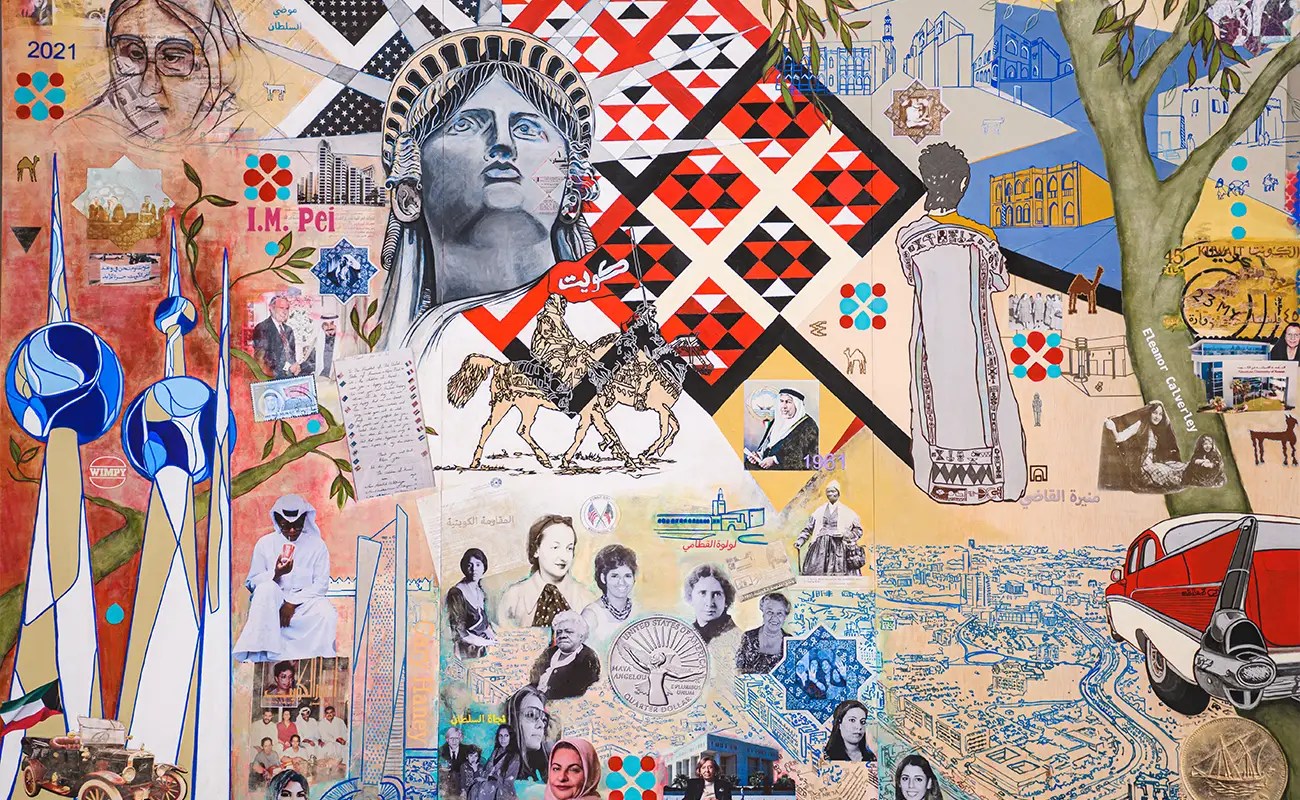
Her career already includes notable public achievements that extend her work beyond gallery walls. Dabbous has completed murals for prominent locations in Kuwait, including Bloomingdales ME at 360 Mall and Crystal Towers, demonstrating her ability to translate personal artistic concerns into large-scale public environments. One particularly meaningful accomplishment involved collaborating with two fellow artists on a mural commissioned for the United States Embassy. Created to celebrate sixty years of friendship between Kuwait and the United States in 2022, the mural now remains on indefinite display at the Museum of Modern Art in Kuwait. This project highlights her capacity to contribute to culturally significant public artworks while maintaining the thoughtful visual approach that characterizes her broader practice. Through collaborative and monumental works alike, she demonstrates how artistic expression can engage both individual emotion and collective history.
Recognition has accompanied this expanding body of work through exhibitions, sales, professional publications, and international platforms. Dabbous has exhibited and sold artworks while earning the Artist Recognition icon on Saatchi Art, reflecting sustained engagement with collectors and audiences. Her work has also appeared in local newspapers and in multiple international art magazines from New York, London, Japan, and more. These accomplishments illustrate a career that continues to gain visibility while remaining grounded in personal authenticity and conceptual integrity. Whether producing intimate portraits, expressive mixed media compositions, botanical abstractions, or ambitious murals, Zena Dabbous consistently demonstrates that artistic identity can remain cohesive even while embracing continual transformation. Her evolving practice stands as evidence that creative growth, cultural perspective, and emotional honesty can coexist within a body of work that continues to invite reflection and discovery.