“A seed carries within itself this same paradox: it seems still, yet it already contains a forest.”
Organic Matter as a Living Witness
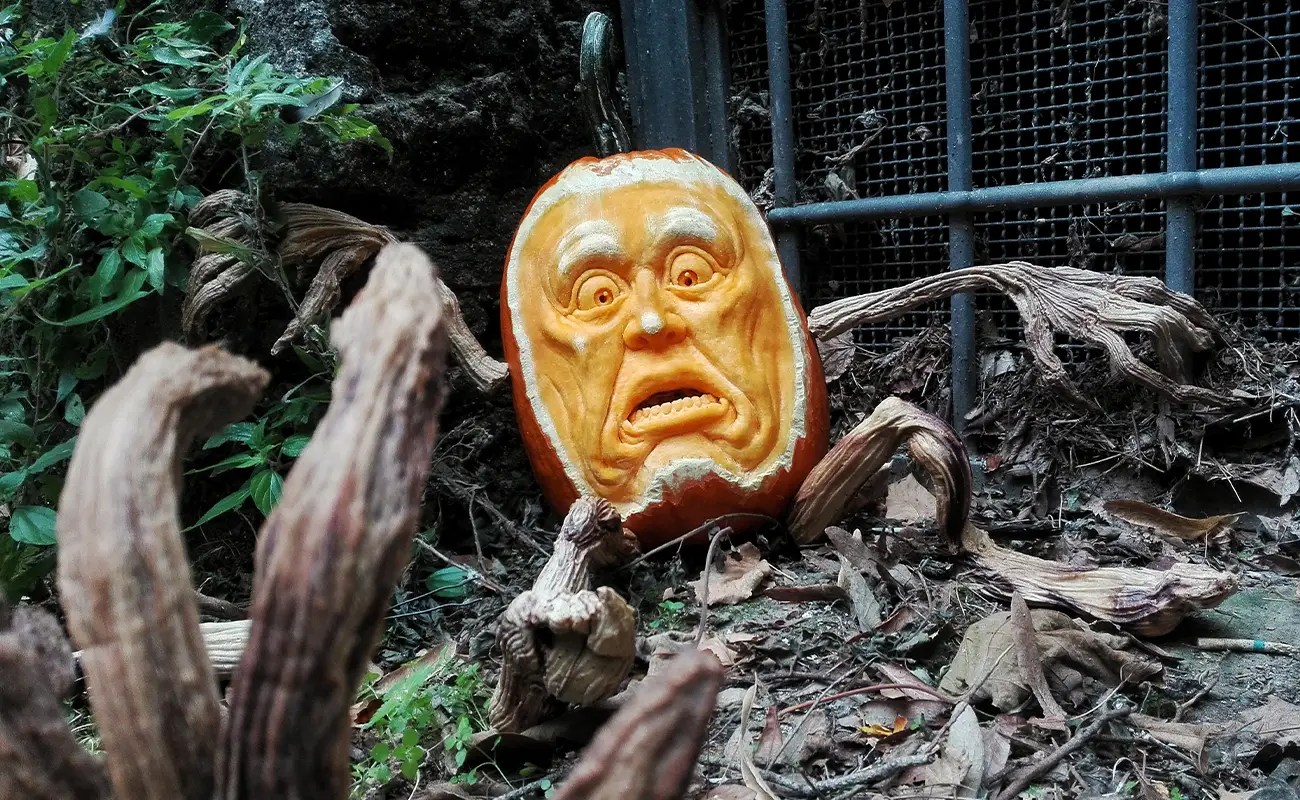
Vincenzo Scuruchi builds an artistic language from what breathes, changes, softens, sprouts, and disappears. A self taught artist from a small town in southern Italy, he carries into his practice a deep awareness of land, rhythm, and fragility. His upbringing in close contact with nature shaped his understanding of creation as something inseparable from decay. For him, fruit, vegetables, and seeds are not passive materials. They react, shift, and continue their own biological journey after the artist has touched them. This makes his work unusually alive, not only in appearance but in behavior. It changes over time, resisting the fixed state often expected from sculpture. Through this living instability, Scuruchi invites viewers to consider art as an event rather than an object, a temporary meeting between matter, body, memory, and time.
His approach begins with instinct rather than academic convention. Scuruchi did not arrive at art through formal training but through direct experimentation, curiosity, and the intelligence of the hands. This origin remains visible in the intimacy of his process. He works with few tools, often only his hands and knives, allowing each cut to become a quiet exchange with the material. The organic surface guides him as much as he shapes it, creating a relationship based on response rather than control. He is not interested in perfection as a polished ideal. Instead, he searches for the energy that appears when something cracks, changes, resists, or fails. In this way, imperfection becomes a signal of life. His sculptures speak through vulnerability, showing that transformation can carry more truth than permanence.
Psychology also informs the depth of his practice. Scuruchi studied the inner mechanisms of perception, emotion, and symbolic expression, and this background helped him see images as forms of dialogue with the unseen self. His art does not treat the mind as separate from matter. A carved seed can suggest a memory, a fruit can hold the tension of a body, and a fragile surface can become a mirror for feelings not yet fully named. Dreams interest him for the same reason. They create images before language can explain them. In Scuruchi’s work, sculpture becomes a way of listening to those images. The result is an artistic practice grounded in touch, but expanded by psychology, sensory experience, and the mysterious conversation between external matter and internal life.

Vincenzo Scuruchi: The Seed That Contains a Forest
The seed is central to Scuruchi’s imagination because it contains contradiction in its smallest form. It appears silent, sealed, and almost inert, yet within it exists the possibility of roots, branches, shade, flowers, and future fruit. This paradox guides much of his work. He is drawn to matter that seems temporary but holds a hidden continuation. A fruit can rot and still feed the earth. A seed can rest and still prepare for growth. A carved organic form can appear finished, while biological life continues beyond artistic intention. Through this vision, Scuruchi does not separate loss from renewal. He sees dissolution as part of a wider movement, where endings generate new forms and disappearance opens space for another beginning.
This sensitivity gives his sculptures a meditative power. They are not monuments to durability but records of passage. Time is not treated as an enemy of the artwork. It becomes part of the artwork itself. The change in texture, color, density, or growth becomes a continuation of the creative act. Scuruchi’s pieces ask viewers to slow down and notice transformation at a scale that often goes unseen. In a culture that frequently values speed, permanence, and flawless surfaces, his work turns toward the fragile and the changing. It suggests that beauty may be found not in resisting time, but in allowing time to reveal what is hidden inside matter. His practice becomes a quiet lesson in attention.
One especially meaningful body of work centers on avocado seeds carved into forms that represent the sense organs: ear, nose, eye, and mouth. For Scuruchi, these works are important because they connect the body to the world through perception. The senses become bridges between inner experience and external reality, reminding us that we meet life through listening, smelling, seeing, tasting, and speaking. The avocado seeds also continue to sprout, grow, become trees, and eventually bear fruit. This cycle turns the artwork into a living metaphor for human existence: birth, development, maturity, and transformation. The piece does not end when the carving is complete. It continues its journey, carrying the artist’s gesture into the rhythms of life itself.

The Body, The Senses, and The Silent Process
Scuruchi’s daily practice is quiet, concentrated, and closely connected to natural light. Silence allows him to listen to the material rather than impose a fixed idea upon it. This listening is physical. The fruit or seed responds to pressure, blade, warmth, and time. Every incision matters because the material is alive and vulnerable. Unlike stone or metal, organic matter can bruise, split, dry, sprout, or decay. That sensitivity requires care. The process becomes almost like breathing, slow and attentive, with each gesture measured by contact. Scuruchi’s hands do not simply execute a plan. They negotiate with a living surface, discovering form through touch, resistance, and patience.
His interest in sensory experience extends beyond the studio. He is influenced by the smell of fruit, the rhythm of breath, and the tactile qualities of organic matter. These are not decorative details. They are the foundations of his artistic perception. For Scuruchi, the world is first understood through the senses, and the senses become the beginning of image making. This is why the carved sense organs made from avocado seeds hold such symbolic force. They transform perception itself into sculpture. The body is not only represented in his work. It is implied in the way the work is made, encountered, and understood. Viewers are encouraged to feel the presence of breath, touch, scent, and growth behind each form.
Photography plays an important role in this process because it allows Scuruchi to understand the work after its physical formation. He has said that each piece reveals its meaning later, when he photographs it and can begin to interpret what it seemed to communicate. The image becomes another stage of the artwork rather than a simple record. Through photography, he pauses a living process long enough to reflect on it, while still acknowledging that the material may continue to change. This adds another layer to his practice. Sculpture, organic matter, image, and interpretation move together. The finished work is never entirely fixed. It exists through making, transformation, documentation, and the artist’s later attempt to understand its message.

Vincenzo Scuruchi: Transformation as Shared Experience
Scuruchi resists strict divisions between artistic disciplines. Sculpture, photography, performance, acting, light, word, and material all belong to the same human impulse: turning experience into images that can be shared. His involvement in acting, including a role in Il Registro, a film directed by Marco Amenta, reflects a path that has developed alongside sculpture and psychology, as part of a wider understanding of creativity. Acting interests him because it offers another way to inhabit a story. Like sculpture, it requires presence, transformation, and an openness to becoming something through form. The body becomes material, gesture becomes image, and personal experience takes shape through another language. This connection strengthens the continuity between his visual work and his interest in performance.
His current project expands this connection by combining sculpture and performance. The aim is not for the viewer to remain outside the artwork as a detached observer. Instead, Scuruchi wants the audience to experience transformation directly. The work becomes a shared passage, where change is not only seen but felt. This approach grows naturally from his belief that emptiness and change are not final states. They are beginnings. In his hands, a void can become a threshold, and an altered material can suggest a new story waiting to emerge. Performance allows this idea to unfold through time, presence, and encounter, making the artwork less like an object and more like a lived situation.
At the heart of Scuruchi’s practice is a clear and powerful belief: life is temporary, but its intensity gives it meaning. His carved fruits, vegetables, and seeds do not deny fragility. They honor it. They show that living matter is beautiful because it changes, not despite that change. His work asks viewers to reconsider what art can be when it is allowed to breathe, age, and continue beyond the artist’s hand. Through organic sculpture, photography, psychology, and performance, Vincenzo Scuruchi creates a language of impermanence that feels both intimate and universal. It is a practice rooted in matter, yet constantly reaching toward memory, perception, rebirth, and the quiet intelligence of transformation.