
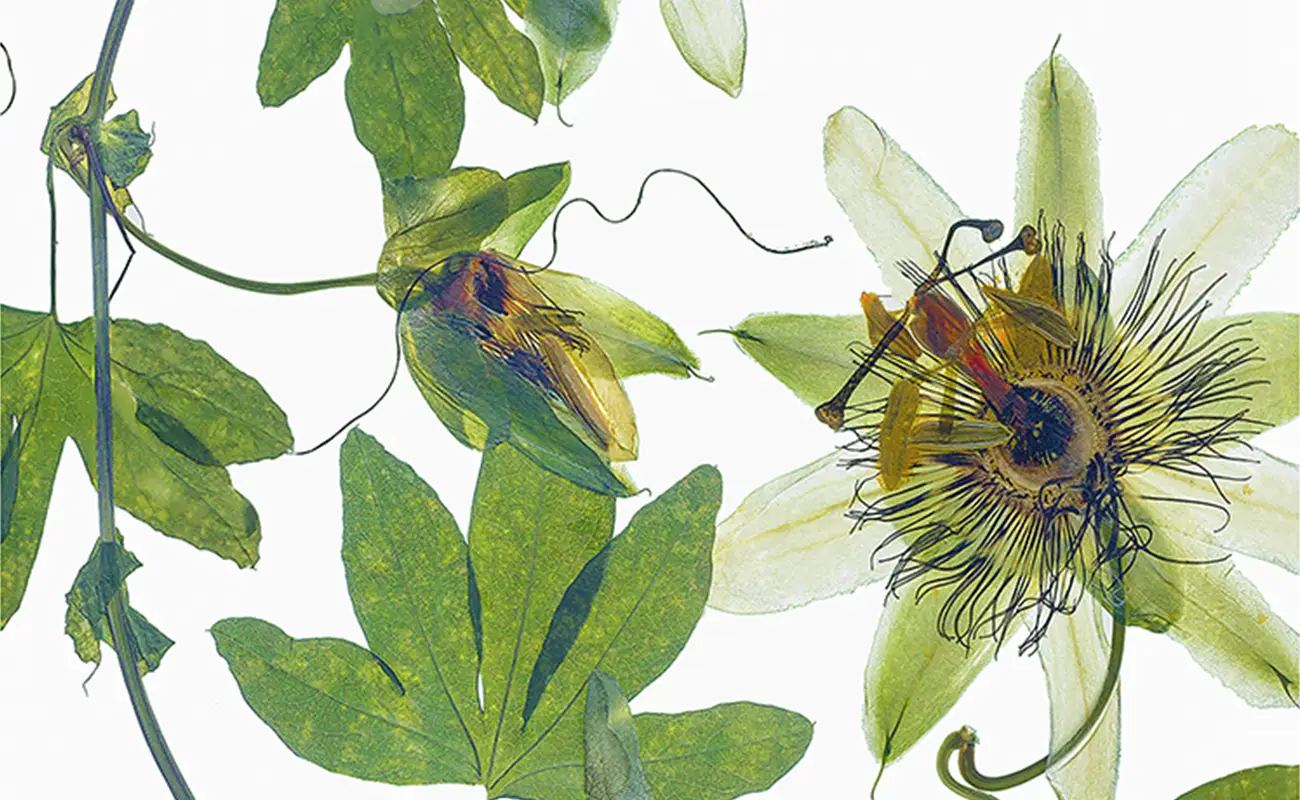
“When you hold a pressed flower against the light and see the perfectly formed detail you realise how wonderful nature is.”
Rooted in Silence and Stone
The artistic journey of Jane Anashka unfolds from a landscape shaped by quiet endurance, chance discovery, and a profound attentiveness to the natural world. More than two decades ago, she and her partner John Cowie arrived in the Umbrian hills of Italy and purchased an abandoned farmhouse that seemed suspended between past and present. With its granite outcrops, steep terrain, and fragile wild plants threading their way through rocky ground, the land offered no promise of ease or cultivation. Instead, it revealed how vegetation organizes itself when human intervention withdraws. The house itself bore signs of former lives through torn images of saints, handmade reed chairs, and a leaking pantile roof that let rain trace slow patterns onto the stone floor. The silence surrounding the building was vast and immersive, broken only by wildlife and the distant movement of air through the valley mist below.
Life at the farmhouse encouraged observation rather than alteration. The absence of running water, the stalls beneath the house once warmed by animals, and the presence of cinghiale moving through long grass each morning created a rhythm that followed natural cycles rather than human schedules. Jane’s background in textile design found unexpected alignment with this environment, where structure, fragility, and repetition were visible everywhere. Her sensitivity to pattern and material translated seamlessly into noticing the subtle frameworks of plants growing between rocks or emerging briefly in seasonal displays. The landscape functioned as both home and teacher, demonstrating resilience without ornament and complexity without excess.
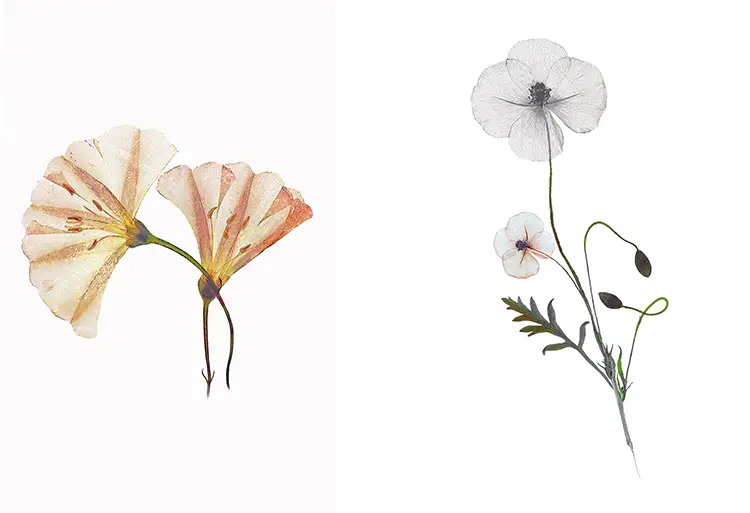
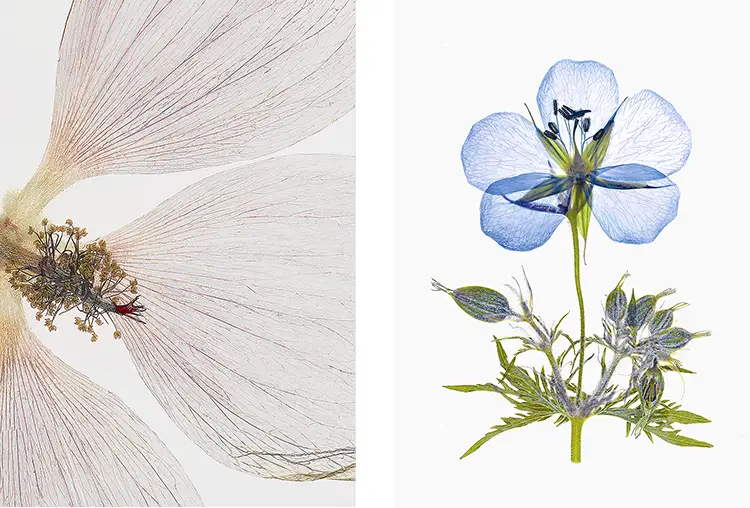
One particular spring marked a turning point when a broad sweep of pink Anemone hortensis appeared near a stream below the house. Jane pressed one of the flowers beneath a heavy pile of rocks and later photographed it using an old film camera. The resulting image revealed an internal structure that was rarely noticed by the naked eye, transforming a familiar bloom into something almost architectural. When their London agent selected this image for the cover of the Hampton Court Palace Flower Show millennium catalogue, the significance became clear. This process offered a way to reveal the inner design of wild flowers and established the foundation of Jane Anashka’s artistic practice.

Jane Anashka: Revealing Nature’s Inner Design
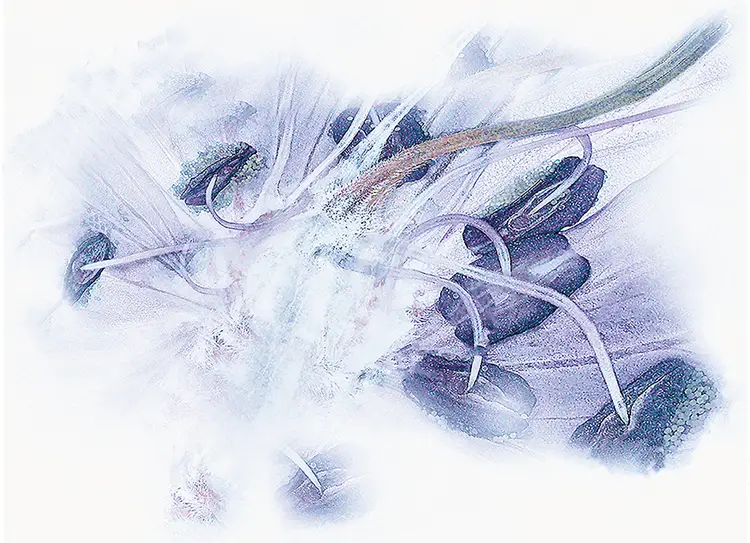
Jane Anashka’s work is guided by a single enduring conviction that clarity and care can awaken concern. Holding a pressed flower against the light exposes an astonishing precision within even the most modest plant, and this moment of recognition has remained central to her approach. Her images focus on the skeletal framework of flowers and plants, presenting them as complete designs shaped entirely by natural processes. Rather than decoration, her work emphasizes structure, balance, and vulnerability. This visual language encourages viewers to slow down and consider what is often overlooked, inviting a deeper respect for forms that are easily lost to environmental change.
Travel has played a crucial role in shaping both subject matter and purpose. Together with John Cowie, Jane has journeyed across Europe, India, and Sri Lanka, collecting specimens and witnessing dramatic shifts in landscapes once rich with wild growth. Urban expansion, industrial farming, deforestation, and climate change have steadily reduced the diversity that initially inspired her. These experiences sharpened the ethical dimension of her work. Each image functions not only as an artwork but also as a quiet statement about disappearance and responsibility. The plants she presents are neither idealized nor romanticized; they are shown with honesty, sometimes marked by irregularities that speak to the conditions in which they grew.
The longevity of this practice is evident in the breadth of their collection, which now spans more than twenty years. Every Saturday, visitors can view the full body of work at their small shop and stall at Chelsea Galleries on Portobello Road in London. Jane’s presence there allows for direct conversations about technique, process, and intention, reinforcing the personal connection between artist and audience. Larger A2 prints are offered rolled for practical travel, reflecting a consideration for accessibility alongside craftsmanship. Their images have also reached wider audiences through publications such as Gardens Illustrated and House & Garden, extending the conversation about wild plants into domestic and cultural spaces.
Influences Carried by Water, Road, and Hedge
The influences behind Jane Anashka’s work combine historical admiration with lived experience. Among the artists she values most are Pierre-Joseph Redouté and Marianne North, both renowned for their devotion to plant life and their commitment to recording it with clarity and respect. Marianne North’s paintings, created during her solo travels across continents and housed in a dedicated gallery at the Royal Botanical Gardens in Kew, stand as a testament to independence and persistence. These figures offer a lineage of botanical art that privileges observation and patience over spectacle, qualities that resonate deeply with Jane’s own methods.
Equally formative are the journeys undertaken with John Cowie in search of wild specimens. Time spent on a narrowboat along the Kennet and Avon canal led to the careful collection and pressing of Malva alcea found along path edges. Elsewhere, Geranium pratense appeared in hedge banks and woodland margins across Europe, while wild sweet peas with purple blooms emerged from grassy roadsides in southwest France. Each location offered a different context for growth, reinforcing the idea that beauty often exists in overlooked or transitional spaces. Even plants considered invasive, such as Convolvulus arvensis spreading through pavement cracks, found a place in her archive.
These experiences reinforce a perspective shaped by movement rather than confinement. Roadsides, waterways, and borders between cultivated and uncultivated land become sites of discovery. Jane’s approach resists hierarchy among plants, granting equal attention to the modest and the dramatic. By pressing and photographing specimens gathered from diverse environments, she builds a visual record informed by travel, chance, and careful looking. The resulting works carry with them the memory of place, season, and circumstance, allowing viewers to sense the conditions under which each plant once lived.
Jane Anashka: Work, Witness, and the Future Page
One image stands at the emotional core of Jane Anashka’s practice, both as artwork and as testimony. In 1993, while cycling through Italy, she and John observed extensive chemical spraying on olive groves where no wildflowers survived beneath the trees. In sharp contrast, an organic farm nearby supported abundant growth under similar conditions. From this experience emerged Papaver dubium (Requiem), created from a wild poppy found near a rocky stream in Tuscany. Its twisted form communicates loss and imbalance, reflecting the damage caused by chemical fertilizers and inorganic farming methods. The image functions as a visual elegy for habitats altered beyond recognition and remains one of her most meaningful works.
The significance of this piece extends beyond its original context. Another image of Papaver dubium was later altered to blue and selected for the cover of The Blue Flower by Penelope Fitzgerald, demonstrating how Jane’s work can cross from environmental reflection into literary culture. Such moments highlight the adaptability of her images while preserving their core message. The medium remains rooted in pressing, drying, and back-lit photography, techniques that allow the plant’s internal structure to speak without embellishment. Each step honors the original specimen while transforming it into a lasting record.
Today, Jane’s daily practice unfolds in London, where travel has slowed but attention remains focused. A small cedarwood greenhouse provides material throughout the year, from the vigorous Ipomoea indica producing fresh blue blooms each morning to Iris pseudacorus flowering beside a small pond. Specimens are pressed for varying lengths of time in a wooden book-binding press, sometimes after slicing or deconstructing buds to reveal interior detail. Plants such as Paphiopedilum and Passiflora caerulea may remain in the press for months before being photographed, while others dry within days. All images are printed at home, and the next ambition is a book titled The Interior World of Wildflowers, presenting more than eighty designs that continue this sustained conversation with nature.