
“What matters is the spark that I leave behind, the people who remember my light and the inspiration I have been for them.”
A Vision Hatched from Life’s Ruptures
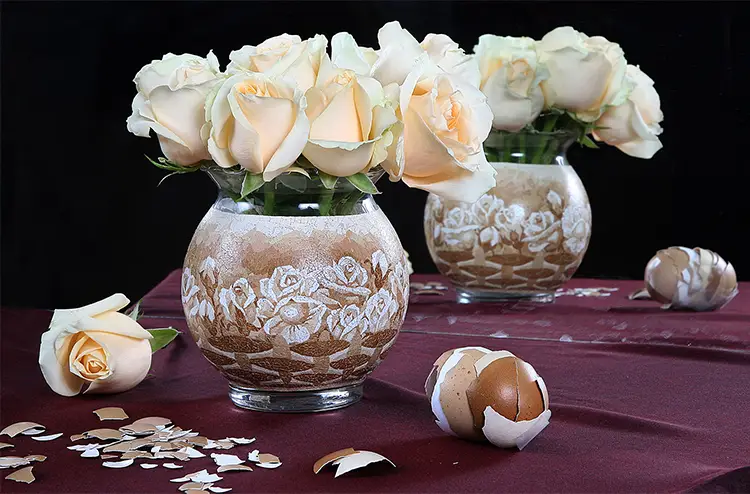
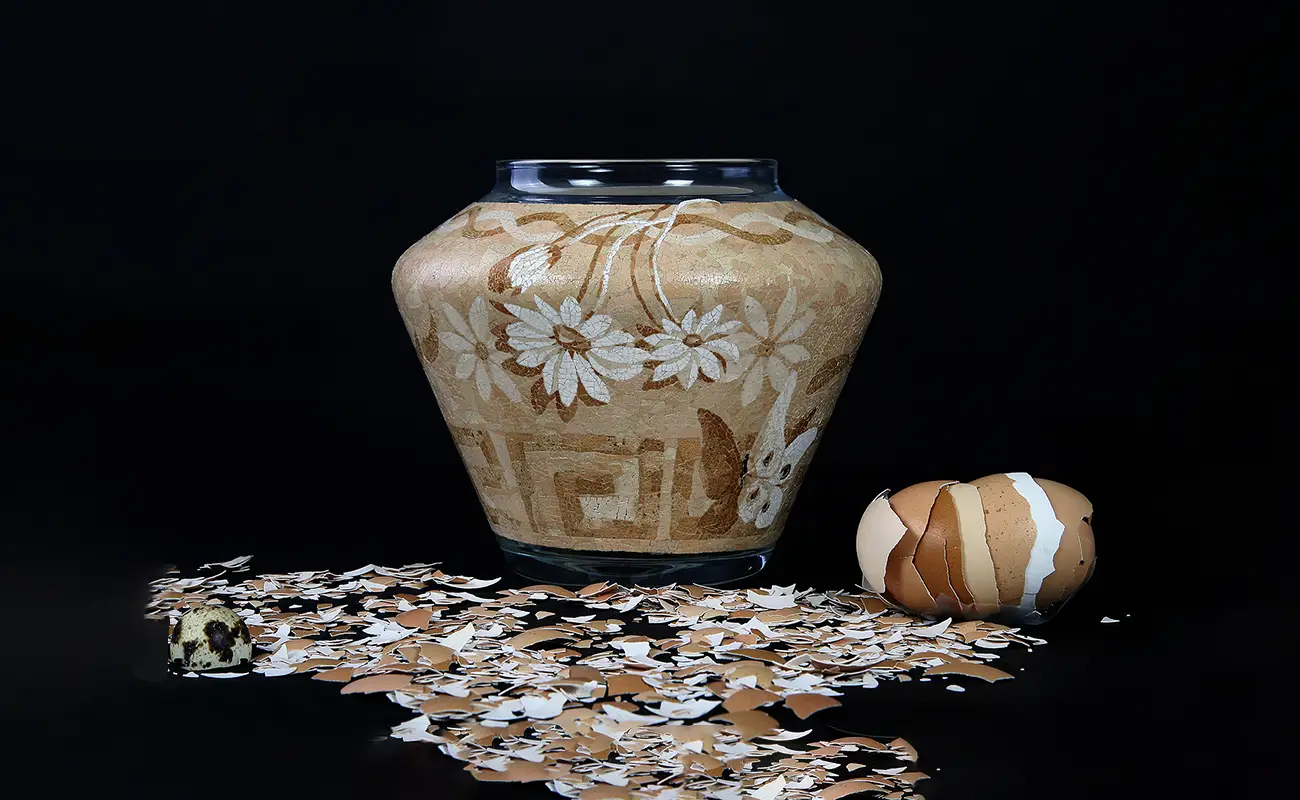
At first glance, Iravazi’s work appears otherworldly — delicate mosaics clinging to glass vessels, arranged in intricate patterns that shimmer with earthy hues. But behind each fragment lies the lived experience of Irina Karamfilova-Tursunova, the Bulgarian artist who reinvented herself as Iravazi. Born in Sofia in 1960, her journey into art was far from conventional. Initially steered by societal and political constraints into a technical career in electronics, Irina’s early life was rooted in the rigid structures of Bulgaria’s communist era. It wasn’t until after the country’s democratic transformation that she pursued entrepreneurship, managing a private business until the 2008 economic downturn disrupted her trajectory. What many would consider a personal loss became an unexpected portal to creativity.
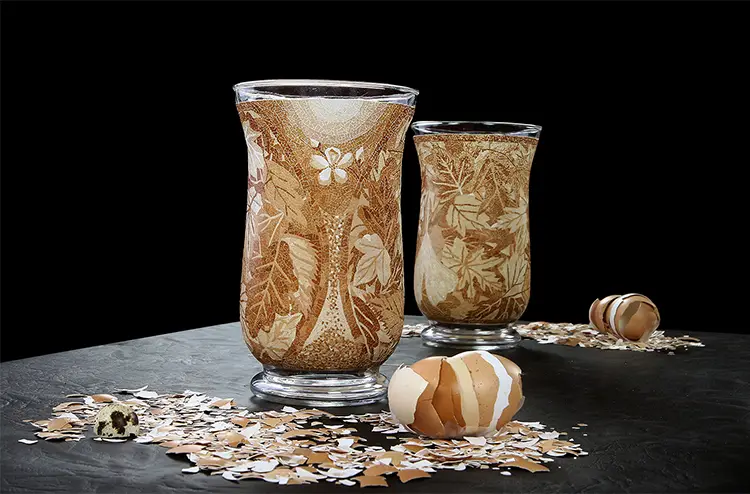
The pseudonym ‘Iravazi’ blends the personal and symbolic: “Ira” short for Irina, and “vazi” meaning vases in Bulgarian. This name encapsulates both her identity and her chosen canvas. Her medium is even more striking — real eggshells sourced from nature, carefully lifted from the ground beneath trees where birds had already hatched. These natural fragments, donated by both forests and farming admirers across continents, including the United States, are never altered by artificial coloring. Instead, Irina lets the nuanced hues formed by nature guide her compositions. She works only with found materials and rejects any practice that might disturb the cycles of life she reveres so deeply.
Mosaics have existed for millennia, yet Iravazi’s interpretation is startlingly original. Her technique, developed independently through trial and patience, employs bird eggshells as the sole material for patterns applied to transparent glass. Each vase becomes a sacred object, imbued with the quiet dignity of both nature and endurance. Her discovery of eggshell durability — heat- and moisture-resistant, lightfast, and resilient — aligned with a deepening connection to nature and the cosmos. These properties not only fascinated her, but validated her intuitive experiments. Even Aristotle, as she points out, once wrote extensively about eggshells, recognizing their structural wonder. Through passion and perseverance, Irina reemerged as an artist, not by formal training, but by necessity and inspiration.
Iravazi: Mosaic Poetry in Natural Fragments
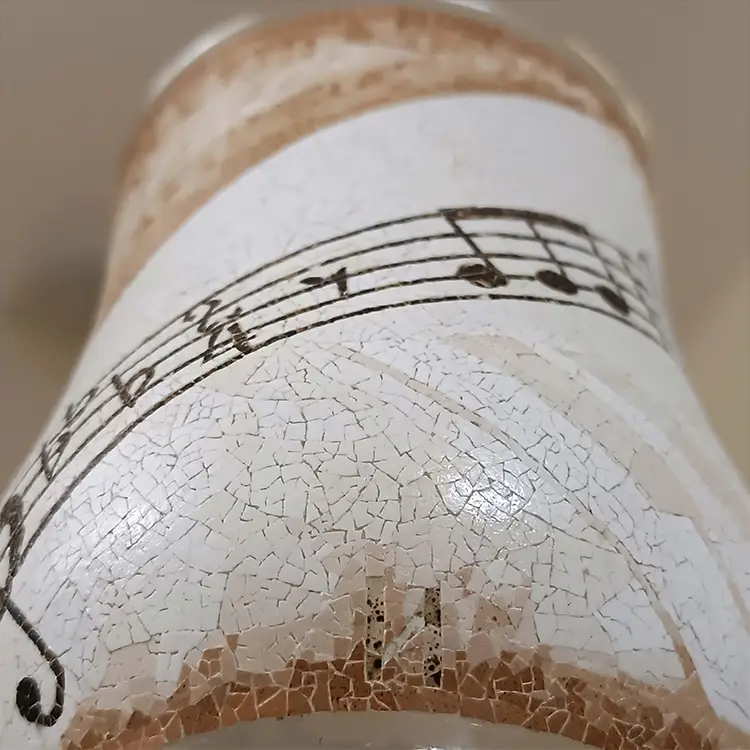
Within each eggshell mosaic, Iravazi channels a harmony of forces — spiritual, artistic, and natural. Her style is not rooted in replicable technique but evolves intuitively, shaped by the observation of nature’s intricacies and ancient symbolism. Despite lacking formal art education, her output possesses a complexity that rivals that of academically trained artists. The process she developed involves gluing minuscule pieces of eggshell, often no larger than a square centimeter, with surgical precision using watchmaker’s tweezers. Several layers of lacquer then seal the design, protecting it without diminishing its tactile integrity. Each artwork demands immense time and physical endurance; the placement of one to two centimeters of material per day is often the maximum she can manage, particularly given the lighting conditions required to distinguish the shells’ natural tones.
She works only during brief windows of ambient daylight, when the eggshells’ subtle colorations reveal themselves. Artificial light and strong sunlight alike obscure the delicate variations that guide her hand. The physical demands are further compounded by her age — now 65 — and the exacting nature of the work. Nonetheless, she embraces the slowness of the process, viewing it as essential to the level of detail and perfection she strives for. Over the years, her mosaics have become increasingly sophisticated, each project pushing the boundaries of patience and intricacy. Her art has never been for sale, despite frequent offers. For Iravazi, creation is a personal and spiritual act, untethered from commercial intent.
Her most cherished piece, titled Balance, features the mythological Phoenix — a potent symbol of resurrection that mirrors her own life story. Created during a period marked by the loss of her husband and the collapse of her business, the Phoenix became more than a motif; it became a declaration of survival and rebirth. She refers to it as the embodiment of her transformation into Iravazi, a persona born from hardship but sustained by vision. The symbolism within Balance draws from a wide range of cultural references, from Egyptian iconography to Greco-Roman mythology. The piece reflects not only personal recovery but the enduring relevance of ancient stories in contemporary life. Iravazi considers herself a conduit through which universal themes find expression in humble materials.
Observing the Infinite in the Ordinary
For Iravazi, inspiration is not something to be hunted but something to be noticed. Her deep relationship with nature forms the heart of her artistic philosophy. Living in a home surrounded by a lush garden, she spends much of her time tending to tomatoes, flowers, and fruit trees. This interaction with the earth’s cycles fuels her creative energy and informs her thematic choices. She views nature not as scenery, but as a living intelligence, an embodiment of spirit that whispers to those who take time to listen. Moments that most people might overlook — the way seeds break through soil, or how clouds drift across the sky — are, to her, revelations of beauty and interconnectedness.
Themes in her work often arise unbidden, like dreams arriving with the dawn. A shape or image might come to her in the morning, prompting research into mythology, archaeology, or geography. Once the idea gains clarity, she sketches preliminary designs and begins the long, meditative process of laying eggshell onto glass. This organic method reflects her belief that art should not be a mechanical act, but a conversation between the artist and something greater — be it intuition, nature, or spirit. The absence of planning, in the traditional sense, allows for a kind of honesty in her work, where symbols and structures emerge organically.
The natural world remains her most consistent muse, but she is equally captivated by what she describes as the miracle of existence. Her work is steeped in a spiritual outlook that interprets nature as a visible manifestation of universal truth. To her, the garden and the galaxy reflect the same principles: life unfolding with order and mystery. While she maintains a sense of humility about her practice, often stating that she doesn’t take herself too seriously, the philosophical undertones of her art suggest otherwise. Iravazi is engaged in a form of visual meditation, where every mosaic speaks quietly of something eternal — not through grandeur, but through reverence for the overlooked.
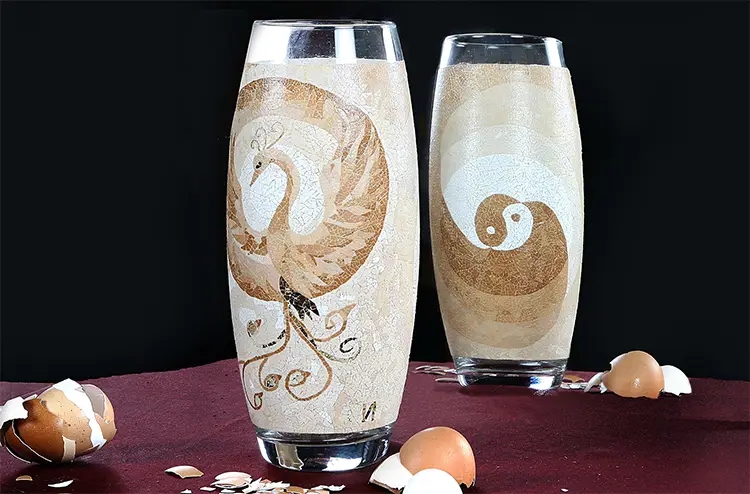
Iravazi: Microcosms of the Universe in Eggshell and Glass
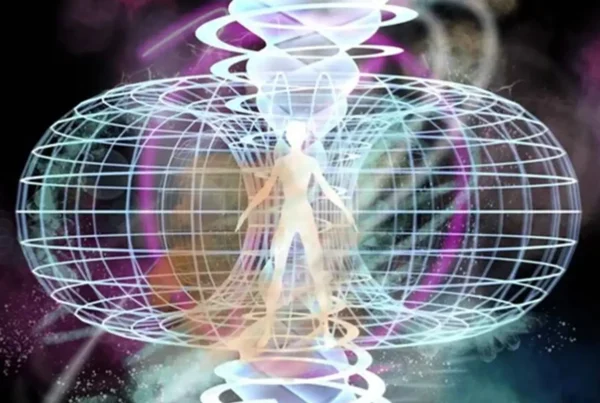
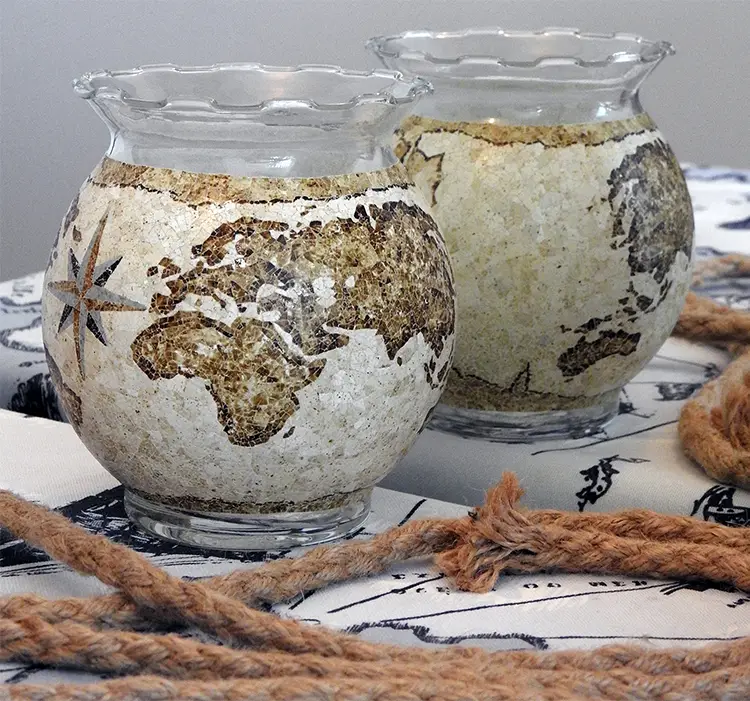
Among her most exciting ongoing explorations is a new series inspired by the cosmos. This thematic direction is more than aesthetic; it’s a philosophical expansion of the ideas that have always guided her. She sees parallels between the microscopic and the astronomical — between the atoms that form our bodies and the galaxies that shape the universe. Her belief that “as above, so below” echoes ancient spiritual teachings and offers a conceptual framework for her evolving body of work. In these upcoming pieces, Iravazi aims to convey the immensity of the universe while emphasizing humanity’s place within it — both minuscule and meaningful.
Although the project is still in its conceptual phase, her reflections suggest it will combine natural motifs with cosmic patterns, creating a visual dialogue between the earthly and the celestial. By incorporating organic materials into themes of interstellar proportion, she blurs the boundaries between matter and spirit, drawing attention to the continuity of life across scales. This work continues her exploration of how art can serve as a mirror to the unseen — not only the invisible forces of the universe, but also the often-unnoticed magic in everyday life. The cosmic series is not just a new direction; it is a logical extension of her worldview, where the divine is found in both the garden and the galaxy.
Despite the metaphysical weight of her ideas, Iravazi’s voice remains refreshingly grounded. She speaks with affection about her two sons, her home, and the joy of tending to living things. Her mosaic practice is not isolated from the rest of her life, but deeply entwined with it. Each vase carries the imprint of the seasons, the hours spent in silence, the precision of aging hands honoring something greater than themselves. Her belief in the interconnectedness of all things finds material form in every finished piece. In this way, Iravazi’s art becomes more than decoration; it becomes a vessel of contemplation, a slow and silent affirmation that beauty still exists in the smallest of places.
Irina Karamfilova-Tursunova, under the name Iravazi, creates mosaics not just with eggshells, but with fragments of insight, resilience, and grace — reminders that the universe often speaks in whispers, and that it is through attentive hands that those whispers are heard.