
Sculpting Sentiment in a Consumer Age
Byun Dae Yong’s work arrives at a striking intersection of visual charm and cultural critique, where polished surfaces cloak urgent narratives. Born in Busan in 1972, and trained rigorously in sculpture at Busan National University, where he earned undergraduate through doctoral degrees, Byun has shaped a singular artistic voice in South Korea’s contemporary art scene. While his sculptures might first catch the eye with their playful appeal and bright, approachable forms, they quickly unravel into layered commentaries on modern life. By drawing from the visual vocabulary of fairy tales, Disney iconography, and pop culture aesthetics, Byun creates more than nostalgic homages—he constructs a mirror to the paradoxes of consumer society.
Rather than settling for pure visual seduction, Byun’s works employ their vibrant allure as a strategic opening. The glossy, cartoonish figures invite physical engagement—smooth enough to trigger the instinct to touch—but beneath this tactile invitation lies a subtle invitation for reflection. Familiar figures such as polar bears, often posed in gentle or whimsical scenarios, serve as carriers of more weighty subjects: loneliness, environmental strain, commodified relationships, and the search for meaning in over-saturated visual culture. It is this gentle collision between the humorous and the harrowing that defines Byun’s artistry. His sculptures do not shout; they suggest, coax, and quietly disturb.
These complex dualities have garnered Byun widespread recognition in Korea and beyond. He has participated in over 30 solo exhibitions and more than 350 group shows, with his work appearing in spaces ranging from prestigious museums to corporate collections and public installations. Institutions such as the Amore Pacific Museum of Art, the Pohang Museum of Art, and the National Museum of Modern and Contemporary Art house his sculptures, reflecting the broad relevance of his themes. Even within highly commercial or everyday settings—such as Eden Valley Ski Resort or MBC Broadcasting Station—his works introduce a dissonance, sparking reflection within spaces not typically reserved for quiet contemplation.

Byun Dae Yong: Whimsy as a Vehicle for Truth
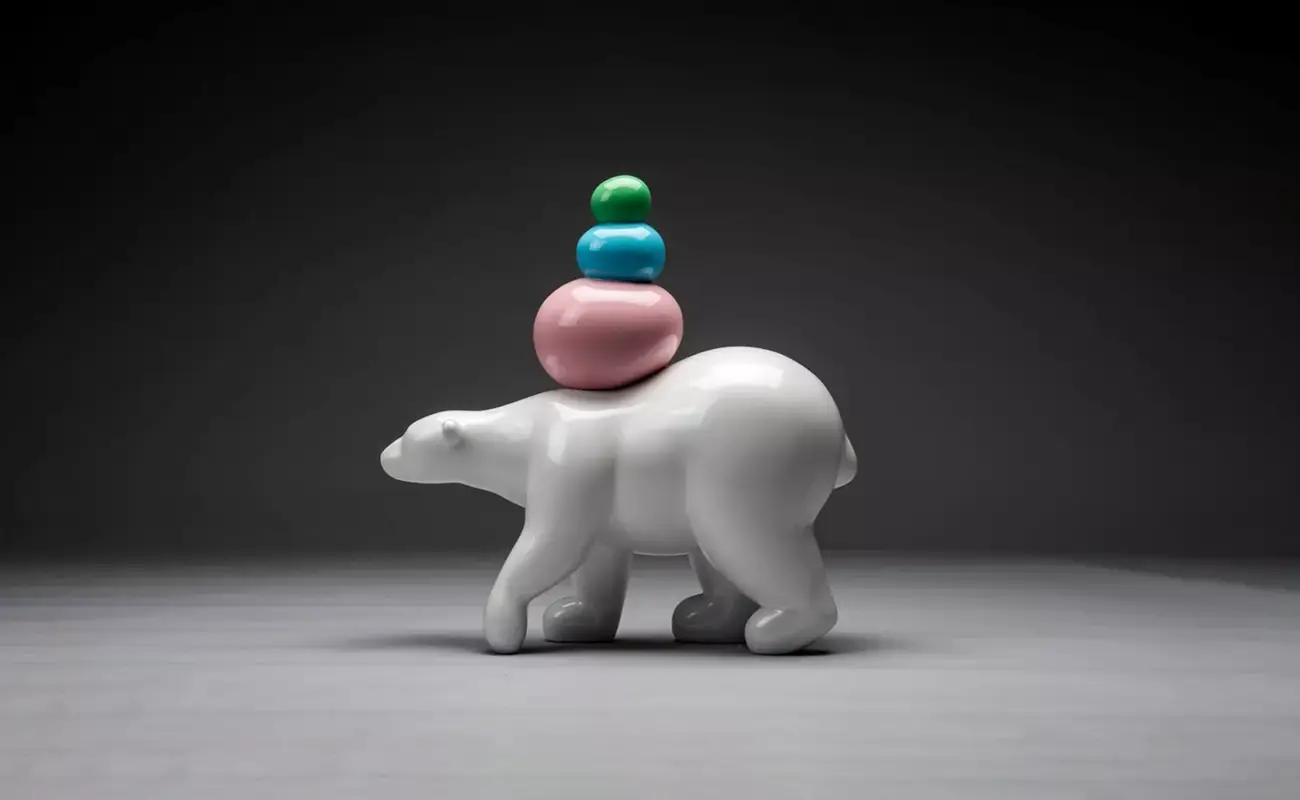
Byun’s artistic language is built upon visual contradiction—his bears, often rendered in flawless pastels and high-gloss finishes, possess an uncanny mix of gentleness and gravity. The bear, a central motif throughout his oeuvre, is both disarming and deliberate. These figures lean into childlike familiarity, yet they gaze back at the viewer with a serenity that suggests deeper burdens. The smooth contours and minimalist forms recall consumer goods and collectible toys, yet the emotional complexity they emit sets them apart from mere aesthetic novelty. In particular, his polar bears—crafted with a soft, ceramic-like sheen—embody both the innocence of childhood memory and the maturity of adult disillusionment.
In one of his most resonant pieces, a reclining bear balances its cub atop a delicate pink orb. The scene at first appears tender, but the arrangement carries a precariousness that challenges the viewer to consider the nature of dependency, care, and imbalance. The recurring use of spheres in Byun’s work functions as both playful accessory and metaphoric anchor: representing emotional weight, environmental strain, or unspoken psychological burdens. These elements suggest that even within apparent equilibrium, the threat of collapse looms. Each sculpture becomes a micro-stage of human experience, rendered in silence yet dense with subtext.
Byun’s ability to speak through surface is one of his most distinctive traits. In his world, the gloss is not decoration—it is armor, illusion, and revelation all at once. The immaculate sheen invites projection, reflecting both the viewer’s gaze and their complicity in the consumer dynamics Byun critiques. His figures resist quick categorization; they are not symbols of innocence nor objects of satire, but rather vessels for emotional ambiguity. Through these forms, Byun offers a meditation on how we present ourselves and what we choose to conceal beneath the polish of daily life.

Sculpted Stories, Unspoken Tensions
Byun’s practice is firmly rooted in the tradition of storytelling, where his characters serve as emotional proxies in contemporary fables. His sculptures often depict scenes that could be drawn from picture books or animation, yet the narratives they imply are laced with irony, vulnerability, and philosophical tension. The bear, again, stands in as a kind of anthropomorphic observer—watching, balancing, or resting, yet always imbued with an aura of quiet resilience. These figures don’t act as overt critics of the modern condition; instead, they embody its contradictions. Through gestures rather than expressions, they communicate longing, fatigue, and an ever-present desire for connection.
By appropriating the charm of popular imagery, Byun situates his work within the lineage of artists who use cuteness as a counterpoint to critique. However, unlike some pop artists who indulge in the spectacle of irony, Byun’s approach is marked by sincerity. His bears may juggle pastel globes or march in sequence like toys, but they carry with them the weight of emotional and environmental histories. These sculptural vignettes suggest that our modern life, though saturated with comfort and convenience, often lacks substance beneath its surfaces. It is in this absence that Byun’s fables find their form—stories that ask not what we see, but what we’ve learned to overlook.
This blend of whimsy and warning makes his work accessible across a wide audience without diluting its intellectual core. Whether displayed in a public park or a private gallery, his sculptures spark curiosity in both casual viewers and critical observers. They avoid alienating complexity by offering visual pleasure, only to subtly shift the conversation toward issues of consumption, sustainability, and emotional detachment. Byun does not seek to provoke with shock; rather, he seduces with softness before steering us toward discomfort. His work thrives in that in-between space, where sweetness carries sadness and humor opens into truth.

Byun Dae Yong: Balancing Beauty with Urgency
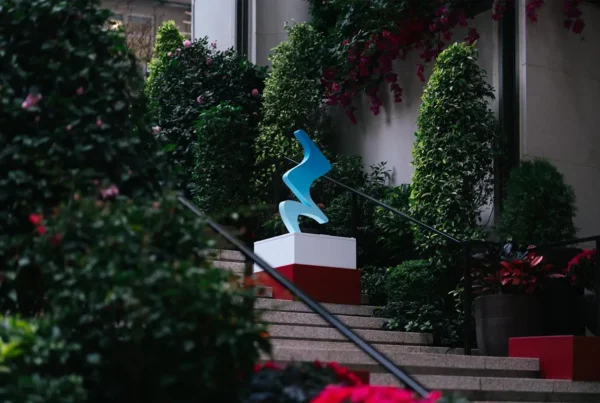
Responsibility emerges as a quiet but central thread through Byun Dae Yong’s body of work, especially in the way his sculptures engage with environmental themes. His polar bears, often depicted in pastel colors or metallic gradients, act as stand-ins for ecological concerns—beings at risk, yet rendered in a visual language associated with delight. A bear transitioning from white to shimmering blue speaks not only of aesthetic transformation but also of environmental decay. This deliberate beauty serves a dual purpose: to attract and to unsettle. It’s in this tension that Byun locates a kind of activism—one that prefers empathy over outrage, beauty over alarmism, but never loses sight of the stakes.
By using materials and techniques that produce seductive finishes, Byun underscores a deeper critique of the allure that consumerism exerts on us all. The viewer’s instinct to reach out and touch these surfaces mirrors the human tendency to pursue what pleases the senses, often without regard for consequence. His sculptures disrupt this cycle by refusing to be fully possessed. They remain still, composed, and enigmatic—artifacts that demand contemplation rather than consumption. In this way, Byun’s bears function not as victims of environmental collapse but as sentinels—watchers who remain elegant even in decline, demanding that we question our own role in the story they represent.
In the broader conversation around ecological art, Byun’s contribution is notable for its subtlety and sophistication. While many contemporary artists approach environmental themes through overt symbolism or dire visual metaphors, Byun chooses restraint. His work does not scream urgency; it hums with it. By couching messages in charm, he makes them more enduring, more likely to be revisited and reconsidered. This approach positions him not only as a skilled sculptor but as a cultural mediator—someone who invites us to see beauty as a form of responsibility. Through his bears, his colors, and his surfaces, Byun Dae Yong offers a visual language for the contradictions of our era: alluring, troubled, and full of meaning just beneath the surface.