“I like the idea of using a chalky powdery medium, on a matte textured paper to create artwork that appears shiny and transparent.”
The Quiet Intensity of Looking
Anna Roberts finds visual possibility in objects and scenes that can easily pass unnoticed: a bag of oranges resting on a kitchen table, sunlight moving through glass, a hand painted bowl, a paper bag, or an empty European street. The Yorkshire based artist and illustrator transforms these modest subjects through soft pastel, close observation, and an enduring fascination with light. Working on heavy cotton paper, she creates images that balance the precision of realism with a carefully reconstructed sense of colour, surface, and atmosphere. The results are calm yet visually intense, inviting sustained attention to reflections, transparency, shadows, and details that might otherwise disappear into everyday life.
Creativity was present from Roberts’s earliest years. Her father was an artist who produced commercial airbrush work during the 1970s and 1980s, and she remembers sitting on the step of his studio as a child and watching him draw. That proximity to image making established an early connection with artistic practice. Roberts later studied several creative subjects at college, including illustration, photography, fashion, and graphic arts. Rather than directing her toward a single conventional discipline, this broad education contributed to a visual language positioned between fine art and illustration, with photography serving as a useful starting point rather than a final authority.
Roberts describes her approach as “filtered realism,” a term that captures the distance between photographic reference and finished artwork. Her subjects may originate in photographs, but the resulting images are reconstructed through decisions about composition, colour, surface, and illumination. Observation remains fundamental, yet literal reproduction is not the objective. Roberts is interested in how an image feels after it has passed through her own way of seeing. This allows familiar objects to retain their recognizable forms while acquiring an unusual clarity and stillness, qualities that have become central to her work.

Anna Roberts: Building Transparency from Pastel
Soft pastel emerged from a practical turning point in Roberts’s life. Earlier in her career, she painted with markers on plastic, blending their colours with spirit to achieve the translucency and smoothness she wanted. When she was expecting her first child, concerns about working with the potent chemical prompted her to search for another method. She developed a process using soft pastel and sponges that could preserve qualities she valued in her previous technique. What began as an adaptation became a defining part of her artistic practice, giving her a medium capable of moving between delicate transparency and dense, opaque colour.
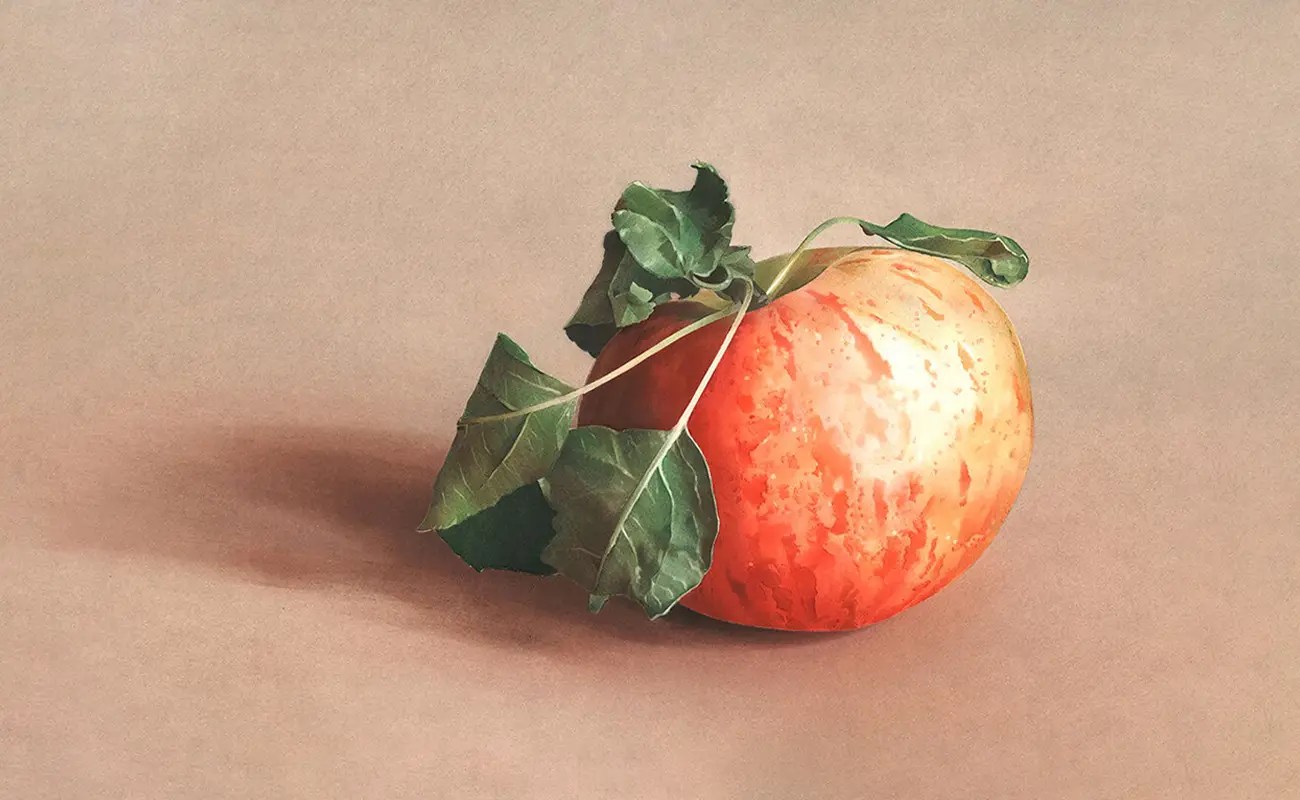
Her chosen surface is heavy 100 percent cotton paper produced by a Somerset based paper mill. Roberts values its ability to accommodate both strong depth of colour and subtle tonal changes. The physical contradiction at the heart of the technique particularly interests her. Chalky, powdery pastel sits on matte, textured paper, yet she uses those materials to create the appearance of glossy, transparent, reflective surfaces. That tension between material and illusion gives her work much of its distinctive character. Glassware, water, plastic, fruit, and other objects become studies in how convincing luminosity can emerge from an inherently dry medium.
Light is more than a technical challenge in these works. Roberts is drawn to the quiet sensation created by watching light dance across a swimming pool or sunlight stream through a glass of water. Painting transparency requires her to consider an object’s surface and what can be seen beneath or through it simultaneously. Reflections interrupt forms, colours shift according to their surroundings, and solid boundaries become visually unstable. Roberts uses those effects to recreate a calm, almost hypnotic quality. Her close attention to such moments turns the act of looking into the central energy of the image.

Ordinary Objects, Unexpected Journeys
Roberts allows personal taste to guide her choice of subjects, accepting that her work changes as her interests evolve. Certain qualities nevertheless remain consistent. She is increasingly attracted to simplicity, reducing compositions rather than filling them with unnecessary information. A hand painted bowl, a paper bag, fruit, flowers, glassware, domestic objects, and architectural details can all become suitable subjects when they catch her eye. Photographs from travel also feed the practice, with southern Portugal and quiet, sunlit streets providing inspiration for architectural works. Across these varied subjects, Roberts searches for the same sense of calm and stillness.
One seemingly casual encounter became especially significant. Roberts bought a bag of oranges from her local farm shop, placed it on the kitchen table, and immediately recognized the potential of the scene. She could already imagine the finished work before beginning it. The resulting painting, Oranges, became personally important and subsequently connected her practice with a series of collaborations. Artist and designer Sho Shibuya encountered the image and invited Roberts to participate in his Plastic Paper project. She selected three bags from Shibuya’s New York plastic bag collection, painted them, and released the images as limited edition prints whose sales benefited Parley, an initiative working to protect the oceans.
Oranges continued to travel far beyond its domestic starting point. Bruno Sialelli saw the painting and commissioned Roberts to create Peaches for Lanvin’s spring and summer collection. The image appeared on garments using scratch and sniff technology and was also used for the invitation to Lanvin’s Paris show, which Roberts attended. Oranges later became the cover image for Saba Sams’ award winning book of short stories. Alongside these projects, Roberts has completed commissions including work for the Academy of Motion Picture Arts and Sciences, demonstrating how her restrained visual language can move between personal artwork, publishing, fashion, and commissioned illustration without losing its focus on careful observation.

Anna Roberts: Simplicity as a Way Forward
The success of these collaborations has not shifted Roberts away from the modest subjects that first attract her attention. Her practice continues to depend on noticing, photographing, selecting, and then rebuilding an image by hand. The ordinary nature of many subjects is part of their strength. Plastic bags, bowls, fruit, and fragments of architecture arrive without the weight of grand symbolism, leaving Roberts free to concentrate on colour relationships, reflected light, texture, and composition. Her increasingly reduced approach gives those visual properties room to register, creating images whose apparent simplicity is supported by sustained looking.
Photography plays an important role within this process without replacing drawing. Roberts currently has a camera full of photographs from a recent trip, providing a reservoir of possible images to revisit in the studio. She has also been collecting appealing objects for future still life paintings. These two sources, found objects and photographed encounters, allow her practice to move naturally between the domestic and the travelled. What connects them is not a fixed subject category but a visual instinct: the recognition of a composition, object, surface, or quality of light that contains enough interest to sustain a finished work.
Her immediate focus includes a second bowl painting, while a new studio is being built in her garden. Both developments point toward continuity rather than a dramatic change of direction. Roberts remains interested in stripping images back, following shifts in her own taste, and pursuing the effects of transparency, reflection, and light through soft pastel. From childhood memories of watching her father draw to a practice that has reached fashion collections, publishing, environmental fundraising, and major commissions, the underlying impulse has remained remarkably grounded. A subject catches her attention, she looks more closely, and an apparently simple moment becomes something worth holding onto.