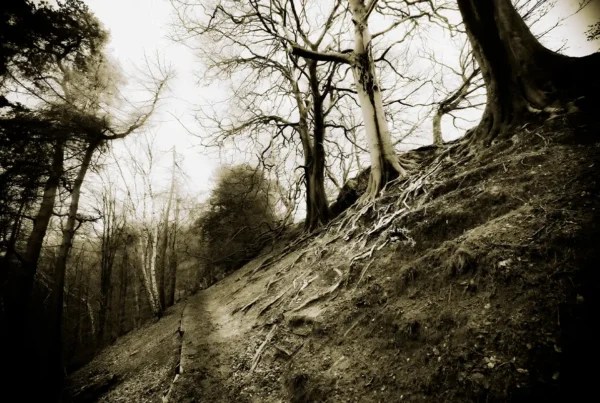
“The force of passion has always driven my style and my core themes… creating new ideas to replace the norm and then break and recreate.”
The Space Between Images and Imagination
Creative partnerships often thrive when shared curiosity pushes artistic ideas beyond conventional boundaries. The collaboration between Tyrrel Jonns and Lena Davis is built upon that spirit of exploration, resulting in photographic art constructs that combine traditional image making with digital experimentation. Their work moves beyond documentary photography, presenting carefully assembled visual compositions that invite viewers to experience emotion, symbolism, and psychological depth simultaneously. Rather than treating photography as a simple recording device, they transform it into a medium capable of constructing imagined environments where visual relationships carry as much meaning as recognizable subjects. Every composition becomes an invitation to pause, observe, and interpret, encouraging audiences to form personal connections with layered imagery instead of searching for fixed explanations. This open approach reflects a belief that visual language can communicate ideas extending beyond ordinary speech, creating works that reward careful attention while remaining accessible through their emotional atmosphere and striking visual presence.
The foundations of Tyrrel Jonns’ artistic path began during childhood through painting on paper before progressing to canvas, establishing an early appreciation for composition, balance, and visual expression. Photography entered much later, first through colour 35 millimetre film before evolving into monochromatic analogue and digital processes. A defining influence emerged through repeated viewing of classic American noir cinema, whose dramatic lighting, carefully controlled shadows, and cinematic atmosphere continue to shape the visual character of his artistic thinking. Rather than separating film and photography into distinct creative disciplines, Jonns sees both as interconnected sources of inspiration that continually influence one another. This relationship allows cinematic storytelling, static imagery, and constructed environments to merge naturally, producing works that retain the stillness of photography while suggesting narratives that extend beyond the frame. That ongoing dialogue between moving image traditions and photographic construction remains central to the collaborative practice developed alongside Lena Davis.
Working together, Jonns and Davis embrace experimentation as an essential creative principle instead of a secondary process. Existing photographs become starting points for new visual possibilities through extensive digital editing, restructuring, and image assemblage. Their methods rely upon repeated refinement rather than immediate completion, allowing each composition to evolve through careful observation and continual adjustment. Concepts such as spatial depth, surface texture, negative space, and the balance between open and closed visual structures become active components of the artistic process rather than technical considerations alone. The resulting works seek to encourage viewers to move freely between observation, interpretation, and imagination, reinforcing the artists’ conviction that photographic construction can generate experiences extending beyond literal representation. This philosophy positions their practice within an ongoing conversation about how contemporary photography can expand into increasingly immersive conceptual territory.

Tyrrel Jonns and Lena Davis: Passion as the Engine of Reinvention
Creative motivation occupies a central place within the artistic philosophy expressed by Tyrrel Jonns. Rather than beginning with clearly defined categories or stylistic ambitions, he describes an internal passion that gradually shaped both his creative identity and thematic concerns. That persistent drive encouraged him to question accepted norms while seeking alternative ways of communicating through visual expression. Photography therefore becomes more than an artistic discipline, functioning as a platform for examining social perspectives, human empathy, and the possibility of generating fresh ideas capable of challenging familiar assumptions. This perspective does not reject established artistic methods outright. Instead, it values the productive relationship between conventional techniques and unconventional experimentation, recognising that meaningful innovation frequently emerges through dialogue between both approaches. Within this framework, artistic practice becomes an ongoing process of reconstruction where each project contributes to an evolving visual language shaped by curiosity, reflection, and continual adaptation.
A wide range of influences contributes to this evolving vision. Jonns identifies his surrounding environment and personal experiences as enduring sources of inspiration while acknowledging the lasting impact of filmmakers including Alejandro Jodorowsky, Orson Welles, and Stanley Kubrick. Their cinematic approaches to symbolism, psychological atmosphere, and visual storytelling resonate strongly within his own photographic thinking. Equally significant are artists such as Salvador Dalí, Francis Bacon, and Max Ernst, whose explorations of surreal imagery, emotional intensity, and conceptual freedom provide important reference points. Literary voices including William Burroughs, Hunter S. Thompson, and Charles Bukowski further expand that creative landscape by introducing distinctive narrative structures and unconventional perspectives. Alongside these influences, classic adventure stories and monochromatic visual imagination continue to encourage artistic exploration, demonstrating how literature, cinema, painting, and photography remain interconnected within the collaborative practice developed with Lena Davis.
These influences are never reproduced directly. Instead, they become part of a broader creative vocabulary that supports continuous experimentation and reinterpretation. Jonns emphasises that inspiration grows through lived experience as much as through artistic admiration, allowing real and imagined encounters to coexist within the same visual framework. This philosophy reinforces the collaborative nature of the partnership with Davis, where ideas evolve through discussion, testing, revision, and shared creative ambition. Rather than presenting definitive statements, their photographic constructs encourage viewers to participate actively by discovering individual meanings within carefully assembled compositions. The resulting works resist narrow categorisation because they combine conceptual photography, cinematic atmosphere, digital construction, and psychological suggestion into unified visual experiences that remain open to multiple interpretations.

Constructing Psychological Landscapes Through Photographic Assemblage
Among the collaborative projects described by Tyrrel Jonns, one stands out for its combination of technical experimentation and conceptual ambition. The work originated from a simple daydream exploring the possibility of combining photographs captured years earlier by Jonns and Lena Davis into entirely new visual structures. Those existing images became raw material for an extended digital process involving repeated editing, reconstruction, and refinement before reaching a final assemblage. Rather than treating digital tools merely as methods of correction, the artists employed them as instruments for creating relationships between independent photographs, allowing separate moments to coexist within newly imagined visual environments. The project demanded weeks of sustained development, demonstrating how patience and persistence became essential parts of translating an initial concept into a finished artistic statement.
Several creative challenges emerged throughout that process. Establishing convincing spatial depth across combined photographs required careful experimentation to maintain visual coherence while preserving the individuality of each element. Surface textures also demanded continual adjustment as components were reshaped and rendered repeatedly until they functioned successfully within the broader composition. Negative space ultimately became an important conceptual and visual solution, helping organise relationships between forms while strengthening the overall balance of the imagery. Decisions involving open and closed compositional structures likewise influenced how viewers experience movement, distance, and visual rhythm across each work. These technical developments were inseparable from the conceptual objectives of the project, illustrating how formal decisions directly supported psychological and emotional engagement rather than existing as purely aesthetic considerations.
Additional information provided by the artists further clarifies the intentions behind the current series. The photographic art construct consists of ten colour images employing a chiaroscuro inspired static mise en scène designed to preserve and intensify the perception of space and depth. Within these compositions, psychological space becomes as important as physical space, encouraging viewers to experience shifting associations between adjacent images. Jonns explains that juxtaposition allows thought to move freely, inviting personal interpretation within the expansive negative void separating visual elements. Instead of directing audiences toward singular conclusions, the work values subjective experience and imaginative participation. This emphasis reflects the artists’ conviction that visual communication can extend beyond the practical limits of spoken language, creating opportunities for reflection that remain deeply personal while still emerging from carefully structured photographic composition.

Tyrrel Jonns and Lena Davis: Expanding the Possibilities of Contemporary Photography
Current work continues to build upon the collaborative principles that have defined the partnership between Tyrrel Jonns and Lena Davis. Their ongoing hybrid photographic visualisation project seeks to produce an immediate visual response before encouraging a deeper psychological experience. This progression from observation to reflection represents a deliberate artistic objective rather than an accidental outcome. Collected thoughts, carefully orchestrated juxtapositions, and layered visual relationships are intended to create conditions where viewers can move naturally between shared imagery and individual interpretation. Jonns believes this approach allows audiences to experience meaningful engagement by encouraging imagination instead of prescribing fixed narratives. Such ambitions demonstrate an enduring commitment to expanding the expressive potential of photographic construction through sustained experimentation and conceptual clarity.
The emphasis upon psychological experience distinguishes their practice from approaches centred exclusively upon technical innovation. Digital methods certainly play a vital role, yet technology remains a creative instrument serving broader artistic intentions rather than becoming the primary subject itself. Every compositional decision contributes toward generating atmosphere, emotional resonance, and intellectual curiosity. Chiaroscuro lighting, spatial organisation, assembled imagery, and carefully considered negative space function collectively to shape experiences that evolve differently for every viewer. This openness reflects a philosophy that values participation over certainty, allowing each encounter with the work to produce unique interpretations influenced by personal memory, perception, and imagination. Such flexibility strengthens the lasting impact of the photographic constructs while reinforcing the collaborative vision shared by Jonns and Davis.
Their evolving body of work demonstrates how photography can continue expanding beyond traditional expectations without abandoning the qualities that make the medium compelling. Drawing upon influences from painting, literature, cinema, analogue processes, and digital experimentation, Tyrrel Jonns and Lena Davis have developed an approach grounded in curiosity, collaboration, and continual reinvention. Their projects seek to create environments where images communicate through association, atmosphere, and emotional presence rather than direct explanation alone. By embracing uncertainty as a productive creative force, they encourage audiences to recognise photography as a medium capable of constructing complex psychological experiences that remain open, reflective, and deeply personal. This commitment to exploration ensures that each new project continues extending the possibilities of photographic art while inviting viewers into spaces where imagination remains an active participant in every encounter.